


RAISING THE PROFILE OF PROCUREMENT
Once seen as a back-of-house function, procurement is now playing a central role in shaping hotel operations, sustainability and guest experience. As the Hotel Purchasing Association (HPA) builds a dedicated community for industry professionals, its Founder, Adam Gill shares how the organisation is elevating the profession and driving meaningful change across hospitality.
You founded the Hotel Purchasing Association to bring procurement professionals together. What was the gap in the industry that you felt needed addressing, and what is the HPA's mission today?
For many years, the hotel industry has had strong representation across most departments, yet there was nothing specifically dedicated to procurement professionals. It was a gap that had been discussed for some time, but the timing never quite aligned to bring something meaningful to life.
A hospitality purchasing group had previously been run successfully for nearly 20 years by Clare Wright. When she retired, it felt like the right moment to revisit the idea. In late 2021, my co-founder Nicola Cross and I began discussing how we could build on that legacy. However, with demanding roles and pre-opening projects, we were conscious of doing it properly rather than rushing.
By the end of 2024, we felt ready. We brought together a group of Purchasing Managers and Directors to understand what the industry needed, and as the committee expanded, with Ruth Duggan and Gyte Mankute joining, the vision became clear.
The Hotel Purchasing Association (HPA) was established as a not-for-profit organisation to create a supportive procurement community across London and beyond. Our mission is to provide a platform where purchasing professionals can connect, share knowledge, discuss challenges and learn from one another.
A key part of our identity is our partnership with The Burnt Chef Project. Mental health remains a significant issue across hospitality, and it was important for us to support an organisation making a tangible difference.
Everything we do is built around four core pillars: networking opportunities, raising awareness, mentoring and support, and representing the procurement profession. Ultimately, our goal is to elevate the profile of procurement and support the people working within it.

With a career in procurement within the hotel sector, you've operated at some of the highest levels of luxury hospitality. How have your previous experiences influenced the way you've shaped the HPA and its priorities?
I’ve been fortunate to work in some of London’s leading luxury hotels, and those experiences have shaped both my career and my approach to the HPA. Luxury hospitality is built on relationships, trust and consistently high standards - qualities that are just as important in procurement.
From the outset, we were clear that the HPA should be more than just a networking group. We took time to speak with established industry associations to understand what works well and where we could do things differently. That helped define the HPA as a not-for-profit community focused on supporting procurement professionals rather than operating commercially.
Everything we do is driven by a volunteer committee who give their time alongside demanding roles because they care about building a stronger procurement community. There is no financial incentive - just a shared commitment to creating something valuable.
That luxury background also influences the standards we set. We apply the same attention to detail as we would in our day jobs, from selecting venues and sponsors to ensuring events deliver relevant, practical value. Listening to members is key - understanding their challenges ensures everything we do remains useful and engaging.
We’re proud to have already exceeded our first-year membership target, which shows there is a real appetite for a dedicated procurement community. Our focus now is to build on that momentum and continue raising the profile of the profession.
Procurement has evolved significantly in recent years, moving beyond simply managing costs. What role do you believe purchasing teams now play in driving innovation, sustainability and the overall guest experience?
Procurement has changed enormously over the last 20 years. When I first started, the focus was largely on receiving goods and ensuring the right quality, quantity and price. While those fundamentals remain essential, the role has become far more strategic.
Today, procurement is about building relationships across departments, working closely with suppliers and contributing to decisions from the outset. Over time, I’ve gone from implementing brand guidelines to being involved in the early conversations that shape them. Being able to influence concepts, suggest alternative solutions and see those ideas come to life is one of the most rewarding aspects of the role.
On my most recent pre-opening project, I was involved from the very beginning. That allowed me to explore different sourcing routes, bring insight into decision-making and help deliver both operational efficiencies and a stronger guest experience.
Sustainability is another area where procurement plays a key role. Guests are increasingly conscious of where they stay - they want to understand environmental commitments, sourcing practices and the materials used throughout the hotel. Procurement is central to delivering on those expectations by selecting suppliers and products that align with brand values.
Ultimately, procurement is no longer just about buying, it’s about creating value. By supporting innovation, driving sustainability and shaping the guest journey, procurement has become a key contributor to a hotel’s success.
One of the HPA's aims is to build a stronger community for procurement professionals. What opportunities does membership provide, and why should both experienced buyers and those new to the profession consider getting involved?
Although the HPA is still in its early stages, we’ve had a strong first year and already surpassed our initial membership target. Our focus now is on growing the community and expanding the value we offer.
Membership is open to Purchasing Managers and Directors within the hotel industry, with a simple sign-up process through our website. A small annual fee supports our not-for-profit activities and demonstrates member commitment.
We host four key events each year, bringing together industry experts, sponsors and guest speakers to explore the main challenges and opportunities in hotel procurement. Alongside these, we organise networking events that allow members to build relationships and share ideas in a more informal setting.
We also run a members’ group chat, which has become a valuable space to ask questions, seek advice and share experiences between events. Confidentiality is central, ensuring open and honest discussion.
Whether you’re an experienced Procurement Director or developing your career, the HPA offers a supportive network. One of the most rewarding outcomes has been seeing genuine relationships form, with members continuing to collaborate and support one another.
As this becomes a regular HPA column in Hotel Magazine, what topics and conversations can readers expect over the coming months, and what do you hope they'll take away from it?
When we first discussed the HPA, having a regular column in a leading publication felt like a long-term ambition. To now be here reflects how far the profession has come. Procurement teams are involved across every part of a hotel’s operation, from supplier relationships and sustainability to innovation and the guest experience, and it’s encouraging to see that contribution gaining recognition.
Through this column, we’ll explore key industry topics, address the challenges and opportunities facing procurement teams, and highlight the work being done across the sector, including by HPA members.
Our hope is that readers gain a clearer understanding of the strategic role procurement plays within hospitality and the value it brings. If the column sparks conversation, encourages collaboration and helps raise the profile of the profession, then it will have achieved exactly what we set out to do.


PRECISION, PEOPLE AND PROCESS
Elinda Keenan, Assistant Executive Housekeeper at Bvlgari Hotel London, shares her journey through hospitality and how empathy, communication and team empowerment underpin her approach to delivering exceptional housekeeping standards in a modern, tech-enabled environment.
Could you share your journey to becoming Head of Housekeeping, and key experiences that shaped your leadership style?
My hospitality journey began in Glasgow at 14 in a café, where I developed a passion for service. By 16, I had moved into housekeeping at Jury’s Pond Hotel while studying hospitality, including commis chef training and five-star silver service.
I later transitioned into front office roles at Cheshunt Marriott, progressing to Senior Receptionist and Night Manager, where I gained a strong understanding of guest expectations, communication, and people-focused leadership. Returning to housekeeping, I joined London Marriott Park Lane as Assistant Executive Housekeeper before becoming Executive Housekeeper at Andaz Liverpool Street, focusing on guest experience, team development, and collaboration.
Navigating the COVID-19 pandemic was a defining moment, reinforcing adaptability and teamwork. Now Assistant Executive Housekeeper at Bvlgari Hotel London, my leadership style is rooted in empathy, clear communication, and empowering teams to take pride in their work.

What are some lesser-known tips or efficiencies you’ve discovered that maintain high standards while keeping your team motivated?
One of the most effective methods I’ve implemented is incorporating short, daily training sessions into morning briefings. These 15-minute sessions allow us to reinforce standards, introduce updates, and address challenges early in the day. It keeps the team aligned, confident, and prepared.
Involving the team in new procedures is equally important. Encouraging feedback not only improves processes but also creates a sense of ownership and accountability. When people feel heard, they are more engaged in maintaining standards.
Recognition plays a vital role too. Alongside formal HR initiatives, I make a point of personally thanking the team after busy periods, often with small gestures to show appreciation. Ultimately, maintaining high standards comes down to creating a supportive environment where people feel valued, listened to, and motivated - something that directly translates into the guest experience.
How has technology changed housekeeping in recent years? Are there any tools you now consider indispensable?
Technology has significantly improved housekeeping operations, making them more efficient, responsive, and sustainable. Systems such as Unifocus and Rex HotSOS have become essential tools in daily operations.
These platforms provide real-time updates on room status, allowing teams to prioritise tasks effectively and improve communication between departments. Task allocation is streamlined, with requests automatically directed to the right team members, enhancing both speed and accountability.
Additionally, these systems support sustainability efforts by reducing paper usage and providing accurate data for better decision-making. However, while technology enhances efficiency, the human element remains at the heart of housekeeping. It is still the team’s attention to detail and pride in service that truly define an exceptional guest experience.
What advice would you offer someone aspiring to a long-term career in hotel housekeeping or hospitality management?
My advice is to embrace every opportunity to learn and develop. Hospitality is a fast-paced industry where each experience builds valuable skills, so staying curious is essential.
Don’t hesitate to ask questions or learn from experienced colleagues. Housekeeping has a strong network of professionals who are often willing to share their knowledge. Gaining experience across different departments is also incredibly valuable, as it provides a broader understanding of hotel operations and strengthens leadership capability.
Most importantly, follow your passion. If you enjoy creating memorable guest experiences and supporting a team, housekeeping can be an incredibly rewarding long-term career. Hard work, curiosity, and continuous learning are key to success.
With ongoing staffing challenges and shifting guest expectations, what strategies have you found effective in maintaining service quality and team morale?
Maintaining service quality during staffing challenges comes down to investing in people. A well-trained and supported team will always deliver better results.
Daily 15-minute training sessions continue to be highly effective, helping to reinforce standards and keep everyone aligned. Just as important is fostering a culture of open communication, where feedback is encouraged and achievements are recognised. When team members feel respected and valued, morale naturally improves.
Empowering the team to go the extra mile for guests also builds confidence and pride in their work. Ultimately, strong teamwork, trust, and continuous development are what sustain high standards, even in challenging times.
What would you like to see evolve in hotel housekeeping over the next 1–3 years?
Over the next few years, I would like to see a stronger balance between technology, sustainability, and people development within housekeeping.
Technology should continue to improve efficiency in areas such as communication, task allocation, and room management, but always as a support tool rather than a replacement for the human touch. Sustainability should also remain a priority, with reduced waste, eco-friendly products, and smarter ways of working that maintain luxury standards.
Most importantly, I hope to see greater investment in people through training, career development, and wellbeing initiatives. This will help attract and retain talent while reinforcing housekeeping as a respected and rewarding career path.
Ultimately, housekeeping should continue to be recognised as a key driver of the guest experience - where people, innovation, and service excellence come together.

Social Care, AI and the Future of Hospitality Marketing
Ahead of the Hospitality Social Media Summit, taking place in London on 3–4 September 2026, we spoke with Santiago García Solimei, a member of the summit faculty and one of the most experienced voices in hospitality social media.
Santiago is the former Global Director of Social Media and Brands PR at Meliá Hotels International. Across 18 years at the group he grew the social function from a single person into a team of thirty-five and built global social care spanning 15 brands, more than 500 profiles and 43 countries, handling over 500,000 guest conversations. In the process he turned social customer care from a complaints desk into a measurable commercial engine. He is now the founder of Unfiltered Mindsets and Unfiltered Hotels, and teaches across business schools in Spain and France.
In this interview, Santiago explains why social care sits closer to revenue than reputation, how to triage guest conversations when volume outstrips capacity, what social listening surfaces that standard reporting misses, and where AI belongs in the guest relationship. He also previews Own the Conversation, the Day 2 lab where delegates build a Social Care Action Plan. His central argument is a simple one: social care is not the unglamorous corner of social media, it is where the business is won or lost.
You came into hospitality from software. What pulled you towards social media, and towards the care side of it in particular?
I started my career in software: Andersen Consulting, then Microsoft, then Sage in Australia for about ten years. When I moved to Mallorca, the obvious pull was hospitality. It is a massive industry there. I joined a smaller tourism agency and was then hired by Meliá on the marketing side, which is where my career really turned.
After a few years leading larger campaigns, 2016 was the moment social media became a main channel. What attracted me was the chance to completely disrupt the way companies communicated. Communication had become multidimensional. Clients, associates, anyone could share opinions publicly, and I thought there was going to be a lot of innovation here. So I took the opportunity to build the social media department at Meliá from scratch. I started with one person on my team and ended with around thirty-five.
Why social care specifically? That connects to the most unexpected thing I worked on: the pandemic. With a multi-country operation and social listening in place, we could see issues emerging in China and Southeast Asia before they hit us. Then everything happened at once. Hotels closed, destinations shut, and we had to automate. We had to provide answers to people whose flights were cancelled and whose reservations had disappeared.
That led to something remarkable. We decided to show what was really happening: Meliá hotels being converted into COVID facilities for mild cases, our entertainment experts showing families what to do with their children at home, and ultimately a project where Meliá gave away 10,000 rooms to healthcare workers, doctors and security forces. We were even featured on the BBC. We doubled Meliá's brand awareness in Spain during that period, and that was when I truly understood the power of social media to do something meaningful at scale.
What is still misunderstood about social media in hospitality?
The biggest misunderstanding is that social media is a free activity. Because you do not need a budget to open a channel, a lot of smaller hotels assume it costs nothing. But the rules are set by the platform owners, Meta, TikTok, X, YouTube, Spotify, and those rules require a proper content strategy and real investment. The content landscape is more saturated than it has ever been. Getting the attention of your consumer is harder than ever.
Ten years ago, you could get noticed working organically with a modest budget. Today you have to understand how the algorithms work, what penalises you, and how quickly things change. A lot of businesses are still waiting to go viral. That is an extremely rare outcome, and it is not a strategy.
Platform behaviour also varies dramatically. On YouTube people are now consuming long-form content, over ten minutes. On Instagram you get one or two seconds at best. If you post a three or four minute video there and the viewer still does not know whether you are a hotel or a restaurant by the second minute, you have lost all credibility. People simply do not have patience.
And there is a wider opportunity being missed. Any guest today, equipped with a phone, can have a huge impact on your business. They could be a creator recording everything about your hotel and sharing it with their community, and you are not even part of that conversation.
Social care is often seen as the unglamorous part of social media. Why is that the wrong way to think about it, and what does it actually do for the bottom line?
There is a misconception that social care is just handling complaints. What people do not understand is that social care is the cornerstone of a massive business opportunity.
Imagine a guest checks into your hotel and is unhappy with their room. If you identify that in real time, while they are still on your property, you can change the problem into an opportunity. Change the room, give them what they need, and that person becomes an advocate for life. They will tell everyone about how you handled it.
The commercial case is direct. If you use social care to generate additional business, through upselling, cross-selling, directing guests to your restaurant, your terrace, your rooftop bar, or flagging a sister property in another destination, that has a measurable positive impact on your bottom line. Those opportunities are easily quantifiable, and many of them start with a complaint.
Social care also gives you direct access to your customers' pain points. Through a proper social CRM, and now AI, you can interpret everything guests are sharing: comments, reviews, what they liked, what they did not. That intelligence is incredibly valuable. We are often so caught up in the day to day operations of a hotel that we forget to actually listen to our customers, yet they hold the answers to many of our biggest opportunities.
The question is always whether you are quick enough to capitalise. If a guest has already checked out before you have seen and responded to their complaint, that is a missed opportunity you can never recover.
And most of what guests want to know is very simple. Do you offer early check-in? What time does the restaurant close? What food do you serve? These are informational needs. They do not want to queue at reception. They want the simplest possible path, and social care can give them that.
Over your years at Meliá, what changed about social care, not just the tools, but the mindset behind it?
Every large hotel chain eventually realised that a younger generation of customers would far rather contact you through a social media channel than through a call centre. The volumes arriving on social were massive, and companies simply were not equipped to respond in real time. Reply times were very long. Years ago, if you messaged a hotel on Instagram, you would often hear nothing back.
Companies gradually understood there was a huge opportunity in improving digital customer service, and social care was the solution. In the beginning it was entirely manual, agents replying one by one. Then came the first generation of chatbots, which were frankly quite frustrating: rigid decision trees that often made you feel the system did not understand you at all.
Now, with properly implemented AI-led solutions, you can hold voice conversations in multiple languages with an agent that the guest may not realise is automated at all, and those answers are genuinely valuable. The mindset shift is recognising that a quick, accurate, informative answer to a simple question is an opportunity, not just a service obligation. If a guest asks what time your restaurant opens, that tells you they are interested in dining with you. That is your cue to mention the rooftop bar, a premium experience, a special menu, and to impact your bottom line.
As head of department, how did you decide which conversations went to the social team, which went to operations, and how quickly each needed to be handled?
You need a priority framework, a decision tree of some kind, because the volume of messages means you cannot treat everything equally.
The highest priority is always a guest who is currently on your property and experiencing a problem. That must be addressed immediately. Second priority is anything operational and urgent: a guest stranded at an airport not knowing whether a transfer is arranged, a booking crisis, anything requiring a fast resolution. Complaints come next, and they need to be addressed while the guest is still at the hotel, because once they have checked out your window of opportunity is closed.
On when to involve operations: if the query requires knowledge you simply do not have on the social team, for example what the special dish is today or whether the pool level has been topped up, route it to one designated person in operations rather than bombing different departments with messages. Consistency is key.
As for channel policy, anything that originates in social should be answered in social. If someone sends a message on Instagram, that is where you respond. And you need the intelligence to recognise when the same person is asking the same question across multiple channels simultaneously, and to reply consistently.
One warning. The better your social care, the more queries you will receive. Once guests discover they get fast, accurate, helpful answers, they will keep coming back to that channel. You need to plan for scale, because the volumes will only increase.
Can you recall a situation where social listening surfaced something about the guest experience that traditional reporting missed?
You need real-time listening tools operating 24 hours a day. At Meliá we used a platform called TalkWalker, part of the Hootsuite group, which allowed us to monitor public opinion as it happened. What you are capturing can represent millions of impressions being generated without you even being aware.
Social listening is often associated with crisis management, but it is just as powerful for capturing positive moments and capitalising on them. A good example, not hospitality, but the principle applies, is Levi's Stadium during the World Cup. The regulations required them to cover the Levi's logo, but they covered it in the exact shape of the Levi's logo, so people recognised it immediately and recreated it on social media. That is smart social listening turned into brand amplification.
On the crisis side, most crises do not start on social. They build elsewhere and migrate in. If your listening tools are sharp enough, you get early warning and more time to prepare a response. That extra time to react is invaluable.
How would you prove the value of social care to leadership, beyond "we replied to 400 comments", and how would you change the mind of a general manager who still thinks social is a nice to have?
Show the impact on the bottom line. Tell them: we generated this many upsells through social care, we diverted traffic to a sister property in another destination, our TripAdvisor ranking increased by this much. Move from volume metrics to outcome metrics.
But the more powerful argument might be the risk of inaction. I would tell leadership directly: if we do not have these systems in place, we are losing customers and becoming irrelevant. Nobody under 40 is going to reach us through traditional channels alone. In my experience, practically every customer checks a hotel's social media profiles before deciding to book, and roughly one in three change their mind based on what they see there. If your presence is weak or absent, that customer will choose the competition. The journey from inspiration to booking now runs across dozens of touchpoints, and social media is definitely one of them. Your hotel is being scrutinised from A to Z.
Honestly, though, the general manager who dismisses social outright is becoming rare. Most understand it now. For the holdouts, I would put it this way: think of your social media channels the same way you think about your lobby, your reception, your rooms. You invest in those because they represent your brand. Your digital channels are an extension of exactly the same thing.
And the intelligence you get from social is irreplaceable. What do your guests appreciate most? What do they dislike? Do they think your restaurant is overpriced? Do they love your views? All of that is in social media, waiting to be extracted. Your customers are essentially telling you what you need to do. You just need to listen. The small share of clients generating most of your revenue is a good place to start. You should know their names, know their birthdays, acknowledge them when they are on your property. A lot of smaller hotels are simply not doing these basic things, and it is a huge missed opportunity.
Smaller hotels often invest far more in OTAs and paid channels than in social. How would you make them rethink that, and what is the single most important first move for a property with no dedicated social function?
I would not tell anyone to abandon OTAs, especially when entering a new destination where you have no presence. Booking.com is one of Google's largest advertising clients. You need your core business generators covered. But social deserves serious investment too. Think of social media as television primetime running 24 hours a day. People are on their phones constantly, while eating, while commuting. That is a massive opportunity to reach exactly the people who share your hotel's values and convert them into potential guests.
The landscape is also shifting rapidly. Search is increasingly driven by AI now. When people ask Claude or Gemini or Copilot for the best hotel in London, you need to understand how to appear in those results. That is a whole new avenue, and it is connected to your broader social and content strategy.
As for the first move, it is this: integrate marketing and social as one discipline, because they are one. It makes no sense today to have a marketing professional without social media knowledge, or a social media person without marketing knowledge. In smaller hotels, 70 to 80 per cent of the marketing budget often ends up going to social anyway. An ad someone sees on Instagram needs to carry the same branding, the same tone, the same identity as every other piece of collateral: your website, your email marketing, your PR. If you have two different people running those in silos, you risk losing consistency, and consistency is everything in brand building.
What you need within your marketing team is public relations, social media, digital, branding, social care, email marketing, SEO and SEM, all interconnected, all speaking the same language. It is one function, even if it is one person wearing many hats. Start there.
And never forget the most important touchpoint of all: the hotel itself. You are setting an expectation online, and when the guest arrives, that expectation has to match reality. The person who opens the door is an extension of your brand, the first real-world impression. Digital builds the desire. The experience is what earns the advocate.
AI is the shift most hospitality brands are not yet ready for. Where does it already help with social media and social care, and where do you still need a human in charge?
AI is the main revolution coming our way. You could potentially run your entire hotel marketing operation with the help of AI. We are already reaching a point where it will be genuinely difficult to distinguish AI-generated content from real content, and that is going to create significant compliance and legal challenges. The legal framework is always running behind the technology.
In social care specifically, AI is already excellent at handling volume: responding to comments, messages and questions across multiple languages, in real time. The latest models can genuinely add value to your guests in an automated way. You can even deploy voice-based customer care for an individual hotel at relatively low cost, and guests will often not realise they are talking to an AI agent.
But you always need a human responsible. The human sets the direction, defines the objectives, and makes sure the overall strategy is clear. You need someone overseeing compliance, satisfaction and escalation, and a clear escalation path so that anyone who wants to speak to a person can do so. If a conversation is becoming frustrated or heated, identify it and route it to a human immediately.
For hospitality specifically, I think the challenge and the opportunity are the same thing. Hospitality is a service-led, human-driven industry. People will increasingly crave authentic experiences precisely because so much will be AI-generated. Hotels that can maintain genuine human warmth while adopting AI for efficiency will have a significant advantage.
As a consumer, if you solve my problem, accurately, quickly, in my own language, I genuinely do not care whether it is a human or an AI. What I care about is the outcome. And that is the mindset shift. AI is not a threat to hospitality's human essence, it is what frees your people up to deliver that essence where it matters most.
Do you agree that a hotel's social care reflects the level of care at the property itself, and that potential guests make that connection directly?
It is identical. Social care and in-person care are the same thing expressed in different environments.
Imagine someone queuing at your reception desk. When it is finally their turn, the receptionist completely ignores them and says nothing. What does that communicate about your brand? Now translate that to social: a guest sends a message and gets no reply, or an unhelpful one. The impression is the same.
We all want to feel heard, valued and cared for. The best thing any hotel can do is listen, acknowledge, and, when a mistake has been made, accept it and fix it. That guest has chosen you over dozens of other options. That is precious. Treat their interaction accordingly.
The additional challenge in social is that you often do not know who you are talking to. Are they a loyalty programme member? A high-value repeat guest? A first-time visitor? You need to gather that information quickly and respond with the right tone and level of personalisation. That is why a consistent brand voice and a well-built knowledge base are so important, and that is precisely what AI can help you embed and scale. Including multilingual capability: responding to someone in their own language, instantly, signals that you truly see them. That elevates your brand in a way that is hard to replicate any other way.
When hotels want social care to become a source of business intelligence, what patterns should they be hunting for in messages, comments and reviews?
You need a system to convert big data into actionable information. The data is all there, across TripAdvisor, Google, Facebook, Instagram, TikTok, LinkedIn and more, but without a structured way to read and interpret it, it is lost data.
Start with the basics: monitor and reply to all reviews across all platforms, always. Then go deeper. What are guests consistently praising? What are they consistently criticising? If a specific dish on your menu is mentioned and praised constantly on social media, do not take it off the menu. It sounds obvious, but hotels do it all the time, without realising that dish is being talked about everywhere.
Ask yourself: what is my number one complaint? What are the recurring pain points? What do guests love about the rooms, the cleaning, the views, the food? Are people saying the restaurant is overpriced? Are there influencers already talking about my brand that I have not engaged with?
Every digital interaction is a data point. People are talking about your hotel with or without your knowledge, including on TikTok, even if you do not have a profile there. You might have thousands of mentions you have never seen. Getting a system in place to capture and analyse that is not optional. It is where your most honest customer intelligence lives. The guests who go through an experience and share it are giving you a gift. You just need to receive it properly.
What should delegates at the Hospitality Social Media Summit walk away ready to do differently?
A reality check, first of all, and I mean that positively. The greatest thing you can get from a programme like this is permission to stop, think and reflect. We are all so consumed by daily operations that we rarely get that space. If you leave with three or four concrete actions that will genuinely change the way you work, that is an enormous output.
Beyond that, I would want delegates to leave with the conviction that social care is not a secondary, unglamorous function. It is a commercial engine. And that AI is not something to wait and see on. The speed of adoption is going to create a very clear divide between the hotels that adapted early and those that did not, and that divide will show up directly in customer acquisition, retention and revenue.
The world is changing faster than most of us have time to process. The summit should be the moment you stop running and start thinking, so that when you go back, you are running in a better direction.
The Hospitality Social Media Summit takes place live in London and online on 3–4 September 2026. Across two days, delegates work with award-winning global leaders to build practical social strategies, systems and assets designed specifically for hospitality.
To explore the programme, meet the faculty and secure your place, visit hospitalitysocialsummit.com.

THE SOCIAL REVENUE BLUEPRINT
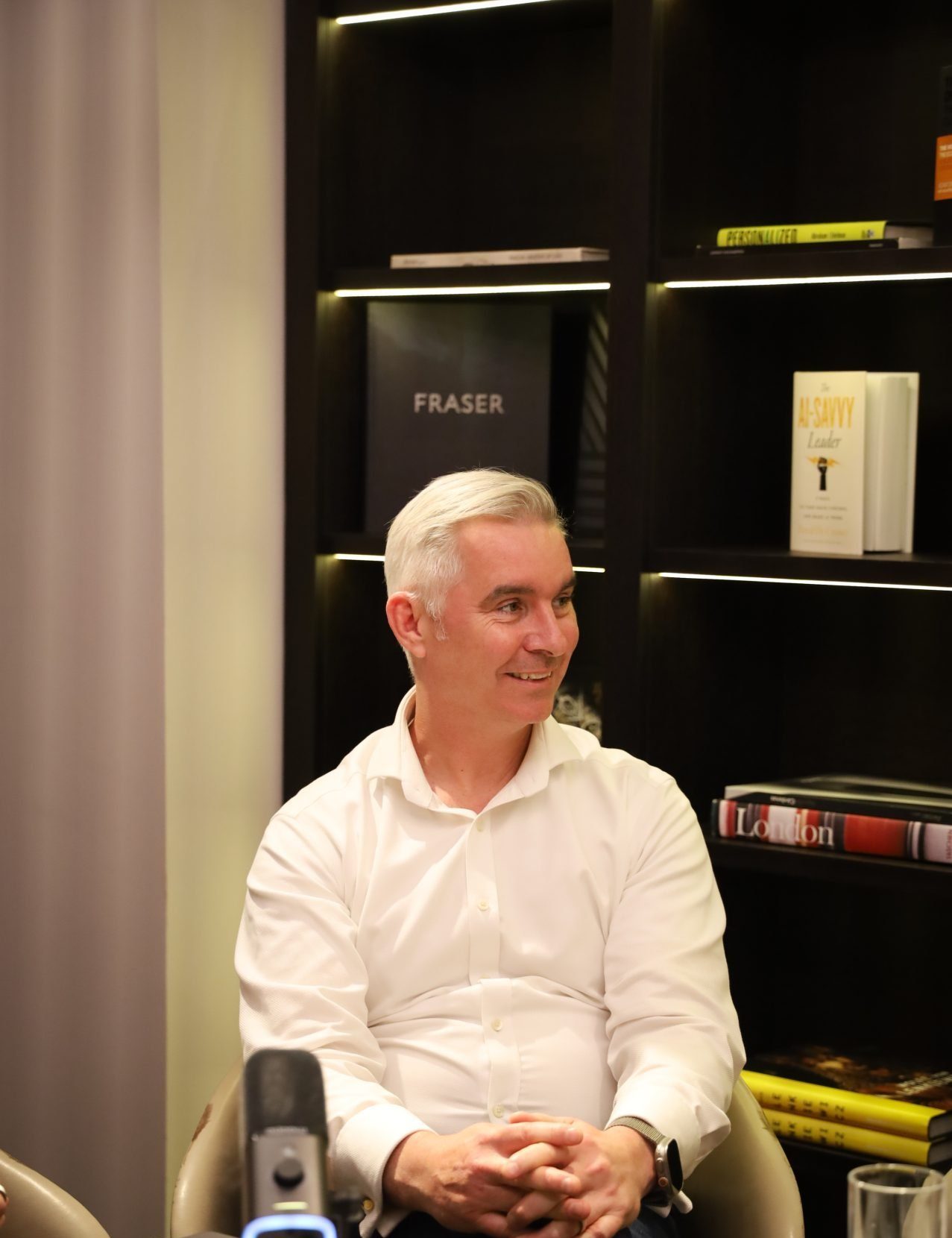
Ahead of the Hospitality Social Media Summit, taking place in London on 3–4 September 2026, we spoke with Ben Lilly, one of the summit's faculty and one of the most experienced voices in luxury digital marketing to high-net-worth audiences.
 Ben is the Founder and CEO of Giant Leap Digital, a luxury growth and performance agency for premium brands. He has spent more than two decades in luxury and financial digital marketing. Before founding Giant Leap, he was Managing Director of Verb Brands, later acquired by Croud. A recognised thought leader in the high-net-worth space, he works with distinctive hospitality names including Corinthia Hotels, The Ritz London, Maybourne Hotel Group and Almanac Hotels.
In this interview, Ben explains why affluent, high-net-worth and ultra-high-net-worth audiences behave very differently online, and why treating them as one audience is a costly mistake. He sets out why leading with a discount does a luxury brand more harm than good, why strategy has to come before tactics in paid social, and how to measure social's influence when the path to a booking is rarely linear. He previews The Social Revenue Blueprint, his Day 2 lab, where delegates rebuild a hotel's social strategy around desire, rate and direct bookings, and leave with a blueprint for their own property.
You have spent more than two decades building campaigns for luxury and financial brands targeting high-net-worth and ultra-high-net-worth audiences. What do most hospitality marketers misunderstand about how these consumers behave online, and where do they go wrong by treating them as one audience?
We actually break this down into more segments: Affluent, Wealthy, HNW, UHNW, and Billionaires. The difference between these audiences is large—not just in terms of financial wealth, but in what is important to them.
To talk about just two segments, HNW and UHNW, the difference in wealth would be £1m in disposable income for HNW compared to £30m+ for UHNW.
At £1m, people have generally earned this wealth. They have typically come from humble beginnings and, as a result, they are keen to show the world they have made it. They buy luxury cars, handbags, watches, etc.—the trappings that show society they have arrived. They are still very active in the day-to-day running of their affairs in terms of how and what they buy.
When you hit UHNW, your background is different. You have either inherited the money and therefore grown up in an environment where these trappings are seen as standard, or you are in the public eye, have sold a successful tech business, or have made money in finance.
Your interests are also different. At £30m+, you probably have an art collection, sit on the boards of charities, think about philanthropy, and want to leave your mark on the world by doing something good or different with your money. Not only this, but your environment is different. You will more than likely have a family office to manage your investments, life, and passions. Moreover, you don’t want society to notice you; your anonymity is important. Therefore, you build an environment where you travel by private jet and holiday on your superyacht because it's more secure and avoids the intrusion of the press.
So, we can quickly see that their desires, values, passions, and networks are very different.
Therefore, we also need to be mindful of who our audience is for the brand we are working on. It’s far more than a curated picture and a good strapline or call to action—we need to understand their environments, and from this, we can build for and target the right people.
Luxury hospitality was cautious about social media for many years, partly from a fear that visibility, accessibility and mass reach could weaken exclusivity. Did that caution protect luxury brands, or has it left parts of the sector commercially behind?
I get asked this a lot and, I'm sorry to say, luxury brands are typically slower on digital uptake than other verticals. That said, I do understand that there is a sweet spot between digital visibility/commerciality and retaining brand integrity, and this is something we work with our clients on every day.
We have seen—and indeed, we talk about—how you can use social media as an engine to drive a business forward. Everything we do involves micro-targeting, not macro-targeting (which a typical agency might do).
We need to pinpoint wealthy audiences rather than drive mass visibility. We have a lot of data to support our targeting options, and we can be specific in who sees our brand and why, aligning with motivations that meet their needs.
Today, luxury hospitality is catching up, but there is still a lot of ground to cover compared to other sectors. Digitally, this is a very exciting space; this year alone, we have seen lots of new platform advances specifically tailored for hospitality. Brands should be looking to understand the commercial value this can bring to their business, while also helping them to reduce costs in other areas such as OTAs.
So, we can quickly see that desires, values, passions, and networks vary significantly.
Therefore, we also need to be mindful of who our audience is for the brand we are working on. It’s far more than a curated picture and a good strapline or call to action; we need to understand their environments, and from this, we can build for and target the right people.
You built Verb Brands into one of the UK's leading luxury digital agencies before its acquisition by Croud, and later founded Giant Leap Digital. What did that journey teach you about what luxury brands genuinely need from an agency, as opposed to what agencies typically sell them?
You're right—Giant Leap is designed from the ground up to be different and to combat some of the issues I saw when I worked in other agencies.
- We have a senior-only team. The brands we work with hold themselves to such high standards, and we need to do the same. Having a senior-only team means we hit the ground running from day one, offering greater leadership, productivity, and strategic support. This allows us to build strong relationships with our clients right away, which in turn builds trust and enables us to retain and grow client relationships over the medium and long term.
- The team you meet during the pitch is the team that delivers your project. This is of huge value to a client: you get to see the skills and expertise those people bring to your business from day one—no handovers, no delegation.
- We have zero burnout. I have worked in agencies where, because a relationship started poorly, the agency had to backfill resources and people ended up working extremely long hours to rebuild trust. This might work briefly, but unless the agency model is fundamentally structured differently, it will always fall into the same trap. This leads to burnout, loss of account history, disgruntled clients, and resources being pulled from other projects. Once that happens, it's a one-way street.
I saw this time and again and thought it was ridiculous. It costs an agency huge amounts of time, money, and effort to win a new client, only to watch them walk out the door six months later—all because no one was willing to break the agency mould.
You have worked with brands including Corinthia Hotels, Almanac Hotels and Chenot. When you first examine a luxury hospitality business, what signals tell you that its marketing is capable of generating demand, and what signals suggest it is simply producing an expensive-looking image?
I’m speaking at the Hospitality Social Media Summit conference in September on this exact topic, so it's a great question!
Social marketing in particular has changed. The idea that a pretty picture with a discount on it will drive sales for a luxury hotel… well, no. Actually, this probably does more damage than good, and yet, time and time again, hospitality brands fall into this trap—maintaining it simply because it’s the way it's always been done.
The reality is that at the top end of the market, this audience isn’t as price-sensitive, so leading with an offer or discount is not the primary motivation for someone looking to stay.
setup today is more sophisticated and hungry for inspiration than ever before, and we need to meet that need. Just think about your own social journey: if you are shown an ad that inspires you for your next holiday or business trip, why would you go anywhere else? Ultimately, people are convenience-driven, and if we can tap into their motivations and show them how our hotel meets that need, they will convert.
Please come along to my session on day two of the conference, where I'll share all about how we do this.
Paid social is one of the areas in which hospitality businesses can spend significant sums without understanding what has actually created a booking. Where does the failure usually begin: the audience, the creative, the offer, the booking journey, the measurement, or the strategy behind all of them?
Any one of these factors can cause a failure in a campaign's objectives, which is why we need a clear strategy to start with. Sun Tzu famously said, "Strategy without tactics is the slowest route to victory. Tactics without strategy is the noise before defeat."
It’s true—strategy has to come first. I have seen many campaigns pushed out the door to keep stakeholders happy, but if they haven’t been properly designed, the chance of success is limited.
When we start planning a campaign at Giant Leap, we don’t just look at one channel in isolation; we look at the wider marketing mix. These channels don’t operate independently, so we need to think through-the-funnel: Which audience are we talking to? Have we tapped into their motivations, and is our vision communicating this effectively? Is our creative right for the channel, and is it aligned with what we are doing in other areas? Do we have the right budget (not just the lowest) and targeting options in place across our channels? Have we ensured that we are measuring success with the right KPIs?
Affluent travellers rarely move through a simple journey from advertisement to booking. They may discover a property socially, validate it elsewhere, consult an adviser and return weeks later through another channel. How should hospitality businesses measure social's influence when the path to revenue is neither immediate nor linear?
Yes, it's complicated—that's true. It's also true that people use channels for all sorts of reasons other than generating sales. This goes back to the point above about having a clear strategy in place, ensuring the business understands why this is happening and the expected impact.
That said, if we are just looking at bookings from a particular channel, we can A/B test the impact. We need to create an environment where we are comparing apples to apples. For example, suppose we ran a campaign last summer with a 20% discount across programmatic, search, and social. We can look at the booking engine data to see what was generated over that period (because, as you noted, the conversion might happen in another channel, so we want to see the overall impact). We can then turn off a channel during the same period this year—provided the offer, media investment, and targeting remain identical.
While there will always be external factors we can’t account for—such as wars or droughts—this will give us as close a comparison as possible, and any mitigating factors can be explained around the results.
Social platforms reward reach, frequency and constant content, while luxury depends on discernment, restraint and a sense of rarity. How can a high-end hospitality brand participate fully in social media without becoming overexposed or indistinguishable from the mass market?
This is exactly what we want to avoid and lots of hospitality bands fall into the same trap- come and see me at the conference in September and I can run you through how to stand out and drive true engagement.
AI is changing how audiences are identified, creative is produced and campaigns are optimised. Where is it already creating a genuine performance advantage for luxury brands, and where does it risk removing the judgement, originality and emotional intelligence on which luxury depends?
While AI is transforming digital development, its undeniable power comes with a critical caveat: speed must never outpace governance.
Before rushing implementation, leaders must step back and establish clear framework policies—a step many organizations have overlooked. Critical factors like regulatory compliance, copyright, data ownership, brand integrity, and internal tool fragmentation need strategic oversight at the executive level before teams deploy unvetted AI solutions.
Furthermore, AI is far from a "fit and forget" solution. Advanced agentic systems demand rigorous, continuous curation.
At Giant Leap, AI is embedded into our daily processes to enhance program quality and accelerate delivery. However, this efficiency is anchored by absolute human oversight. No asset or output created by our tools ever reaches a client or the public without expert verification. In high-stakes industries like luxury, that human touch isn't optional—it's the foundation of trust.
Independent properties and smaller hospitality groups may assume that sophisticated luxury marketing requires the budgets and resources of a global brand. Which principles from the luxury playbook can they apply immediately, and which elements should they avoid trying to imitate?
For smaller brands, the first thing to get right is their owned media: creative, website, SEO/GEO, socials, CRM, and data/reporting. This is the most cost-effective place to start, and it has a strong impact on how your brand is represented and the commercial value it drives.
You don’t need big media spend to improve this area of your digital footprint. However, when we start working with a boutique hotel, this foundational activity has often been overlooked or deprioritised in favour of tactical paid campaigns.
Once this foundational work is in place, it’s important not to spread yourself too thin. It is far better to research where your audience lives online, identify the primary channel for their needs, and focus your efforts there, rather than trying to maintain a presence across all channels simultaneously. Once you have built a proven test case on one channel, you can use it as a framework for others.
Your Day 2 session at the Hospitality Social Media Summit is a 90-minute practical lab rather than a keynote or agency presentation. What will delegates work through with you, and what commercial decisions should they be better equipped to make by the end of the session?
At our heart, we are a performance agency, so the lens we apply to all our projects is: How can we drive commercial return from the investment in time, labour, and creativity?
Our Lab will look at the following:
- Which hotels are doing it well: We want to understand which hotels are driving the highest ADR from their grids.
- Buying behaviour: We’ll look at a bit of theory to understand consumer purchasing habits.
- Missing the mark vs. what good looks like: We’ll explore how hotels typically miss the mark when building campaigns—and what success actually looks like.
- Social to direct bookings: We’ll provide a framework for building stronger campaigns, alongside examples of both best practices and poor execution.
- Growth without compromising luxury: We’ll examine the role of our digital ecosystem and how to prevent luxury status from being diluted.
- Workshop: We are going to work on a fictional campaign for a top London hotel, covering our ecosystem, examining what works and how it could be done differently to drive maximum impact.
Lastly, we’ll give delegates take-home toolkits to help them structure their future campaigns more effectively.
Much of your most valuable knowledge would ordinarily sit inside agency strategy rooms and private conversations with luxury clients. What are you able to explore in a small working lab that would be impossible to communicate from a conventional conference stage?
My session will give lots of practical advice and highlight why things need to change. We are moving past high-level strategic landscaping and vision setting. This will be a "roll up your sleeves and let’s do this together" session, so attendees will leave with great case studies and practical workshops on how to apply these strategies when they get back to their desks.
After working with you in the lab, what should delegates be able to identify or assess in their own social strategy that they may not recognise today?
The Lab will be engaging and fun. It will be interactive and conversational - so please come along and attend. I’m hoping that by the end of the session, people will have seen how many luxury brands are getting social campaigns wrong—and why they need to pivot to meet the needs of today's social audience. A lot has changed in recent years, and I will share the strategies, examples, tactics, and frameworks they can take away to make their social campaigns work harder, driving greater impact for both their community and their business's bottom line.
The Hospitality Social Media Summit takes place live in London and online on 3–4 September 2026. Across two days, delegates work with award-winning global leaders to build practical social strategies, systems and assets designed specifically for hospitality.
To explore the programme, meet the faculty and secure your place, visit hospitalitysocialsummit.com.
MEININGER MAKES ITS UK DEBUT WITH EDINBURGH LAUNCH
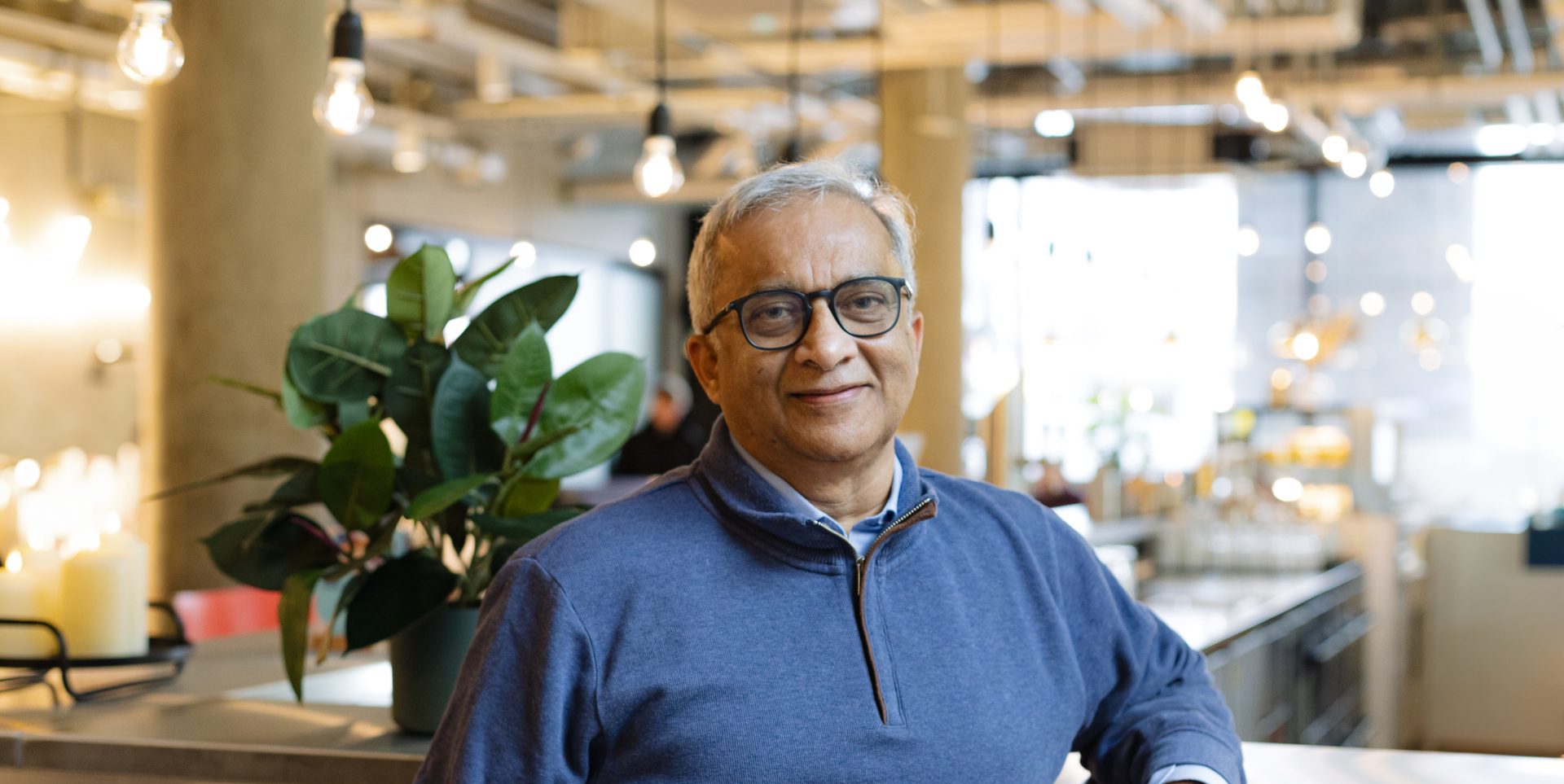
As MEININGER Hotels enters the UK market with its first property in Edinburgh’s Haymarket, CEO Ajit Menon explains why now is the right time to expand, how adaptive reuse is shaping growth, and why the brand’s hybrid hotel-hostel model is primed for today’s flexible, experience-led traveller.

MEININGER is entering the UK market with its first active property in Edinburgh - why was now the right time to launch here, and what made the Haymarket location the ideal choice?
The UK has always been an attractive market for MEININGER Hotels, given its strong tourism appeal and the close alignment with our hybrid hospitality concept, which serves a diverse mix of travellers, including leisure guests, backpackers, families, groups, and business travellers.
Edinburgh is one of Europe’s most attractive city destinations, combining culture, history, and entertainment. From the Edinburgh Festival Fringe and Hogmanay celebrations to its historic architecture, vibrant food scene, and growing calendar of major events, the city attracts a broad range of visitors throughout the year.
MEININGER’s Haymarket location is ideal for our guests, who are looking for a convenient base that allows them to make the most of their destination. The hotel provides easy access to Edinburgh’s main attractions while offering excellent transport connections beyond the city. Haymarket railway station is just a short walk away, with direct links across Scotland and the UK, while the tram network provides convenient connections to Edinburgh Airport and the city centre.
The Edinburgh property repurposes a long-vacant office building - how does adaptive reuse fit into MEININGER’s wider growth strategy, particularly in urban destinations?
We pursue both new-build projects and conversions of existing buildings. Conversions typically take around 12 to 18 months, meaning we can bring a property into operation faster than with a new build, and they also allow us to make a meaningful contribution to revitalising vacant buildings in city centres. Osborne House is a great example of this, and one we're especially proud of.
Developed and owned by S Harrison and delivered by Ogilvie Construction, the scheme transformed a tired 1970s office building into a modern development. The work included demolishing part of the original structure, adding two new accommodation wings and an extra top storey, with the design led by Edinburgh-based Comprehensive Design Architects.
MEININGER sits at the intersection of hotel and hostel, how are you evolving that hybrid model to meet the expectations of today’s travellers, especially in a competitive market like Edinburgh?
The strength of the MEININGER concept has always been its ability to combine the best elements of both worlds: the comfort, quality, and reliability of a hotel with the social atmosphere of a hostel. This remains highly relevant in today’s travel landscape, where guests increasingly look for authentic experiences, value for money, and the opportunity to connect with others.
Especially in competitive city destinations like Edinburgh, we believe this flexibility is a key differentiator. Travellers are not looking for a one-size-fits-all accommodation experience, they want a place that adapts to their journey and allows them to experience the destination in their own way.
At the same time, we know today's travellers are more digital than ever, which is why we continue to invest in services such as self-check-in, mobile key access, and other digital solutions that make the guest journey as seamless as possible. We are also placing greater emphasis on contemporary design that creates a warm and welcoming atmosphere throughout the property. Our newest hotels, including Edinburgh, showcase this next evolution of the MEININGER concept, combining everything guests already value about our brand with an even more modern look and feel.
With 549 beds across 157 rooms, the scale of the property is significant, who is your core target guest for this opening, and how do you balance appeal across different segments such as families, groups and solo travellers?
We expect the Edinburgh property to attract our typical diverse MEININGER guest mix. The hotel offers a range of single, double, and multi-bedrooms for up to six people, allowing different types of travellers to find the accommodation options that suit them best. Solo travellers and couples can choose private rooms. Families and groups benefit from larger room configurations that allow them to stay together, while shared accommodation offers an affordable and social option.
Beyond the rooms, our communal spaces and facilities add further options: guests can prepare their own meals in the guest kitchen or explore Edinburgh’s restaurants, choose breakfast at the hotel or start their day discovering the city. This combination of choice and flexibility enables us to serve different segments while delivering one consistent MEININGER experience.
Looking beyond Edinburgh, what are your ambitions for expansion in the UK, and how important is this opening in shaping MEININGER’s long-term presence in the market?
Our expansion strategy focuses on building multi-city networks rather than isolated properties. Experience has shown that once our concept is successfully established in a market, further growth can accelerate as we leverage our brand awareness, operational expertise, and market knowledge. We have successfully applied this approach in markets such as France, where our initial presence in Paris was followed by further openings in Lyon, Bordeaux and Marseille, with Strasbourg set to become our fifth destination in the country.
We see similar potential in the UK and view Edinburgh as an important first step in establishing our presence in the market. Dublin, planned for 2028, will be our next opening in the region, and we are continuing to explore further growth opportunities. Cities such as London, Manchester, Liverpool, Belfast, Glasgow, Cambridge and Brighton are of interest. As always, expansion depends on finding the right property in the right location.
IN THE HOT SEAT: JOSH LITTMAN
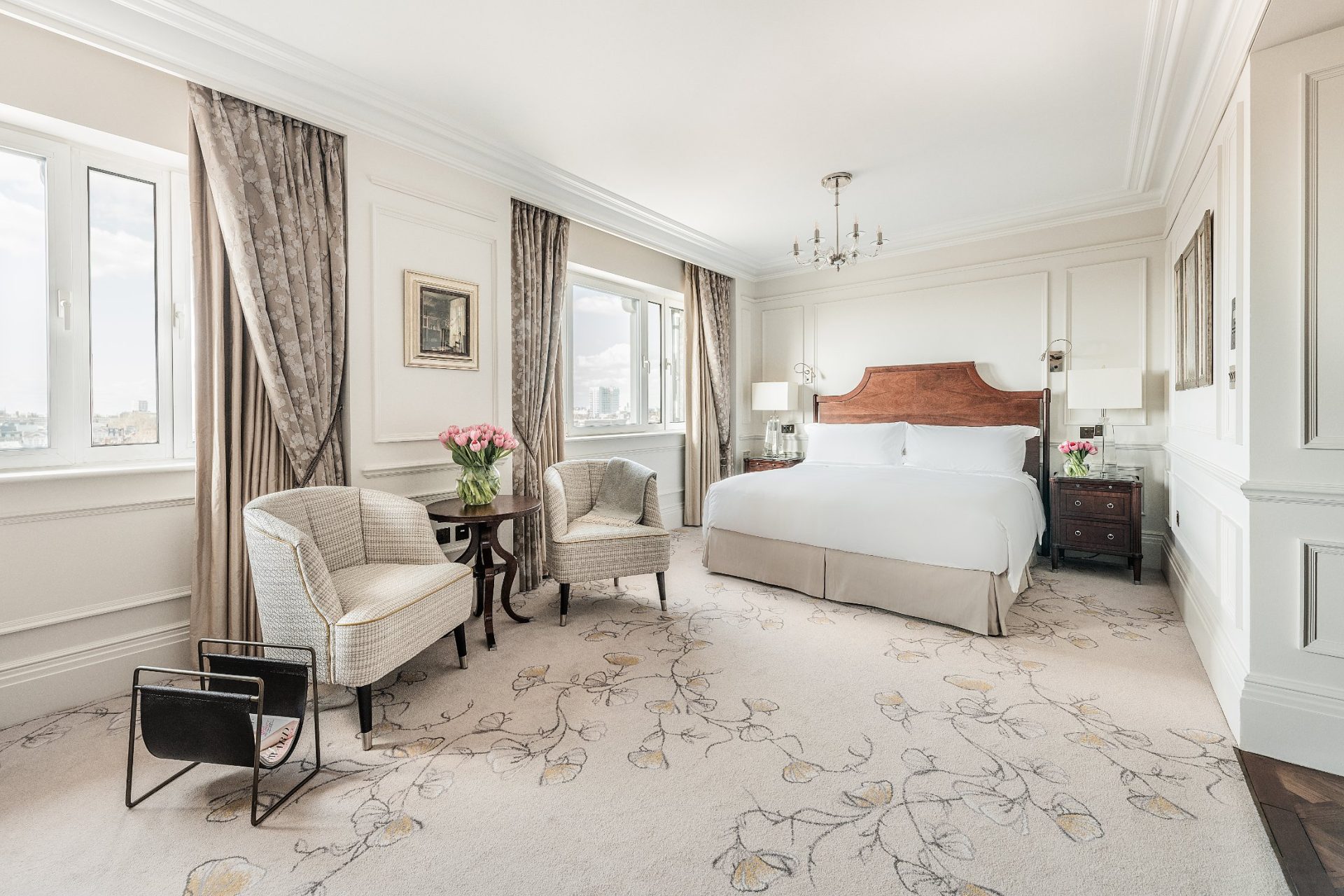
As Langham Hospitality Group accelerates its expansion across Europe, the Middle East and Africa, newly appointed Head of Development – EMEA Josh Littman shares his vision for growth, the opportunities shaping the region, and why the Group's heritage gives it a distinctive edge in today's competitive luxury hospitality market.
Fresh into his role as Head of Development – EMEA, Josh Littman is tasked with accelerating Langham Hospitality Group's growth across one of the world's most dynamic hospitality markets. With landmark projects already underway in Venice and Diriyah, and ambitions spanning Europe, the Middle East and Africa, he joins the business at a pivotal moment. For Josh, the opportunity was impossible to ignore.
I've always been a fan of The Langham Hotels & Resorts brand, which, for me, is the epitome of timeless luxury and British heritage hospitality. The Langham brand was born in London 160 years ago, and there is plenty of room to grow our footprint across the region.
said Josh.
That heritage, combined with significant white space for expansion, was a major draw.
We're already making great progress in Europe and the Middle East, with both The Langham Venice and The Langham, Diriyah well underway. In Africa, I see some fantastic opportunities across our brand spectrum in a number of the key international markets.
he explained.
He believes Langham Hospitality Group occupies a distinctive position in today's luxury hospitality landscape.
With so much saturation in many markets amongst our luxury peers, we have the unique proposition of being able to deliver a new, but familiar face. I'm thrilled to play a part in sculpting the group's next chapter of growth.
Josh said.
Over the next five years, the Group's ambitions are firmly focused on strategic growth across EMEA, with the Gulf Cooperation Council (GCC) standing out as a priority market.
I see plenty of growth opportunities in the GCC for Langham Hospitality Group, both in urban hotel development and in resorts. Not too far away, the Red Sea also offers interesting opportunities, alongside Jeddah and Mecca.
said Josh.
Europe also represents a significant opportunity for the business to build on its historic roots.
We were founded in London, and so European development is a key priority of ours going forward. Whilst we want to be in the key capital and gateway cities, we are also hungry to expand our resort presence, and southern Europe has seen significant activity in the industry over the past few years - a trend we are keen to capitalise on.
he said.
One area where Josh sees particular momentum is branded residences, a sector that continues to attract both developers and investors.
The Group is heavily invested in branded residences, and we are in a unique position to succeed in this area. Developers want proof of concept, and we have 160 years of legacy and brand trust under our belts.
he explained.
That combination of established heritage and a relatively limited regional footprint creates a fascinating proposition.
Whilst other groups may have already entered the GCC, our early-stage growth in the region gives us an edge. From an investor or developer standpoint, that recognition and lighter footprint translates into trust and opportunity that helps us stand out as an exciting new option in this space.
Josh said.
Langham's residential offering, he adds, is about much more than luxury real estate.
Our Residence philosophy mirrors that of The Langham Hotels and Resorts - elegance in design, innovation in hospitality, genuine service and sensory appeal. Owners have access to the services and amenities provided by our hotels while investing in The Langham lifestyle.
he said.
Josh's approach to development has been shaped by a career spanning advisory, financing, feasibility and hotel operations, giving him a broad commercial perspective when negotiating new partnerships.
I've had the privilege of working across a mix of hotel groups, from smaller, independent platforms to larger, publicly listed companies. Each situation brought me into contact with different people, situations and objectives.
he said.
Those experiences have reinforced one lesson above all others.
I think the most relevant lesson is understanding what the person sitting across from you wants. Once you understand that, you're better able to focus on what is relevant when entering new relationships and pursuing new deals.
Josh explained.
Looking ahead, his ambitions for Langham Hospitality Group are clear and measurable -
Success for me would be us signing 10–15 deals over the next four to five years across all our brands, but The Langham and Eaton in particular. I'd love to see us plant a few flags in major global cities and one or two iconic resort destinations.
he said.
Despite now operating at the highest levels of hotel development, Josh remains grounded by the operational experience that launched his career.
Any job you do in the business is a learning opportunity. With every new experience you gain, you become better equipped to understand various situations in the future and add more value as a professional.
he reflected.
Starting in hotel operations, he said, continues to influence every commercial decision he makes.
Understanding the hotel experience through a guest's perspective and through the eyes of hotel staff provides a great perspective when making commercial decisions.
Josh said.
To this day, I recall my time rotating through housekeeping and learning how critical the proper functioning of that department is, and how important a role its people play in the delivery of service and overall guest experience.
As Langham Hospitality Group embarks on its next phase of growth across EMEA, Josh Littman is bringing together commercial expertise, operational understanding and a deep appreciation for the Group's heritage. With an ambitious development pipeline and a clear vision for expansion, his focus is firmly on ensuring Langham's next chapter is every bit as enduring as its first.
WHY MESSAGE MATTERS MORE THAN MARKET
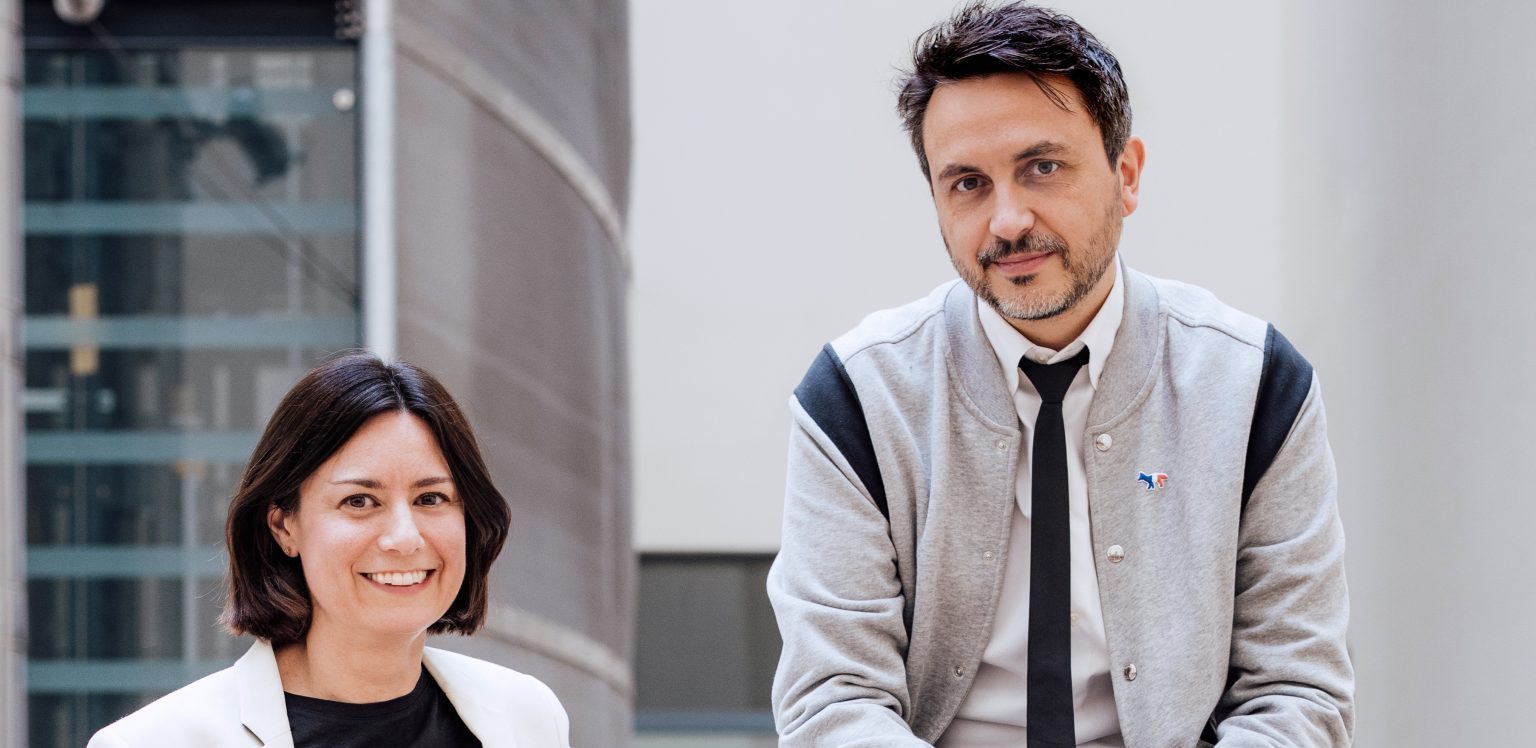
Ahead of the Hospitality Social Media Summit, taking place in London on 3–4 September 2026, we spoke with Laura Ferrari and Stefano Della Schiava, two of the summit's faculty and two of the most experienced voices in international brand and content strategy.

Laura is the former Director of Social Media for Hyatt across Europe, Africa and the Middle East, and co-founder of SHIFT Collective. She has led international social strategy for hospitality, luxury and fashion brands across culturally diverse markets. Stefano is the former Head of Nespresso's Content Studio and has built content and creative operations for brands including Toyota Europe and Mastercard.
In this interview, Laura explains why the booking journey shifts from market to market and why message, not translation, is where international campaigns break. Stefano sets out why scalable brands think in systems rather than campaigns, and where human judgement matters more as AI accelerates production. Together they preview Winning Hearts Worldwide, the Day 2 lab where delegates build a Regional Activation Plan.
You led social media for Hyatt across Europe, Africa and the Middle East. What did that vantage point teach you about how differently guests in different markets discover and choose hotels?
Laura: We assume the booking journey follows one logical path, the same for everyone. It doesn't. The path is rarely linear, and it shifts from person to person, market to market. Too often, when we build campaigns, we pour our energy into the message itself - perfecting the brand's tone of voice - and pay far less attention to the cultural shades, emotions, and motivations that actually drive someone to book. One of the Hyatt EAME summer campaign made that concrete. In Europe, the creative that worked was almost under-produced: a guest opening the balcony doors onto the Mediterranean, natural light, ambient sound, nothing that looked staged. In the Gulf, the same season called for the opposite: a family arriving at a grand lobby, greeted with traditional gahwa, settling into a private cabana. Polished, aspirational, respectful of family and privacy. Same brand, same summer, two different emotional truths, and the creative had to shift with them, not just the copy. Leading social across Europe, Africa and the Middle East gave me that testing ground: campaign after campaign, I saw how much those cultural nuances decide whether a regional idea lands or falls flat.
You have said that hotel brands targeting international travellers are often spending budget in the right markets with the wrong message, on the wrong platforms, for the wrong emotional reason. Which of those do teams get wrong most often, and what does it cost them?
Laura: Message, most often. Teams treat translation as the finish line: take one line of copy, run it through ten languages, send it. What gets lost isn't the words, it's the emotional register. Even within Europe, English translated literally into German or Italian rarely lands the same way; the words can be perfectly correct and still leave the audience cold. We need language that finds the right chord for that specific audience, not just the right vocabulary. Platform compounds it: to stretch budget, teams often reuse the same channels everywhere, ignoring that in some markets a less obvious platform - Snapchat, for instance - would reach that audience far more effectively than the default choice. But message is where it usually breaks first. The cost isn't abstract. It's not just a lower number on a report nobody rereads, it's a guest who scrolls past because the ad clearly wasn't made with them in mind, and a media budget spent reaching someone who was never going to convert. Worse, it plants an idea in that market: this brand doesn't get us. That's harder to undo than one underperforming campaign.
Take us one step earlier. How should a hotel decide which one or two international markets genuinely deserve its budget, and what signals tell you a market is worth the investment?
Laura: It has to start as a commercial decision, not a brand ambition. The first layer is logistics and volume: which are our key feeder markets, where do we already have the most hotels, and how easy is it to get from that market to the properties we want to fill - direct flights, rail links, real ease of travel. The second layer is our own data: where our current guests are actually coming from, and whether the market fits our seasonality and cultural profile. Only after that do I look outward: where the website traffic on that hotel's page originates, what competitors are already doing in that market, and how mature our brand is there, because that tells you what kind of campaign and message you'll need, not just whether to run one at all. None of these signals matter in isolation. A market can look perfect on paper for feeder volume and still be the wrong bet if brand awareness there is close to zero because then you're not selling a stay, you're introducing a brand, and that's a different budget and a different timeline entirely. When the signals conflict, I weight commercial reality - feeder volume, connectivity, existing guest base - over ambition. That's what turns a long list of countries into the one or two markets that actually deserve the money.
Having built content operations for Nespresso and shaped work for brands such as Toyota Europe and Mastercard, where do you see the biggest gap between how hospitality brands produce content today and what a scalable content operation requires?
Stefano: The biggest gap is that many hospitality brands still think in terms of campaigns, while scalable organisations think in terms of systems. Campaigns are temporary. Systems are permanent.
Across brands like Nespresso, Toyota and Mastercard, what made content scalable wasn't producing more assets. It was designing an operating model where strategy, creative, production and local adaptation all worked from the same foundations.
Hospitality often creates beautiful content, but every campaign starts almost from scratch. Different agencies, different briefs, different production partners, different approval processes. That creates inconsistency and unnecessary cost.
A scalable content operation works differently. It defines what should never change, the brand principles, the visual language, the core narrative, while deliberately designing everything else to be modular. One shoot should create content for social, CRM, paid media, retail, partners and local markets simultaneously, not sequentially.
The real shift isn't producing more content. It's extracting more value from every production
For readers who have never worked with a content studio, what problem is it designed to solve, and how is that different from simply producing a succession of campaigns?
Stefano: A campaign answers the question: "What do we want to say this season?"
A content studio answers a different question: "How do we continuously tell the brand's story every day, across every touchpoint?"
That's a fundamental difference.
Most hospitality brands don't struggle because they lack ideas. They struggle because the pace of modern marketing has changed. One campaign no longer feeds an entire year. Brands now need content across social, paid media, websites, CRM, digital screens, travel partners and local activations, often simultaneously.
A content studio isn't simply an internal production team. It's an operating model that connects strategy, creative excellence, production, governance and measurement into one continuous system.
Instead of reinventing the process every quarter, the studio creates consistency, efficiency and speed without compromising creativity.
Laura, your framework identifies the right market, message, platform and emotional motivation. Stefano, your work builds the content system capable of delivering that consistently. Where do hospitality teams most often lose the connection between strategy and execution?
Laura & Stefano: Usually during the handover.
Strategy is often developed centrally, then translated into creative briefs, then passed to agencies, then adapted by regional teams, then interpreted again by local markets. At every handover, a little of the original intent disappears.
By the time the content reaches consumers, everyone has executed their task correctly, yet the final output no longer reflects the original strategy.
The organisations I've worked with reduced that gap by introducing governance rather than control. Clear principles. Shared planning. Modular content. Defined ownership. Local freedom within central guardrails.
Execution shouldn't dilute strategy. It should express it.
Emotional hooks rarely travel unchanged. Can you share an example of an angle that resonated in one market but not another, and explain how you find the story that will translate?
Laura: Sure, I think the 2024 Andaz campaign "Be Like No One's Watching" is a good example. We built everything around one idea: Andaz as a brand of maximum self-expression. But self-expression doesn't look the same everywhere, and that's exactly the point. In London, it's loud, theatrical, and deliberately norm-defying. We partnered with characters like Dolly Pawton, bold, unapologetic, larger than life, because that's the emotional register that resonates in a city that celebrates eccentricity as a form of identity. In Bali, the same idea became something quieter and more rooted: an Indonesian artist whose crocheted installations explore the fragility of marine ecosystems. Self-expression there is inseparable from cultural identity and connection to place. While in Seoul, it translated into emotional interiority, an artist whose work blends Korean pop art with urban energy, described as a direct reflection of his own feelings. The campaign idea never changed. The emotional hook it needed in each market did. That's the work most brands skip, and it's the difference between content that travels and content that just gets posted. Finding that hook always starts with the same question: what does this experience mean to someone from this culture, not to us.
Local creators are often described as the shortcut into a new market. What separates a creator partnership that genuinely builds trust with international guests from one that just looks good in the feed?
Laura: The shortcut framing is already the problem. Brands that treat local creators as a market entry tactic get transactional results, content that looks credible but doesn't build anything. The partnerships that actually move trust share three things: the creator has a real community behind the numbers, not just reach; the collaboration is built on genuine value alignment, not aesthetic fit; and the relationship is designed to last beyond a campaign cycle. Those principles don't change whether you're activating in your home market or entering a new one. What changes locally is who that creator is and what trust means in that culture but the foundation is always the same.
Hotels feel pressure to feed more channels with more content every year. How do you scale output without quality and brand consistency slipping?
Stefano: The instinctive response is usually to produce more.
I think the better response is to produce smarter.
Every production should be designed around a content ecosystem rather than a hero asset. Instead of shooting one film and then creating social content afterwards, you plan from day one for multiple formats, audiences, markets and channels.
At the same time, consistency doesn't come from policing creativity. It comes from building clear design systems, reusable templates, shared asset libraries and governance that allows teams to move quickly without constantly asking for approval.
AI will increasingly automate production, versioning and localisation, but the brands that stand out won't be the ones producing the highest volume of content. They'll be the ones with the clearest creative system behind it.
What disciplines from brands such as Nespresso and Mastercard could hospitality teams adopt to make their content more consistent, recognisable and commercially effective?
Stefano: Three disciplines stand out.
First, think in ecosystems rather than campaigns. Every piece of content should strengthen the wider brand, not exist in isolation.
Second, design for reuse from the beginning. The most valuable productions aren't necessarily the most expensive. They're the ones that continue creating value months after the shoot because they were planned for multiple audiences, channels and markets.
Third, build governance into the operating model rather than the approval process. The strongest brands don't stay consistent because someone checks every asset. They stay consistent because everyone understands the principles they're working from. That's something luxury brands like Nespresso have done exceptionally well. Consistency becomes cultural rather than procedural.
You ran campaigns that had to work across several cities and cultures at once, including the Park Hyatt activation around Fashion Week in Milan, Paris and London. How do you keep one brand voice while giving each market room to adapt?
Laura: One principle I've always worked by: consistency doesn't come from making every market do the same thing, it comes from making sure everyone understands the brand's role in culture. The Park Hyatt Fashion Week campaign is a proof of that. We activated across Milan, Paris and London, three cities with distinct fashion identities, audiences and creator ecosystems, each expecting something different from a hotel brand showing up that week. The intent and the format stayed identical everywhere: curated city guides, built with local talent, positioning Park Hyatt as the starting point for anyone in town for Fashion Week who cared about design, fashion and culture, not just the shows. What changed from city to city was who told that story. We worked with talents who actually knew each city, people who could point to the hidden gems a visitor would never find on their own, not just the obvious fashion-week circuit. The result felt unmistakably Park Hyatt wherever you encountered it, but never a copy-paste of the city next door.
When content must work across several markets, what should remain centrally controlled and what should local teams be free to change?
Stefano: I think about it as protecting the brand while empowering the market.
Centrally, I'd keep the brand narrative, visual identity, strategic objectives, measurement framework and the core content architecture. Those elements create recognisability across markets.
Locally, I'd give teams freedom over creators, cultural references, language, casting, moments, partnerships and platform behaviour because that's where authenticity comes from.
Problems arise when organisations centralise cultural decisions or decentralise brand decisions. Those are the wrong things to optimise.
The goal isn't identical content. It's recognisable content.
As AI makes content production faster and cheaper, which parts of the content system will require stronger human judgement rather than less?
Stefano: AI is rapidly removing production as the bottleneck. The constraint is shifting from creating content to deciding what deserves to be created.
That makes human judgement more valuable, not less.
The hardest decisions remain deeply human: understanding cultural nuance, identifying meaningful consumer insight, protecting brand distinctiveness, recognising when something feels emotionally true rather than merely technically correct.
AI can generate hundreds of versions of an asset in minutes. It can't yet decide which story is worth telling or whether that story genuinely reflects the brand.
The future content operation won't be built around replacing creatives. It will be built around giving creative teams more time to make the decisions only humans can make.
At the Hospitality Social Media Summit, delegates in Winning Hearts Worldwide will build a Regional Activation Plan. What will that plan enable them to decide, adapt and execute more confidently when approaching their next international market?
Laura & Stefano: Walking out with a Regional Activation Plan means walking out with a decision already made, not a deck to present back to leadership, but a working document that answers the questions that usually stall international campaigns before they start. Delegates will leave knowing which market deserves their attention right now and why based on demand signals, not aspiration. They'll have identified the emotional role their brand needs to play in that market, which platforms match how those travellers actually discover and validate destinations, and what in the brand stays fixed versus what genuinely needs to flex. Most importantly, they'll have answered the governance question that kills localised content in practice: who decides what. Without that clarity, the best strategy stalls at the briefing stage. The plan compresses the six weeks of misaligned conversations that typically precede an international campaign into a single session so the next one starts from alignment, not assumption.
The Hospitality Social Media Summit takes place live in London and online on 3–4 September 2026. Across two days, delegates work with award-winning global leaders to build practical social strategies, systems and assets designed specifically for hospitality.
To explore the programme, meet the faculty and secure your place, visit hospitalitysocialsummit.com.

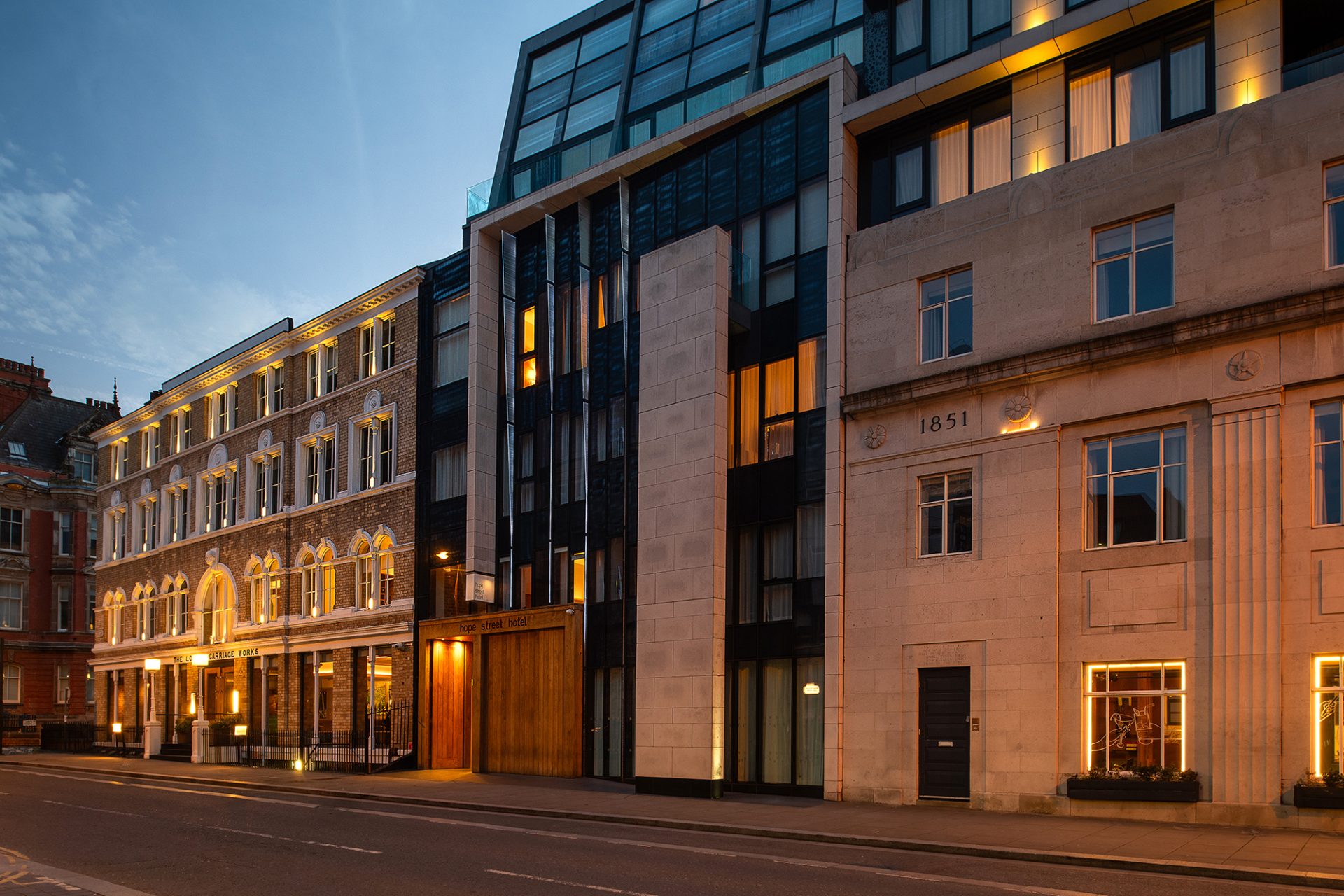
BEYOND THE BEDROOM: HOW HOPE STREET HOTEL IS REDEFINING REVENUE
Mary Clarke, Revenue Manager at Hope Street Hotel, explains how shifting focus from room rates to the full guest journey is unlocking new commercial opportunities. From seamless pre-arrival booking to integrated spa and dining experiences, she shares how technology and collaboration are driving stronger direct revenue, higher conversion rates and a more valuable, personalised stay.

Hope Street has become known for generating revenue well beyond the bedroom. When did you start thinking about the entire guest experience as a commercial opportunity rather than just the room booking?
I think the turning point came when we shifted our mindset to the fact that guests aren’t just booking a bedroom – they’re booking an experience. They want spa, dining, drinks and little extras to make their stay memorable, but these experiences weren’t always easy to discover or arrange online. Since partnering with Journey, we have been able to bring accommodation, spa, dining and gifting together in one seamless booking experience. This makes it easier for guests to personalise their stay while creating new revenue opportunities across the hotel.
Revenue management used to be almost entirely about rooms. How has your definition of commercial success changed over the last few years?
Bedroom revenue will always remain a key priority for me, but it is no longer the only measure of commercial success. Today, we look at the complete value of each guest, including spend across accommodation, spa, dining and gifting. This broader approach has brought our revenue, marketing and operational teams closer together, with everyone focused on delivering a better guest experience while maximising revenue. By focusing on the full guest journey, we’ve been able to identify new ways to increase direct bookings and maximise spend across the hotel. This approach has contributed to an 18% year-on-year increase in online direct revenue.
What have you done to make it easier for guests to discover and book experiences before they arrive, and what impact has that had?
The biggest improvement has been simplifying the booking journey for our guests. Guests can now plan their stay in one place, rather than navigating separate systems or having to call for bedrooms, spa, dining or other experiences. It allows guests to book online with confidence, knowing their stay is tailored to them, while helping us capture additional revenue at an earlier stage. Since creating this user-friendly experience with Journey, our booking conversion rate has grown to more than double the industry average which is amazing!
Your spa has become a significant contributor to overall performance. What role does technology play in helping you connect rooms, spa and other experiences into one guest journey?
We have seen such an uplift in spa reservations since working with Journey. Giving guests the ability to book online in one place has giving us a greater understanding of guest demand before arrival, helping us plan staffing, resources and operations more effectively. For guests, it creates a much smoother experience, with everything confirmed before they arrive. Commercially, this approach has helped us deliver strong results, with spa revenue increasing by 140% since 2023. It allows us to maximise the value of every guest while ensuring we continue to deliver a personalised guest experience.
Many hotels still rely on guests discovering experiences after check-in. Why do you think that leaves revenue on the table?
The booking stage is when guests are most engaged and excited about their trip. They are actively planning how they want to spend their time, so this is the ideal time to showcase everything we have to offer. If we only introduced experiences at check-in, guests may have already made plans elsewhere. By making spa, dining and other experiences bookable earlier, we can drive additional revenue and improve forecasting all well tailoring the guest experience.
What impact has technology had on your direct booking strategy and guest experience booking journey?
Our website is essentially a digital shopfront where the booking experience reflects the quality of the stay. Guests now expect a booking journey that is engaging and easy to complete. This shifts our strategy to put more into our online presence. By investing in a smooth booking experience, we have increased conversion and created more opportunities to generate revenue beyond just accommodation. We have also seen strong growth in gifting, with 74% of our vouchers now sold online. Guests who redeem vouchers online also spend around 53% more than the original voucher value, showing the value of a connected digital journey.
If you could give one piece of advice to hotel leaders looking to increase guest spend without simply raising room rates, what would it be?
I believe guests don’t always know exactly what they want until they see it, so having a website and booking engine that shows what you have to offer in the right way is very important. The opportunity is to make these offerings easier to discover, book and pay for at the moment guests are most engaged. My advice is to showcase what you have to offer by making it visible and accessible, it will be much easier to naturally increase guest spend.
FROM PLATFORM TO PROFIT

Ahead of the Hospitality Social Media Summit, taking place in London on 3–4 September 2026, we spoke with Whitney Reynolds, the summit's headliner and co-producer, and one of the world's leading voices in hospitality social media.
Whitney is the former Global Director of Social Marketing at IHG and Kimpton, where she spent 12 years shaping social strategy across some of the world's best-known hospitality brands. Under her leadership, Kimpton won Skift's inaugural award for Best Social Presence among hotels, and she has been recognised by PRWeek and Brand Innovators' 40 Under 40.
In this interview, Whitney explains why social media should now be treated as a business function, what separates attractive content from content that creates demand, and why humanity will be the differentiator as AI transforms content creation. She also shares what delegates will build across the summit's two days, and what hospitality leaders should be doing differently the Monday after.
Social media was once treated as a publishing channel within marketing. Today it influences discovery, reputation, loyalty and revenue. Where should social sit within a hospitality business now, and who should ultimately be accountable for its performance?
Social media is no longer a channel within marketing - it's a business function that happens to use social platforms. It has the ability to influence every aspect of the business, even ones you might not think of, like development, talent acquisition, and nurturing client relationships. The most effective social media teams begin with the organisation's business goals, translate them into measurable social marketing objectives, and develop a strategy that drives those outcomes. That work requires a unique combination of community building, platform expertise, content strategy, and an understanding of how social behaviours and algorithms continue to evolve - skills that are distinct from brand, communications, or paid media. Social practitioners themselves should be accountable for social media performance. They should own the strategy, advocate for the resources needed to execute it well, and regularly demonstrate how their work is contributing to the business's priorities.
From your experience leading social across IHG and Kimpton, what separates hospitality brands that convert attention into demand from those that simply produce attractive content?
Experiences. Sparking the senses. Beautiful photography of hotel spaces is no longer a competitive advantage; it's the baseline. A recent Bloomberg Business Week article posed the question, "Can you tell the difference between a $300 hotel room and a $1,300 one?” As hotel design continues to converge, spaces alone are becoming harder to distinguish. The brands that convert attention into demand are the ones that sell the experience, not just the product. They bring the stay to life through on-property programming, memorable moments, and the sensory details that help people imagine what it feels like to be there. That's what creates desire (and ultimately demand); not just another beautiful image in the feed.
Hospitality leaders often say social is important, but many still struggle to explain what it contributes commercially. Beyond reach, engagement and follower growth, what should a strong social strategy be expected to deliver?
Social media contributes commercially across the entire customer journey, from building awareness and increasing consideration to driving bookings, strengthening loyalty, and inspiring advocacy. The reason many hospitality leaders struggle to articulate its value is that social teams haven't always connected their work back to the business's priorities. That's our responsibility as social strategists. We should begin with the organisation's goals, translate them into specific measurable social marketing objectives, and report on the outcomes that matter to leadership. Reach, engagement, and follower growth are useful indicators but they're not the end goal. They're only meaningful if they help move the business forward.
Teams are under pressure to post more, adopt new platforms and experiment with AI. Which changes genuinely matter for hospitality leaders right now, and which are mostly distractions?
The biggest distraction is the belief that you have to do everything. Hospitality marketers have more opportunities than ever, but effective social strategy is about making disciplined choices. Every new platform, technology, or content format should be evaluated against the business's priorities, not because it's generating buzz. If your goal is to reach Gen Z and your audience is spending time on TikTok, expanding your presence there might be the right decision. But it should be driven by a clear business objective, not by fear of missing out. The hospitality brands that will succeed aren't the ones chasing every trend. They're the ones that stay relentlessly focused on the initiatives that create the greatest business impact.
At Kimpton, social helped create a brand people felt part of rather than simply followed. What creates that sense of belonging, and why do so many hospitality brands struggle to achieve it?
Belonging starts with making people feel seen as individuals, not as audiences. At Kimpton, we prioritised one-to-one engagement. We used people's names, asked genuine questions, remembered returning guests, and responded like humans rather than brands. That kind of acknowledgment builds trust, and ultimately community. Many hospitality brands assume this level of personalisation isn't scalable, but I think it's more a matter of mindset than resources. When leaders prioritise meaningful engagement alongside content creation, it becomes one of the most powerful differentiators a brand can have on social.
As AI makes it easier to produce polished content at scale, what will distinguish hospitality brands that remain memorable, distinctive, and human?
In a sea of increasingly polished content, humanity will become the differentiator. As AI makes it easier to create beautiful on-brand assets at scale, people will gravitate toward the moments that feel real: the unexpected turn of phrase, the genuine facial expression, the imperfect detail, the emotion and warmth that remind us there are people behind the brand. We're already seeing hospitality language start to blend together: so many hotels inviting guests to “linger longer.” The brands that stand out will be the ones with a distinct personality and the courage to express it consistently.
Many hospitality businesses outsource social delivery to an agency. What strategic knowledge must remain inside the business, and what does being an effective, educated agency client look like?
An agency should be an extension of the team. The best agency partners take the time to deeply understand business priorities and translate them into social efforts that drive meaningful business outcomes. They also know the right questions to ask to uncover the stories, resources, and insights needed to bring those efforts to life. The most effective agency-client relationships are built on transparency and trust: clients who openly communicate evolving priorities, and agencies that proactively advise and execute against those goals.
If you were building a hospitality social function from scratch today, what are the three foundations you would refuse to compromise on?
Most importantly, I would centre everything around strategy. That's it. Social teams need a clear understanding of the business goals they are supporting and the ability to translate those goals into measurable objectives to track against. Next, I would prioritise genuine guest connection. Social Is one of the few places where a brand can have thousands of individual conversations at scale. Community management and connecting the online experience with the on-property experience must be core to the function. Third, I would invest in true creativity. In an increasingly crowded and AI-enabled content landscape, the ability to tell compelling stories through visuals, words, and distinctive brand personality will be more important than ever.
You are headlining the Hospitality Social Media Summit in London this September. There is no shortage of marketing conferences, so what did you feel was missing from the way hospitality professionals are currently being taught social?
In many markets, hospitality professionals aren't really being taught social through the lens of hospitality. Throughout my career I've attended countless marketing and social media conferences, but I often found myself trying to translate advice designed for retail, consumer packaged goods, or e-commerce into an industry where the customer journey is entirely different. Booking a hotel isn't the same as buying a shirt or a beverage. Travel is a considered purchase Influenced by emotion, trust, and timing. It's not a quick decision-making process. What's been missing is a framework for using social throughout the travel consumer lifecycle, from inspiring the trip to enhancing the guest experience and loyalty. That's the gap I hope this summit helps fill: giving hospitality professionals practical strategic guidance that's built specifically for the challenges and opportunities of our industry.
Day 1 is structured as a working strategic masterclass rather than a series of presentations. What will delegates build during the day, and what decisions should they expect to have made by the time they leave?
We intentionally designed Day 1 as a working masterclass rather than a series of presentations because strategy isn't something you learn by listening. It's something you build. Throughout the day, delegates will create a practical social strategy blueprint tailored to their own business, including the goals they’re supporting, the audiences they’re prioritising, the channels they should invest in, and how they measure success.
Day 2 moves into eight practical labs led by people who have run social and content for brands including Hyatt, Meliá and Nespresso. Hospitality teams have heard talks on paid social, creators, AI and international audiences for years, yet the same problems persist: spend without bookings, content without rights and tools without results. Why does the gap between knowing and doing remain so difficult to close?
The gap exists because information isn’t the problem; implementation is. Most hospitality professionals don’t need another presentation about why AI, paid, or creator partnerships are important. They need the confidence and practical experience to apply those tools and frameworks to their business. That’s why Day 2 is built around hands-on labs rather than lectures. Delegates won’t just hear about best practices; they’ll discuss real scenarios, ask questions, and practice applying what they’ve learned. That kind of active learning is far more likely to translate to meaningful change once they’re back at their desks.
What do you want a marketing director, commercial leader or general manager to be doing differently on the Monday after the summit?
I hope delegates return with a different way of thinking about social media. I want them to be asking, "What business goal are we trying to achieve and how can social help us get there?" I hope they'll have the confidence to make more strategic decisions about where to focus their time, resources, and creative energy rather than trying to do everything. I also hope they'll see social as a strategic business function - one that deserves clear objectives, meaningful investment, and accountability for results. If delegates leave with a practical strategy they can immediately put into action and a clear framework for demonstrating social media's commercial contribution to their business, then we've achieved exactly what we set out to do.
The Hospitality Social Media Summit takes place live in London and online on 3–4 September 2026. Across two days, delegates will work with award-winning global leaders to build practical social strategies, systems and assets designed specifically for hospitality.
To explore the programme, meet the faculty and secure your place, visit hospitalitysocialsummit.com.

Rethinking Water: How BE WTR Is Disrupting Hospitality’s Bottled Water Model
In an industry where luxury and sustainability are often seen as competing priorities, BE WTR’s founder and CEO Mike Hecker is challenging the status quo. Drawing on his experience building global consumer brands, Mike is on a mission to transform how water is produced, served, and experienced in hospitality - shifting from long-distance, single-use models to local, circular systems that deliver both premium quality and environmental responsibility.

You helped build innovative consumer brands before founding BE WTR. What inspired you to rethink bottled water for the hospitality industry, and why do you believe the traditional model is ready for disruption?
Throughout my career, I’ve been extremely fortunate to help build businesses that challenged established ways of thinking. I’ve taken many incredible lessons from these previous roles, but one thing that has always stood out is that the biggest opportunities often exist in categories that people rarely question. Water is absolutely one of those. It is one of the world’s most essential resources, yet the industry has continued to rely on a model where water is transported hundreds or even thousands of kilometres, packaged in single-use containers, and marketed as a premium experience. To me, that simply no longer makes sense in a world that expects both quality and responsibility, especially when it comes to sustainability.
That’s exactly why I founded BE WTR. Our ambition is to completely rethink how water is produced and served in hospitality by producing premium still and sparkling water locally, using advanced Swiss filtration and a circular bottling system. Rather than asking businesses to choose between luxury and sustainability, BE WTR demonstrates that the two can and should go hand in hand. By bottling water close to where it is consumed and serving it in elegant reusable glass bottles designed for more than 300 uses, we’re helping hospitality businesses reduce transport emissions and waste while delivering an exceptional taste and guest experience.
The opening of our new London BiG bottling facility this autumn is an important milestone in bringing that vision to life. London is one of the world’s leading hospitality destinations, and by producing water locally from our Surrey Quays facility, we’ll be able to support more hotels, restaurants, and premium venues with a solution that combines exceptional taste, operational excellence, and a significantly lower environmental footprint. Every new bottling plant we open is another step towards transforming how premium water is experienced, proving that local production is the future of hospitality.
Hotels and restaurants are under increasing pressure to balance exceptional guest experiences with meaningful sustainability goals. How can premium, locally sourced water help hospitality businesses achieve both?
The perception that sustainability requires compromise is, thankfully, rapidly disappearing. Guests still expect exceptional quality, a premium dining experience, and impeccable service, but many also now want to know that the businesses they choose are making responsible decisions. Water presents a unique opportunity because it touches almost every guest experience across the board, making it one of the most visible ways hospitality brands can demonstrate their sustainability efforts without sacrificing quality.
At BE WTR, we've designed a premium water brand that enables hotels and restaurants to serve locally bottled water without compromising on the guest experience. Freshly filtered water presented in elegant reusable glass bottles creates a refined dining experience while eliminating the need to transport bottles over long distances or rely on single-use packaging. It almost feels obvious, because it’s a solution that delivers operational, environmental, and brand value simultaneously, allowing hospitality businesses to serve water that champions both their standards and their values.
Our new London BiG bottling facility is a great example of that philosophy in action. By producing water within the city we’ll be able to support more hospitality partners across London with a local, circular solution that combines exceptional taste, premium presentation, and a significantly lower environmental footprint.

Single-use packaging remains a significant challenge across the hospitality sector. What practical steps can hotels, restaurants, and bars take to reduce waste without compromising quality, convenience, or brand perception?
The first step is recognising that sustainability shouldn’t exist as a separate initiative; it should be embedded into everyday operations. Hospitality businesses should look closely at products that are consumed in high volumes, water being a prime example, where relatively small operational changes can have a significant cumulative impact. It needs to be a conscious effort, but replacing disposable packaging with durable, reusable systems is one of the most effective ways to reduce waste while maintaining consistency and quality.
Equally important is choosing partners that make sustainability simple rather than adding complexity. Our circular model is already proving successful across a number of international markets and, with the opening of BE WTR’s London bottling facility in Surrey Quays this autumn, hospitality businesses across the capital will be able to benefit from locally produced water alongside our reusable bottle collection, professional washing, and refilling system. This allows hotels and restaurants to maintain the convenience they’re accustomed to while dramatically reducing waste. Guests increasingly associate responsible choices with premium brands, so moving away from single-use packaging is becoming an important part of protecting brand reputation and meeting evolving guest expectations.
Guests are becoming more conscious of where their food and beverages come from. How do you see expectations around water evolving, and what role will transparency, traceability, and local sourcing play in shaping future guest experiences?
Water is an essential part of life, but for many years, it was viewed as a commodity, with relatively little attention paid to where it came from or how it reached the table. That mindset is has already changed and continues to do so. Consumers are asking more questions about everything they consume, and water is no exception. They want reassurance around quality, safety, environmental impact, and increasingly, provenance. As awareness grows, I believe people will begin to expect the same level of transparency from water that they already expect from things like wine, coffee, or locally sourced ingredients.
At BE WTR, transparency is central to our approach. Because our water is produced locally, we can tell a much richer story about where it comes from, how it’s filtered using our advanced Swiss active carbon technology, how our reusable glass bottles are collected, cleaned, and refilled through a circular system, and why this dramatically reduces environmental impact. For hospitality businesses, that transforms water from an afterthought into part of the overall guest experience, creating a more meaningful story while reinforcing their sustainability credentials. I believe transparency, traceability, and local sourcing are on course to become defining factors in how guests judge premium hospitality experiences.
Having worked with globally recognised brands such as Nespresso, what lessons have you brought to BE WTR about creating premium experiences while driving meaningful change in consumer behaviour?
One of the most valuable lessons I learned at Nespresso is that people rarely change their behaviour simply because something is more sustainable. They change because the overall experience is better. If you can combine superior quality, thoughtful design, convenience, and emotional engagement, then sustainable choices become the natural choice rather than the difficult one. That’s a philosophy I've carried with me throughout my career.
At BE WTR, we’ve applied a similar thinking to water. We haven’t focused solely on solving an environmental challenge, instead we’ve reimagined the entire experience, from the taste and presentation to the elegance of the bottle and the simplicity of the circular system behind it. When sustainability enhances the guest experience instead of detracting from it, people don’t feel they're making a sacrifice. We make it easy for the guest, so they’re simply choosing a better product, and that’s how lasting behavioural change happens.

Looking ahead five to ten years, what do you think the hospitality industry's relationship with bottled water will look like? What innovations or shifts do you expect to have the greatest impact on hotels, restaurants, and bars?
I believe we’ll see a significant shift away from transporting water across continents towards producing premium water much closer to where it is consumed. Hospitality has always evolved alongside guest expectations, and I think locally produced, circular water systems will become the new benchmark for premium hotels and restaurants. Just as local sourcing has transformed food, I believe it will increasingly shape how water is experienced, served, and valued.
Alongside localisation, technology will continue to improve both quality and transparency. Advanced filtration systems, smarter circular logistics, and better traceability will allow businesses to provide guests with greater confidence in what they’re consuming while reducing environmental impact. That’s exactly the future BE WTR is building. Our new London bottling facility, with its opening just around the corner, is another step towards creating a network of local production sites that allows the world’s leading hotels and restaurants to serve water that is local, circular, and aligned with the expectations of modern guests.
London is just the next chapter, but every new BE WTR bottling facility brings us one step closer to reshaping the future of premium hydration for hospitality, proving that sustainability and luxury can evolve together, without compromise.