

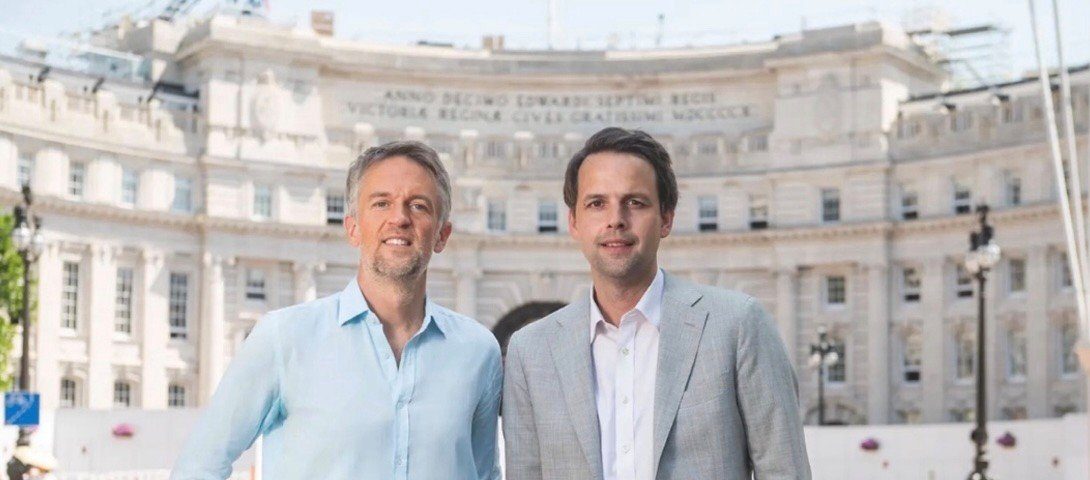
INCEPTION GROUP TO OPEN THE ADMIRAL'S MESS WITHIN WALDORF ASTORIA LONDON - ADMIRALTY ARCH
Inception Group, the operator of unique and immersive hospitality concepts across London, is set to open The Admiral's Mess, a 2,400 sq ft bar concept at the landmark Waldorf Astoria London – Admiralty Arch, the highly anticipated new luxury hotel overlooking The Mall. The Admiral's Mess will have a 60-seat capacity and will sit outside the group's existing brands, including Mr Fogg’s and Cahoots. It will join restaurant openings from Clare Smyth MBE and Daniel Boulud in the Grade I listed monument, which is being meticulously restored by Reuben Brothers, in partnership with Hilton.

Charlie Gilkes, Co-Founder of Inception Group, noted "We are honoured to have the opportunity to open within such an iconic London location and are excited to have created a totally unique concept fitting for such a historic site''.
Guillaume Marly, General Manager, Waldorf Astoria London - Admiralty Arch commented “We are delighted to partner with Inception Group to introduce an exciting new bar concept at Waldorf Astoria London – Admiralty Arch, joining Whiskey & Seaweed and our signature cocktail bar. Their expertise in crafting memorable experiences makes them a natural partner, offering guests an opportunity to discover something distinctive and unexpected, yet another compelling reason to visit.”


WHY HOTELS ARE STUCK IN AI ‘PILOT PURGATORY’
By Michael McCartan, Area Vice President EMEA at IDeaS

Hotels are investing significant time and resources in artificial intelligence, yet many are still struggling to move from experimentation to widespread operational use.
The challenge facing many hotel groups today is no longer access to AI. It is developing enough confidence in the technology, data and governance behind it to allow AI to influence real commercial decisions at scale.
As a result, many organisations find themselves trapped in a form of "AI pilot purgatory", where teams are willing to test the technology and review its recommendations but remain hesitant to let it influence live commercial decisions.
The trust gap becomes particularly visible in revenue management, where changes to pricing, inventory or forecasting can have an immediate financial impact.
McKinsey's State of AI 2025 found that fewer than one-third of organisations have successfully scaled AI beyond the pilot stage. For hotels, the challenge is often not whether AI works. It is whether organisations trust it enough to become part of everyday decision-making.
COMMERCIAL DECISIONS RAISE THE STAKES FOR TRUST
Trust becomes more important as technology moves from providing insight to influencing decisions.
A revenue manager may be comfortable reviewing a recommendation generated by a system. Allowing that same system to automatically increase a rate, restrict lower-rated inventory or decline a piece of business requires a higher level of confidence in both the data and the decision-making process behind the recommendation.
Revenue management systems often reach conclusions that appear counterintuitive when viewed through a single data point such as current occupancy. A hotel may still have rooms to sell while forward demand, booking pace, length of stay and displacement indicators suggest that restricting lower-value business will produce a stronger commercial outcome.
Teams therefore need sufficient visibility into how a recommendation was reached, what factors influenced it and where human intervention remains appropriate. Trust develops through consistent performance, but it also depends on understanding.
Accuracy alone is not enough. Commercial teams are more willing to adopt automation when they can understand the factors that influenced a recommendation and communicate that reasoning across the business. Trust is strengthened when AI can be governed as well as measured.
DISCONNECTED SYSTEMS LIMIT WHAT AI CAN ACHIEVE
Technology is only as effective as the information available to it.
Hotels typically manage commercial data across a range of systems, including the PMS, CRS, RMS, CRM and distribution platforms. The quality of any automated recommendation depends heavily on how consistently those systems exchange information.
Disconnected data can limit what AI is able to achieve, while inconsistent reporting and definitions can cause different departments to make decisions using different versions of demand.
Siloed ways of working create additional challenges. Revenue teams may be reacting to booking pace, marketing teams may be focused on generating demand and sales teams may be pursuing group business, all while operating from different assumptions about future performance.
Introducing AI into that environment can increase the speed of activity without necessarily improving the quality of decisions if the information feeding those decisions remains incomplete or fragmented.
Applying AI to fragmented data does not simply risk producing a poor recommendation. When the wrong type of AI is paired with incomplete or disconnected information, organisations risk creating bad recommendations at scale.
Instead of eliminating manual inefficiency, they may simply replace it with automated error-making. Recommendations can be repeated confidently across room types, market segments and future arrival dates, multiplying the impact of flawed assumptions or incomplete inputs.
The danger is that the system may still appear to be working. Without the right architecture, monitoring and explainability, errors can remain hidden until they have already influenced a meaningful volume of commercial activity.
That is why hotels increasingly need to understand not only what data feeds an AI system, but also what form of AI is being used, where it sits within the decision process and how its recommendations can be evaluated and challenged.
HOTELS ARE STARTING TO ASK A DIFFERENT QUESTION
For several years, much of the hospitality industry's conversation around AI focused on whether technology providers offered AI capabilities.
Increasingly, however, hotel groups are asking a different question: how deeply does AI actually sit within the decision-making process?
The question matters because not all AI-enabled systems are designed in the same way. Some technologies use AI to summarise information, generate content or surface insights while core commercial recommendations continue to rely on predefined rules or manually maintained logic.
Others place machine learning at the centre of forecasting and optimisation, allowing models to continuously adapt as demand conditions change.
As hotels pursue greater automation and scalability, the underlying architecture becomes increasingly important. Trust is influenced not only by the quality of a recommendation but also by confidence that the decision process is consistent, explainable and embedded within the product itself.
This reflects a broader shift in how hospitality organisations evaluate AI. The question is no longer simply whether AI exists within a platform. Increasingly, buyers want to understand where AI sits within the decision process and whether it is capable of acting as part of the commercial decision engine itself.
HOTELS NEED TO MATCH THE TECHNOLOGY TO THE DECISION
The rapid growth of generative AI has created a tendency to discuss AI as a single category, even though different commercial challenges require different forms of intelligence.
Generative AI can support communication, interpretation and user interaction. Revenue management relies on mathematical forecasting and optimisation to estimate future demand and determine how pricing and inventory should respond.
A generative model predicts language. A revenue management system must forecast demand across future arrival dates and optimise commercial decisions based on those forecasts.
Mathematical AI can support the decision engine by collecting demand signals, forecasting future behaviour and optimising pricing and inventory. Generative AI can help users interpret and communicate recommendations, while agentic capabilities can support execution by carrying out approved actions within defined parameters.
The most effective commercial environments combine these capabilities within a single decision framework. Forecasts, recommendations, explanations and actions become more valuable when they work together as part of a connected system rather than as separate tools.
When the wrong type of AI is asked to solve the wrong problem, organisations risk creating confidence in outputs without improving the quality of the underlying decision.
The commercial value comes from creating a continuous process in which signals are collected, demand is forecast, controls are optimised, decisions are applied and future recommendations improve through ongoing learning.
HOTELS NEED TO DEFINE WHERE AUTOMATION STOPS
Trust also requires clear accountability.
Hotels need to establish which decisions can be automated, which circumstances require review and who remains responsible for outcomes.
Routine pricing adjustments may operate automatically within agreed parameters, while unusual demand shifts, major deviations from forecast or significant inventory decisions may warrant additional oversight.
Clear intervention points help teams understand where human judgement remains necessary and make it easier for automation to become part of everyday operations rather than remain confined to controlled pilot programmes.
Governance must also be supported by skills, training and adoption. Technology alone does not create confidence. Employees need to understand why systems are being introduced, what role automation will play and how decision-making responsibilities evolve as AI becomes more deeply embedded within commercial processes.
SUCCESSFUL ADOPTION STARTS WITH A SPECIFIC PROBLEM
Hotels can prolong pilot purgatory when AI initiatives begin with a broad ambition to adopt AI rather than a clearly defined business challenge.
A more effective starting point is usually a specific outcome, such as improving forecast accuracy, responding more quickly to changes in booking pace, reducing manual pricing activity or evaluating group opportunities more consistently.
Once the objective is clear, organisations can determine what data is required, which technologies are appropriate and how success will be measured. They can also establish the evidence needed to justify moving from experimentation into operational use.
Moving beyond pilot purgatory ultimately requires organisations to think about AI less as a technology project and more as an operating model.
The discussion is no longer simply whether AI can generate recommendations. The real question is whether organisations trust the underlying decision engine enough to embed those recommendations into everyday commercial processes.
When that happens, AI stops being an experiment and becomes part of how the business operates.
THE BOTREE LAUNCHES TWO NEW SUITES IN MARYLEBONE
The BoTree in Marylebone has launched two new suites, designed as private urban retreats combining expressive interiors, thoughtful wellness touches and a sense of seclusion in the heart of London.
The new suites offer a restorative way to experience the city, with generous living spaces, private outdoor areas and considered details designed around slowing down and settling in.
The Harley Suite
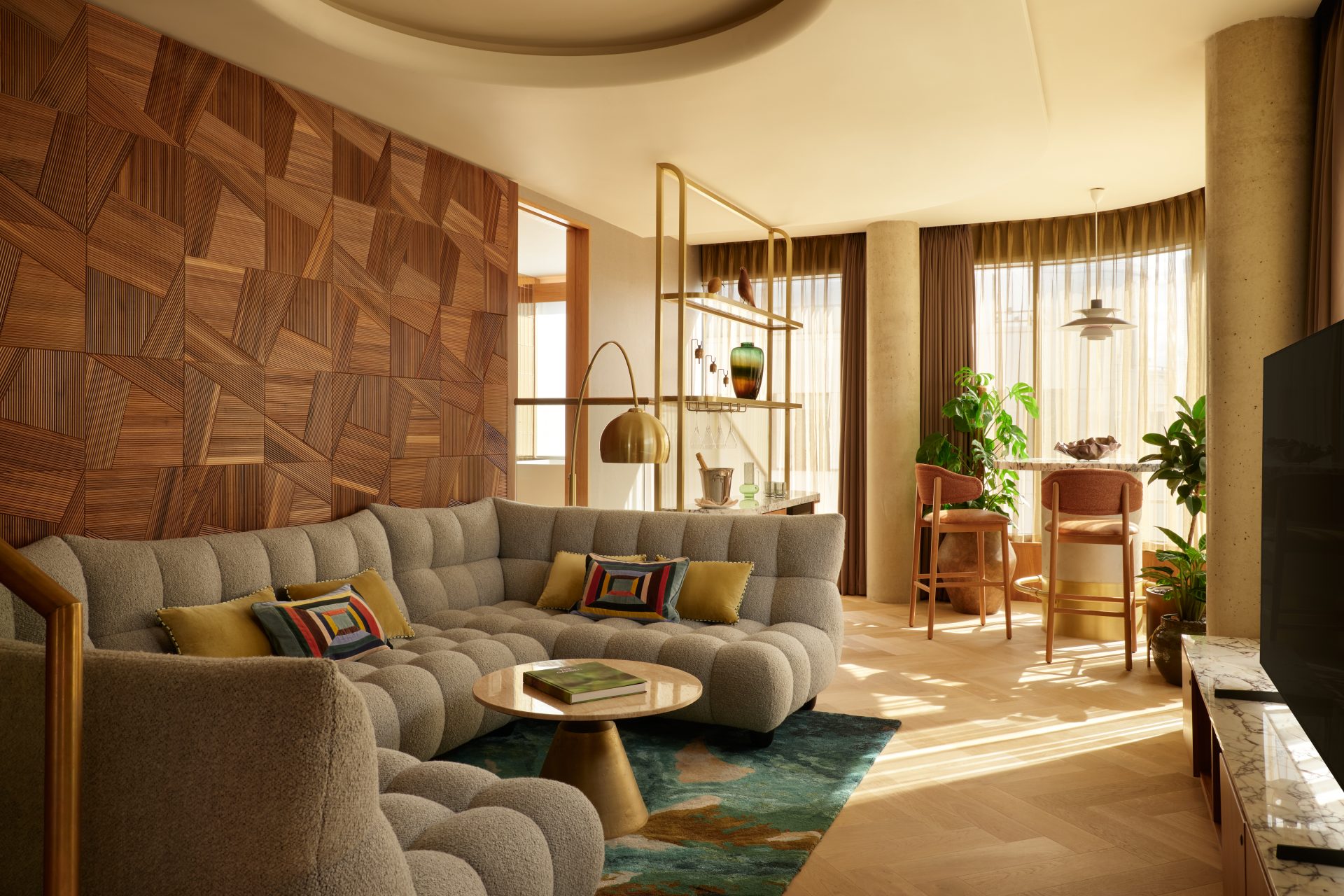
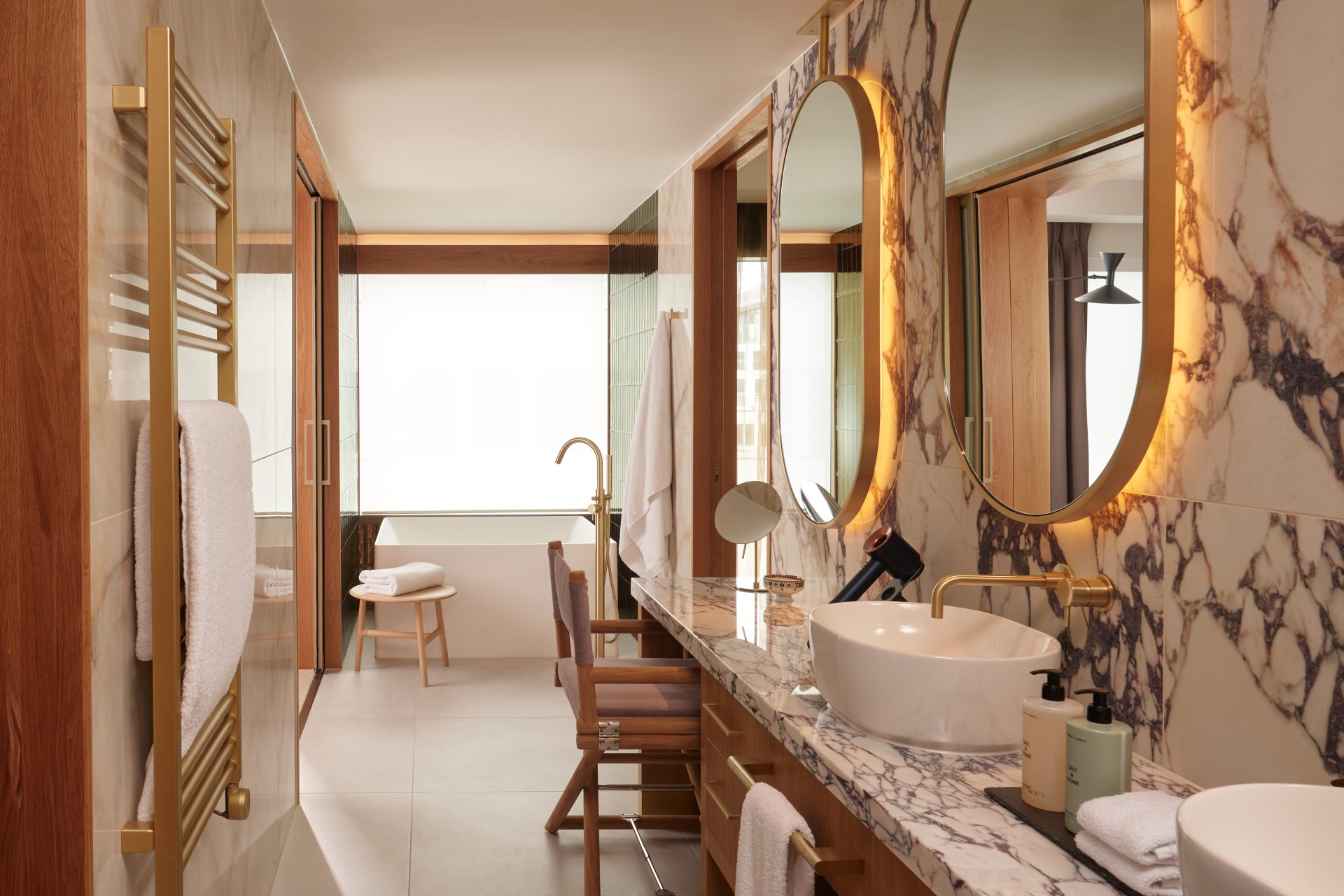
An expansive 86.5 sq. m. suite with panoramic views across Marylebone and Mayfair, a private balcony, elegant living space and super-king bedroom, alongside playful design touches including the iconic egg bubble chair.
- Spanning 86.5 sq. m., the Harley Suite is an expansive and elegantly designed retreat, equally suited to entertaining and unwinding in style.
- The separate living area offers panoramic views across Marylebone and Mayfair, with a private balcony and seating for up to ten guests.
- Guests can rewind within the room dining space, while automated electric sheers and blackout curtains allow guests to tailor the natural light at the touch of a button.
- The adjoining bedroom features a super-king-sized bed and spacious walk-in wardrobe, while the large en-suite brings a sense of relaxation with a deep soaking bath and separate walk-in rain shower, alongside a dressing table equipped with a Dyson hair dryer and Airwrap.
The Terrace Suite
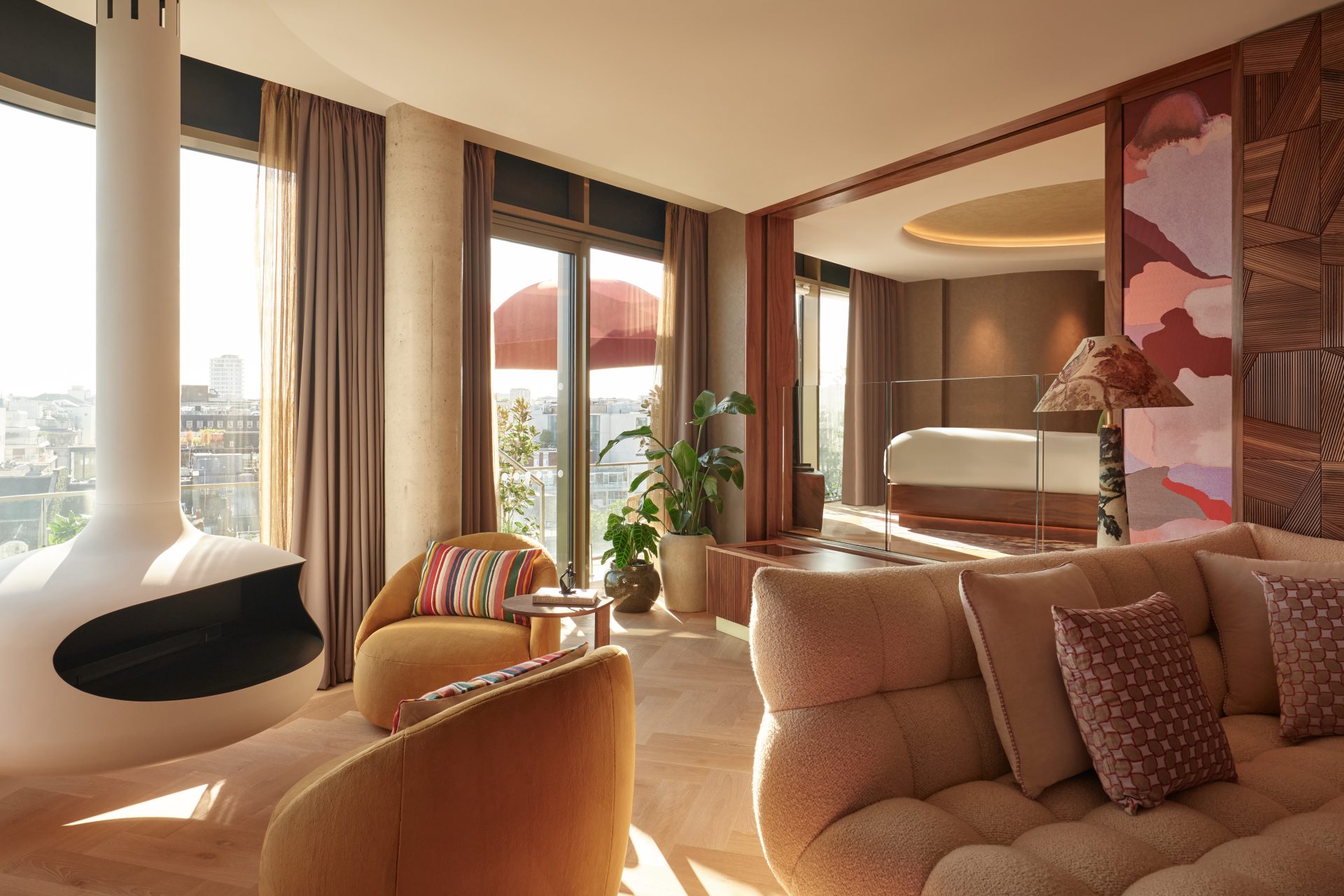
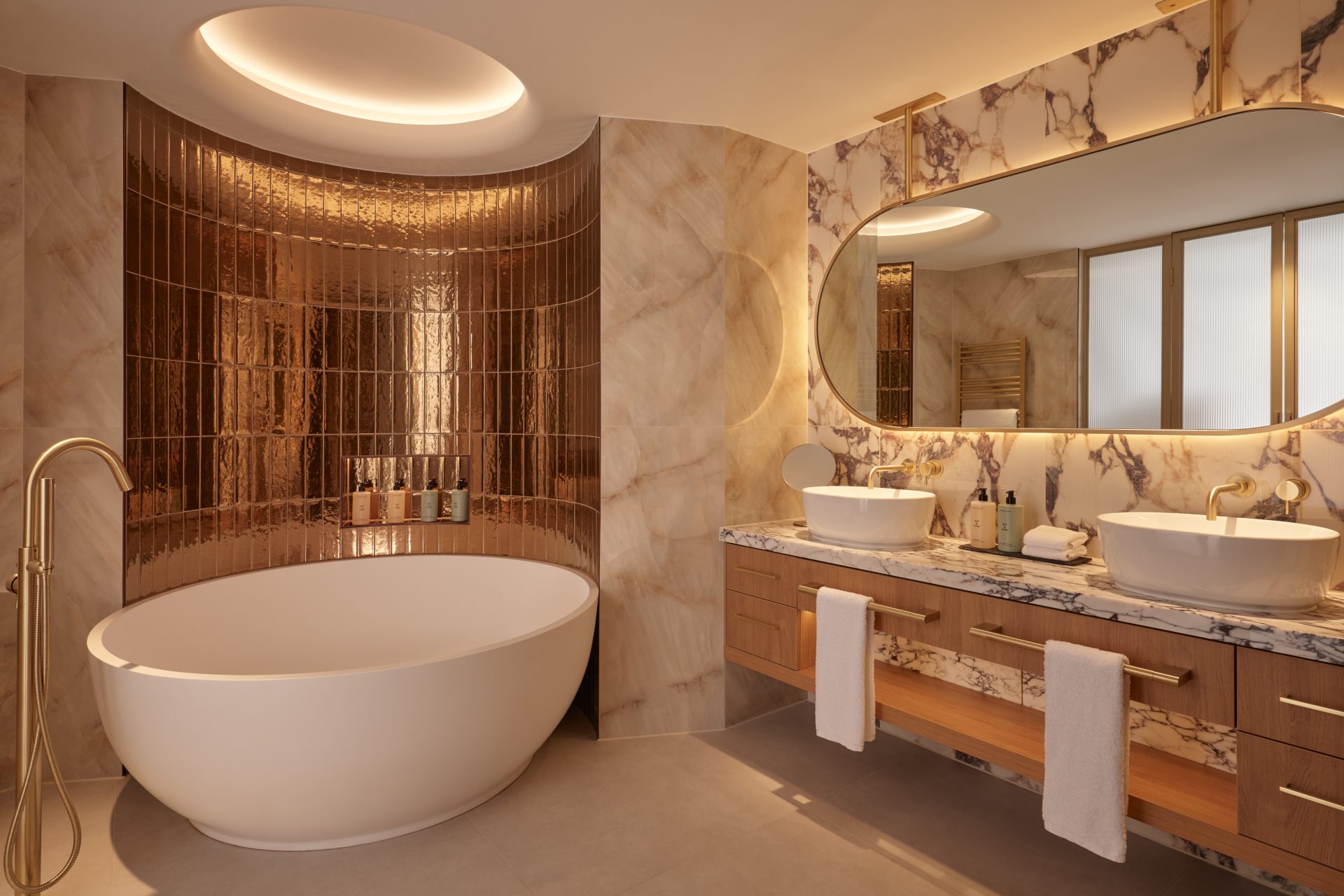
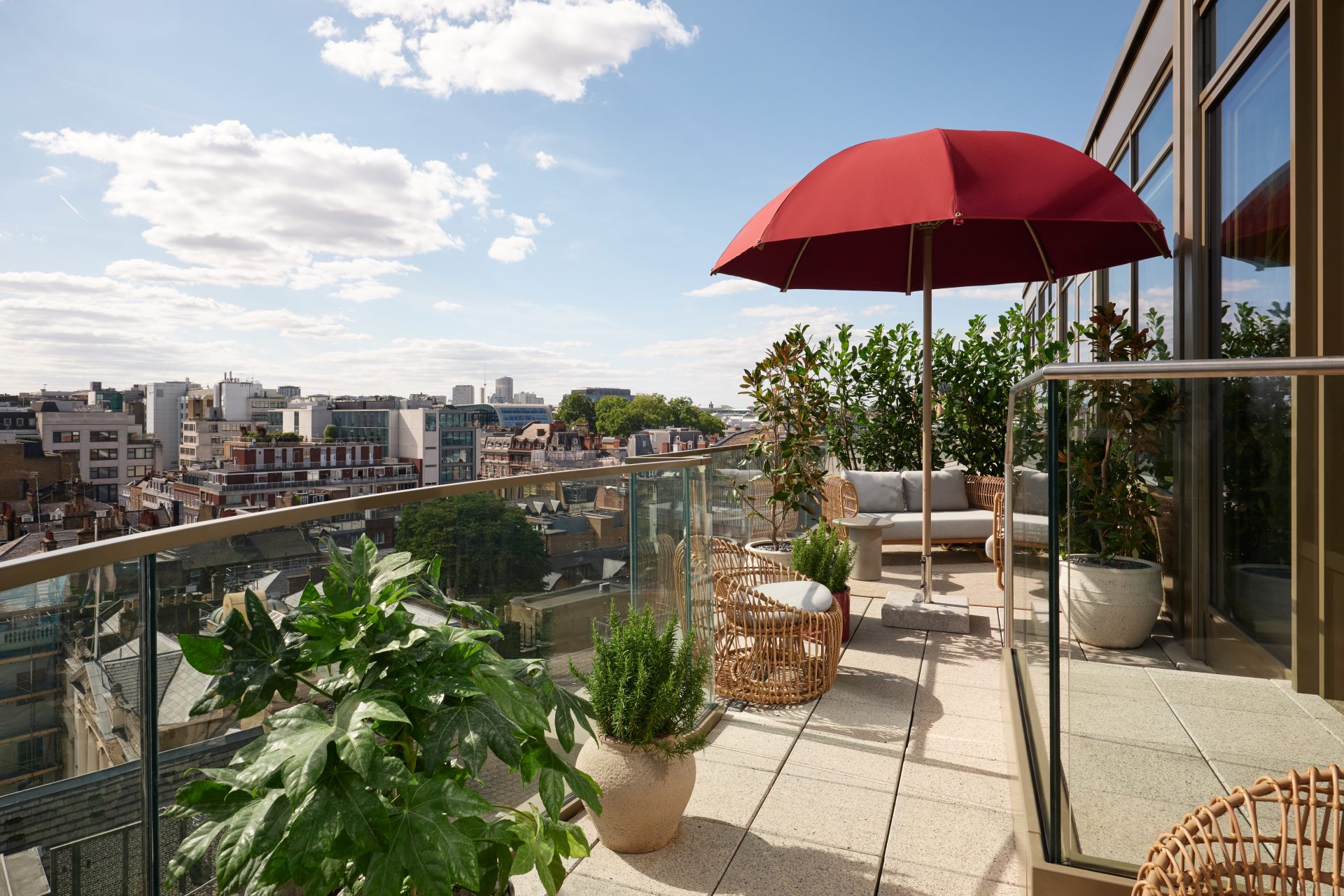
The BoTree’s new top suite is a spacious, sanctuary-style retreat with a private terrace overlooking Marylebone, indoor fireplace, dining area for six and a retractable bedroom partition opening onto sweeping views of the Mayfair skyline.
- Guests are welcome to experience London from the inside of a 115 sq m / 1,237 sq ft suite designed for stretching out, settling in, and feeling completely at home.
- The Terrace Suite emphasises grand scale, featuring a generous separate living room, an oversized sofa tailored for gathering, a cozy fireplace, and an elegant dining area for six.
- The suite features a private terrace complete with outdoor seating with a beautiful view of Marylebone, and a sliding partition bedroom wall that retracts to reveal stunning vistas stretching over Marylebone and the Mayfair.
- Luxurious en-suite bathroom designed for deep relaxation, with a circular soaking bath and separate walk-in rain shower.
- Tom Dixon coffee cups and glassware add a distinctive, contemporary British design touch to the thoughtfully curated dining area.
- Automated electric sheers and blackout curtains allow guests to easily tailor natural light, creating a calming environment for rest and relaxation.
Three-Bedroom Configuration & Hotel Experiences
Both suites can connect with neighbouring rooms to create a three-bedroom configuration, ideal for families or groups.
Complimentary butler service is available throughout, alongside access to The BoTree’s social wellness club, triplebond; coastal Italian restaurant LAVO; and events spaces and nightlife venue 77.
Enhanced In-Room Wellness Offering
The new suites also introduce an enhanced in-room wellness offering available across all rooms:
- Re-imagined minibars with healthy, restorative and nutritious snacks.
- Professional-grade recovery essentials for those who travel without their usual wellness or supplement toolkit.
- A new in-room technology rental menu brings compression boots, red light face masks and more to any room, on request.
ROCCO FORTE HOTELS UNVEILS A RAIL ESCAPE CONNECTING LONDON AND EDINBURGH THROUGH BRITAIN'S LITERARY AND ARTISTIC HERITAGE
Launching to coincide with the UK's National Year of Reading, Rocco Forte Hotels has unveiled the Great British Cultural Journey, a new literary and cultural experience created exclusively for Forte Suite guests booking the Great British Journey experience, which connects The Balmoral in Edinburgh and Brown's Hotel.
Building on the original journey between the two properties, the enhanced experience offers literary encounters, cultural access and immersive storytelling inspired by the heritage of both destinations.
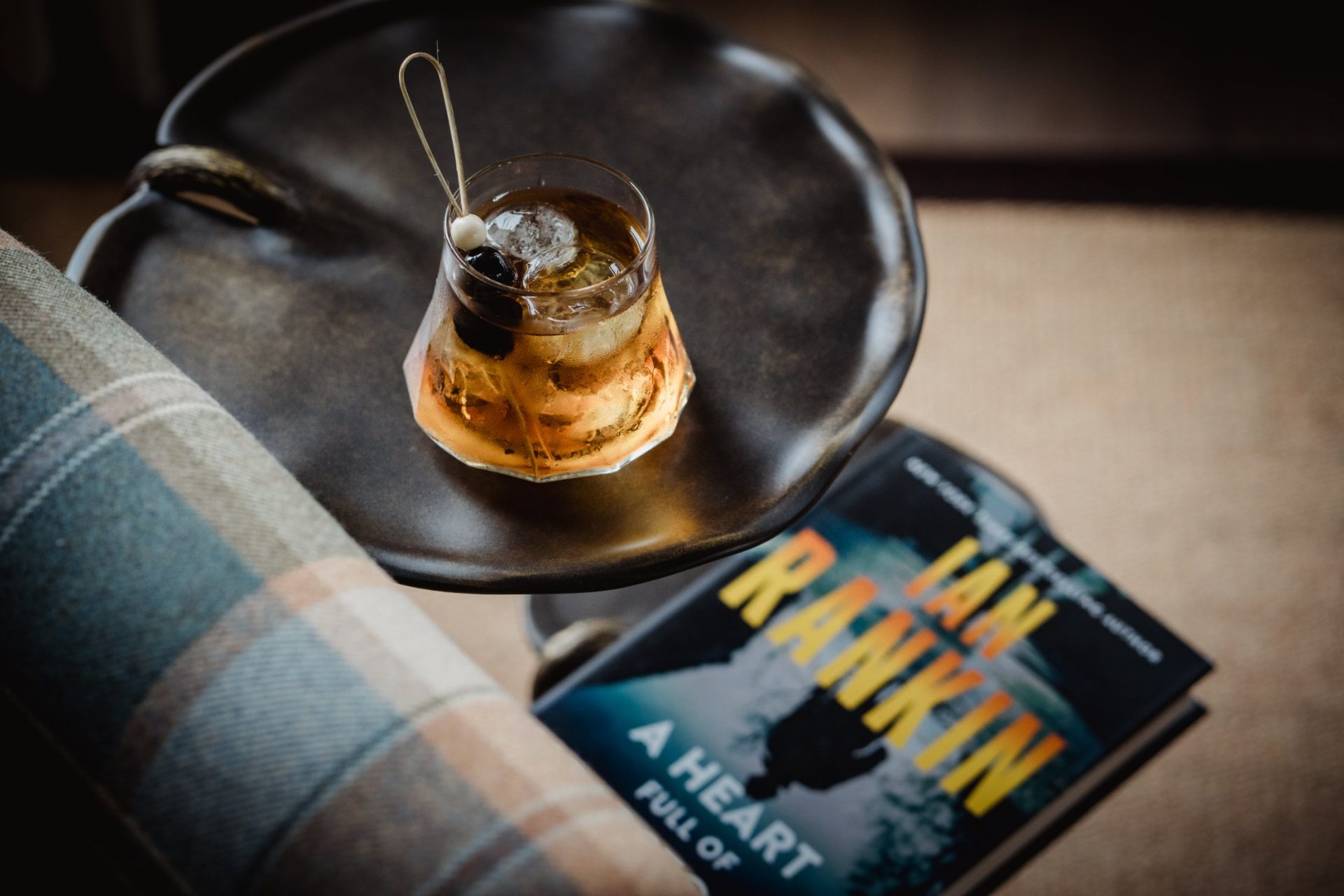
At The Balmoral, a two-night suite stay showcases Scotland's rich storytelling traditions through a Dine Around Scotland experience with a literary twist, alongside a choice of private literary adventures exploring themes and characters ranging from Harry Potter and Muriel Spark to Sherlock Holmes. Guests may also enjoy an exclusive storytelling experience with award-winning Scottish author Sir Ian Rankin, offering unique insight into Scotland's literary landscape.
Additional highlights include privileged access to some of Scotland's leading cultural institutions, including The King's Gallery, the Scottish National Portrait Gallery and the National Museum of Scotland, home to treasures ranging from the Lewis Chessmen to Dolly the Sheep.
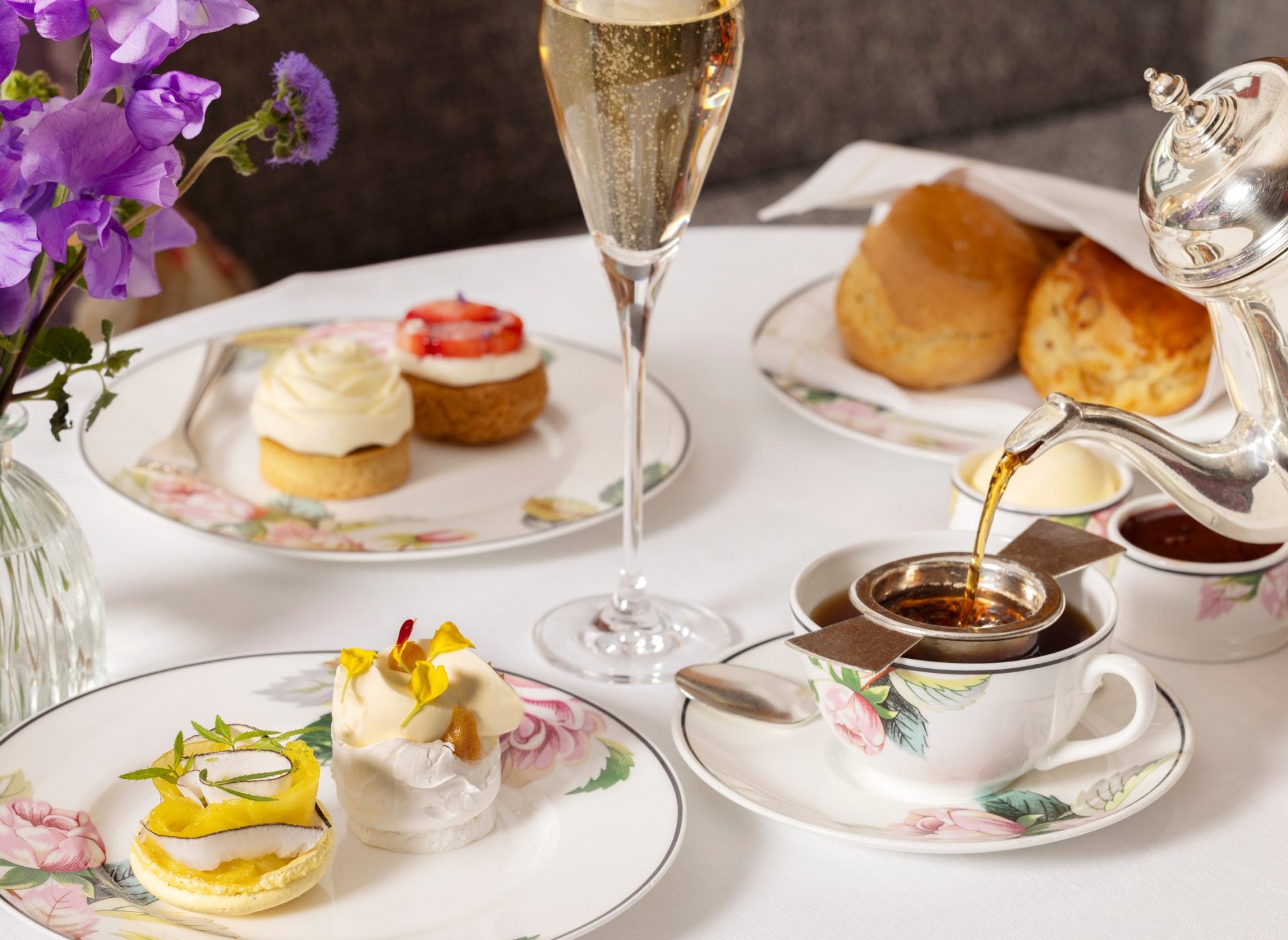
At Brown's Hotel, guests can enjoy a private literary walk led by hotel historian Andy Williamson and a special Agatha Christie experience marking the 50th anniversary of the author's death. A bespoke edition of At Bertram's Hotel, thought to have been inspired by Christie's favourite hotel, Brown's itself, is included as part of the experience. Further highlights include martinis in Donovan Bar's famed "Naughty Corner", an evening at The Mousetrap, a private visit to Colnaghi Gallery and Champagne Afternoon Tea in the hotel's iconic Drawing Room.
Inspired by the literary touches found throughout Rocco Forte Hotels, from the P.G. Wodehouse books found at Brown's Hotel and across the collection to The Balmoral's enduring connections to Scotland's literary history, the Great British Cultural Journey celebrates the unique character of each destination through experiences that extend beyond the hotel itself.
Richard Cooke, Managing Director, United Kingdom & Northern Europe, Rocco Forte Hotels, said:
This offering celebrates two of Britain's most storied destinations through the distinct character of Brown's Hotel and The Balmoral. Together, they create an extraordinary British cultural journey, combining literary heritage, world-class art, exceptional hospitality and personalised experiences that connect guests with the spirit of London and Edinburgh.
The experience forms part of Rocco Forte Hotels' Suites & Beyond programme, created exclusively for suite guests. Across the collection, suites are designed to reflect the individuality, history and craftsmanship of each destination, while experiences beyond the suite are shaped through longstanding local relationships, offering privileged access to cultural institutions, artists, galleries and authentic experiences that reveal the character of each city.
To experience the Great British Cultural Journey, guests can book a Forte Suite stay at Brown's Hotel or The Balmoral via the hotels' websites.
Package includes the following for any guest already booking The Great British Journey:
- Two-night suite stay at Brown's Hotel, London
- Two-night suite stay at The Balmoral, Edinburgh
- First-class rail travel between London and Edinburgh
- Concierge welcome at Edinburgh Waverley station
- Agatha Christie commemorative experience led by Brown's historian, Andy Williamson, and bespoke edition of At Bertram's Hotel
- Martini in Donovan Bar followed by tickets to The Mousetrap
- Private tour of Colnaghi Gallery
- Choice of Royal Afternoon Tea at Brown's or Champagne afternoon tea in Palm Court at The Balmoral
- Dine Around Scotland literary dining experience
- Choice of bespoke literary city experiences: Potter Trail, Muriel Spark Walking Tour, or Sherlock Holmes Tour
- Access and curated experience at the following leading Scottish galleries: The King's Gallery, Scottish National Portrait Gallery, National Museum of Scotland
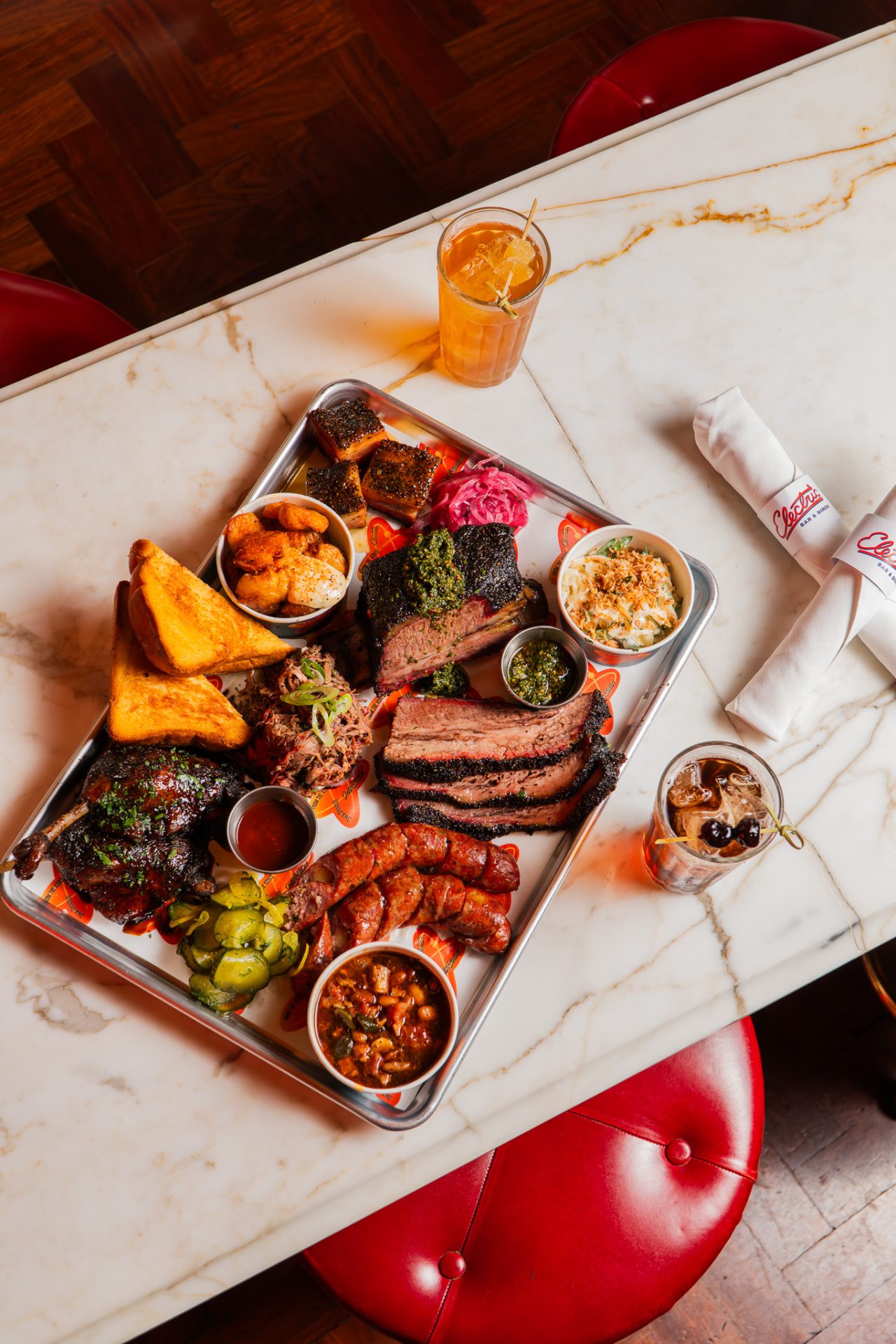
INSIDE THE NED’S EXPERIENCE-LED COLLABORATIONS
From fashion takeovers to chef residencies and immersive brand activations, The Ned has built a reputation for partnerships that go far beyond the expected.
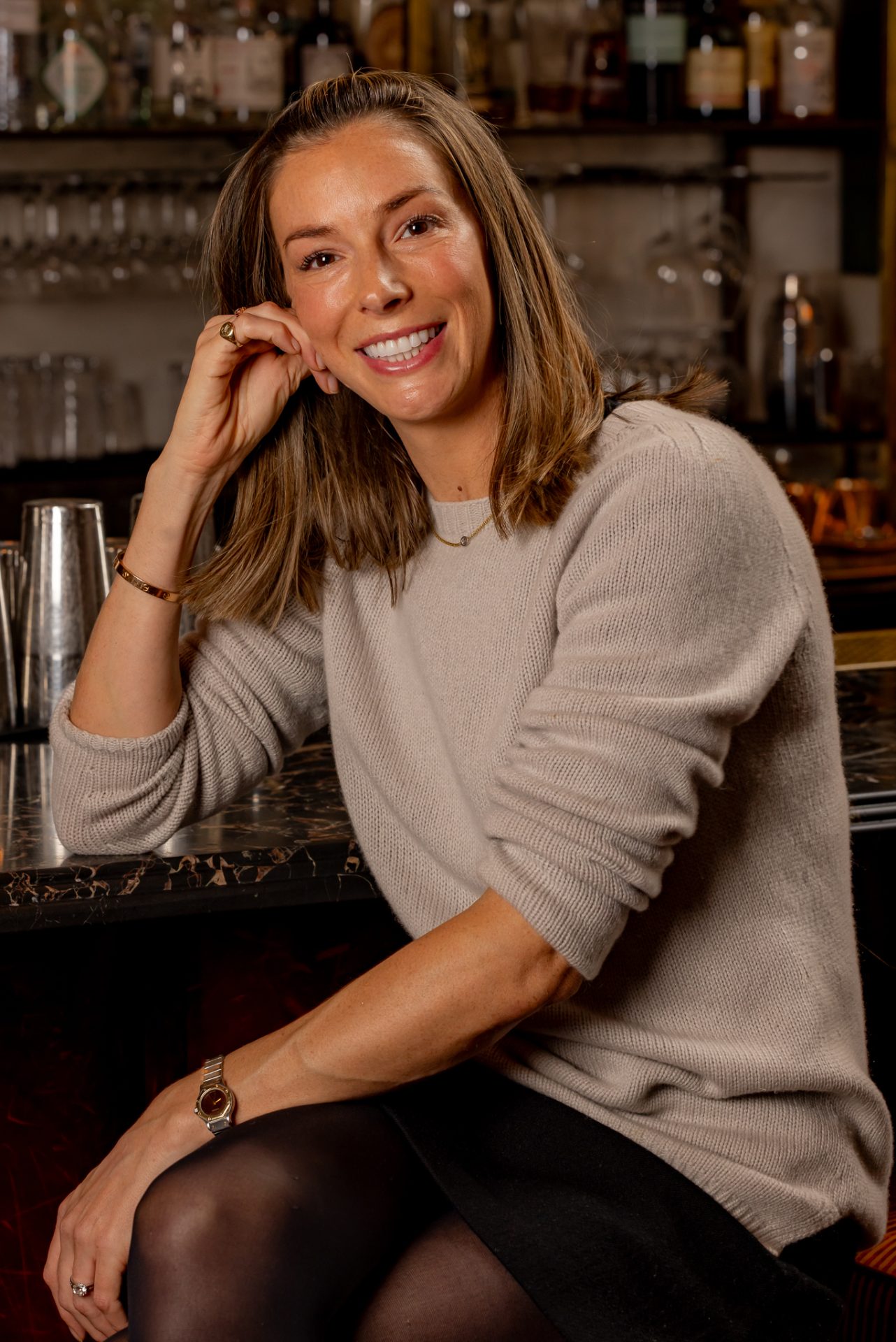
Georgia Howie, Global Head of Commercial Partnerships, reveals how a focus on creativity, authenticity and experience is shaping a dynamic programme that keeps guests engaged, surprised and always coming back for more.
The Ned has become known for collaborating with a wide range of brands, artists and creators. How important are partnerships to your overall brand strategy, and what role do they play in shaping the guest experience?
Partnerships are a hugely important part of The Ned experience. At their best, they allow us to introduce our members and guests to brands, creators and experiences they may not otherwise discover, while also bringing something new and unexpected into our spaces.
Our approach is always experience led rather than purely commercial. Whether it’s an in-room collaboration, a fashion activation, a chef residency, a wellness experience or a cultural event, we look for opportunities that add genuine value and enhance what makes The Ned special. For our members in particular, partnerships help create a constantly evolving calendar of experiences, ensuring there is always something new to discover, while maintaining the sense of quality, creativity and exclusivity that people associate with The Ned.
Can you tell us about some of your most recent, successful collaborations?
We’ve been fortunate to work with an incredible range of partners across hospitality, fashion, food and drink, wellness and culture.
Recent highlights include our Christmas partnership with The Macallan, which saw the brand take centre stage throughout our festive programming with the co-designed tree a particular highlight, alongside larger-scale activations such as the Guinness Bar pop-up. In fashion, collaborations including Balmain’s rooftop summer celebration and our Paul Smith Sunset Session transformed our spaces in a way that felt both immersive and true to the character of the brands.
In our hotels, we’ve enjoyed creating thoughtful in-room experiences, including collaborations with Net-A-Porter across both London and New York, bringing an additional layer of discovery directly into guest rooms.
Across our US properties, we’ve continued to build a varied programme of events, from intimate member experiences with brands such as Mulberry, featuring on-site monogramming, and luxury cashmere house Falconeri, through to larger hospitality and sporting moments. This week, for example, we hosted a FIFA Club World Cup yacht experience in partnership with Don Julio, bringing together sport, entertainment and hospitality in a uniquely Ned way.
We’ve also seen great success with chef collaborations and dining experiences. InterStellar, a 1 MICHELIN BBQ chef from Austin, Texas is a recent example that generated significant excitement among both members and the wider hospitality community, demonstrating the appetite for experiences that combine exceptional food with cultural relevance. It was such a huge success that we’re bringing it back again this year.
With so many potential collaboration opportunities available, what criteria do you use when deciding whether a partnership is the right fit for The Ned?
The first question we ask is whether the partnership will genuinely resonate with our members and guests. We look for brands that share our values around quality, creativity, craftsmanship and experience.
We also consider whether the collaboration brings something new to our audience. The most successful partnerships feel natural rather than forced; they should enhance an existing aspect of The Ned experience or introduce a compelling new one. Finally, we look at the long-term relationship potential. Some of our strongest partnerships have evolved over several years, allowing us to continually innovate together and create increasingly meaningful experiences for our community.
How do you strike the balance between working with exciting, high-profile brands while ensuring every collaboration still feels authentic to The Ned’s identity?
Authenticity is essential. While we are fortunate to work with globally recognised brands, profile alone is never enough. Every collaboration has to feel relevant to The Ned, our spaces and our audience. We achieve this by focusing on shared values and ensuring there is a strong creative narrative behind every activation and always work closely with our partners and our internal teams from Marketing and comms to operations across our hotel, to create experiences that feel bespoke to The Ned rather than simply transplanting an existing campaign into our venues.
Ultimately, we want guests to feel that the collaboration enhances their experience of The Ned, rather than distracting from it. We find that when that balance is achieved, the result is pure magic.
Many of your partnerships extend beyond traditional hospitality offerings. How do collaborations across areas such as wellness, retail, food and beverage, or culture help create more memorable and engaging experiences for guests?
Today’s guests are increasingly looking for experiences that extend beyond traditional hospitality. They want discovery, access and a sense of connection to our brand with brands that are shaping culture.
That is why our partnerships span everything from member perks within our app and wellness experiences, through to retail pop-ups, in-room collaborations, cultural programming and large-scale food and beverage activations. By bringing together different worlds under one roof, we’re able to create experiences that feel richer, more immersive and more personal.
The breadth of our partnership programme means a guest could discover a new fashion brand through an event, enjoy a chef collaboration at dinner, experience a wellness activation the following morning and receive a curated in-room experience during their stay. That variety keeps the experience fresh and helps ensure there is always something new and unexpected for members and guests to engage with.

WHAT AFTER-HOURS BOOKING BEHAVIOUR TELLS US ABOUT THE FUTURE OF HOTEL ECOMMERCE
By Joe Watkins, Head of AI at Journey
There is a point each evening when most hotel commercial teams have finished for the day, but the same cannot be said of their guests, who are still researching weekends away, comparing rooms, considering spa treatments and deciding whether to add dinner, Champagne or another extra to their stay.
The data we see at Journey suggests that this behaviour is more commercially significant than hotels may realise. In 2025, almost a quarter of spa orders made through Journey-powered ecommerce were placed outside normal working hours, yet those bookings accounted for more than a third of revenue.
That matters because it suggests after-hours demand is not simply about convenience. Guests are not only continuing to browse and buy when hotel teams are offline; they are also generating a disproportionately high share of revenue.
For hotels, that raises an important question: if guests are ready to spend at 9 p.m. or 10 p.m., is the digital experience ready to respond?
Hospitality demand does not follow a timetable
One of the most revealing things about ecommerce data is how little guest behaviour conforms to the traditional rhythms of hotel operations. People browse when they have time, make decisions when intent is highest and often complete purchases well outside the hours when a reservations, spa or commercial team would normally be available.
That demand is not confined to one time of day, or even one part of the week. Sunday was the most popular day for guests to make online table reservations, with 14,140 reservations placed, compared with 12,932 on Thursday.
The broader growth in digital transactions points in the same direction. Across Journey-powered ecommerce, revenue processed through the platform increased 16% from Q1 2025 to Q1 2026, while online orders and bookings rose 13%, from 110,315 to 125,402.
Spa bookings alone increased from 70,214 to 86,489 over the same period, a rise of roughly 23%, showing that guest appetite to research and purchase experiences online is continuing to grow.
Guests are willing to add more
The products guests add to their bookings are equally revealing because they show that the opportunity extends well beyond the initial reservation.
Guests are buying breakfast, spa access and treatments, but they are also adding Prosecco, Champagne, afternoon tea, chocolates, hampers, rose petals, robes, cocktails, spa products and treatment upgrades such as hot stones, LED masks and foot masks.
That behaviour has a measurable commercial impact. Revenue from spa and room extras increased by around 18%. In Q1 alone, extra revenue rose in 2025 by approximately 25%.
This is useful because it tells us guests are not necessarily resistant to spending more. The bigger question is whether the right option is being presented at the right moment, in a way that feels relevant to the stay they are planning.
A guest booking a spa break, for example, is likely to respond differently to a family booking during the school holidays, while someone arriving tomorrow may need very different prompts from somebody travelling in three months.
The next step is understanding intent
There is a tendency to reduce the hospitality AI conversation to chatbots or automated customer service, but the more valuable opportunity may be in helping hotels interpret behavioural signals and use them to merchandise more intelligently.
The goal should not be to place every possible extra in front of every guest. It should be to understand which products are most relevant at a particular point in the journey, based on factors such as timing, stay type, booking behaviour and the products that similar guests tend to purchase.
The data is beginning to show us not simply what guests buy, but when they are most receptive to buying it. Over time, AI can help hotels identify those patterns and move away from static lists of extras towards an ecommerce experience that responds more intelligently to intent and context.
There is still significant demand being lost
The opportunity becomes even clearer when conversion and abandonment are considered together.
In 2025, website-to-purchase conversion was 5.66%, rising to 8.72% for spa and 7.79% for rooms according to our data. At the same time, total checkout abandonment stood at 37.34%, with room checkout abandonment reaching 40%.
That gap matters. Guests are clearly willing to transact online, but a significant amount of intent still disappears before the purchase is completed.
The next phase of hotel ecommerce should therefore be less about simply putting more products online and more about understanding how people actually behave: when they buy, what they add, where they drop out and which offers are most likely to be useful at that moment.
The after-hours spa data offers a glimpse of why this matters. When almost a quarter of orders can account for more than a third of revenue, valuable demand is already arriving when many hotel teams are not available to capture it manually.
For hotels, the opportunity is to build an ecommerce experience that reflects how guests actually behave: always available, responsive to context and increasingly able to recognise when someone is most likely to buy.
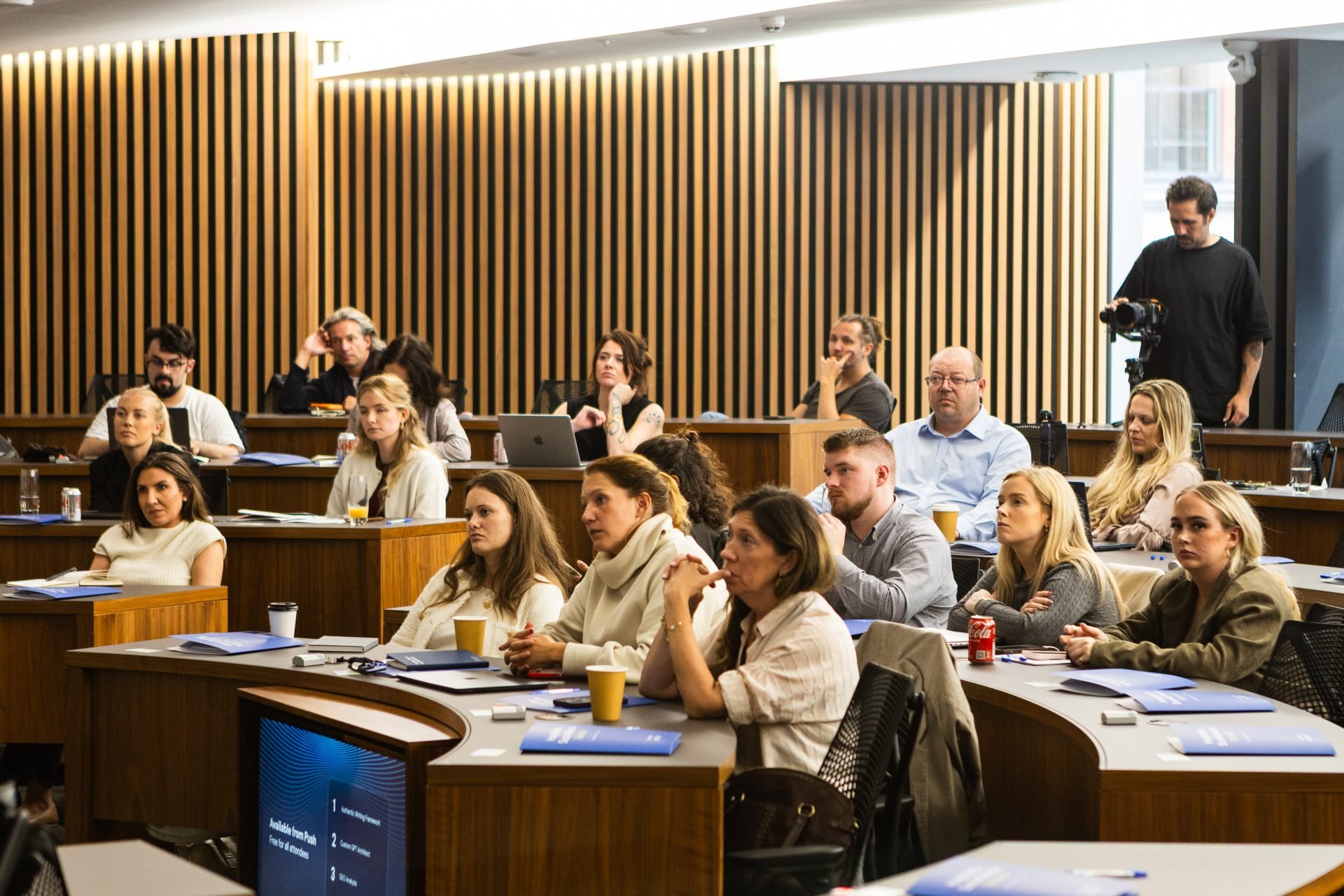
INAUGURAL HOSPITALITY SOCIAL MEDIA SUMMIT CONNECTS HOSPITALITY LEADERS ACROSS 14 COUNTRIES
First HoSS edition brought together more than 200 participants across London and online, with senior leaders from dozens of global hotel brands, independent properties and restaurant groups, alongside a faculty with experience behind IHG, Kimpton, Hyatt, Meliá and Nespresso.

The inaugural Hospitality Social Media Summit (HoSS) was held on 3–4 September, combining a live executive summit at The University of Chicago Booth School of Business, Robert Rothman ’77 London Campus with an international online programme running alongside it.
The first edition brought together more than 200 participants representing 14 countries, including the United States, Canada, Mexico, the United Kingdom, Austria and the United Arab Emirates, alongside delegates from other European markets.
The audience included senior professionals responsible for social media, marketing, digital, brand, reputation and commercial performance within their businesses.
It combined leading global hotel brands and groups, including Fairmont, Hilton, Frasers Hospitality, Falkensteiner, Trump Hotels and Springboard Hospitality, with leading independents including Hazlitt’s, The LaLiT London, The Stratford and The Killarney Park, properties affiliated with Preferred Hotels & Resorts and Small Luxury Hotels of the World, and restaurant groups including Emerald Hospitality, COYA, Urban Pubs & Bars and JKS Restaurants.
That range — from global hotel groups to luxury independents and major restaurant operators — brought very different operating models and markets into the same programme, providing an early indication that the challenge HoSS was created to address extends beyond any one hospitality market.
Across those businesses, social media teams are increasingly expected to contribute to demand, revenue, reputation, customer relationships and long-term brand value. The specialist strategy, skillsand commercial frameworks surrounding the function have not developed at the same speed.
Kordie identified that gap early. As social media moved from a communications channel into an increasingly commercial discipline, hospitality lacked not only a dedicated platform around that shift, but executive education designed for the speed, complexity and commercial expectations of modern hospitality businesses.
HoSS was created to fill it. Rather than a traditional conference, it was designed as an executive working summit: senior-level strategic education applied directly to delegates’ own businesses, moving away from passive learning and generic theory towards programmes that produce decisions, frameworks and outputs teams can use immediately.

Global hospitality experience, applied
The programme brought together award-winning practitioners with experience behind some of the world’s most recognised hospitality and consumer brands, including IHG Hotels & Resorts, Kimpton, Hyatt Hotels Corporation, Meliá Hotels International, Maybourne Hotel, Corinthia Hotels and Nespresso.
Day one was led by Whitney Reynolds, former Global Director of Social Marketing at IHG Hotels & Resorts and co-producer of the Summit.
Her full-day strategic masterclass took delegates through the foundations of building a commercially relevant social strategy, from business goals, audiences and channels to brand personality, content direction, tactics and measurement.
Delegates applied the frameworks directly to their own organisations, developing strategic structures and practical outputs designed to be taken back into the business rather than left in the event room.
Whitney Reynolds, former Global Director of Social Marketing at IHG Hotels & Resorts and co-producer of the Hospitality Social Media Summit, said:
“The biggest takeaway for me was realising just how ready the hospitality social media community is to elevate this discipline. Starting with strategy and commercial outcomes on Day One, then layering in practical tools and expertise on Day Two, gave delegates a foundation for making smarter decisions about where and how to invest their efforts. And perhaps most importantly, there was a remarkable sense of collective purpose in the room. We weren't simply talking about how to make better social content; we were working together to demonstrate the enormous influence social can have on hospitality businesses and to ensure the discipline is understood and valued accordingly.”
Day two shifted the emphasis from strategy to specialist implementation and practical application.
Faculty included Laura Ferrari, former Director of Social Media EMEA at Hyatt Hotels Corporation; Santiago García Solimei, former Global Director of Social Media and Brands PR at Meliá Hotels International; and Stefano Della Schiava, former Head of the Nespresso Content Studio, alongside specialist hospitality, performance marketing, content and digital teams.
Sessions explored areas including paid social and direct bookings, AI-assisted workflows, AI content quality, video strategy, international market activation, and social care and reputation.
Rather than simply presenting ideas, faculty worked through practical frameworks and applications with delegates, connecting specialist expertise directly to the commercial challenges facing their own businesses.
Laura Ferrari, former Director of Social Media EMEA at Hyatt Hotels Corporation and HoSS faculty member, said:
“What stayed with us most from these two days was the recognition that social strategy has been sitting in the wrong room. The conversation has shifted: from ‘how do we make more content’ to ‘how do we make social actually accountable for commercial outcomes.’ That's not a small shift, it's a structural one. And the teams who make it will look very different from the ones who don't.”
Alisa Kremer, Founder of Kordie and the Hospitality Social Media Summit, said:
“Across very different markets and businesses, we heard the same underlying challenge. Leadership increasingly expects social media to contribute to demand, revenue and reputation, while the commercial frameworks and capability surrounding the function have not evolved at the same speed.
“That tells us this is not simply a local or creative challenge. It is a wider commercial capability gap.
“Closing gaps like this is exactly what Kordie is being built for: specialist executive education led by people who have done the work at senior level and applied directly to the delegate’s own business rather than delivered as theory. We are incredibly grateful to every delegate, faculty member and partner who backed the first edition.”
Built beyond the event room
Delegates retain access to the HoSS Digital Hub, powered by Kordie, which holds the programme’s tools, templates, recordings and expert-led learning.
That pairing of an intensive live summit with continued digital learning is central to the Kordie model: education that continues after the room empties, rather than ending with it.
The inaugural London edition was delivered with SiteMinder as Summit Sponsor, Opposite Land Productions as Video and Content Partner, and The Hotel Magazine as Anchor Media Partner, alongside 80 DAYS, Push Group and Giant Leap Digital as Programme Partners.
Further editions follow in 2027.
About the Hospitality Social Media Summit
The Hospitality Social Media Summit (HoSS) is an international executive summit for hospitality social media, marketing, digital and brand leaders.
Created by Kordie, it convenes hospitality businesses with practitioners who have built and led social and commercial programmes inside some of the world’s leading hotel groups.
The Hospitality Social Media Summit addresses the widening gap between what social media teams are expected to deliver commercially and the strategy, measurement and capability available to them.
About Kordie
Kordie™ is building the next generation of executive business education for hospitality — specialist, applied and built around the industry’s changing commercial needs.
Through executive summits, specialist programmes and an AI-led knowledge platform, Kordie combines senior practitioner expertise with applied and continuous learning to turn industry knowledge into practical commercial capability.

HILTON LONDON METROPOLE ANNOUNCES WEST WING REFURBISHMENT WITH 363 NEW FAMILY BEDROOMS
A landmark investment in family travel, including a flagship connecting suite sleeping up to eight guests, opening November 2026
Hilton London Metropole, the largest Hilton hotel outside the United States, has announced the multi-million-pound refurbishment of its West Wing, introducing 363 newly designed bedrooms created with families in mind.
Currently underway on a floor-by-floor basis, the refurbishment will be completed in November 2026, further strengthening the hotel's position as one of London's leading destinations for family stays. The redesigned accommodation has been thoughtfully created to offer families more space, flexibility and comfort while exploring the capital.
A New Standard for Family Accommodation in London
At the heart of the West Wing is the Four Queen Bed Family Connecting Room – standout accommodation that combines two adjoining dual-queen rooms into a spacious suite sleeping up to eight guests. With five of these suites available, Hilton London Metropole will offer one of the largest family-room configurations among centrally located London hotels.
The West Wing's 363 bedrooms will also include dual-queen rooms that sleep up to four guests, family rooms with sofa beds that accommodate up to five guests, and a range of accessible room options. Designed in a contemporary style and among the most spacious bedrooms in the hotel, each room has been created to meet the evolving needs of today's family traveller.
London, Within Easy Reach
Located on Edgware Road, Hilton London Metropole offers excellent connections across the capital and beyond. Guests can reach London Heathrow in just 15 minutes via the Elizabeth line, while many of London's most-loved family attractions are within easy reach.
Hyde Park, home to the Diana Memorial Playground and expansive green spaces, is just a short walk away, while nearby Little Venice offers a more relaxed pace, with picturesque canals, waterside cafés and family-friendly walks.
The Vision Behind the Investment
Kelly Shrives-Wrist, General Manager of Hilton London Metropole, brings a unique perspective to the West Wing transformation. Having previously spent almost a decade as the hotel's Commercial Director, she played a key role in shaping the project's vision before leaving to become the opening General Manager at Hilton Woking. She returned to Hilton London Metropole in November 2025 and now leads the hotel in delivering the transformation she helped bring to life.
Hilton London Metropole
225 Edgware Road, London, W2 1JU

RBH HOSPITALITY APPOINTED BY VICTORY GROUP TO MANAGE LUXURY PROPERTY, CAMERON HOUSE RESORT ON LOCH LOMOND
Following Victory Group’s acquisition of Cameron House earlier this year, leading UK hotel management company, RBH Hospitality has been appointed to operate the five-star luxury resort. The 400-acre estate is set within Loch Lomond & The Trossachs National Park, and marks Victory Group’s first move into the UK hotel market.

The luxury resort offers 208 hotel bedrooms, significant meeting spaces and a diverse F&B offering for guests, including the flagship restaurant LOMA, led by Michelin-starred and AA Rosette winner Graeme Cheevers. The resort is also home to two golf courses, a spa, marina, rooftop pool, and a range of activities catering for the experience-led traveller.
RBH’s appointment by Victory Group reflects their strong expertise managing properties in the luxury segment, alongside their extensive experience of managing capital projects. The addition of Cameron House also complements RBH’s growing luxury portfolio, which includes The Edinburgh Grand, a Luxury Collection Hotel; Old Town Chambers, Autograph Collection, and The Municipal Hotel & Spa Liverpool – MGallery Collection.
The announcement also marks RBH’s sixth new signing this year as the business continues to diversify its portfolio and grow its footprint in the UK across branded hotels as well as independent and luxury properties.
David Hart, CEO, RBH Hospitality Management said: “2026 has been a momentous year for RBH as we continue to grow and work towards being the partner of choice to hospitality investors. Bringing an iconic hotel of this calibre into our portfolio reflects the journey we are on as a business and showcases our expertise in the luxury space. We're delighted to be supporting Victory Group to achieve their vision for Cameron House and look forward to working with our new partners on what is truly a special property.”
Erik Moresco, Founder and Managing Partner of Victory Group, said: "We have ambitious plans for Cameron House and a clear vision for its future, focusing on the authenticity of the Scottish experience and hospitality and the site’s breathtaking beauty. We strongly valued RBH’s hospitality experience, roots in the Scottish market and physical proximity to the resort through their Glasgow-based head office. This reflects the way we manage assets – we are hands-on, highly present investors and wanted an operator that would take the same approach. We believe RBH shares our belief in the potential that Cameron House has, and we look forward to building on its strong reputation as one of Scotland’s most iconic luxury destinations.”
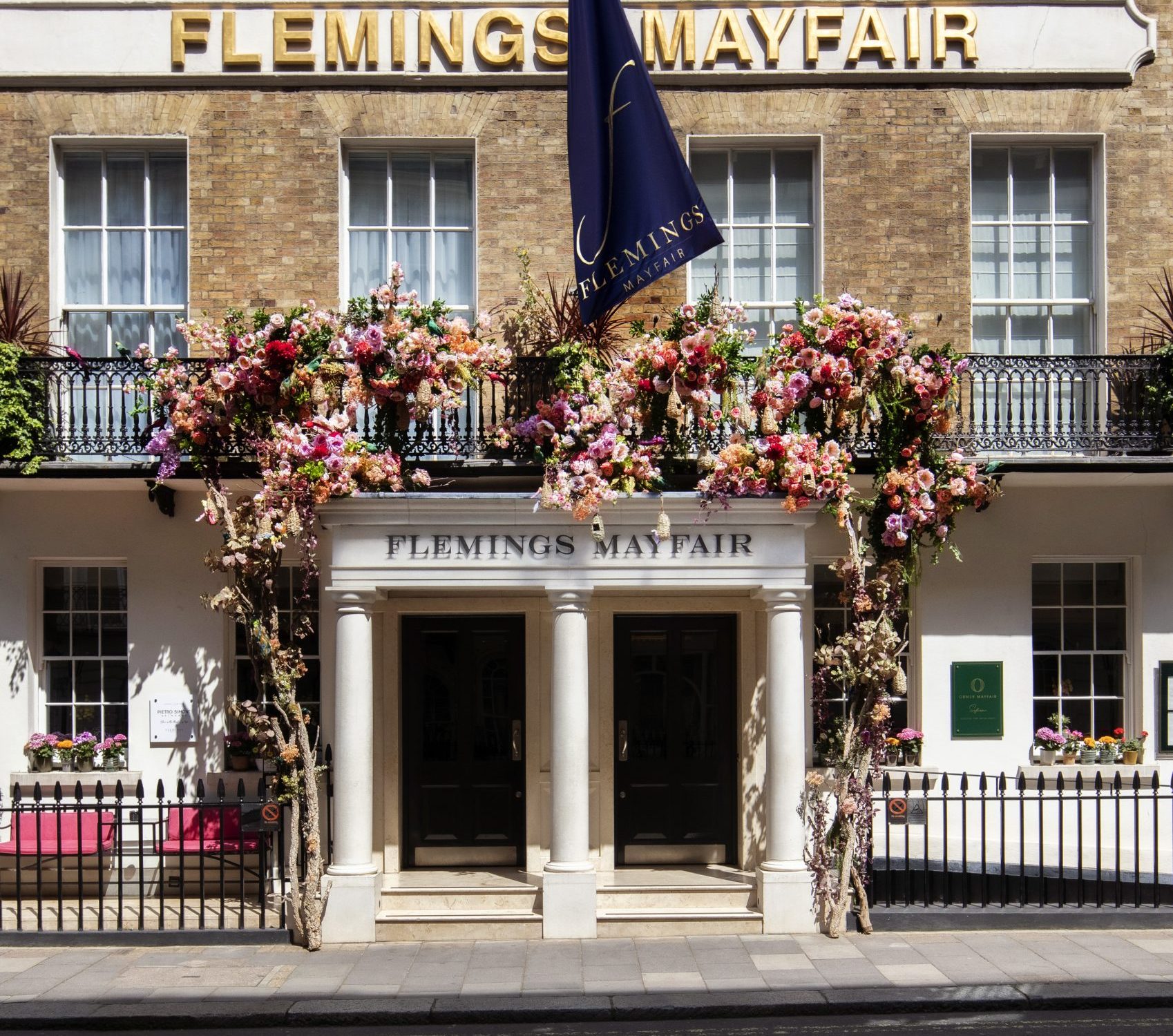
FLEMINGS MAYFAIR MARKS 175 YEARS AS A FAMILY-OWNED INDEPENDENT HOTEL IN LONDON
Few London hotels have a 175-year history at the same address. This year, Flemings Mayfair celebrates its 175th anniversary, having remained family-owned and independent since Robert Fleming opened the hotel on Half Moon Street in 1851.
Flemings was established in the year of the Great Exhibition, when more than six million visitors came to London. Robert Fleming, who had worked in private service as valet to the Marquis of Anglesey, used his savings and experience to acquire No. 10 Half Moon Street and establish a private hotel.
By 1855, Robert and his wife Mary had expanded the business to Nos. 9 and 10, running a “Private Hotel” serving London’s aristocracy and gentry. Their emphasis on personal service established the foundations of a business that has continued through generations.

A Mayfair address with a literary history
Half Moon Street has long been associated with London’s literary world. James Boswell lived on the street in 1768, followed by writers including William Hazlitt, Frances Burney, Henry James and Wilfred Owen. The street also features in Oscar Wilde’s The Importance of Being Earnest, where Algernon Moncrieff has an apartment on Half Moon Street.
The address has also been linked to Agatha Christie’s At Bertram’s Hotel, with Flemings among the Mayfair hotels believed to have provided inspiration for the fictional setting.
Those connections continue to influence the hotel today. The three-bedroom suite, redesigned in 2025 by Tully Filmer, takes inspiration from The Importance of Being Earnest, with guests receiving a copy of the play at turndown.
Manetta’s Bar draws on the atmosphere of 1930s Mayfair, while the hotel’s private art collection, developed in collaboration with photographer Andy Gotts MBE, reflects its continuing connection with the arts.
Today, Flemings remains a family-owned independent hotel, with 129 rooms and suites alongside Michelin-starred Ormer Mayfair and The Drawing Room. Its ability to retain its character while continuing to evolve has seen it recognised with a Michelin Key, placing it among a select group of hotels recognised for an exceptional stay.
“175 years is a long time, and a lot has changed around us,” said Henrik Muehle, Managing Director of Flemings Mayfair. “We’ve changed with it, of course, but we’ve always remained family-owned and independent. I think that’s what makes Flemings different. We can do things our own way, make decisions quickly and keep the character of the hotel. That’s something we’re very proud of.”
Flemings' 175th Anniversary Package
To mark the celebration, Flemings has launched a limited-edition 175th Anniversary Package, available from 1st September 2026 to 31st January 2027, including:
- Two-night stay
- A £175 gift card for Selfridges department store, subject to availability.
- Daily continental buffet breakfast for two
- Available across all room types, subject to availability
For every booking made, £1.75 will be donated to CEO Sleepout, a long-standing charity partner of Flemings Mayfair, which raises vital funds to tackle poverty and housing insecurity across the capital.