

Sean Larsen, Co-Founder of Labl.it, explains how digital food labelling is helping hotel F&B teams streamline compliance, reduce risk, and improve both efficiency and guest confidence in an increasingly regulated landscape.
For readers who may not yet be familiar with Labl.it, can you explain what your system does and the role it plays within the food and beverage space?
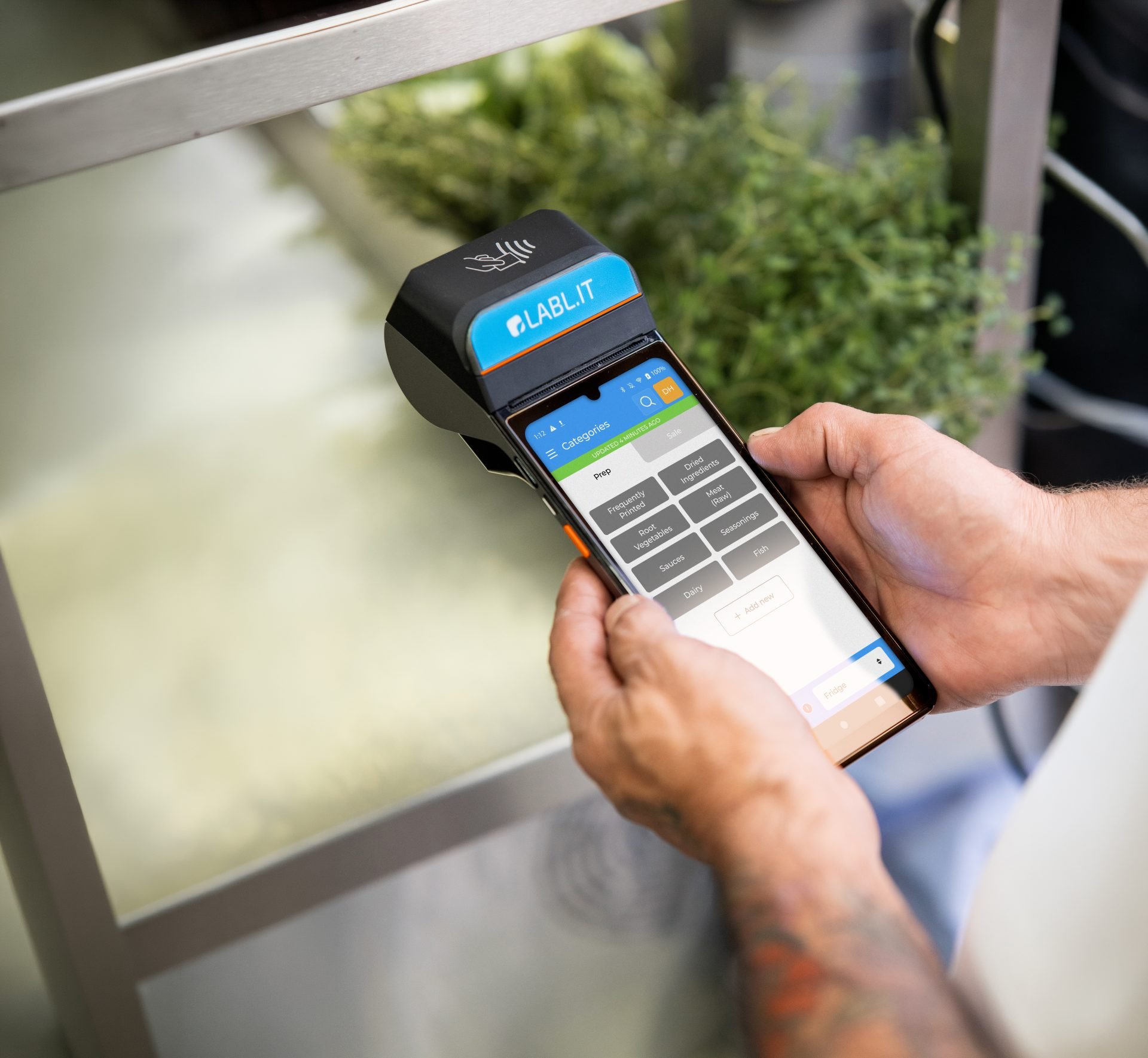
Labl.it is the UK’s leading all-in-one food labelling system for commercial kitchens. Already trusted by some of the biggest names in hotel F&B, including Hilton, Sofitel, Novotel, Holiday Inn, Exclusive Collection, Harbour Hotels, Accor, Aurora Group, and more, our system replaces handwritten food labels with a fast, reliable digital solution built around intuitive handheld hardware and cloud-based software, covering everything from prep dates and use-by information to the allergen data every commercial kitchen is legally required to produce.
We were founded in 2021 by former restaurateurs who had lived the daily frustration of compliant kitchen labelling first-hand. The pen-and-paper approach is slow, error-prone, and critically, it poses real food safety risks to consumers with allergies. We set out to solve that problem properly, and the result is a system that any kitchen team member can operate from day one, with no training required. Labels print in three clicks, in seconds.
Today, Labl.it is trusted by over 3,000 food businesses across the UK – from independent cafés and award-winning restaurant groups through to care homes, contract caterers, and hotel kitchens. The role we play is simple: we help kitchens move faster, stay compliant, and trust every label.
What are the biggest compliance challenges currently facing hotel F&B departments, and how does Labl.it help address these issues?
Hotel F&B operations face a particularly complex compliance landscape. You have high-volume, multi-outlet kitchens: restaurants, room service, banqueting, grab-and-go, all running simultaneously, often with large and frequently changing teams. Every item of prepped food must be accurately labelled with preparation date, use-by information, and full allergen data. Getting that consistently right across an entire hotel operation, every single service, every single day, is genuinely challenging.
The biggest risks we see are around allergen accuracy and consistency. Since Natasha’s Law came into force, pre-packed-for-direct-sale food must carry a full ingredients list with allergens clearly emphasised. For hotel kitchens producing grab-and-go items, sandwiches, buffet food, or packaged amenities, the compliance burden is significant, and the stakes are high. Errors aren’t just an EHO concern; they’re a guest safety issue.
Labl.it addresses this directly. Our system provides EHO and Natasha’s Law compliant label formats, with the ability to add allergen data with the legally required bolding and underlining, alongside prep dates, use-by times, and batch numbers. Centralised management means head chefs or F&B managers can control the product database across all outlets, with user permission controls to ensure consistency. The result is that compliance becomes built into the workflow rather than dependent on individual staff knowledge – which matters enormously in an industry with high staff turnover.
Transparency and traceability are becoming increasingly important to consumers – how does Labl.it support hotels in meeting these expectations?
Consumer expectations around food information have shifted significantly, and rightly so. Guests today, particularly those managing allergies or dietary requirements, want to know exactly what is in their food. For hotels, which serve an incredibly diverse range of guests, the ability to provide clear, accurate food information is no longer a differentiator; it’s a baseline expectation.
Labl.it supports this in a tangible way. Every label produced through our system carries verified, consistent allergen and ingredient information drawn from a centralised product database. There’s no ambiguity, no reliance on a team member recalling what went into a dish – the data is accurate and traceable back to the original product record.
Our TempLog® add-ons take this a step further, and importantly, they do it differently to what’s already on the market. Many temperature monitoring solutions are expensive, complex to implement, and require significant setup time. TempLog® accessories are a fraction of the cost of comparable solutions, significantly more robust hardware built for the realities of a busy kitchen environment, and simple to set up with just a few taps. Hotel kitchens can record temperature checks alongside labelling activity within a single connected system, creating a comprehensive digital compliance record that supports full EHO audit-readiness – without the price tag or complexity that has made other solutions a hard sell for F&B teams.
In a competitive hospitality landscape, how can leveraging your solution enhance a hotel’s guest experience and drive revenue within F&B operations?
The connection between back-of-house compliance and front-of-house experience is more direct than people often realise. When kitchen teams spend less time on labelling admin, and our customers report time saving of up to 75%, that time is freed up for what actually drives guest experience: quality of preparation, consistency of execution, and the ability to handle volume without dropping standards.
For hotels with grab-and-go offerings, retail food operations, or packaged guest amenities, clear and professional labelling also has a direct impact on guest confidence and revenue. Guests are more likely to purchase packaged food when allergen and ingredient information is clearly displayed. A label that looks professional, accurate, and trustworthy is a small but meaningful part of how guests perceive a hotel’s food offer.
There’s also a direct cost saving case. Labl.it’s improved date management capabilities, as well as the expiry and wastage report features help kitchens reduce food waste, one of the hospitality sector’s most significant cost challenges. For a busy hotel kitchen, better stock rotation translates directly to reduced wastage and improved margins.
Looking ahead, what trends do you see shaping the future of food and drink in hotels, and how is Labl.it positioning itself to support these developments?
A few themes stand out to us. The first is the continued tightening of food safety regulation and scrutiny. Natasha’s Law was a significant step, but the direction of travel – toward greater transparency, digital record-keeping, and demonstrable compliance – is clear. Hotels that invest now in digital compliance infrastructure will be better positioned as expectations and requirements continue to evolve.
The second is the growing demand for integrated, connected kitchen management. Hotels are increasingly looking for systems that talk to each other, that reduce the number of disconnected processes and paper-based records their teams have to manage. That is precisely the direction Labl.it is heading. Over the next three years, we are evolving from a labelling solution into a fully integrated back-of-house food safety and compliance system. Our upcoming TempLog® temperature monitoring accessories are the first step in that journey, enabling kitchens to manage labelling and temperature recording within a single connected platform.
The third trend, and one we feel strongly about, is sustainability. Food waste remains one of hospitality’s most pressing environmental challenges. As hotels face increasing scrutiny – from guests, from ESG reporting requirements, and from their own sustainability commitments – tools that demonstrably reduce waste and support responsible kitchen management will become more important. Labl.it helps on both fronts: in-app features that help to cut and manage waste, and our partnership with Ecologi, planting 19 trees for every tree’s worth of paper used in label production.
The ambition for Labl.it is to become the definitive compliance system for commercial kitchens across the UK, and hotel F&B is a sector we’re particularly excited to grow within.