

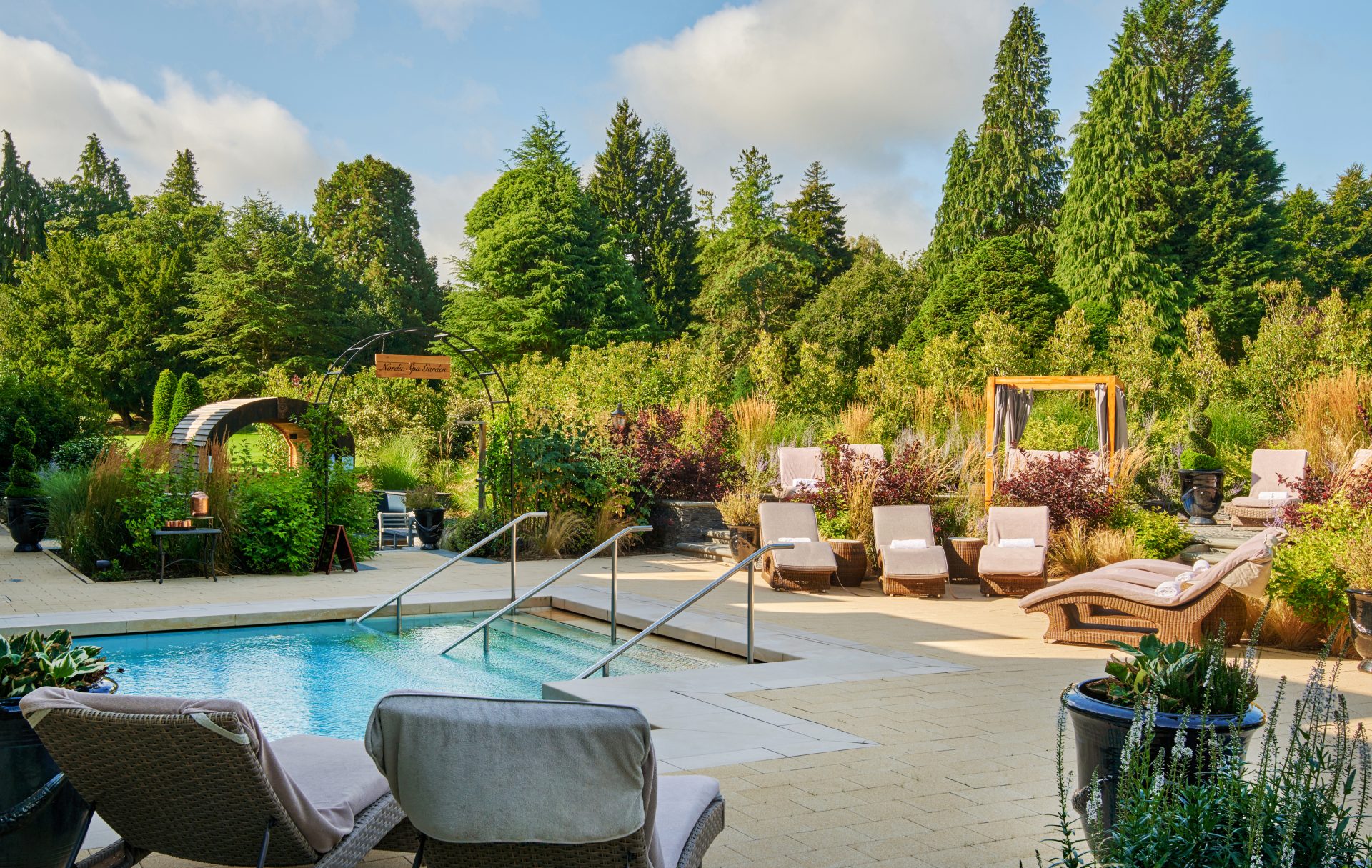
LESSONS IN WELLBEING
The finest spas have mastered the art of creating environments where guests slow down, switch off and feel genuinely cared for. As wellness moves from hotel amenity to core hospitality proposition, we look at what the wider hotel industry can learn from their approach.
The UK’s leading spas have turned slowing down into an art form. From thoughtful design and sensory experiences to highly personalised treatments and genuinely attentive service, the best wellness destinations understand that creating a sense of calm is about far more than offering a treatment menu. As wellness becomes an increasingly important part of the hotel proposition, there is much the wider industry can learn from the spa sector’s approach to creating spaces where guests can pause, disconnect and feel truly cared for.
When it comes to the biggest shifts in consumer expectations around spa and wellness, Lesley Bacon, Spa & Wellness Director at Good Spa Guide, revealed that one of the most prominent changes is a move towards personalisation over choice. “Treatment menus are becoming shorter, with more time given to consultation so the experience can reflect what the guest actually needs, rather than simply selecting from a long list of options. The best spas are also moving this consultation to the pre-arrival stage, giving therapists valuable insight before the guest even arrives. This means the conversation begins with understanding, rather than starting from zero,” Lesley added.
Space is also becoming a premium rather than a “nice-to-have”, in Lesley’s opinion. Leading spas understand that guests are willing to pay more when they know there will be room to relax and dwell afterwards, whether that is a lounger, relaxation room or quiet space. “The experience should not end when the treatment does,” Lesley added.
Lesley revealed that she’s also seeing the spa experience blur the boundaries between indoors and outdoors and said, “Hotels can make better use of their grounds by incorporating plants and flowers grown on site, encouraging guests to walk or sit outside, and providing blankets or shelter so changing weather does not immediately bring everyone back indoors.”
Finally, Lesley explained that wellness and indulgence can sit comfortably side by side. Spa menus are broadening rather than becoming exclusively 'healthy', with more interesting non-alcoholic drinks and nutritious dishes alongside the indulgent, celebratory food guests also want. “It doesn't have to be a choice between the two; the best experiences offer both thoughtfully,” she said.
The Good Spa Guide Awards celebrate the very best in the UK spa industry. Looking at the spas and experiences that stand out in the awards, we asked Lesley what qualities or trends she thinks the wider hotel industry should be paying closest attention to right now, to which she said, “The standout spas tend to have a clear and specific identity.
“They don't try to be all things to all guests, but instead focus on a particular proposition, understanding what they offer, why they offer it and who it is designed for.” Lesley believes that clarity should be evident from the moment a guest discovers the spa, with the website and booking journey setting clear expectations about what the experience will actually involve.
Another important trend in Lesley’s opinion is the ability to explain the 'why', not just the 'what'. Whether it is contrast therapy, thermal experiences, a sound bath, meditation or a breathing ritual, the best spas explain the purpose behind each element and the benefit it is intended to deliver. “This helps establish the spa as an expert guests can trust,” said Lesley.
She acknowledges how we are also seeing a shift towards value rather than simply ‘deals’. Guests are not necessarily looking for the cheapest experience; increasingly, they want to feel that they are making a worthwhile investment in their health and wellbeing. “Ultimately, spas don't need to do everything. The strongest operators focus on the things they know they can deliver exceptionally well, ensuring the whole team is trained to provide that experience consistently,” Lesley concluded.
Louise Molloy, Director of Spa at Park Hyatt London River Thames recognises that leading spas are highly intentional about every aspect of the guest journey. From the moment a guest arrives, the goal is to create a seamless transition away from the demands of everyday life and into a space where they can truly relax and reconnect with themselves.
“Hotels can learn from this by looking beyond individual touchpoints and focusing on the emotional journey of the guest. Small moments such as a warm welcome, intuitive wayfinding, uncluttered spaces, and a slower, more thoughtful pace of service can all contribute to a greater sense of calm,” said Louise.
Delving into the spa environment itself – from design and sensory details to lighting, sound and scent – Louise sees that these elements are “absolutely fundamental”. She said, “In a leading spa, every sensory element is carefully considered because our surroundings have a powerful impact on how we feel. Lighting, acoustics, scent, temperature, textures, and even the flow between spaces all influence whether a guest feels energised, relaxed, or overwhelmed.”
Hotels often focus on visual aesthetics but sometimes overlook the sensory experience as a whole. Noise management, scent consistency, lighting transitions throughout the day, and creating quiet spaces away from technology can make a significant difference. Louise recognises that guests are increasingly seeking refuge from constant stimulation, so designing environments that help them disconnect is becoming more important than ever.
Wellness today is no longer confined to the spa. Guests increasingly view wellbeing as something that should be woven throughout their entire stay. This means integrating wellness into every aspect of the guest journey, from nutritious dining options and quality sleep experiences to movement opportunities, mindfulness offerings, and spaces designed to reduce stress. Louise said, “It is also about recognising that wellbeing looks different for every guest. For some, it may be a fitness class or recovery treatment, for others, it may simply be having quiet time, meaningful human connection, or uninterrupted rest.
“The most successful hotels will be those that integrate wellbeing into their culture and operations, creating experiences that support guests physically, mentally, and emotionally rather than treating wellness as a standalone facility.”
At The Mandrake’s DAMU, the team has intentionally created an environment that feels distinctly separate from the world outside. From the architecture and sensory environment to sound, nature, storytelling and science, every element is designed to help guests slow down and become fully present. The entire experience is centred around rejuvenation and realignment.
The commissioned soundscape flows throughout the Spa, from reception and treatment rooms to the Tranquillity Room and Mud Cave. Rather than traditional spa music, it has been created to influence the atmosphere and gently encourage the mind and body to slow down. The Tranquillity Room, with its botanical indoor garden, provides another space to pause, reflect and release.
Nathalie Dubreu, DAMU Spa Manager, said, “Storytelling is also important
“The Mud Cave, for example, draws on ancient Mesopotamian healing traditions, while the Origin Pool combines water, low-frequency vibrations, sound, chromotherapy and visual projection to create an immersive sensory experience. We also share the stories behind our products and rituals, connecting ancient traditions with new science and technology.
“This creates a deeper connection between guest and experience. Rather than simply receiving a treatment, guests understand its purpose and journey, allowing them to become more engaged and present.”
At DAMU, personalisation begins before the treatment. Nathalie said, “From the moment a guest arrives, we want them to feel they are stepping into a journey thoughtfully created for them. The welcome, atmosphere, storytelling and introduction to each ritual all contribute to this.
“It is about understanding the individual guest: listening to what they need that day, paying attention to how they are feeling and allowing the experience to adapt. Personalisation is not simply choosing a treatment from a menu; it is creating a genuine sense of being seen, understood and cared for. Sometimes that means remembering preferences, noticing how a guest is responding, knowing when they want conversation and when they need space.”
This is where the idea of oneness becomes important. Every part of the experience should feel connected – Natalie recognises that the welcome should lead naturally into the treatment, which connects with the environment and storytelling. “When these elements align, the guest experiences one complete journey rather than a collection of separate services.”
The same philosophy can extend beyond the treatment room and across the wider hotel experience, from arrival and the room environment to food and beverage, sleep and wellness activities. When these touchpoints are connected and informed by an understanding of the individual, Natalie sees that the experience becomes much more meaningful.
As wellness becomes increasingly central to the hotel experience, the industry is moving beyond the traditional treatment-led model towards a more holistic approach. “I think wellness is evolving beyond the idea of booking an individual treatment – a massage, facial or therapy – and towards creating a wider wellness ritual,” said Natalie. “A ritual gives meaning and intention to the experience, helping guests transition away from the outside world and become fully present.”
At DAMU, the treatment is viewed as just one part of that wider journey. “Whether a guest comes for a massage, facial or technology-led treatment such as BBL, Moxi or Dermapen, we want the moments before, during and after to contribute to their overall sense of wellbeing,” Natalie explained.
“Even highly results-driven treatments can create opportunities to slow down, breathe, reconnect with the senses and feel genuinely cared for.” This means considering every element of the experience, from the welcome and atmosphere to aromatherapy, sound, touch, relaxation spaces and rituals that help guests transition into and out of their treatment.
As wellness increasingly converges with aesthetics, longevity and technology, Natalie believes hotels should also consider how different elements can work together. “It is about considering the whole person – mind, body and spirit – rather than treating each aspect of wellbeing separately.” Ultimately, the lesson for hotels is that there is no one-size-fits-all formula. “Technology can deliver remarkable results, but human connection, environment and moments of relaxation are what can transform an individual treatment into a truly complete journey.”
At Firefly Spa at Silverlake Estate (part of Habitat First Group), the team’s starting point was to ensure that every guest would feel a slower pace and a deeper sense of calm from the moment they arrive. With the 10-acre Firefly Lake and woodland on one side and the pool on the other, the Firefly Spa has been designed to connect to its natural surroundings. Unlike many spas that involve total darkness, Firefly’s facilities, including the treatment pods, cold plunge and sauna all look out onto the calm stillness of the water and the team has embraced the natural medicinal properties of the nature reserve and has integrated on-site botanicals, such as gorse, into the ESPA treatments.
Guests increasingly look for much more than a treatment menu. Wellness has become about balance, restoration and creating experiences that support both physical and mental wellbeing. For some, wellness is about movement and fitness; for others, it is about relaxation, recovery, sleep, mindfulness or spending time outdoors. Red Paxton, CEO of Habitat First Group, explained, “Firefly responds to that by offering multiple ways to engage with wellbeing. Guests can relax with therapeutic treatments, thermal experiences and a spot of lunch at the lakeside Firefly Restaurant or they can seek out active relaxation through wild lake swimming, paddleboarding or kayaking, or even combine the two.”
Specialist spas are increasingly demonstrating that personalised, restorative wellness is about far more than treatments and facilities – and hotels can take a similar approach by weaving wellbeing throughout the entire guest journey. “One of the biggest lessons is that wellness should be considered throughout the entire guest experience rather than confined to a spa menu or gym facility,” explained Red. “Guests increasingly value experiences that help them feel better during and after their stay, and that doesn’t necessarily require extensive wellness facilities.”
Instead, hotels can create a sense of wellbeing through thoughtful design, access to nature, opportunities for movement, healthier dining and genuinely attentive service. “When wellness is embedded into every touchpoint, from arrival to dining and leisure activities, it feels natural rather than transactional,” Red said. Crucially, this also means continuing to evolve the offering rather than standing still. “It is also important to keep inventing. We are continually adding to the offerings at Firefly and are looking forward to bringing even more in the coming months, including gong baths, triathlon weekends, wellness residentials and a lakeside gym.”
The team at Grantley Hall also ensures that a guest’s spa experience begins long before they enter the spa itself. Victoria Rickett, Director of Spa & Wellness at Grantley Hall, revealed that at the point of booking, the team asks thoughtful questions to understand who is visiting, why they are coming and what their individual preferences are, so the experience can be tailored from the outset.
To make things even more personal, Victoria said, “We also look at what we have learned from previous visits and no detail is considered insignificant, whether it’s a preferred room temperature or favourite therapist. Luxury is increasingly about personalisation and making the experience feel effortless, and our guests regularly tell us that attention to detail is one of the reasons they return time and again.”
Recognising that personalisation is paramount, at Grantley Hall they have a dedicated Guest Experience Team overseeing every stage of the journey. The hotel also has an internal initiative called ‘Grantley Love’, which encourages every member of the team to share small details they learn about a guest through natural conversation, allowing them to create thoughtful moments during a guest’s stay. “For example, we know the preferred treatment playlists of some of our regular guests and have them queued up ahead of their appointment – it’s often these small, highly personal touches that can make somebody feel genuinely known and cared for,” added Victoria.
At Grantley Hall, the changing expectations around wellness are influencing the guest journey far beyond the spa itself. “We’re noticing that guests are far more wellness-focused than they were even a few years ago,” said Victoria.
“While previously a hotel stay might have meant stepping away from usual routines and eating habits for a few days of indulgence, now many guests want us to help them maintain those routines while they are away.” This applies to both exercise and nutrition, with more guests looking to maintain specific regimes throughout their stay. “We recognise that wellness should be considered at every touch point for these guests, rather than confined to the spa.”
That means taking a personalised approach to the details of a stay – for one Peloton enthusiast, Grantley Hall arranged for a bike to be waiting in her suite alongside a wellness hamper containing electrolytes, BCAAs and protein shakes, as well as a yoga mat. “While we have a fully equipped, state-of-the-art gym, some guests prefer the privacy of their own suite or a private studio.”
That same understanding of individuality is central to creating a spa environment guests want to return to. “One of the biggest lessons we have learned is that wellness means something different to everybody,” Victoria explained. For some, that might mean meditation and solitude; for others, access to technology such as VO2 testing, underwater treadmills, cryotherapy, EMS or BATAK.
“For others, wellness is simply having uninterrupted time with friends or family away from the pressures of everyday life.” With guests increasingly talking about feeling burnt out by constant connectivity, even switching off a phone can become part of the experience. “Where hotels can go wrong is assuming wellness automatically means salads, detoxes and treatments when, in reality, it is about listening carefully to what each guest needs to feel restored, creating the right environment for that to happen and, wherever possible, exceeding their expectations.”
Gleddoch Golf & Spa Resort’s recent spa investment demonstrates that today’s guests are looking for experiences that help them properly disconnect and create a sense of escapism from the moment they arrive.
Tim Rumney, BWH Hotels GB CEO, explained: “The growth of thermal and contrast experiences, outdoor wellness and spaces that connect guests with nature is particularly interesting.” The outdoor sauna at Gleddoch is a great example and one of the largest of its kind in the UK. “It combines aromatic heat with an outdoor hydrotherapy pool, cold plunge, ice bath and barrel drench shower, tapping into the growing appetite for temperature-led wellness while overlooking sweeping views across the Clyde Estuary and Scottish landscape.”
For independent hotels, Tim sees that there is a real opportunity here. “They don’t necessarily need to replicate the scale of a large destination spa; the key is understanding what is unique about the property and using that to create an experience guests cannot get elsewhere.
“We are seeing wellness become more of a reason to choose a hotel in the first place. Creating experiences guests remember, talk about and want to return to.”
James Anderson, General Manager at Gleddoch Golf & Spa Resort, WorldHotels Distinctive, commented: “We have seen a strong response from guests since the Imperia Spa reopened, particularly the opportunity to combine a city or business trip with some genuine time to switch off. Just a 30-minute drive from Glasgow, we are seeing more guests choosing Gleddoch as a place to decompress before heading home, rather than simply treating wellness as an add-on to their stay.
“What has also been encouraging is how much guests are engaging with the experience as a whole, moving between thermal experiences, outdoor spaces, treatments and relaxation areas rather than simply using one facility. The feedback has reinforced that the setting is just as important: being able to step outside, take in the Clyde views and simply switch off creates a real sense of escape.
“Ultimately, guests are looking for somewhere that allows them to slow down and leave feeling genuinely restored. Working with BWH Hotels GB has allowed us to tailor that experience around our guests, while staying true to what makes Gleddoch so special.”
For The Landmark London’s Spa Manager, Hida Shuleta, the recent refurbishment was an opportunity to create more than simply a visually impressive wellness space. “I envisioned creating more than just a beautiful spa, and thought comfort, calm and personalised wellbeing should be a priority,” she explained. The result is a concept designed around giving guests the freedom to experience the spa in a way that feels genuinely restorative to them, recognising that relaxation and wellbeing can mean something different to every individual.
That philosophy extends beyond the spa itself and into the wider guest journey. “I wanted wellness to be part of the whole guest journey, not just a visit to the spa,” said Hida. Alongside the spa’s enhanced facilities and treatments, The Landmark London has introduced personalised in-room wellness experiences, including a spa minibar, yoga video sessions, Theraboot and LED mask treatments. For Hida, this demonstrates how hotels can make wellness more flexible and accessible by introducing considered touchpoints throughout the stay, rather than confining it to a dedicated facility.
Ultimately, however, she believes it is the people who make the greatest difference. “The team plays a huge part in how a guest feels,” she said, with expertise, training and genuine care enabling therapists to understand individual needs and personalise the experience. “Beautiful facilities are important, but it’s often how you make someone feel that they remember most.”
For Corinthia London, the decision to relaunch its spa concept after 15 years reflects the fundamental shift in how guests now approach wellness. “Wellness has changed enormously over the past 15 years,” said Spa Director Aysun Mut. “Guests are not simply looking for a treatment; they are looking for expertise, emotional reset, physical recovery, better sleep, stress reduction and a deeper sense of balance.” The relaunch of Biome was therefore an opportunity to move beyond the traditional spa model and create what Aysun described as “a complete wellbeing ecosystem”, combining expert-led treatments, considered rituals and an environment designed to support both stillness and transformation.
“Today’s guests want wellness to feel meaningful rather than prescriptive,” she added. “They want high levels of personalisation, credible practitioners, sensory escape and visible results, but they also want the experience to feel intuitive, nurturing and deeply human.”
That holistic approach also offers valuable lessons for hotels looking to create more restorative experiences throughout the guest journey. “The best spas and wellbeing spaces are designed to orchestrate a complete physical and sensory journey,” said Aysun, with every detail – from arrival and treatment through to relaxation and reflection – carefully considered to encourage guests to slow down. Natural materials, ambient lighting, fragrance, soundscapes, biophilic design and acoustic zoning can all help create a sense of escape, while discreet technology can support personalised wellness preferences, sleep and treatment recommendations.
Crucially, however, Aysun believes restoration is as much about service as design: “The most restorative experiences are guided intuitively rather than intrusively, with teams anticipating needs quietly and allowing guests the space to switch off.” For hotels, she said, the message is clear: “Restoration should not begin and end in the treatment room; it should be felt in the welcome, the bedroom, the bathroom, the food and beverage experience, and the way teams quietly choreograph the guest’s time.”
Ultimately, the lessons from the UK’s leading spas extend far beyond the treatment room. The most successful wellness experiences are built around understanding the individual, creating space to slow down and ensuring every touchpoint feels intentional, from arrival and design to dining, sleep and service. As guests increasingly seek meaningful ways to disconnect and restore, hotels have an opportunity to make wellbeing part of the fabric of the stay – not simply an amenity, but a philosophy that shapes how guests feel from the moment they arrive to the moment they leave.


DOUBLE BOOST FOR BWH HOTELS AS SENIOR APPOINTMENTS SUPPORT GROWTH AMBITIONS
BWH Hotels GB has strengthened its leadership team with two senior appointments as it enters its next phase of growth.
Gary Wallace joins the business as chief financial officer, alongside Akshada Kodag as national sales manager, Premium & Extended Stay.
The appointments come as BWH Hotels GB continues to deliver positive results across the business, with its venues desk performing ahead of last year, meetings & events revenue up 10 per cent and business on the books increasing by 16 per cent year-on-year.
The group has also added a further 100 bedrooms to its portfolio, taking the total number of new bedroom signings to 291 over the past 12 months and bringing its portfolio to more than 230 independent hotels across Great Britain, including Best Western and WorldHotels.
Wallace succeeds Adrian Burrows, who is retiring after more than 14 years as finance director and company secretary.
His appointment will support BWH Hotels GB’s focus on improving performance and positioning the business for future growth.
Kodag’s appointment forms part of the group's long-term growth strategy to expand its premium and extended stay offering, strengthen member value and support independent hoteliers in an increasingly competitive market.
Tim Rumney, CEO of BWH Hotels GB, said: “These appointments come at an important time for BWH Hotels GB. Corporate travel and meetings & events continue to be key growth opportunities for our hotel partners and we’re seeing positive brand contribution across both.
“Gary and Akshada bring valuable experience in their respective areas and will play an important role as we build on this momentum, strengthen our Premium and Extended Stay offering and continue delivering value for our members.”
Wallace brings experience across PLCs, private equity-backed and privately owned businesses.
Most recently CFO of Time To ACT plc, he played a key role in its business transformation, stock market listing and fundraising, as well as a successful acquisition.
Wallace said: “Good finance isn't about saying no, it’s about helping a business invest confidently where value can be created, while making sure risks are understood. My focus will be on using data and commercial insight to support better decision-making, strengthen performance and create greater value for our portfolio of hotels.”
Kodag joins BWH Hotels GB with more than 20 years’ experience across the hospitality industry, having worked with leading hotel brands including Kempinski, InterContinental, Hilton, Macdonald and Accor.
In her new role, she will lead sales strategy across BWH’s Premium and Extended Stay portfolio, with a focus on premium and corporate travel as well as extended stay.
Kodag said: “Business travel is becoming much broader than the traditional overnight stay, with growing demand for longer, more flexible and experience-led trips. Having worked in hospitality for more than 20 years across both operations and sales, I understand the industry from both sides.
“I see a real opportunity to connect BWH’s Premium and Extended Stay hotels with corporate buyers and specialist agencies looking for something beyond the standard business hotel.”
For more information on BWH Hotels, visit joinbwhhotels.co.uk.

Operto unveils hotelier assessment revealing the cost of predatory OTA brand hijacking
Operto today launched a new assessment that gives individual hotels visibility into how predatory OTAs are targeting their brand in search, which third-party sites are competing for their guests, and the potential revenue impact on their property.
Predatory OTAs, also referred to as rogue OTAs, and third-party booking sites bid on hotel names in Google Search, often appearing above a hotel’s official website when a traveler searches specifically for the property. Operto data shows that branded hotel searches feature competing OTA ads 75% of the time, while the average hotel competes with nine predatory OTAs for its own name, with GuestReservations, ReservationsDesk and HotelsOne among the most active.
Operto’s new assessment brings that problem down to property level. In around five minutes, a hotel can identify the third-party sites bidding on its name, see how visible they are in search, and estimate the commission leakage and lost revenue associated with guests being diverted away from the direct channel.
The assessment comes as hotels face a significant blind spot around guests who have already decided where they want to stay. While hotels invest heavily in generating demand and encouraging direct bookings, third-party sites can insert themselves at the final stage of the journey by advertising against the hotel’s own name.
Operto estimates that 8% of direct bookings are lost to third-party booking sites. Beyond the commission paid when a booking is diverted, hotels can also lose control of the guest relationship. Travelers booking through third parties may face additional fees or restrictive cancellation terms, sometimes without realizing they have booked outside the hotel’s official website.
Once a hotel understands its exposure, Operto ONE’s AI Marketing Agent can take action to protect its branded search. The agent continuously monitors Google Search, runs and optimizes brand protection campaigns, identifies predatory OTAs targeting the property, and reports misleading ads to Google.
The Marketing Agent handles campaign execution and optimization in the background, removing the need for hotels to continually monitor search results or manage Google Ads campaigns themselves. Hoteliers retain oversight of important actions and receive proactive updates when activity changes, while also being able to ask the agent which sites are advertising against their property, how their visibility is changing, and how many direct bookings have been recovered.
The capability is designed to make brand protection accessible to independent hotels that may lack the distribution, marketing, or paid-search expertise needed to continuously monitor and respond to brand hijacking.
Tim Major, CEO of Operto, commented: “Hotels put an enormous amount of work into earning a guest’s decision, yet even when someone searches for a property by name, there can be multiple third parties waiting to intercept that booking. For many hoteliers, the scale and financial impact of that activity at their own property has been difficult to see.
“Our assessment gives hotels a much clearer picture of what is happening around their own brand: who is competing for their guests, how visible those sites are, and what that could be costing them in commission and lost direct revenue. From there, the Marketing Agent can actually do something about it, continuously monitoring and protecting branded search on the hotel’s behalf. It gives independent hotels a level of visibility and protection that previously required considerable time and specialist expertise.”
Hotels can complete the assessment, estimate their potential commission leakage, and learn more about Operto ONE at operto.com/one.

THE CUMBERLAND WELCOMES TWO NEW HEAD CHEFS ACROSS HOTEL F&B AND GORDON RAMSAY HELL'S KITCHEN
The Cumberland Hotel in Marble Arch has announced two new senior culinary appointments across The Cumberland and Gordon Ramsay Hell's Kitchen, further strengthening its food and beverage leadership as it continues to evolve its guest experience and hospitality proposition.
The hotel has appointed Matthew Hurry as Head Chef of The Cumberland and Stefano Tortelli as Head Chef of Gordon Ramsay Hell's Kitchen, bringing together two highly accomplished chefs with extensive experience across some of the UK's and Europe's leading luxury hotels and restaurant groups.
Matthew Hurry appointed Head Chef of The Cumberland
Matthew Hurry brings more than 15 years of experience across some of the UK’s leading luxury hotels and restaurants, with a strong background in fine dining, large-scale operations and high-performing kitchen leadership. Throughout his career, he has earned a reputation for delivering exceptional guest-focused dining experiences, combining culinary creativity with operational excellence.
Most recently, Matt served as Head Chef at The Angel Inn, a 2 AA Rosette restaurant with rooms, following more than three years leading the kitchen at The Stables at The Grove Hotel & Spa, overseeing a large brigade across multiple food and beverage outlets within the award-winning five-star resort.
His career also includes senior roles at Hotel Café Royal, Sea Containers London, Four Seasons Hotel London at Ten Trinity Square and InterContinental London Park Lane.
In 2019, Matt was recognised as one of the UK’s most promising culinary talents when he won the prestigious M Young Chef of the Year award while at Hotel Café Royal, receiving industry-wide recognition for his innovation and technical expertise.
As Head Chef at The Cumberland, Matt will lead the culinary vision across the hotel’s food and beverage offering, including Lírica, the hotel’s destination Spanish tapas restaurant. With a focus on exceptional dining experiences, innovative menu development and fostering a culture of excellence within the kitchen brigade. Alongside its restaurants and bars, The Cumberland also offers 17 meeting and event spaces, including Arena, its largest space accommodating up to 400 guests.
Stefano Tortelli appointed Head Chef of Gordon Ramsay Hell’s Kitchen
With an outstanding career spanning some of London’s most respected restaurant groups, Stefano has earned a reputation as one of the leading names in contemporary Italian cuisine, combining culinary innovation with exceptional operational leadership.
His experience spans fine dining, premium casual and internationally renowned restaurant concepts, having held senior leadership roles at Margot, Enoteca Turi, Bocconcino and Gordon Ramsay Restaurants. He has also worked internationally as a consultant on the launch of Adare Restaurant in New York and as a private chef for the Getty family.
Most recently, as Brand Executive Head Chef for Bulldozer Group, he led the culinary vision for the group’s Italian portfolio, overseeing the successful openings of ALBA in London’s Knightsbridge and La Baia in Paris’ prestigious Triangle d’Or. His expertise extends beyond the kitchen to concept development, kitchen design, menu innovation, operational strategy, talent development and commercial performance, consistently delivering exceptional quality.
Renowned for combining creative flair with operational excellence, he is passionate about developing high-performing teams, mentoring the next generation of chefs and creating memorable dining experiences rooted in authenticity.
As he joins The Cumberland to lead the kitchen at Hell’s Kitchen, we are excited to welcome his wealth of experience, leadership and passion for culinary excellence. We look forward to the next chapter under his direction and the continued evolution of one of London’s most exciting dining destinations.
Commenting on the appointments, Pedro Da Silva, General Manager at The Cumberland said: "We are delighted to welcome Matthew and Stefano to The Cumberland at such an exciting time for the hotel. Both bring exceptional talent and creativity, with a wealth of experience across some of the industry's most respected hotels and restaurants. Their appointments reflect our continued investment in delivering outstanding dining experiences, and we're excited to see them shape the future of dining at The Cumberland."
For more information and press enquiries, please contact: cumberlandhotel@wcommunications.co.uk.
For more information, visit: https://www.thecumberland.com/

Over 1 Million Bookings Say Thursday Has Quietly Dethroned Saturday As London's Big Group Night
| GROUP SIZE | THURSDAY | FRIDAY | SATURDAY |
| 6+ | 19.6% | 17.1% | 21.5% |
| 8+ | 11.35% | 8.85% | 11.23% |
| 10+ | 7.22% | 5.21% | 6.52% |
| 12+ | 4.37% | 2.89% | 3.73% |
Katie Kirwan, Head of Brand and B2C at DesignMyNight, comments '' We definitely expected Thursday to be creeping up on Friday when it came to going out popularity, but what surprised us was that it's Saturday it's really going after, at least when it comes to bigger groups. Nearly one in five Thursday bookings are now for parties of six or more, and once you get to groups of ten or twelve, Thursday is very comfortably ahead of Friday. It's not that people are giving up on the idea of the Friday night out, it's that Thursday has become its own occasion from what we can see in our data: less about a cheeky one after work, more about actually getting the gang together before the weekend gets swallowed by everything else. Venues that still treat Thursday like a quiet night before the real business of Friday and Saturday are most likely leaving covers on the table. ''

Statement panels added to Kinewall range
Ever fancied a Highland Cow in your bathroom, or a preening peacock? Perhaps a glorious lion? Well, now you can! Kinedo has created a portfolio of animal-inspired wall panel designs under the new Signature brand and these three new patterns join the funky giraffe pattern launched late last year.
The Signature collection is designed for the brave and bold amongst us who want to make a lasting impression in the bathroom. Designed to stand out from the crowd, these eye-catching panels bring personality, fun and style helping to turn an everyday bathroom into a statement space. From a single panel in the shower, to a standalone panel in a cloakroom or a feature wall in the utility room panels are exceptionally flexible and durable, plus, of course, simple and easy to install.

In addition to the new animal-inspired designs, some other Kinewall collections have been expanded with new patterns. Tangram is a new abstract, oak colour wood design, whilst Royal Foliage is a striking large gold leaf pattern that slots into the Nature collection, along with the new, stylish Botanical Beige. Marble Haze is a newcomer to the Mineral and Metals collection, whilst the playful Hills design adds a dash of blue and orange colouring into the wavy design.
The full collection can be viewed on the Kinedo website as well as in the new downloadable brochure.

KIMPTON UNVEILS QUINTA DA MARINHA, BRINGING LAID BACK LUXURY LIFESTYLE TO PORTUGAL'S ATLANTIC COAST
Just minutes from the town of Cascais, nestled by the Atlantic Ocean, Kimpton Quinta da Marinha combines nature, wellness, and vibrancy, marking the Kimpton brand’s second opening in Portugal.
Surrounded by the natural beauty of Portugal’s Atlantic coastline, Kimpton Quinta da Marinha, the newest addition to IHG Hotels & Resorts’ luxury and lifestyle portfolio, is now open in Cascais. Located between the Sintra-Cascais Natural Park and the Atlantic Ocean, the 194-room resort introduces Kimpton’s distinctive boutique luxury to one of Europe’s most desirable coastal destinations. Just minutes from the charming centre of Cascais and within easy reach of Lisbon, the property brings Kimpton’s playful approach to luxury and life through striking design and sociable spaces combined with nature, wellness, and active living in a setting that feels both energising and restorative.
Kimpton’s bold approach to hospitality has redefined luxury lifestyle travel around the world, and Kimpton Quinta da Marinha continues that legacy with a resort experience deeply connected to its surroundings. The hotel reflects the colours, textures, and spirit of the neighbouring Sintra-Cascais Natural Park. Organic materials, warm neutral tones and Portuguese craftsmanship create interiors in guestrooms, shared spaces, and restaurants that feel both elevated and inviting. Depending on the room, travellers will find stunning panoramic views of lush forests, the resort’s 18-hole golf course, or the Atlantic coastline, providing a constant connection to nature.
The hotel’s 180 guest rooms, plus 8 suites and 6 signature suites, embrace the relaxed sophistication of Portugal’s western coast, balancing contemporary comfort with a strong sense of place. Bathed in natural light, interiors feature mid-century influences, layered textures, and botanical accents inspired by the surrounding landscape. The result is an atmosphere that encourages guests to slow down, reconnect, and embrace the rhythms of coastal living. This message of tranquility travels beyond the rooms, with the breathtakingly designed Natur Spa, which offers holistic rituals and restorative therapies designed to relax, rebalance, and renew, along with the spa which features a jacuzzi, sauna, and seven treatment rooms.
Food and drink have always been a cornerstone of Kimpton and the resort’s restaurant and bars are destinations in their own right, bringing together local ingredients and contemporary Portuguese flavours across a collection of distinctive spaces. From relaxed social moments at FICA! over specialty cocktails and wines, to elevated dining experiences at Ao Ponto, where the grill takes centre stage, guests can experience elevated Portuguese cuisine with premium meats, local seafood and seasonal delicacies depending on their unique cravings. Those looking for a more casual daytime experience can enjoy drinks at the outdoor pool bar, perfect for sipping between swims. Across the hotel, guests will discover spaces designed for connection, conversation, and memorable culinary curations.
Paulo Jorge Costa das Neves Figueiredo, General Manager of Kimpton Quinta da Marinha, said: “Kimpton Quinta da Marinha offers a new way to experience Cascais. Whether guests come here to play golf, unwind at the spa, discover the cuisine or simply relax in nature, we want every stay to feel personal, inspiring, and deeply connected to this destination. Kimpton’s signature warmth and individuality in every aspect of our work, from check-in to check-out, combined with the heritage of Quinta da Marinha, create an experience unlike any other in the region.”
Rooted in Kimpton’s long-standing commitment to culture and community, the hotel invites guests to explore the very best of Cascais and the surrounding region. From surfing the Atlantic waves of Guincho Beach and hiking the trails of the Sintra-Cascais Natural Park to discovering local galleries, markets, and vineyards, the destination offers a blend of adventure and relaxation. At the hotel itself, guests can enjoy a championship 18-hole golf course designed by Robert Trent Jones, indoor and outdoor swimming pools, tennis and padel courts, and a range of curated experiences that celebrate Portuguese culture and lifestyle.
Each guest at Kimpton Quinta da Marinha will experience the thoughtful touches that have become synonymous with the Kimpton brand, including Kimpton Kickstart, the signature daily offering of complimentary coffee and tea each morning, and Kimpton Social Hour, the beloved evening gathering that brings guests together over complimentary drinks and light bites. Guests can also take part in regular small-group learning sessions with local artisans, from traditional cork makers to skilled craftspeople, offering a deeper appreciation of the Portuguese craftsmanship, heritage and creativity that define the destination and the property.
As always, guests will find the thoughtful amenities that make Kimpton feel like a home away from home, including pet-friendly accommodations welcoming animals of all shapes and sizes at no additional charge, and yoga mats in every guest room, primed for embracing the tranquility of the surroundings.
Kimpton Quinta da Marinha joins IHG Hotels & Resorts’ growing luxury and lifestyle portfolio in Portugal, alongside sister property Onyria Marinha Cascais, Vignette Collection, and further strengthens Kimpton’s presence throughout Europe. The resort represents a new chapter for one of Cascais’ most iconic hospitality destinations.
For more information or to book a stay, visit the hotel’s website here. IHG One Rewards members can also book directly using the IHG One Rewards mobile app.

RETHINKING INVESTMENT
Experience versus amenities - where should hotels invest? With the help of industry experts, we look into whether guests really want more facilities, or better experiences.
For years, the race to attract guests centred on bigger, better and more luxurious amenities – from rooftop pools and state-of-the-art gyms to smart-room technology and lavish spas. But as guest expectations continue to evolve, many hoteliers are asking whether memorable experiences now deliver a greater return than bricks-and-mortar upgrades.
Today's travellers increasingly value authenticity, personalisation and meaningful connections, placing greater emphasis on exceptional service, curated local experiences and wellness-led stays alongside traditional facilities. At the same time, rising costs and tighter capital budgets are forcing operators to make difficult investment decisions. So, where should hotels be directing their spending? We explore the balance between amenity-led investment and experience-driven strategies, examining how operators are prioritising capital expenditure in a challenging market while meeting the expectations of the modern guest.
At Lucknam Park, they boast exceptional infrastructure, from their spa to the dining offering and setting. However, David Griffin, General Manager at Lucknam Park, said, “Our focus is firmly on how those spaces are brought to life through service, attention to detail, and storytelling. Investment decisions are therefore being shaped not only by maintaining our physical standards, but by enhancing the guest journey, ensuring every interaction feels considered, personal, and memorable.”
As operators face rising costs and tighter capital allocation, we turned to evaluating the return on investment from major physical upgrades compared with spending on staff development, service culture and guest personalisation – David explained that at Lucknam Park, they see staff development and guest personalisation as critical drivers of long-term value. “A well-trained, engaged team can elevate every aspect of the guest experience, regardless of the setting. The most successful investments are those that align both elements, ensuring that exceptional facilities are matched by an equally exceptional level of service.”
The approach to capital expenditure at Foxhills Club & Resort has become more disciplined and commercially focused, with every project needing to demonstrate not only an operational need but a clear impact on guest experience, revenue, retention or reputation.
Mark Thewlis, Hotel Manager, Foxhills Club & Resort, said, “Traditional amenity upgrades remain important, but we now place greater value on investments that activate those spaces properly through service, training, personalisation and experiences that create stronger long-term loyalty.”
We asked Mark if he believes today's guests place greater value on memorable experiences than on the breadth of a hotel's physical amenities, he said, “Yes, guests still expect strong facilities, but what they truly remember is how those facilities are brought to life through service, personalisation and experiences that feel distinctive. At Foxhills, our audience spans several different generations, which means it is very important to ensure we have bespoke, tailored stays and dinner experiences for every type of guest, from business travellers to families.”
At the golf resort they measure ROI through direct revenue, repeat visits, guest sentiment, spend per head and brand impact and then compare those results against traditional capital projects such as room upgrades or facility investment.
People-led experiences are central to the guest experience strategy at Foxhills, because facilities create the setting, but the team create the memory, loyalty and emotional connection.
Mark said, “A good example of this was the opening of our new restaurant, Lomri, where the team completed two weeks of intensive culture and service training before launch. This ensured they understood not only the menu and concept, but also the style of hospitality, storytelling and consistency required to bring this new experience at the resort to life.
“I see investment in training, service culture and personalisation delivering stronger long-term value than simply adding more amenities, as it improves consistency, drives repeat visits and protects the reputation of the business.”
Over the next three to five years, Mark expects investment to focus less on adding more facilities and more on improving service delivery, wellness, lifestyle and curated local experiences that give guests a clear reason to choose one property over another.
He said, “Core amenities will still need to be maintained to a high standard, but the strongest returns will come from propositions that feel personal, relevant and experience-led, supported by teams who can deliver them consistently.”
With London being a crowded market in the hotel sector, Clermont Hotel Group want to ensure their portfolio remains competitive. With this in mind, Paul Knightley, Chief Operating Officer, Clermont Hotel Group, said, “We work hard to listen to our guests and have extensive guest insight work taking place across our hotels so that we can evolve and adapt to changing guest needs.
“Ultimately, our guests and what they value is at the core of our decision-making. We are investing across all areas of our portfolio to enhance the entire guest journey, with a specific focus on the initial sense of arrival across our hotels. This sets the tone for their stay and equally on departure, it’s that experience they will remember as they leave.”
Alongside this, investing in their hotel F&B offering has been a priority as experience-led travel continues to grow. Paul explained this as “the strategic thinking” behind bringing destination-dining to The Cumberland through their partnership with Gordon Ramsay Restaurants and the newly opened Hell’s Kitchen, which leans into experiential dining.
Experiences are a key driver of guest expectation, and this is something Paul explained he is seeing across the Clermont portfolio, particularly from US guests who value more immersive and imaginative activities. Guests now want more than just a traditional hotel stay. “A strong experiential F&B offer is where we see the biggest opportunity, whether that be a chef’s table, masterclasses or even tealeaf reading, which we put on at the Green Parlour at The Royal Horseguards,” said Paul.
Whilst experiences are important, high-quality amenities and a convenient location remains central to decision making in Paul’s opinion. It is about finding a balance – creating meaningful moments for your guests.
Paul believes that measuring the return on experiential offerings is more complex than a standard refurbishment. “A new bedroom refurbishment has a relatively clear financial impact, whether that be through a rate uplift, or we see it through occupancy. Experience-led stays require a broader view with direct revenue, spend per head, and repeat stays being important. Guest sentiment is also a key driver as it tells us how the service, personalisation and authenticity of the experience is performing and how each stay makes a guest feel,” he added.
Hospitality is a people-led industry. Regardless of the hotel, it is the teams within them that deliver the guest experience and make a stay special. Paul explained, “Whilst additional facilities or amenities are important, it is our colleagues who deliver extraordinary hospitality that make the real difference.”
That is why his team are always looking at ways they can enhance the guest experience through training initiatives, such as their Summer Skills Fest partnership with RADA Business that is aimed to enhance guest interaction and experience using specialist performance training skills.
“This new approach to training demonstrates how we are re-thinking hospitality as an experience, not just a service, while ensuring colleagues have the opportunity to develop, learn and grow. We want to be the leading hotel operator in London, and it is our people who will help us achieve that goal,” Paul said.
When it comes to guest experience, Timothy Griffin, Co-founder of LEVEN and Principal at Wellbrook Hospitality, said, “With mounting inflation and rising operational costs, all expenditure decisions including CapEx need to be well considered.” Many hospitality businesses will be questioning the traditional approach that treated hard assets (rooms, F&B, heavy leisure infrastructure) as predictable depreciating assets and will be reviewing the cyclical approach to refurbishments and amenity upgrades, questioning whether the product life of guest facing spaces can be extended beyond, for example, the traditional seven years for a bedroom.
In an increasingly competitive marketplace, with significant cost pressures, the choice between CapEx expenditure on amenity upgrades and guest experience initiatives can be so stark. Wise hospitality businesses will continue to direct capital to the physical product upgrades to ensure their core product continues to be relevant for an increasing decerning and visually literate customer.
Timothy continued, “Modern consumers expect good design and product and will make buying decisions that leave behind businesses that do not invest. Clearly there is opportunity to invest wisely, spending capital in areas that have the most impact, for example high-tactility emotionally resonant design (natural materials, lighting) and extending the lifespan of less critical areas.” From this foundation, Timothy believes investment in guest experience initiatives, based on a robust ROI can be directed toward tech-enablement (like flexible check-ins) and modular public areas that can easily pivot between a morning workspace, a community art gallery, and a night activation without requiring a secondary multi-million-pound renovation.
Timothy recognises that today's travellers are too sophisticated to be swayed by generic amenities they will never use. An under-utilised, spa, gym or a formal restaurant can quickly become a financial anchor. “Guests place greater value on curated, visceral experiences and emotional design than on sheer physical volume,” he said.
He sees that measuring the return on these experiential projects requires looking past traditional, isolated rates of return toward modern ecosystem metrics. For example, when a property runs hyper-local activations (e.g., local art showcases, pop-up events), the project doesn't just generate immediate ancillary spend; it acts as an engine for organic social content.
“This culturally relevant positioning directly drives web traffic and builds a loyal audience pool, resulting in a measurable increase in direct bookings and a reduction in third-party OTA commission fees. When investing in non-traditional offers, as we have done at LEVEN Manchester, a non-traditional approach to ROI is also required,” Timothy finished.
On a market level, where hotels may not have the money to spend on products, it’s beneficial to everyone involved to put that resource into staff. Tom Ansbro, Group Commercial Director at Dean Street Developments, said, “Our ethos as developers – and Aloft’s as a brand – centres around community and experience, so we train our staff to embody that.
“We encourage them to engage with the local community, attending events and visiting new venues, so that they’re really immersed in our city.” Tom and his team have gone as far as to bring to life their own hospitality training scheme, called Dean Street Academy, where they engage with schools, colleges, and universities to support students in building a career in hospitality. He said, “We pour energy into people, and it eventually comes back around to us and our community, so investing in that means everyone wins.”
In Manchester specifically, Tom acknowledges that really immersing guests in the city is essential to the guest experience. He said, “We work really closely with the city’s stakeholders to drive that bigger awareness piece that means Manchester is spotlighted as an amazing place to visit. As hoteliers, we all work together through an initiative called ABID that funds campaigns to boost tourism and events in Manchester.” As a result, so many of the people that visit Manchester are really invested in its story and what it has to offer, meaning in turn that hoteliers have to make sure that they’re really connecting them with the community when they come to stay.
At Castlebridge Hospitality, the team are seeing guests place increasing value on the details that make their stay feel personal, rather than simply the scale of a hotel's facilities.
Rebecca Bozeat-Manzi, Group Director - Sales & Marketing at Castlebridge Hospitality, said, “That doesn't reduce the importance of investing in the physical product, but it does mean we're thinking much more carefully about where investment creates the greatest impact, this makes sense not only through a guest’s lens but also means we’re protecting our owners’ investments.”
Traditional upgrades still form part of Castlebridge Hospitality’s approach, and at times this may include complimentary facilities. However, the team are increasingly focused on protecting revenue wherever possible by ensuring complimentary enhancements genuinely add value for guests while supporting the long-term commercial performance of the hotel. “The priority is to balance guest satisfaction with commercial discipline, creating memorable experiences in a way that is thoughtful, sustainable and commercially sensible,” added Rebecca.
Rebecca revealed that booking behaviour increasingly tells her team that guests are looking beyond the physical product. Competitive pricing and a quality room remain essential, but what often differentiates one hotel from another is how memorable and personal the overall experience feels. While the quality and breadth of a hotel’s physical amenities remain important, guests are often looking for more than a comfortable room or well-presented facilities. They want moments that make their stay feel individual, whether that is through personalised service, meaningful local recommendations, thoughtful in-room touches or experiences that reflect the character of the hotel and its location.
“For Castlebridge Hospitality, across our portfolio of hotels, the return on investment from experiential offerings is measured in both commercial and guest sentiment terms. We look at guest feedback, review scores, repeat visits, direct booking behaviour, ancillary spend and the ability of those experiences to support the overall positioning of each hotel. A conventional capital project may be easier to measure through direct revenue or asset improvement, but experiential investment can deliver value through stronger guest loyalty, improved reputation and increased willingness to recommend,” added Rebecca.
We asked Rebecca over the next three to five years, where she expects hospitality businesses to focus their investment budgets: enhancing core amenities, developing wellness and lifestyle propositions, creating curated local experiences, or improving service delivery. She said, “Owners and operators are understandably looking much harder at return on investment than they were a decade ago. As a result, investment decisions increasingly need to strengthen both the guest proposition and commercial performance. This means a continued focus on enhancing core amenities while also developing stronger wellness, lifestyle and local experience propositions.”
In line with this, Mark Thurman, Managing Director of Peak Edge Hotel, explained that rising costs have undoubtedly sharpened the way hoteliers evaluate investment, but they haven't changed their philosophy. He said, “Every decision still starts with one question: will this make our guests' experience noticeably better?”
Owner, Steve Perez, has always believed that hospitality is about creating places people genuinely want to return to, not simply maintaining buildings. That means investing in the fundamentals guests value most, while continually looking for new ways to enhance their stay and strengthen their connection with the destination.
This year, Steve and his team have made significant investments across both hotels that reflect that approach. At Casa Hotel, they've replaced every bed with new super king beds, “because a great night's sleep is at the heart of every successful stay”. They've also installed a new kitchen in Barca Bar, allowing the hotel to launch brunch for the first time and significantly expand their food and drink offering throughout the day. “Even relatively straightforward projects are approached responsibly. When replacing the beds, almost 400 nearly-new pillows were donated to charity rather than going to landfill,” Mark added.
These investments are complemented by longer-term commitments that guests increasingly value. “Steve's Walton Lodge Farm Estate sits at the heart of our food philosophy, supplying produce to both hotels while supporting a genuine farm-to-fork approach. More recently, both Peak Edge Hotel and Casa Hotel achieved Green Tourism accreditation, recognising years of investment in responsible sourcing, biodiversity, local suppliers and sustainable hospitality.
“For us, capital expenditure and guest experience aren't competing priorities. The best investments improve comfort, create memorable experiences and strengthen what makes our hotels distinctive. When you achieve all three, the commercial return naturally follows,” said Mark.
As guest expectations continue to evolve, one message is clear: exceptional hospitality is no longer defined by facilities alone. While investment in core amenities remains essential, the greatest long-term value comes from creating meaningful, personalised experiences delivered by engaged teams. The most successful hotels will be those that strike the right balance between maintaining high-quality physical products and investing in the people, service and local connections that transform a stay into a lasting memory.

POINT A HOTELS STRENGTHENS UK EXPANSION WITH SECOND EDINBURGH OPENING ON ST ANDREW SQUARE
Point A Hotels has officially opened the doors to its newest hotel in Edinburgh’s prestigious St Andrew Square, marking the brand’s second location in the Scottish capital and its twelfth hotel across the UK and Ireland.
The opening represents another significant milestone in Point A Hotels’ continued expansion strategy, building on the success of its original Edinburgh property and reinforcing the growing demand for high quality, affordable city centre accommodation in one of the UK’s strongest year round tourism and business destinations.
Located just moments from Edinburgh Waverley Station, the new hotel places guests within walking distance of the city’s historic Old Town, New Town, financial district and world renowned cultural attractions. The opening further strengthens Point A’s presence in key gateway cities, with the brand continuing to focus on delivering exceptional value in prime urban locations.
To coincide with the opening of Point A St Andrew Square, the brand is launching a limited opening campaign designed to drive early occupancy while rewarding its growing community of loyal guests. The initiative forms part of Point A Hotels' wider strategy to strengthen direct bookings and build long term customer loyalty as the brand continues to expand across the UK and Ireland.
Over a 10 day period, Point A Hotels will release 100 rooms per day at £100 per night, giving guests access to centrally located accommodation in Edinburgh during one of the city's busiest periods, when hotel rates regularly exceed £300 per night.
The campaign is available exclusively to members of A List, Point A Hotels' free loyalty programme, which offers exclusive room rates, complimentary breakfast, preferred room selection and discounts with local neighbourhood partners across the portfolio. By encouraging guests to book directly through its own channels, Point A Hotels continues to invest in creating greater value for customers while strengthening long term brand engagement. Promotional rates will be available for stays until 31 December 2026, with a new allocation of rooms released daily over the course of the campaign.
Point A Hotels has built its reputation around a simple philosophy: do the essentials brilliantly. Rather than investing in unnecessary extras, the brand prioritises what matters most to guests, including comfortable beds, thoughtfully designed rooms, outstanding city centre locations and genuinely warm hospitality, creating a streamlined experience that delivers both quality and value.
The launch comes as Edinburgh continues to experience sustained demand from both domestic and international visitors, with accommodation rates regularly reaching peak levels during major events and festivals. By expanding its footprint within the city, Point A Hotels is increasing access to centrally located accommodation without compromising on guest experience.
To book, visit: here

TIPTREE PATISSERIE LAUNCHES NEW ONLINE ORDERING PLATFORM FOR FOODSERVICE CUSTOMERS
Tiptree Patisserie, part of the Wilkin & Sons group, has launched a new online ordering platform designed to make it easier for cafés, tea rooms, visitor attractions, hospitality venues and foodservice operators across mainland UK to access its range of artisan cakes, traybakes and baked goods.
Available at www.tiptreecakes.com, the new website offers a carefully selected range of cakes, scones and muffins chosen specifically for their ability to travel well and deliver consistent quality, convenience and reduced wastage for operators.
The launch marks the latest development for Tiptree Patisserie, whose products already supply Marriott Hotels, Uber Boat by Thames Clippers and Essex Wildlife Trust visitor centres. The quality of Tiptree Patisserie has been proven across Wilkin & Sons' own network of renowned Tiptree Tea Rooms, which welcome thousands of visitors every year.
As part of the Wilkin & Sons Group,the company behind the iconic Tiptree preserves brand,Tiptree Patisserie combines artisan bakery expertise with the quality standards and heritage associated with one of Britain's most respected food producers.
All products are handmade in small batches, hand-finished and hand-decorated by a skilled bakery team, creating a range that delivers a premium homemade appearance while offering the convenience required by modern foodservice operators.
The online range includes a selection of cakes, traybakes, muffins and scones. Products include customer favourites such as Victoria Sponge, Lemon & Raspberry Traycake and traditional fruit scones, with additional products and seasonal lines set to be added throughout the year.
Products are supplied frozen with a minimum six-month shelf life, allowing operators to take out only what they need, when they need it. The approach helps reduce food waste, improve stock management and provide greater flexibility for businesses of all sizes.
Orders are available nationwide across mainland UK, with a minimum order value of £60 and free delivery available on orders over £150.
Tyler Bennett, Business Development Manager at Tiptree Patisserie, said: "The new website has been developed to make it easier than ever for businesses across the UK to access our products. We know operators are looking for quality, consistency and convenience, and that's exactly what this platform delivers.
"Our cakes and baked goods have already been proven within the Tiptree Tea Rooms and through a growing number of hospitality and foodservice customers. By making a selected range available online, we're helping more businesses access artisan bakery products that are handmade, easy to manage and designed to minimise waste.
"As part of the Wilkin & Sons family, quality is at the heart of everything we do. Every product is made in small batches and finished by hand, ensuring customers receive bakery products that look and taste exceptional."
The launch comes at a time when many hospitality operators continue to balance labour pressures, food waste reduction and growing customer demand for premium sweet treats. By offering frozen, handcrafted, pre-portioned products, Tiptree Patisserie aims to help businesses serve high-quality cakes and desserts without the challenges associated with in-house production.
Further product categories, including cookies and seasonal ranges, are expected to be added to the platform in the coming months.
For more information or to place an order, visit www.tiptreecakes.com.