


Savona Foodservice and PepsiCo: A Partnership Powering Customer-Centric Digital Growth
In today’s fast-evolving foodservice landscape, delivering a seamless and intuitive customer experience is no longer optional, it’s essential. That belief sits at the heart of a dynamic and increasingly impactful partnership between PepsiCo and Savona Foodservice, a collaboration that is redefining how suppliers and wholesalers work together in the digital age.
In August 2025, PepsiCo delivered a Digital Immersion session to Savona’s ecommerce team, exploring shopper behaviour, product performance, search visibility and site usability. Together, they identified key opportunities to enhance how PepsiCo products appear and perform on Savona’s online ordering platform.
The goal was simple: make it easier for customers to find and buy what they need, by improving product content, refining keywords, and optimising taxonomy.
The impact was tracked and measured. Clicks on PepsiCo products increased by 99%, driving strong sales growth and demonstrating the value of a customer-first approach.
Innovation continued at Savona’s annual exhibition, where PepsiCo introduced an eye-tracking UX tool as a spin off to the ecommerce stand. This technology provides insight into how customers navigate the site, helping identify areas for further improvement and ensuring the platform continues to evolve around real user behaviour.
Beyond the results, the project has strengthened relationships across both businesses. Regular collaboration has built alignment and a shared ambition to keep improving. Following a LinkedIn post highlighting the project which caught the attention of PepsiCo stakeholders, Savona is now firmly on the manufacturers radar as a wholesaler leading the way in ecommerce and digital strategy.
“This collaboration shows what’s possible when teams align around the customer. We’ve improved the online experience while building a strong partnership we’re excited to grow even further.”
Jenny Squire, Head of Ecommerce, Savona Foodservice
With strong foundations in place, both teams look forward to continuing their journey, working together across the business to deliver even better outcomes for customers.


TAJ HOTELS LONDON MARKS QUEEN ELIZABETH II’S CENTENARY IN THE HEART OF THE CAPITAL’S ROYAL DISTRICT
On 21 April 2026, Queen Elizabeth II would have celebrated her 100th birthday, a milestone that will place Britain, and especially London’s royal district, firmly in the spotlight. With commemorations and cultural moments unfolding across the capital, few addresses are more naturally aligned with the centenary than St. James’ Court, A Taj Hotel and Taj 51 Buckingham Gate Suites and Residences, neighbouring sister properties both just a five minute stroll from Buckingham Palace.

In honour of this landmark moment, guests staying at these two Taj Hotel London properties can enhance their visit with a liveried horse and carriage ride through Westminster, a stunning optional extra that begins directly outside on Buckingham Gate. The route passes Westminster Abbey and Parliament Square, with sweeping views of Big Ben and the Houses of Parliament, before continuing along Birdcage Walk, through Horse Guards Parade and down The Mall towards Buckingham Palace.
If desired, this unforgettable experience can also be twinned with a visit to Queen Elizabeth II: Her Life in Style at The King’s Gallery, Buckingham Palace, running until 18 October. Spanning the late Queen’s life and reign through fashion, the exhibition will explore how clothing helped shape one of the most recognisable public images in modern history.
Back at TH@51, the signature restaurant and bar serving both hotels, The Queen’s Centenary Table is a new, limited edition menu created for the occasion, whether enjoyed during a stay at either property or as a standalone dining option.
Available until the end of October, the menu has been created by Executive Head Chef Sujoy Gupta and will be served alongside the regular à la carte offering. Celebrating the enduring elegance of the British table, it draws on exceptional produce, landscapes and traditions closely associated with Her Majesty.
A starter of John Ross smoked salmon nods to Balmoral and to a supplier long associated with the Royal Household, while a composed salad of plant shoots, cress, English cheddar, blueberries, roasted pine nuts, pumpkin seeds and pomegranate brings a fresher, lighter touch.
For mains, there is a choice of either pistachio-crusted Welsh lamb rack with roasted potatoes, a dish that calls to mind the grandeur of state banquet dining, or grilled Portobello mushroom with asparagus and beurre blanc. Chocolate biscuit cake, widely known to have been one of the Queen’s favourite desserts, provides a fitting final note.
A specially curated drinks list extends the theme, from Taj Signature London 51 Dry Gin, which balances London character with the warmth of Taj hospitality, to the Swan of Avon cocktail, a blend of gin, fruit tea, elderflower and tonic. Nyetimber Classic Cuvée also gives English sparkling wine its moment. From 15 May to 31 August, the menu can also be enjoyed in the TH@51 Courtyard alfresco dining area, bringing an outdoor summer dimension to the celebration in one of central London’s most tranquil private courtyards.
Together, St. James’ Court, A Taj Hotel, and Taj 51 Buckingham Gate Suites and Residences offer richly atmospheric and exceptionally well-placed bases from which to experience this landmark season. Framed by pageantry, remembrance and culture, the properties bring guests to the heart of the royal district at a time when the capital’s ceremonial and historic character feel especially vivid.

CLARIDGE’S X THE NEWT IN SOMERSET: Where rural riches meet Art Deco elegance in Mayfair this summer
This May, Claridge’s, the legendary London hotel, is collaborating with the UK’s leading country estate and working farm, The Newt in Somerset, returning to the capital following its sponsorship of the RHS Chelsea Flower Show. The two week partnership will showcase grand installations, produce-packed menus, an indulgent stay, and even apples aplenty for all guests. This union celebrates the very best of town and country and will bring the people and perspective of Somerset to the heart Mayfair.

Launching on Monday 18th until Sunday 31st May 2026, the collaboration will unveil a sculptural installation, entitled A Farm in Mayfair, that brings the life and theatre of The Newt’s rural idyll to Claridge’s famous Art Deco lobby. The six-metre sculptural tower of woven willow has been curated by The Newt’s team and crafted by British artisans, blending age-old techniques with contemporary flair. This constellation of animals features water buffalo, British White cattle, a stag, a ram, ewes and chickens, all ascending skyward. The installation, tells a story of the estate in layers, culminating in a single egg at its peak, a symbol of origin, renewal and the cycles that underpin both farming and gardening. Willow sculptures will also flank the entrance to The Foyer restaurant and make a statement on the Deco façade of the hotel.
Throughout the two-week partnership, guests at Claridge’s can also expect a hallway of apples and visitors are invited to generously help themselves to the fruit. Fragrant green Granny Smith apples will be interspersed with flashes of gold – a subtle nod to the language of luxury shared by both hotels.
Claridge’s menus in The Foyer and Reading Room will also feature ingredients from The Newt’s estate, from field to Foyer. These include heritage tomatoes and buffalo mozzarella fresh from The Newt’s Creamery and greenhouses, and estate-reared British White beef and lamb. To finish, seasonal rhubarb, strawberry and apple bring a taste of Somerset to London. Claridge’s Bar will also serve The Newt’s Cyder, whilst a special edition Claridge’s X The Newt tote bag will be available from both hotel’s on-site and online shops.
Guests will also be able to book a very special Claridge’s X The Newt Stay in Mayfair, including bed and breakfast, three courses in The Foyer, and a selection of welcome gifts from The Newt. Rates start from £1,220 and details can be found here: https://www.maybourne.com/en/hotels/claridges/offers

Thomas Kochs, Claridge’s Managing Director, commented,
“We are honoured to invite our friends at The Newt to Claridge’s for the start of the summer season, when London is buzzing and in full bloom. Once again, in true Claridge’s tradition, our famous lobby will be the centrepiece, coming alive with creative flair, visual splendour and a few surprises for guests and visitors.”
Andrew Foulkes, CEO of Hospitality - The Newt in Somerset, said,
“This collaboration is a celebration of our values, with both hotels sharing a commitment to excellence, hospitality and artistry. To see the spirit of The Newt – from our produce to our deep sense of place – brought to life at Claridge’s is very special, bringing a taste of Somerset to the heart of Mayfair during Britain’s most iconic flower show.”
Claridge’s X The Newt in Somerset will run from Monday 18th May until Sunday 31st May in Mayfair. To find out more, visit: www.maybourne.com/en/hotels/claridges.

HOSPA membership proves pivotal for digital transformation success at Macdonald Hotels
The Hospitality Professionals Association (HOSPA) has highlighted the significant impact of its networking and educational ecosystem through the success of one of its members at Macdonald Hotels, with their experience underlining the association’s role as a central hub for industry innovation.
Kimberly Ofrecio, Group Commercial Director at Macdonald Hotels & Resorts, emphasised the association’s role in helping her to drive large-scale commercial success within the organisation, which operates more than 30 properties across the UK and Spain.
Kimberly joined Macdonald Hotels sixteen months ago, bringing with her a strong commercial background spanning the retail and airline sectors. Wanting to tap into hospitality expertise to enhance her approach, she became a HOSPA member in early 2025. Kimberly used the association to navigate the complex supplier and technology landscape and to meet executives in similar roles at other hotel groups, describing the organisation as a "magnet" for the industry.
Her experience highlights how HOSPA serves as a critical bridge between senior hospitality leadership and the evolving technology and partner sectors and offers networking opportunities among peers.
Tasked with leading significant commercial initiatives for the prestigious hotel group, Kimberly joined HOSPA to connect with industry experts and identify the tools needed to support a "Big Transformation Project" underway at Macdonald Hotels. One year into her membership, the resulting partnerships and peer-to-peer insights have proven instrumental to the project’s progress.
HOSPA’s unique community model encourages high-level knowledge sharing, allowing even the largest hotel groups to gain insights into shared challenges and emerging market trends.
Kimberly said: "I was so lucky to meet HOSPA at the very beginning of my hospitality journey, just after joining Macdonald Hotels & Resorts. I wanted to network with industry experts and learn about the tools, new partners, and suppliers that would support me in my new role. HOSPA introduced me to a range of networking events and the right people in the industry.
"I think HOSPA plays such a good role as the magnet for all of us. We are all trying to solve the same problems, and because HOSPA is such a broad and supportive community, I’ve even gained insights from my competitors.”
The collaboration facilitated by HOSPA has enabled Kimberly to draw on insights from across the sector, ensuring that Macdonald Hotels remains at the forefront of commercial innovation.
Commenting on the success of Kimberly’s membership, Jane Pendlebury, HOSPA’s CEO, said: “We are delighted that Kimberly has found such value in the HOSPA community. To have a leader of her calibre, managing the commercial direction of a group as significant as Macdonald Hotels, recognising HOSPA as the heart of the industry – or in her words, “the magnet “– is a testament to the practical, high-level connections we strive to facilitate. We are proud to support Kimberly and her team as they continue their impressive transformation journey.”
As HOSPA moves forward with its 2026 schedule of events, the association continues to champion the collaborative spirit that enables leaders like Kimberly Ofrecio to drive the industry forward.
A video interview with Kimberly exploring her experience with HOSPA can be watched here: https://www.youtube.com/watch?v=-2qXHf-mvT0
For more information on HOSPA and its membership benefits, please visit: https://www.hospa.org/hospa-membership

UK hotels brace for tougher ESG reporting requirements
Hotels across the UK are getting ready for more demanding sustainability reporting obligations, as evolving environmental, social and governance (ESG) standards begin to influence how the hospitality sector measures and communicates its impact.
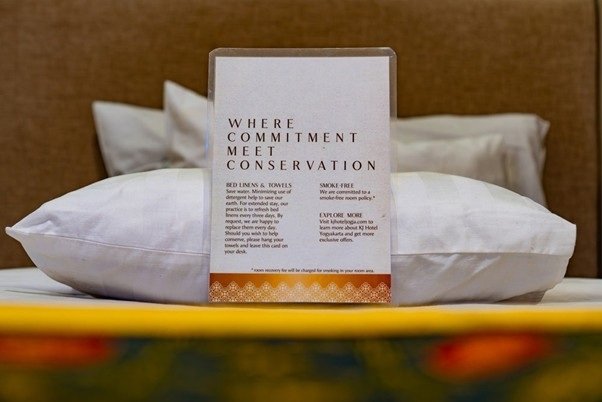
These developments are part of a broader transformation in corporate disclosure practices, with consequences not only for major hotel groups but also for independent operators and their wider supply networks.
Current industry guidance suggests that larger hotel businesses will be most directly affected by the upcoming UK sustainability reporting framework. They are expected to meet enhanced requirements covering areas such as greenhouse gas emissions, energy consumption, waste generation and water usage.
Although smaller operators may initially fall outside the formal scope, they are still likely to feel the impact through increasing data requests from corporate clients, partners and investors.
Evolving sustainability framework
The UK is progressing towards a more structured approach to sustainability reporting, aligning more closely with global ESG standards. The aim is to create greater consistency and transparency in how organisations disclose environmental performance and climate-related risks.
For hotel operators, this shift will require more comprehensive data collection across daily operations. Activities such as monitoring energy use in guest rooms, improving water efficiency in laundry processes and managing waste in food and beverage outlets will come under closer examination.
Industry experts note that the sector is entering “a new phase of sustainability reporting”, where businesses must deliver clearer, more comparable information. This extends beyond direct emissions to include indirect impacts from supply chains, commonly known as Scope 3 emissions.
Operational challenges and adjustments
Stricter ESG reporting is expected to influence hotel operations in several ways. Many businesses will need to invest in improved systems to ensure accurate and reliable environmental data, particularly where manual processes are still in place.
For hotel groups operating internationally, the challenge may be greater. Aligning UK requirements with other frameworks, such as the EU’s Corporate Sustainability Reporting Directive (CSRD), could increase the need for consistent data collection across multiple regions.
Alongside carbon tracking, water management is becoming a key area of focus. Hotels are being encouraged to monitor usage more closely and identify opportunities for reduction, particularly in high-consumption areas like housekeeping and leisure facilities.
Supply chain transparency is also gaining importance. To meet reporting expectations, hotels may need to collect sustainability data from suppliers, including those providing food, laundry and maintenance services.
Wider impact across the hospitality sector
While large hotel companies are the primary focus of new ESG regulations, the effects are expected to spread throughout the industry. Smaller operators may increasingly be required to supply environmental data as part of procurement processes or franchise agreements.
As highlighted in industry reports, organisations subject to ESG rules are likely to pass reporting requirements down to their suppliers, creating a knock-on effect across the sector. This could present additional administrative challenges for smaller hotels without dedicated sustainability resources.
At the same time, ESG performance is playing a growing role in access to finance. Lenders and investors are factoring sustainability metrics into risk assessments, which could influence both funding availability and borrowing costs.
Industry bodies are encouraging hotels to act early by reviewing existing data collection methods and identifying any gaps. Taking proactive steps now is expected to ease the transition and reduce compliance risks once the new standards come into force.
With ESG reporting shifting from a voluntary initiative to a core business requirement, hotels are entering a period of adaptation. The ability to accurately track, verify and communicate environmental performance is set to become an essential component of operating in the modern hospitality landscape.

SiteMinder opens hotel distribution to the AI era
SiteMinder, the world’s leading hotel commerce platform, today announced new platform capabilities and partnerships designed to extend hotel distribution into the AI era.
Connecting 53,000 hotels across 150 countries to the channels where travellers search and book accommodation, SiteMinder is expanding its platform to support AI-driven direct booking and AI-powered online travel agency (OTA) pathways. The announcement reflects SiteMinder’s focus on helping hotels remain visible, competitive and bookable as AI becomes a larger part of travel planning and purchasing. DirectBooker is announced today as the inaugural AI demand partner.

SiteMinder is achieving this through two platform expansions.
First, Demand Plus, SiteMinder’s demand generation solution across Google, Trivago and TripAdvisor, is being extended beyond traditional metasearch into supported AI-driven conversational environments, including platforms such as ChatGPT and Claude. This enables travellers to discover hotels through curated recommendations, view live rates and complete their reservation on the hotel's own booking page.
Through this approach, SiteMinder is establishing the hotel commerce infrastructure to enable AI demand partners to surface hotel inventory across a growing network of AI platforms, helping hotels extend their reach wherever travellers are planning and booking. DirectBooker, which connects live hotel rates to major and emerging AI platforms, is the inaugural partner in this pathway.
Second, through Channels Plus, SiteMinder’s multi-channel distribution solution, AI-enabled OTA and intermediary pathways that support search, comparison and booking on behalf of travellers will now gain access to SiteMinder’s hotel inventory. The full guest experience, from discovery to confirmed booking, will take place within the partner’s platform, with reservations flowing through SiteMinder to the property.
Across these two pathways, direct bookings on the hotel’s own site and bookings completed within partner platforms, SiteMinder is extending hotels’ reach across the emerging booking landscape, converting AI-led demand into direct and indirect booking opportunities.
The announcement comes at a pivotal moment for the industry. SiteMinder’s Changing Traveller Report 2026, the world’s largest consumer survey on accommodation plans and preferences, recently found that eight in ten travellers now want AI assistance during their booking journey, a shift that is reshaping how hotels connect with their guests, and one that SiteMinder’s latest platform expansions are designed to meet.
“Navigating the shifts in how travellers find and book hotels is what SiteMinder was built to do,” says Sankar Narayan, CEO and Managing Director at SiteMinder. “As AI-driven hotel discovery accelerates, we are expanding Demand Plus and Channels Plus to give properties on our platform new ways to be found and convert demand across these emerging pathways. For hoteliers, that means being present and bookable at every new point of discovery, and that advantage will only grow.”
Sanjay Vakil, CEO and Co-Founder of DirectBooker, added:
“AI is creating a new front door for hotel discovery, and every hotel deserves to be found through it. SiteMinder has pioneered hotel distribution at every major turn, and this partnership extends that leadership into the age of AI-driven travel. SiteMinder's partnership supports DirectBooker's goal of ensuring hotels are the primary beneficiaries of this shift: capturing a new generation of demand while keeping the guest relationship exactly where it belongs.”
Norman Arundel, Director of Hotels and Resorts at EVT, a leading hotel and entertainment group with properties across Australia, New Zealand and Europe, welcomed the announcement:
“We are watching guest search behaviour evolve in real time, and the direction is unmistakable: AI is becoming part of how travellers find and choose where to stay. The imperative for hotels is to be discoverable in that environment, surfacing the right information at the right moment. At EVT, we see this as one of the most significant opportunities in hospitality right now, and it’s encouraging to see technology partners actively enabling hotels to not only be found, but booked, wherever guests are searching.”
Both product expansions are powered by Model Context Protocol (MCP), a technical standard that gives AI platforms access to live hotel data in real time, rather than relying on static or outdated information.
With 53,000 hotels, 2.5 million rooms and more than 300 million room nights processed annually across 150 countries, SiteMinder has built one of the hospitality industry’s largest and most connected distribution platforms. That scale, together with its hotel commerce infrastructure, positions SiteMinder to help hotels participate in the AI era of travel distribution.

Why Supply Chain Optimisation Is the Key to Meeting the Evolving Demands of the Hospitality Sector

Wexiödisk enter their greenest era yet with every machine now being made from 98% recycled steel
Swedish warewashing manufactueer, Wexiödisk is excited to announce that their work with Aperam had cranked up a notch, so much so that every Wexiödisk machine will now manufactured will be made from 98% recycled steel, with 0% compromise on steel quality. This includes internal components as well as the body of each dishwasher.
This clear commitment to minimising the brand’s burden on the earth’s resources is one that feeds into Wexiödisk’s company ambition for environmental excellence very clearly, and compliments the brands commitment to developing sustainable, environmental-conscious solutions as Johan Engström, Purchasing Manager at Wexiödisk, reflects :
‘‘Our partnership with Aperam has truly allowed us to deliver a new level of environmental excellence without forgoing quality. Since the very beginning, one of our brand USP’s has been that we use quality steel both internally and externally. So, to be able to retain the same durability and quality credentials that our brand is known for, while reducing our own CO₂ emissions by over 700 tonnes each year by using Aperam infinite™ stainless steel is fantastic’’
Roger Klavus, Aperam’s CEO Nordic, shares in Johan’s enthusiasm:
" We are committed to supporting Wexiödisk on their sustainability journey. I want to thank the teams at Wexiödisk and Aperam for their enthusiasm and engagement. Together we will shape the future."
To find out more about Wexiödisk, please contact David.glover@wexiodisk.com or visit www.wexiodisk.com/en

At first glance, this may resemble a traditional afternoon tea…
At first glance, this may resemble a traditional afternoon tea…Tiers of delicate pastries, scones and something rather indulgent in the middle, but look a little closer and you will find a thoroughly savoury affair. Launching on 1st May, this is ‘Afternoon Cheese’ at Brasserie Max, the elegant restaurant at Covent Garden Hotel, located just off Seven Dials.

Scones are rich with cheddar, ready to be generously laden with goat’s curd, caramelised onion chutney and chive oil. The pastries, although echoing the familiar shape of traditional sweet versions, are entirely cheese led and include:
- Colston Basset Stilton éclair with pickled walnuts and chives
- Ragstone and caramelised onion macaron
- Baron Bigod on malt and prune loaf
- Lincolnshire Poacher burnt cheese tart

In place of finger sandwiches, a gloriously decadent Welsh rarebit stuffed doughnut takes centre stage.
Paired, if you wish, with beautifully made English wines including the remarkable Chardonnay ‘Guinevere’ from Gusbourne, this is a celebration of British cheese in its most playful and delicious form.
- From £56 per person
- Available from May, Monday to Sunday, 2pm – 6pm

YANNICK ALLÉNO BECOMES THE WORLD’S MOST MICHELIN-DECORATED CHEF WITH 18 STARS
It’s official: Chef Yannick Alléno is now the most Michelin-decorated chef in the world, with 18 stars across 21 restaurants globally. Yannick Alléno made his mark in the UK with the opening of Pavyllon London at Four Seasons Hotel London at Park Lane in July 2023, which secured a star within six months.
His 18th Michelin star was awarded to Monsieur Dior Restaurant at 30 Montaigne in Paris just seven months after opening in March 2026.
In addition to being the most Michelin-starred Chef in the world, he holds the rare distinction of leading two three-Michelin-starred restaurants: Alléno Paris and Le 1947 at Cheval Blanc Courchevel. Both establishments retained their three-star status in the 2026 edition of the Michelin Guide France & Monaco. At Pavillon Ledoyen in Paris, he is also uniquely recognised for having six Michelin stars under one roof: three for Alléno Paris, two for L’Abysse Paris and one for Pavyllon Paris.
He is widely regarded for his modern interpretation of French cuisine, rooted in classical technique while embracing contemporary processes. Drawing influence from Auguste Escoffier, his cuisine places emphasis on sauces, alongside pioneering techniques of extraction and cryoconcentration.
This milestone caps a landmark period for Yannick Alléno, following his International Outstanding Achievement Award at The Cateys in 2025 and his recent appointment as Culinary Director for the 30 Montaigne Dior, further underlining his position as one of the most influential chefs on the global dining scene.
Alléno Paris , Paris (3★)
Le 1947 à Cheval Blanc, Courchevel (3★)
La Table de Pavie, St-Emillion (2★)
STAY Dubaï by Yannick Alléno (2★)
L’Abysse Paris, Paris (2★)
L’Abysse Monte-Carlo (2★)
Pavyllon Monte-Carlo (1★)
Pavyllon London (1★)
Pavyllon Paris (1★)
Monsieur Dior, Paris (1★)