

AI search, content quality and how hotels get found
 Following the inaugural Hospitality Social Media Summit, held in London on 3–4 September 2026, we spoke with Steve Hyde, a member of the summit faculty and one of the UK’s most recognised voices on AI in marketing.
Steve is the co-founder of Push, the digital marketing agency he started in 2007 after senior marketing roles at Kraft, PepsiCo and Disney. Push made the decision to become an AI-first business early, and is the only agency recognised by both Google and Microsoft six years running, with multiple Best Use of AI awards to its name. Steve now spends most of his time on the question of how brands stay visible as search moves from a page of results to a generated answer.
In this interview, Steve explains what AI-first means in practice rather than in language, why generative search is changing the way guests discover and choose hotels, what actually decides whether a brand appears in an AI recommendation, and where AI genuinely saves hotel teams hours rather than adding noise. He also looks back at the Day 2 lab he co-led with his Push colleagues Jai Khan and Cim Dahir, where delegates assessed their own brand’s visibility in AI search and built the quality controls that keep AI content on-brand. His central argument is a direct one: AI is not another channel to add to the plan; it is a change in how guests find you, and the brands acting on that now will be the ones recommended later.
- You spent the first part of your career in senior marketing roles at Kraft, PepsiCo and Disney before co-founding PUSH in 2007. You have seen major shifts in how brands reach and influence consumers, from search and social to mobile and programmatic. Hospitality is a very different environment: demand is seasonal, the customer journey is fragmented, distribution can involve multiple intermediaries, and reputation has an immediate commercial impact. When you look at AI through that lens, what makes this shift structurally different from everything that came before it?
Yes, I spent most of my decade in corporate in FMCG, although I was always in touch with hospitality. My first job out of university with Mondelez International propelled me into travelling round the Middle East, spending two weeks in every month in the Gulf States, becoming very familiar with the developing hotel infrastructure in the 1990s. In PepsiCo (Walkers Snack Foods), I was responsible for food service sectors, and my final job at Disney gave me even more insight into the wider hospitality sector.
Looking purely at marketing, I have been fortunate to witness one big shift already, as I was at the heart of the digital wave in the mid 2000s. There are some striking similarities with what we are going through now. Many marketers were in denial and even hostile towards digital. Bigger brands often found it harder to shift. Those willing to try out new approaches benefited the most.
This wave (AI, of course) will be much bigger in its impact on business and society than digital. I say that with conviction looking at what it is already capable of doing. The tougher question is “how fast” it has an impact. At PUSH we have been on this journey since 2022. We have seen how the interest in AI has changed over the years. In 2023, we were hearing, “It’s a tool my kids might use”. In 2024, we were hearing, “You guys talk too much about AI”. By 2025, we were starting to get Innovators buying in, and now in 2026, the same brands that were telling us that we were too obsessed with AI in 2023/24 are saying, “We were wrong; we need to move NOW”.
There’s still some resistance at the moment, but as businesses like ours start to publish more case studies showing impact, then more and more will get on board. I would not be surprised if we reach a tipping point very soon. If we do, then the demand for AI implementation knowledge and expertise will massively outstrip the supply.
AI isn’t just another channel or optimisation layer, as it rewires how demand is generated, qualified, converted and retained. We are going to see entirely new business models develop just as we did in the previous wave. Go back to the early 2000s, and there was no Uber, Deliveroo or Rightmove. In hospitality, there was no Booking.com, Airbnb, Tripadvisor, and the list goes on.
The internet allowed entirely new business models, often from players outside the sector who had almost no experience in a market. AI will do the same; we’ll see entrepreneurs rewrite the rules for multiple hospitality sectors.
A personal favourite of mine from the past was a guy in the Lake District who had a few properties of his own and started up Lakes Cottage Holidays. David Hogarth, whilst a tough businessman, was always willing to try out new approaches. Consequently, we worked with him and were the first brand to introduce remarketing adverts back in 2008, way ahead of his competition.
He was first on Meta as well, and before you knew it had built up over 1,000 cottages on his site. He later sold his business, and we remain good friends after a decade of working with one another. Moving fast pays off.
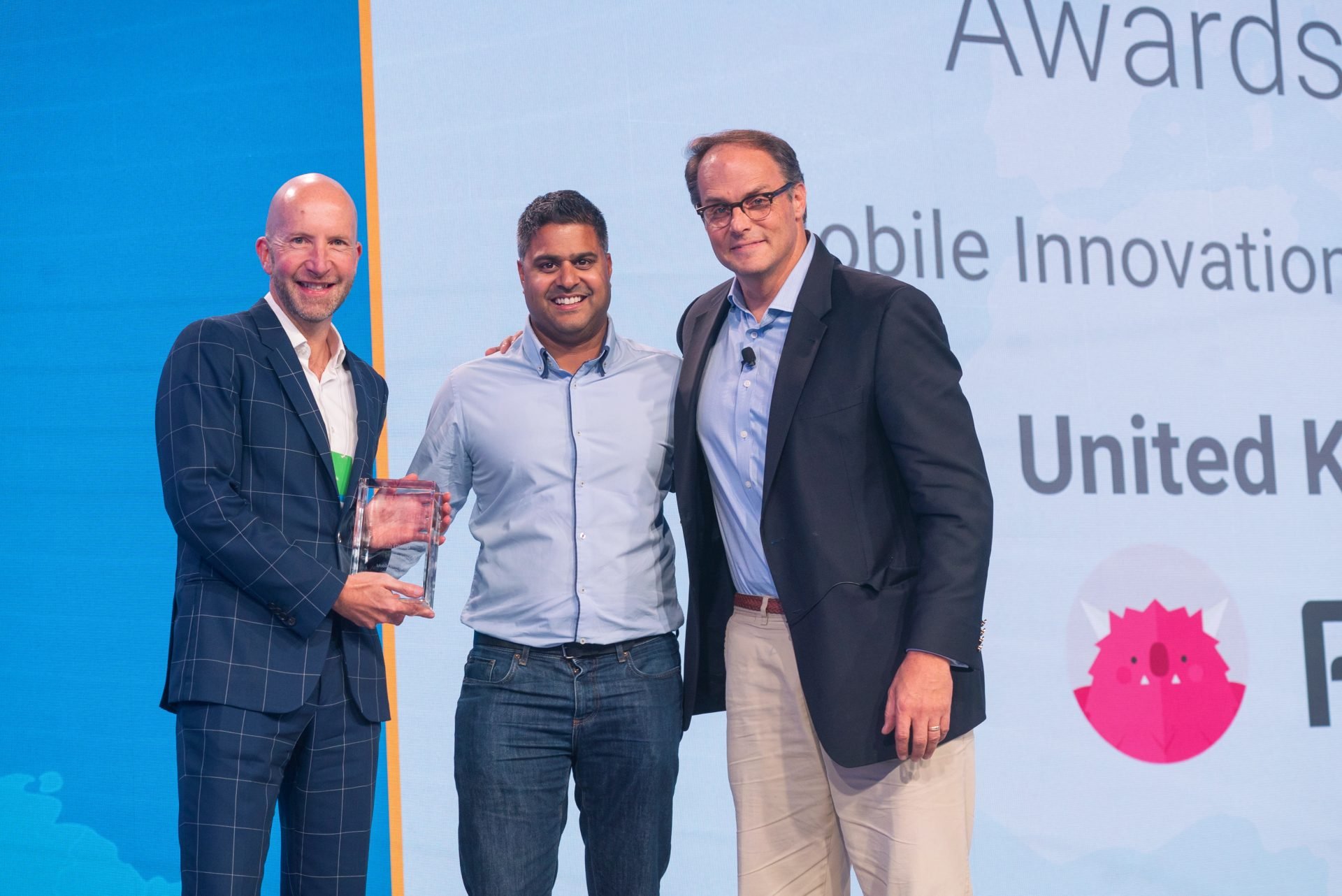
- PUSH made the decision to become AI-first relatively early. What does an AI-first business actually mean in practice? Which processes did you have to redesign, rather than simply giving existing teams access to new AI tools?
Some important context here. We have been very close to Google for over a decade as part of their Executive Circle. Their head of EMEA joined PUSH as an NED in 2020, for example. As a business, Google switched their mantra from “Mobile First” to “AI First” in 2016, so for the entire time we have been close partners with them, we have been made very aware of their intensive efforts to lead with AI.
A trip to a marketing conference in Chicago in the spring of 2023 was the catalyst for us to go all in on AI. Ricky Solanki (co-founder of PUSH) and I returned from that trip and brought the senior team together within a week at an off-site meeting in London. Within a month we had appointed a Director of AI implementation.
The first thing we had to do was to run a survey for existing staff to understand how they felt about AI. We took the output from this to build an AI manifesto in 2023.
Being AI-first is not “we bought licences”. It means redesigning workflows, data and decision rights so AI is native to how value is created. One of the biggest mistakes we have seen businesses make is simply bolting on AI to existing processes rather than fundamentally reviewing the entire business model. We made heads of department responsible for recommending which internal processes to review first.
Some of the first processes to be reviewed included generating content for all of our social media channels, developing personalised email sequences for different brackets of prospects and customers, and industry, audience and competitor research for both the sales and marketing teams.
- Many hospitality marketing teams already use AI every day: ChatGPT or Claude for copy, image generators for creative, AI inside their advertising platforms. Yet the way the team plans, produces and approves work looks exactly as it did two years ago. What separates a team that has simply added AI tools from one that has genuinely changed how it works, and what does that difference show up as commercially?
The short answer is that “just” adding AI speeds up yesterday’s process; becoming AI-first changes the process entirely. We learned that the hard way.
Teams that simply add tools still run calendar-first marketing. They brief, create, approve and publish just a bit faster. Output increases, but performance barely moves because the work remains detached from inventory, pricing and live demand signals.
The teams that change how they operate switch from campaigns to event-driven workflows. Occupancy dips, weather shifts, flight prices and local events become triggers that generate creative offers and targeting automatically within clearly defined guidelines.
Additionally, performance signals feed asset iteration and concept design. AI loves data, and leveraging it means feeding your engine with as many signals as possible.
Low-risk variants move through automated checks and go live; high-risk assets route to humans with clear SLAs. The centre of gravity shifts from opinions to data. Prompts become products, grounded in a shared source of truth, a brand voice library, compliance lines and fresh FAQs. That’s when content stops being merely eloquent and starts converting.
Commercially, this shows up as hours to market rather than weeks, fewer dark gaps in demand, higher conversion from like-for-like traffic because pages, emails and ads reflect what is actually available, and sustained improvements in CPA, ROAS and direct bookings rather than a temporary novelty bump.
- There is enormous pressure on hospitality leaders to “do something with AI”. Where do you currently see AI creating genuine commercial value, not simply saving somebody 20 minutes writing a caption, but improving acquisition, conversion, personalisation, creative performance, productivity or revenue?
The first point I would make on “leaders” is that this absolutely needs leader-level buy-in. The resistance we see today mirrors what happened with digital marketing around 2006. The technology moved. The businesses that hesitated paid for it later.
I would focus on five areas that repay the effort quickly.
First, acquisition tied to live reality: search and social creative that pulls directly from real rates, packages and live availability, so what you promote is genuinely bookable now. When ads and landing pages reflect actual inventory, CPAs fall and refund friction drops.
Second, conversion on site: a bounded assistant trained on property data, menus, policies and local FAQs. One that can say “I don’t know” and escalate. That reduces abandonment on the blockers that kill bookings: parking, pet policies, adjoining rooms, dietary requirements.
Third, CRM, merchandising and the repeat guest relationship. Journeys that adapt to stay history, party type and local events, with intelligent bundling of add-ons like parking, late checkout or spa treatments to move revenue per booking without discounting the room. And beyond that first stay, AI that builds a memory of the guest: their preferences, their requests, the details that make a return visit feel personal rather than transactional. That is where loyalty actually gets built.
Fourth, connecting forecasting, pricing and creative in a single loop. When revenue management signals feed your automations, you stop promoting sold-out dates and shift effort to shoulder nights or sister properties.
Fifth, reporting and guest intelligence. Hospitality businesses need to know which channels drive bookings, not just traffic, and what type of booking each channel delivers. AI makes it possible to analyse that at a level of granularity that was previously impractical, and to build genuine guest personas from the data. Those personas should be shaping your marketing comms, your content, your channel mix. Most hospitality brands are sitting on that intelligence already. They are just not using it.
- And where is the hype furthest ahead of reality? What are hospitality businesses currently being encouraged to invest in or automate that you would approach with much more caution?
There are a few areas where caution is sensible. Fully autonomous publishing is one; without a single source of truth and a QA step, letting a model write live room pages or menus invites hallucinated amenities and outdated offers, which are reputational grenades.
Another is the idea of a single agent running the hotel end-to-end. It sounds elegant, but it breaks on integrations, latency and liability. We are not there yet. It will happen one day, but not 2026.
Start with narrow, high-value use cases like pre-stay FAQs or review drafting with human approval.
Personalisation without permission is another trap. Without consented first-party data and identity resolution, most “personalisation” is just guesswork with risk attached.
Hyper-reactive pricing without aligned messaging creates guest whiplash; if you flex price, explain the value or you’ll pay in reviews.
- There is a particular trust issue in hospitality. Generative AI can create a beautiful room that does not exist, embellish a restaurant experience, misrepresent a view or use outdated information about an amenity or offer. How should hospitality businesses build AI into content production without allowing efficiency to undermine the credibility of the brand or the guest promise?
Trust is the product, so we set five non-negotiables.
Start with a single source of truth: rooms, amenities, floorplans, menus, images and accessibility features must be structured, owned and timestamped, and generators should read from this, not from memory.
Make “unknown” acceptable: write prompts and policies that force the model to decline if the data isn’t present, because a blank is better than a broken promise.
Prioritise proof over polish: never fabricate views, square footage or inclusions, and be open about renovations or constraints; accurate expectation-setting reduces bad reviews.
Time-bound everything: offers and amenity details should expire unless re-verified, because outdated content is the most common trust failure.
Finally, make content auditable: every published item should have provenance, the data inputs, the prompt, the model version and the human approver, so that if something slips, you can fix the system and not just the sentence.
This discussion around trust is really interesting. We haven’t found the balance yet. Brands across all industries use actors to represent them. Sometimes it is obvious to the consumer (David Beckham hunting Walkers Crisps, for example). On other occasions it is more subtle, but still worth a conversation. I’m a huge snowboarding fan, for example. Should I care whether the riders and ambassadors really use the gear they are promoting?
A hypothetical question to your readers: what is worse? An AI-generated image of a family by the pool, or the same pool setting with paid actors who have nothing in common with one another?
- Does that require hospitality businesses to start treating AI governance as a real marketing discipline? Should teams now have defined source data, brand rules, approval processes, human review and clear accountability for what AI is allowed to produce and publish?
Yes. Governance here is brand safety with new plumbing. In practice that means clear data ownership and refresh cadences. For example, if no one owns the pet policy, it will be wrong. It means brand rules that machines can read: tone, banned phrases, claims thresholds, disclosures and accessibility standards. It means risk tiers, where low-risk variants pass automated checks and high-risk content such as offers, policies and pricing requires human sign-off. It means humans in the loop for novelty and edge cases. And it means logs and incident playbooks so that when something goes wrong, you correct the root cause rather than merely patching the copy.
Banned phrases at PUSH include “pivot”, “game changer”. I used to despair in Covid with the number of emails I would get about the “new normal” or “in these uncertain times”. If I were working in the property sector, I would ban the use of “stunning” or “contemporary”.
- Perhaps the biggest change is happening even earlier in the customer journey. People can now ask ChatGPT, Gemini or other AI platforms where to stay, eat or visit rather than starting with a conventional search engine or social feed. How significant is that change for hospitality customer acquisition?
It is already very significant and growing fast. We started exploring this at PUSH in 2023. At the time, internally we were calling it LLMO (large language model optimisation), later on AIO, but the term the industry has settled on is GEO: Generative Engine Optimisation.
All the evidence so far suggests that consumers are using the LLMs like ChatGPT, Gemini and Claude to build their travel experiences more than other verticals or sectors. Itinerary planning is absolutely enormous, and the habits are forming fast. Sectors like “fashion” are less likely to be an area for consumer “research” on the LLMs.
Assistants compress a long, multi-tab research process into a single recommendation moment. The practical implication is that assistant visibility becomes as critical as SEO. If you are not in the shortlist an assistant proposes, you are not in the running. Big brands are already dropping behind faster moving independents.
Authority beats virality in this environment: structured, consistent and recent data, combined with strong review signals, matter more than keyword tricks. Independents can win if they present cleaner signals than OTAs, though the OTAs will fight hard for this surface, so your direct channel needs real reasons and real data to compete.
- We understand traditional search reasonably well. AI recommendations are much less transparent. From what you are seeing, what determines whether a hospitality brand, property or restaurant is surfaced, trusted and ultimately recommended by an AI system?
Across clients, we see a consistent pattern. Structure and freshness come first: correct schema, accurate Google Business profiles, up-to-date amenities and consistent hours and prices across your site, OTAs and socials.
Reputation signals matter. Stuff like recent review volume, sentiment and timely owner responses, especially when issues are acknowledged and fixed.
Content coverage is vital too. Assistants answer intent-rich questions using authoritative FAQs, accessibility information, family and pet policies, and practical details like parking and transport.
Local context, with clear distances and times rather than generic adjectives, helps assistants match recommendations to the brief.
And finally, post-click success counts: fast pages, transparent fees and frictionless checkout lead to acceptance and booking; if users bounce or reject, assistants learn not to recommend you.
- If a hospitality marketing team came to you tomorrow and said, “We want to become more visible when consumers use AI to decide where to stay, eat or travel”, what are the first practical things you would tell them to change over the next six months?
We would give them a six-month plan focused on foundations and fast feedback. Build a proper source of truth for rooms, amenities, menus, policies, images and FAQs with ownership, versioning and timestamps.
Make that data machine-readable by fixing schema, Google Business and OTA consistency, and by aligning naming conventions, alt text and captions. Strengthen reputation operations with polite, automated post-stay review requests, fast and empathetic responses, and visible fixes for recurring issues.
Publish assistant-friendly content such as clear FAQs, local guides tied to real events, accessibility details and transparent fees.
Deploy a bounded on-site assistant that retrieves answers only from verified content, is willing to say “I don’t know”, and escalates to humans. Measure and iterate by tracking assistant-origin sessions where possible, on-site task completion and conversion, and by running controlled tests on AI-generated variants.
- Hospitality groups also face a scale problem. A business might have dozens or hundreds of locations, multiple brands, different audiences, languages, offers and seasonal priorities. AI potentially makes localisation and personalisation dramatically easier. How would you design that process without creating huge volumes of generic, inconsistent or inaccurate content?
We treat content like Lego rather than brochures. Break everything into reusable atoms: room descriptors, amenity blurbs, policies, USPs and local points of interest. Tagged by brand, locale, audience and season.
Use generation templates with guardrails that assemble those atoms with locale rules for spellings, units, holidays and legal lines, with hard limits on claims.
Tier your markets so that key languages and geographies receive human-edited AI while others use AI plus QA or on-request production, and maintain translation memories and glossaries to preserve brand voice.
Make the system inventory-aware so it never promotes sold-out packages and can switch automatically to shoulder nights or sister properties.
Build automated QA for links, facts and dates, and sample a fixed percentage with human reviewers each week.
Finally, version and expire assets so that every item has an owner, a version and a review date; that prevents errors from fossilising.
- That raises an important question about competitive advantage. If every hospitality brand eventually has access to similar AI tools, what actually differentiates the winners? Is it proprietary data, stronger creative, better processes, faster decision-making, better brand thinking, stronger first-party relationships, or something else?
There’s a simple answer to this that sounds a little trite. Move fast, stay ahead. This space is constantly evolving. The best practice we are advocating in this article will be less valuable one year from now. It won’t all “age well”.
Operating cadence matters: faster tests, tighter feedback loops and clear kill rules compound advantage.
On-property delivery still wins hearts and reviews, which feed the next cycle of discovery.
The tools will converge, so the edge comes from how you use them. Depth and cleanliness of consented first-party data, coupled with the trust to use it well, is a major differentiator.
Distinctive brand systems encoded into your generators, voice, visuals and values, ensure your outputs are recognisably yours.
- If you look two or three years ahead, where do you think AI will most fundamentally change the hospitality customer journey: inspiration, discovery, comparison, booking, the on-property experience, reputation or loyalty?
The biggest shifts will be in inspiration, discovery, comparison and on-property experience. Assistants will shortlist options based on clean, recent data and strong reviews, so visibility depends on data quality.
Comparison becomes conversational, with clear trade-offs explained.
On property, service gets proactive and profile-aware, anticipating needs and resolving issues faster.
Booking turns into a smoother handoff from assistant to direct checkout with clearer inclusions and fewer clicks.
- And turning that around, what parts of hospitality marketing do you believe will remain stubbornly human? Where would you actively resist the temptation to automate?
Brand judgement and storytelling will remain human, because deciding what a brand means and how it makes people feel is not a commodity task.
Partnerships and community require local relationships and taste that no model can fake. And the ethical lines of truth, privacy and fairness need human leadership, not blind automation.
- Finally, at the Hospitality Social Media Summit, you and the PUSH team led a practical AI lab rather than giving delegates another presentation about the future of AI. What did people work through, build and test in the room, and what did you want them to take back into their businesses afterwards?
Most conferences give you a keynote and a slide deck. You leave with ideas and no idea what to do with them on Monday morning. That is exactly what we are not doing.
We start with prompting. That is deliberate. Prompting is the foundation. If you cannot construct a clear, well-structured prompt, you cannot build an assistant. You cannot design a workflow. You cannot get reliable output from any AI system at any level of complexity. So we start there, in the room, hands on, building and testing prompts against real scenarios from the hospitality industry.
The exercises are all built around tasks and bottlenecks we actually see across hospitality businesses. Every one of them is something a delegate can take back and apply the same week. The room worked on real problems, not hypotheticals.
What I want people to leave with is a shift in how they see what is possible. Not AI as a writing assistant. AI as the engine of an entire process. Delegates saw first-hand what it looks like to automate a process from start to finish, not save ten minutes on a task.
The difference between a team that has added AI tools and a team that has genuinely changed how it works is that one has done the work at process level. That is what the lab is for.