

Choosing the right water solution is about more than hydration. From sustainability credentials and operational efficiency to guest perception and evolving legislation, Belu explores how hotels can make informed decisions that balance environmental impact, practicality and premium service.
Water is one of those procurement decisions that gets made once and then quietly renewed. It sits in the background of your operation until a guest comments on it, a sustainability audit flags it, or your F&B manager raises it in a briefing. Getting it right matters more than most GMs realise, and getting it wrong is more visible than you might expect.
At Belu, we have spent more than twenty years working with hotels across the UK, from independent properties to major groups including The Corinthia, The Hari, The Pig Hotels and Double Red Duke. What we have learned is that the right water format is rarely the same for every part of a hotel operation, and that the brand and product story behind your choice is increasingly something guests, staff and procurement teams want to understand. There is no single perfect option. The best choice is the one that fits your venue, your service style and your guests’ expectations.
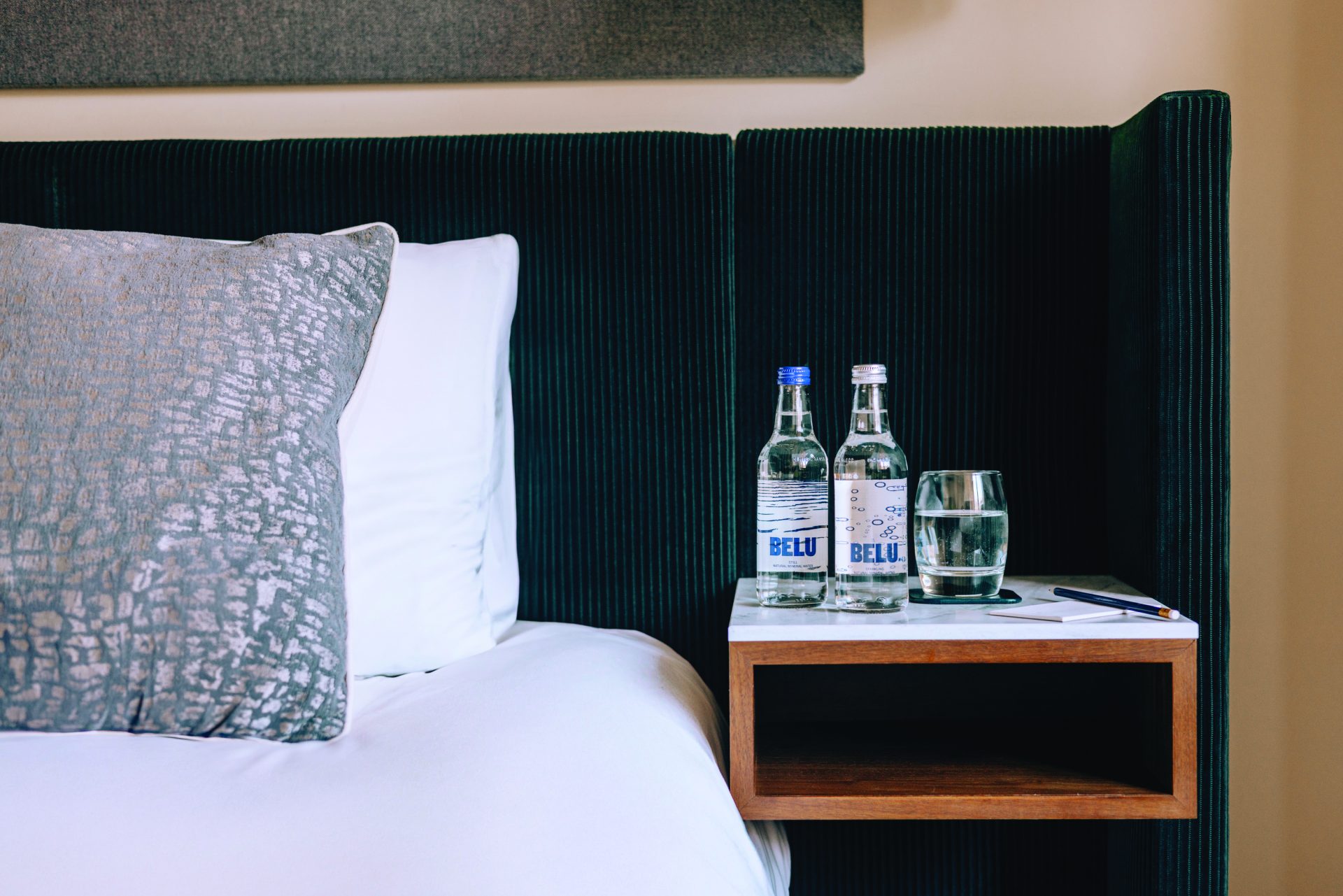
Glass (Belu Glass: 585g CO2e per litre poured)
Glass remains the default for mid-market and above, and for good reason. It looks right on a restaurant table and signals quality without requiring explanation. Glass is infinitely recyclable, and the UK glass recycling rate sits at just under 75 per cent, though a portion of collected glass is downcycled into road aggregate rather than returned to bottle production, which limits the supply of high-quality recycled glass to UK manufacturers. The bigger issue is at the production and transport end: glass is heavy and energy-intensive to make, and if your supplier is importing from continental Europe, that transport footprint erodes much of the recyclability benefit. When reviewing a glass supplier, focus on UK manufacturing, recycled content of 30 per cent or above, and bottle weight.
rPET (Belu rPET: 159g CO2e per litre poured)
For bedrooms, minibars, grab-and-go and conference water stations, rPET bottles made from 100 per cent recycled plastic are hard to beat on practicality and environmental performance. The UK plastic bottle recycling rate now sits above 70 per cent, and bottles made from fully recycled content use around 75 per cent less energy to produce than virgin plastic equivalents. They are also significantly lighter than glass, reducing transport emissions across the supply chain. rPET is not a restaurant table format, but for portable, resealable needs it is the strongest option available, provided recyclability labelling is clear and waste infrastructure separates plastic properly.
Cans (Belu cans: 382g CO2e per litre poured)
Cans have gained ground in events, casual dining and outdoor settings. With an 81 per cent UK recycling rate they perform well on paper, though only around 30 to 35 per cent of aluminium cans currently make it back into new cans; the rest are downcycled into automotive or construction materials and cannot re-enter the drinks can supply chain. Lighter formats and high recycled content help close that gap. Cans suit durability and convenience but are less at home in formal restaurant settings.
Cartons and bioplastic
Cartons and bioplastic bottles are sometimes pitched as lower-carbon alternatives but rarely hold up under scrutiny. Cartons are lightweight but genuinely difficult to recycle, with patchy UK collection infrastructure meaning most end up incinerated rather than recovered. Bioplastics need industrial composting facilities that are not widely accessible in hotel waste streams, and a bioplastic bottle in the wrong bin can contaminate a recycling batch. Belu trialled bioplastic in 2006 and stopped due to the lack of supporting infrastructure.
Filtration (Belu filtration: 120g CO2e per litre poured)
For restaurants, meeting rooms and high-volume banqueting, filtration removes the packaging question entirely. Chilled still or sparkling water served from quality glassware is both the lowest-carbon option available and a genuinely premium service experience, not a budget compromise. The upfront investment is higher, but cost per litre falls substantially over time, and there is no packaging procurement, storage or disposal logistics to manage.
Using a mix and staying compliant
Most hotels find no single format works everywhere. A sensible combination is filtration for restaurants and meeting spaces, rPET for bedrooms and grab-and-go, and cans or glass where presentation matters most, paired with back-of-house waste infrastructure that can separate each material without cross-contamination.
There’s also a regulatory dimension. Extended Producer Responsibility now makes packaging producers fund recycling costs, with fees from April 2026 weighted by recyclability; glass stays in scope even when served on-site. The Deposit Return Scheme launches UK-wide from October 2027, adding refundable deposits to containers, so hotels should plan ahead now. To keep up to date visit GOV.UK.
Water is a small decision with a surprisingly large footprint, in carbon, in cost and in the impression it leaves on guests. It is worth making it deliberately.
To find out more about water formats for your hotel, visit belu.org.