

DONG Luxury Collection and Dragon Trail International have published the Luxury Travel Trends in China White Paper, a unique and in-depth analysis of the Chinese high-net-worth individual (HNWI) travel market. The white paper was first released at the 9th edition of DONG Connection Event on 16 April 2026 in Sanya, China. Dragon Trail will hold a webinar to introduce the report’s key findings on Tuesday, 12 May 2026 at 9am BST (register here).
───────────────
This first-of-its-kind white paper is based on surveys of more than 200 Chinese HNWIs, 200 luxury travel agents, and 200 luxury hospitality partners – primarily from hotels and resorts, with additional representation from the cruise industry and tourism organizations. Survey data was enriched with in-depth interviews with senior executives from the hotel and cruise sectors.
━━━━━━━━━━━━━━━━━━━━
The white paper introduces the Chinese high-net-worth traveler segment, with an overview of the market and in-depth exploration of who these travelers are, what they value the most, their preferences, their motivations, and their desires for the travel experience. We see where they are going, when, for what purpose, and how they book their trips.
Analyzing the key decision factors behind Chinese HNWIs’ travel, the white paper offers insights on how to build brand reputation, balance personalization with privacy, adapt services to cater specifically to the Chinese market, and deliver the full travel and hospitality experience these travelers are seeking now – including cultural experiences, destination trends, and wellness products.
Our research also shines a light on how to navigate new developments for the market, including the best ways to deploy new technologies like AI, and how to increase sustainability in a way that enhances rather than diminishes the luxury travel experience.
With a focus on the hotel and cruise landscapes, the white paper offers particular value to the hospitality industry, but provides timely insights for anyone hoping to effectively and successfully engage the valuable and highly competitive Chinese luxury travel market.
━━━━━━━━━━━━━━━━━━━━
10 Key Findings from the White Paper
━━━━━━━━━━━━━━━━━━━━
1) Travel is a major spending priority
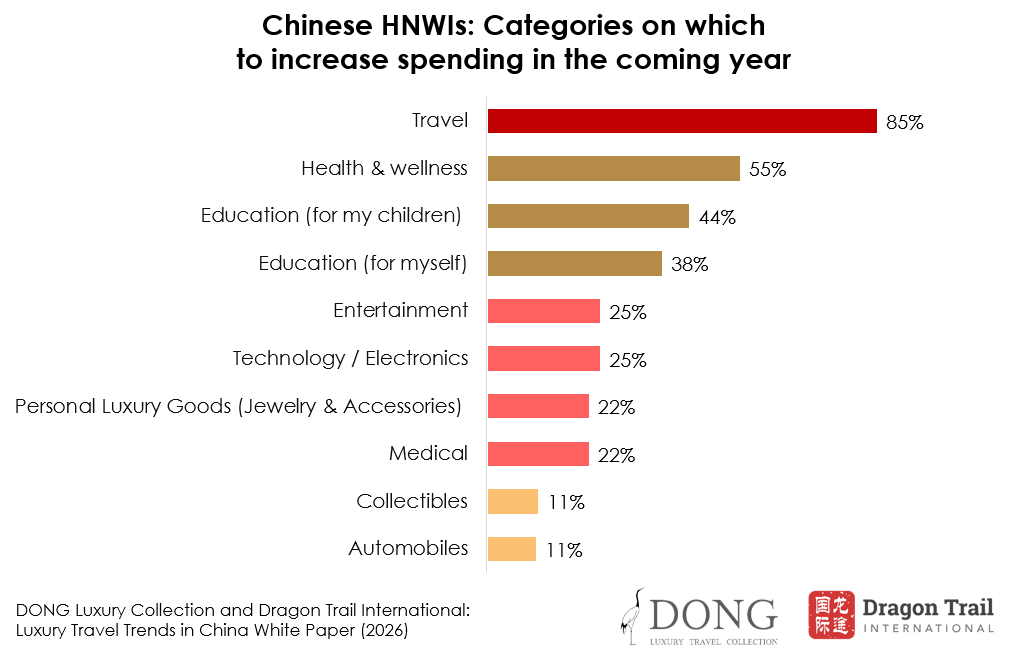
Travel is currently a significant spending priority for Chinese HNWIs. 85% of our HNWI survey respondents said they planned to increase their spending on travel in the coming year, followed by health and wellness – chosen by 55%, and children’s education – chosen by 44%.
───────────────
2) Strong demand for international travel
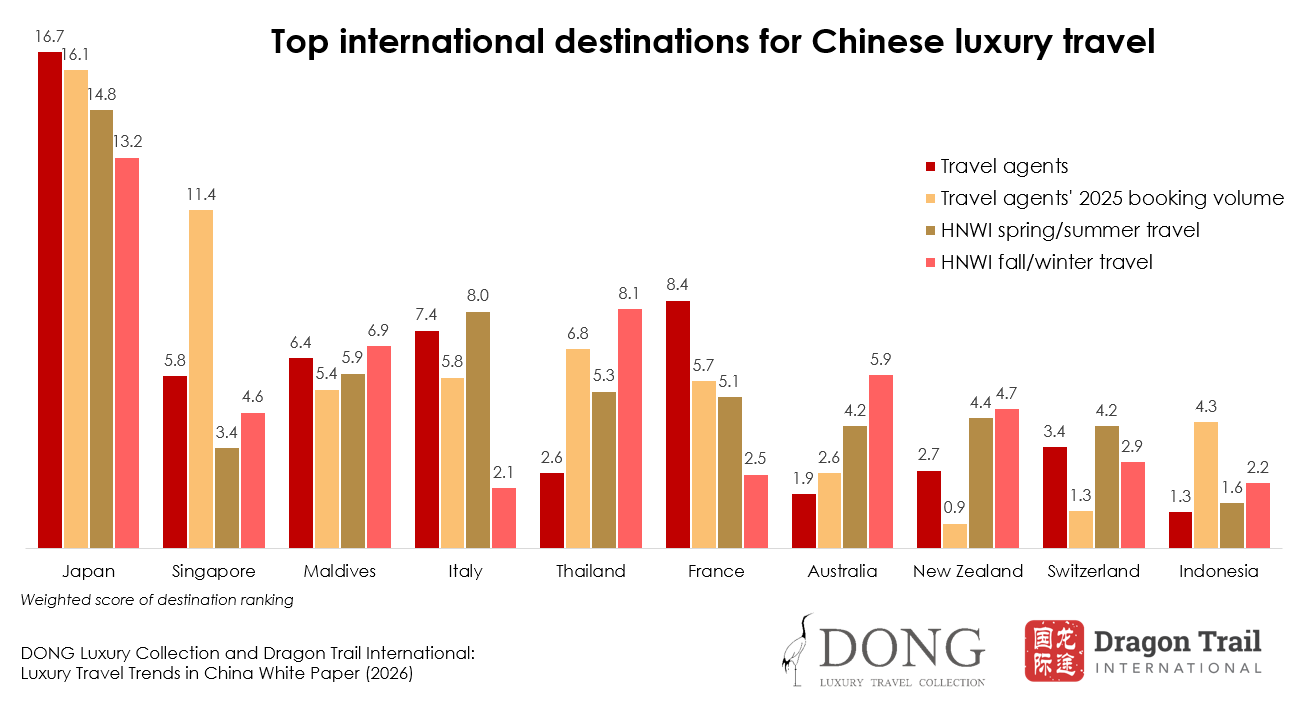
Chinese HNWIs exhibit strong demand for international travel, with nearly half (49%) saying they prefer it over domestic travel, and just 8% saying they would rather travel domestically. Ranking international destinations based on survey responses from both HNWIs and luxury travel agents, Japan is the stand-out leader, followed by Singapore, the Maldives, Italy, Thailand, France, Australia, New Zealand, Switzerland, and Indonesia.
───────────────
3) Authenticity and cultural experiences matter
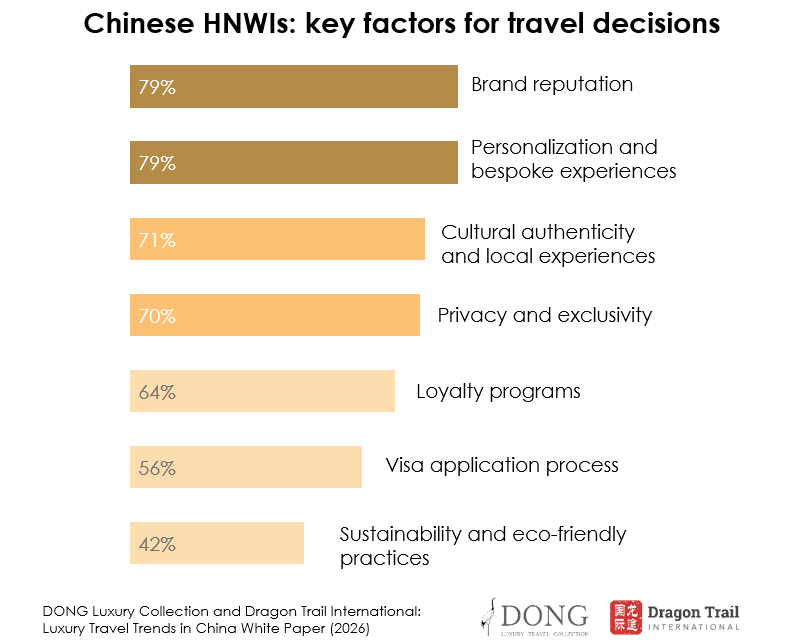
Authenticity has been a major buzzword for young Chinese travelers in the post-pandemic era, while demand for in-depth cultural experiences has also risen as the market looks beyond traditional sightseeing and shopping-focused itineraries. 71% of HNWIs in our survey said that authentic cultural experiences were important to them when traveling. An even greater proportion (77%) said they were willing to pay a premium for unique, once-in-a-lifetime experiences. Luxury hospitality partners mentioned experiences such as hot air balloon rides, private yacht and catamaran excursions, and Vespa sidecar tours, alongside curated local tours and unique photoshoots as highlights of what they offered.
───────────────
4) Personalization is essential
Personalization is one of the elements of travel most valued by Chinese HNWIs, with 79% saying they value personalized experiences while traveling. Luxury hospitality partners were most likely to highlight personalized amenities as the most effective personalization strategy for their Chinese HNW guests, followed by customized itineraries and bespoke activities and excursions.
───────────────
5) Privacy and exclusivity are crucial
Another majority priority for Chinese HWNI travelers is privacy and exclusivity. 70% say that privacy and exclusivity are crucial factors in their travel choices, and 75% say they value access to exclusive experiences during their travels. Privacy is particularly important for HWNIs traveling with their children or as multi-generational family groups. VIPs may choose to check in under an alias or buy out a whole floor or property. They also value private villas and private entrances, and closed-door, exclusive visits to cultural attractions as well as to shops.
───────────────
6) Human service still matters most
Attentive, warm, human service is essential for Chinese HNWI travelers, and this service needs to be localized to the Chinese market, both linguistically and culturally. Although these are experienced travelers and many will be comfortable communicating in English if needed, more than half of luxury travel agents and hospitality partners say that having Mandarin-speaking staff is either critical or very important for Chinese HNW guests, with only 5% saying this is not important.
───────────────
7) Sustainability needs stronger positioning
Our research shows that sustainable travel is a lower priority for Chinese HNWIs, and that there is work to do to communicate the value of sustainability to this market. Just 42% of HNW travelers said they prioritized sustainability and eco-friendly practices when choosing travel options, and 60% of hospitality partners said Chinese guests were only somewhat interested or not interested at all in their sustainability practices. Sourcing is the initiative that hospitality partners say resonates best, particularly with farm-to-table initiatives including on-site organic farms, gardens, and even beehives. The Chinese luxury market will want to see how sustainability enhances their stay and adds value, rather than diminishing the luxury experience or coming across as a cost-cutting measure.
───────────────
8) Wellness is an emerging growth area
Wellness is an emerging trend with potential for future growth, but Chinese HNWIs are looking for long-term wellbeing and longevity, not just relaxing spa treatments. Hotels in turn are offering “bespoke wellness journeys” and holistic approaches to wellbeing that draw upon traditional techniques and the latest wellness health tech, as well as dedicated wellness coaches. Wellness programs are created to address common concerns of HNW guests – including stress, insomnia, anxiety, and emotional fatigue – and provide solutions that they can implement into their daily lives after leaving the hotel.
───────────────
9) AI adoption remains cautious
While most Chinese HNW travelers are digitally savvy, they are still sceptical when it comes to AI. Just 30% say they are comfortable using AI-powered chatbots for travel inquiries and support, with 39% saying they are not comfortable using this technology. Many survey respondents have deep misgivings about AI and its ability to provide the warmth of human service, and see developments like chatbots and robot room service as low-budget. However, others predicted that AI will help them in the future to save time, increase customization, and potentially even arrange travel schedules and recommend destinations better than a person could. Travelers also expect that advances in technology will remove barriers from communication across languages while traveling, and make niche destinations more accessible.
───────────────
10) Continued market growth expected
There is general consensus within the travel industry that China’s luxury travel market will continue to grow. 60% of luxury travel agents expect the Chinese luxury travel market to see moderate growth over the next five years, with another 19% forecasting significant growth. Just 9% of travel agents forecast a decline in the market, with most of these (8%) predicting only a moderate decline. Luxury hospitality partners were even more optimistic. A total of 78% forecast growth, and less than 4% foresaw any decline in the market during the next five years.
━━━━━━━━━━━━━━━━━━━━
Industry Commentary
━━━━━━━━━━━━━━━━━━━━
“This research and analysis from DONG Luxury Collection and Dragon Trail is a guide for the travel industry. It goes far beyond merely understanding Chinese HNWI travelers in theory, by providing concrete examples and directions as to how to balance personalization with privacy, make sustainability luxurious, and benefit from the newest technologies. It also outlines how to best approach the Chinese luxury market through both B2C and B2B channels, with experienced and detailed advice on creating effective social media content strategies and navigating vital relationships with the Chinese travel trade,” said Sienna Parulis-Cook, Director of Marketing and Communications at Dragon Trail International and the report’s lead author.
───────────────
“Luxury travel transcends destinations – it is a pursuit of unforgettable experiences, emotions, and perspectives that stay with us. Similarly, this white paper seeks to deliver enduring value. It is the culmination of extensive research, thoughtful analysis, and valuable sources – offered as a tool to provide clear insights and actionable guidance for those interacting with Greater China, highlighting months of research and collaborative efforts to analyze trends driving the luxury travel leisure segment in this high-potential region, viewed through three key lenses: Suppliers, who redefine innovation and excellence in their offerings; Luxury travel agencies within Greater China, delivering curated experiences tailored to elite travelers; and High-net-worth individuals (HNWIs), whose evolving aspirations and preferences continue to reshape the travel landscape,” said May Wong, Co-Founder, DONG Connection Event and CEO, DONG Luxury Travel Collection.
━━━━━━━━━━━━━━━━━━━━
The Luxury Travel Trends in China White Paper is available (for free) to the public at https://www.dragontrail.com/resources/blog/china-luxury-travel-white-paper-2026.