

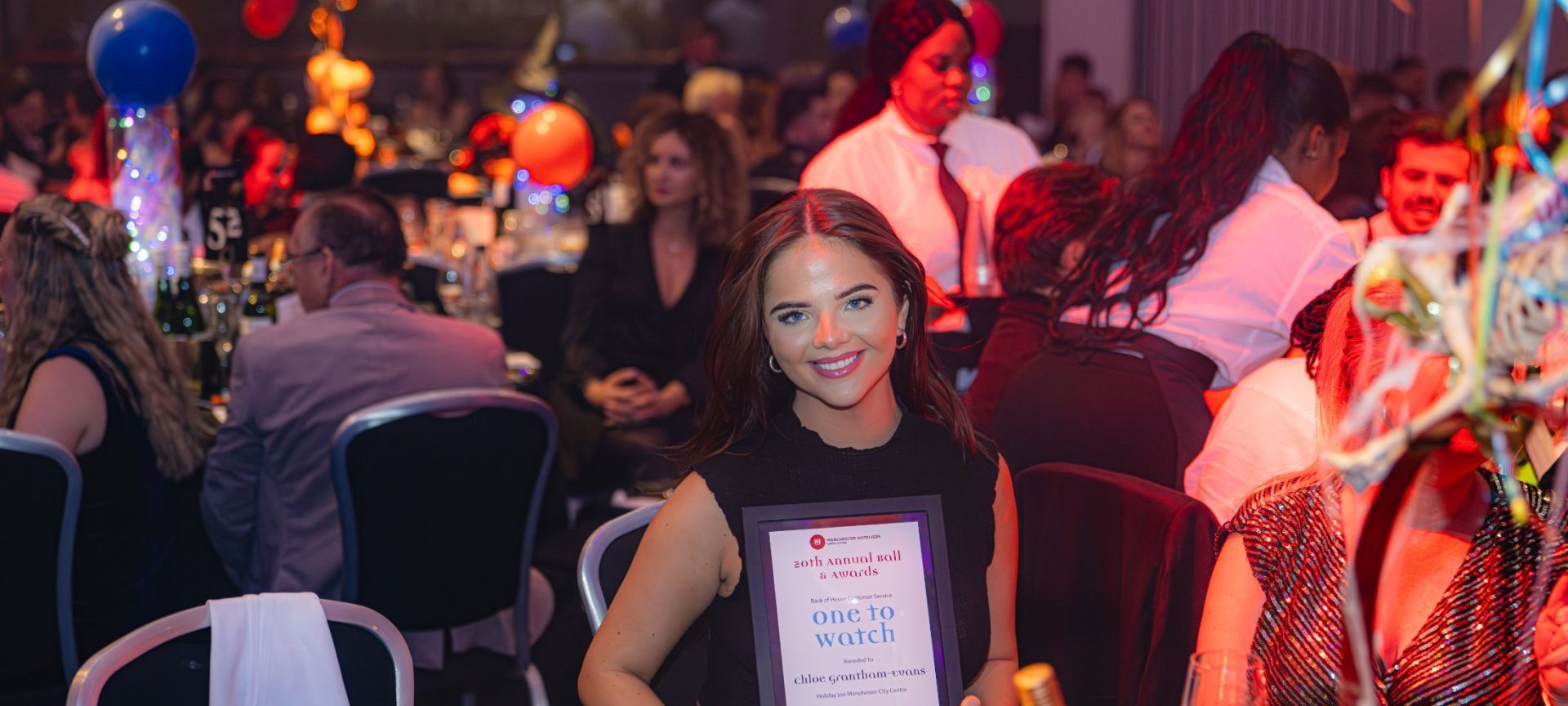
PUTTING ON THE RITZ: MANCHESTER HOTELIERS ASSOCIATION CELEBRATES 21ST ANNIVERSARY WITH ROARING 20S BALL
Membership organisation Manchester Hoteliers Association, comprising more than 75 of Greater Manchester's key hotels, has announced plans for its 21st annual ball. The popular event is hosted every year to raise money for local charities and celebrate the hospitality industry.
Taking place on Thursday 29th October, the ball will return to Emirates Old Trafford for the second year running.
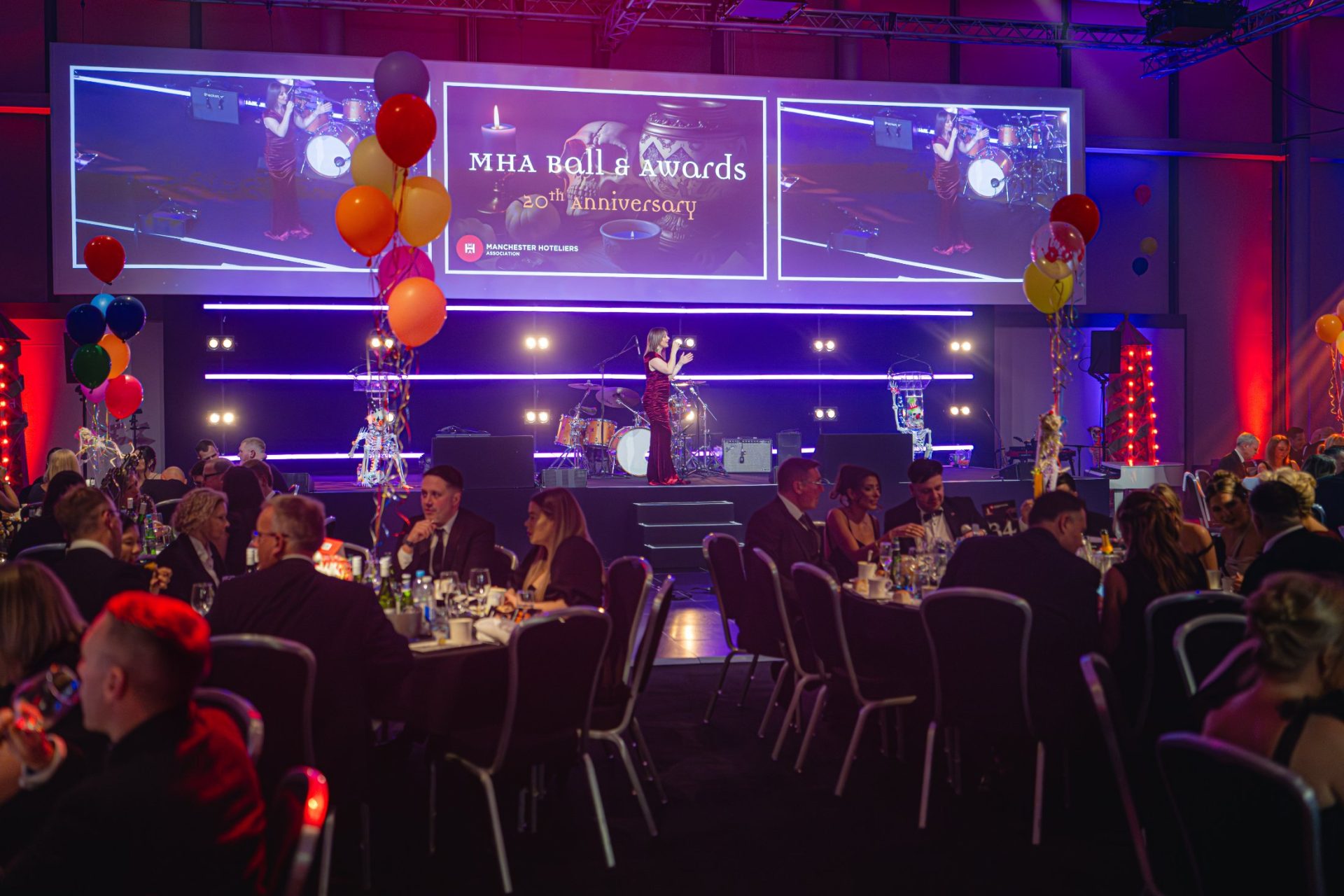
Two decades of charitable giving
Since the organisation's inception, one of its key pillars has been charitable donations, raising hundreds of thousands of pounds from the annual celebration over two decades. This year's chosen charities are Barnabus, Greater Manchester Mayor's Charity, Wood Street Mission and national charity, Hospitality Action. MHA chair, Matt Townley, has set lofty aims to beat last year's £45,000 raised.
The event, which will take a Roaring 20s theme, will also play host to the MHA's annual awards, voted for by a panel of business and industry experts. Following usual proceedings, there will be a total of nine trophies presented on the night, including Unsung Hero, Rising Star, and Outstanding Contribution to Hospitality.
Now in its 21st year, the MHA ball has become a cherished tradition within our industry, providing an opportunity to recognise achievements and support important charitable causes.
Matt, who is also Group Operations Director at Dakota Hotels, said: "Manchester's hotel and hospitality community continues to demonstrate remarkable resilience and collaboration, and this year's event will be a fitting celebration of those qualities. We look forward to welcoming colleagues, partners, and friends from across the sector for what promises to be a memorable evening as always."
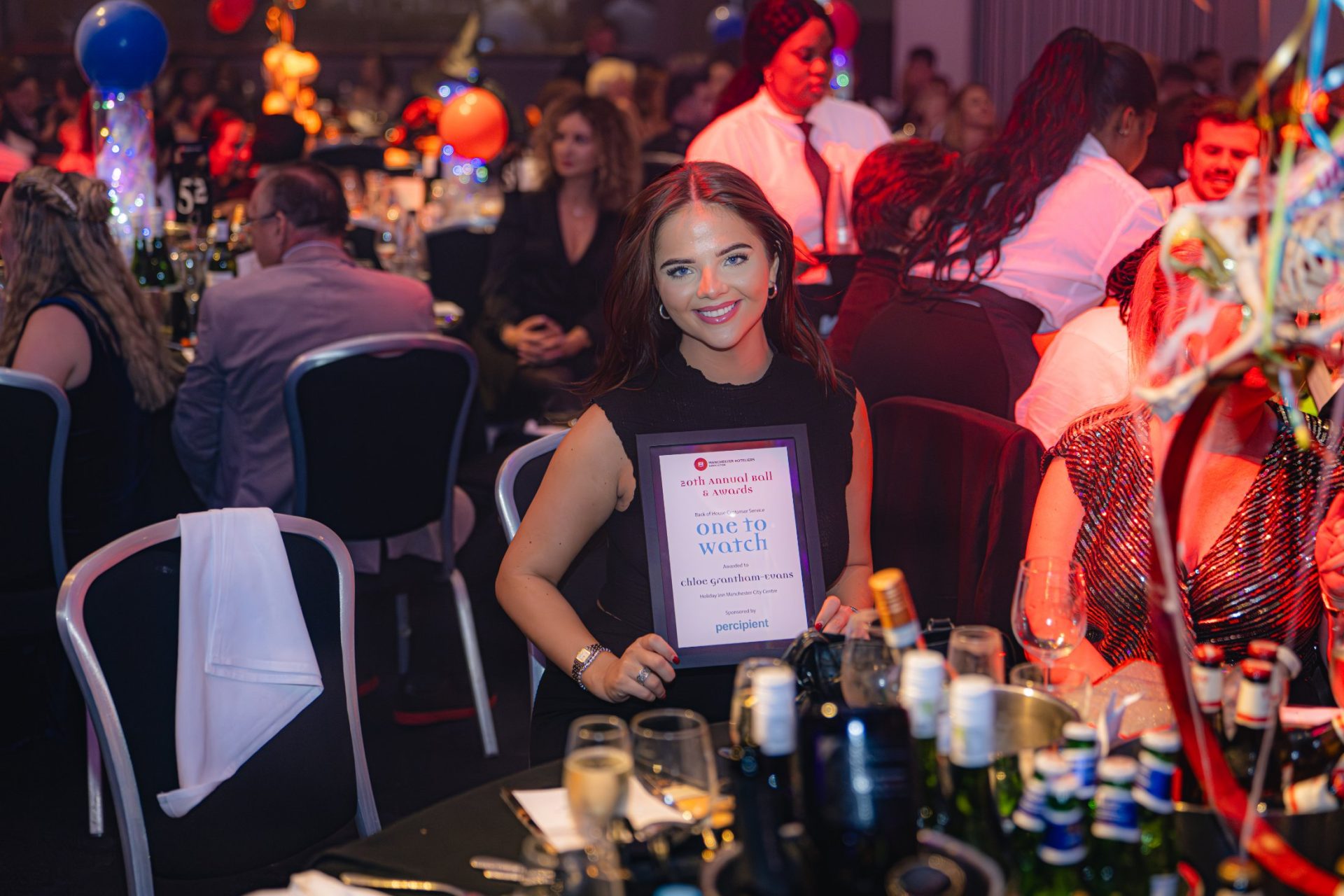
Sponsors and industry partners
The event has also amassed support from key local and national sponsors such as WGC, Expedia, MMU, Stephenson's, Elix Air, and Percipient.
MHA's five key industry partners, Nespresso, Silentnight, Howden, Mint People, and Purple Story, will also continue supporting the organisation for a second year running.
Pamela Reckert at Manchester Metropolitan University, said: "Manchester Metropolitan University is proud to sponsor the 21st Manchester Hoteliers Association Ball and support an event that celebrates the people and achievements that make Greater Manchester's hospitality industry so exceptional."
The MHA Ball is a fantastic opportunity to recognise excellence, strengthen collaboration across the sector, and raise vital funds for charities making a real difference in our communities.
"As a university with strong links to the region's hospitality sector, we're committed to helping develop the next generation of talent while working closely with businesses to address the industry's evolving needs. We look forward to celebrating alongside colleagues and partners from across Greater Manchester."
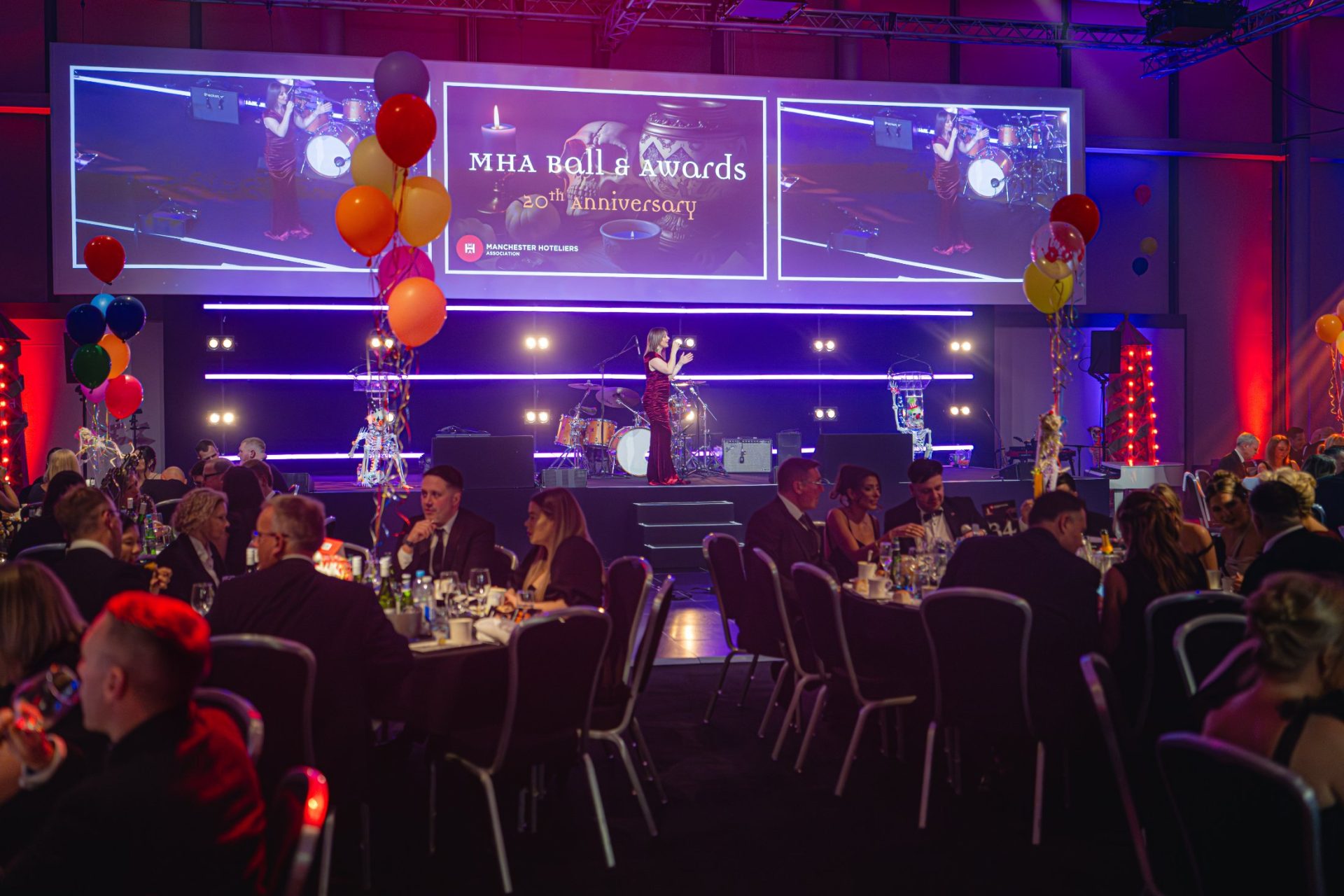
Attending the ball
The ball will be taking place on Thursday 29th October at Emirates Old Trafford, with more than 800 people expected to turn out. Tickets are available to purchase, and entries are now open for the MHA awards.

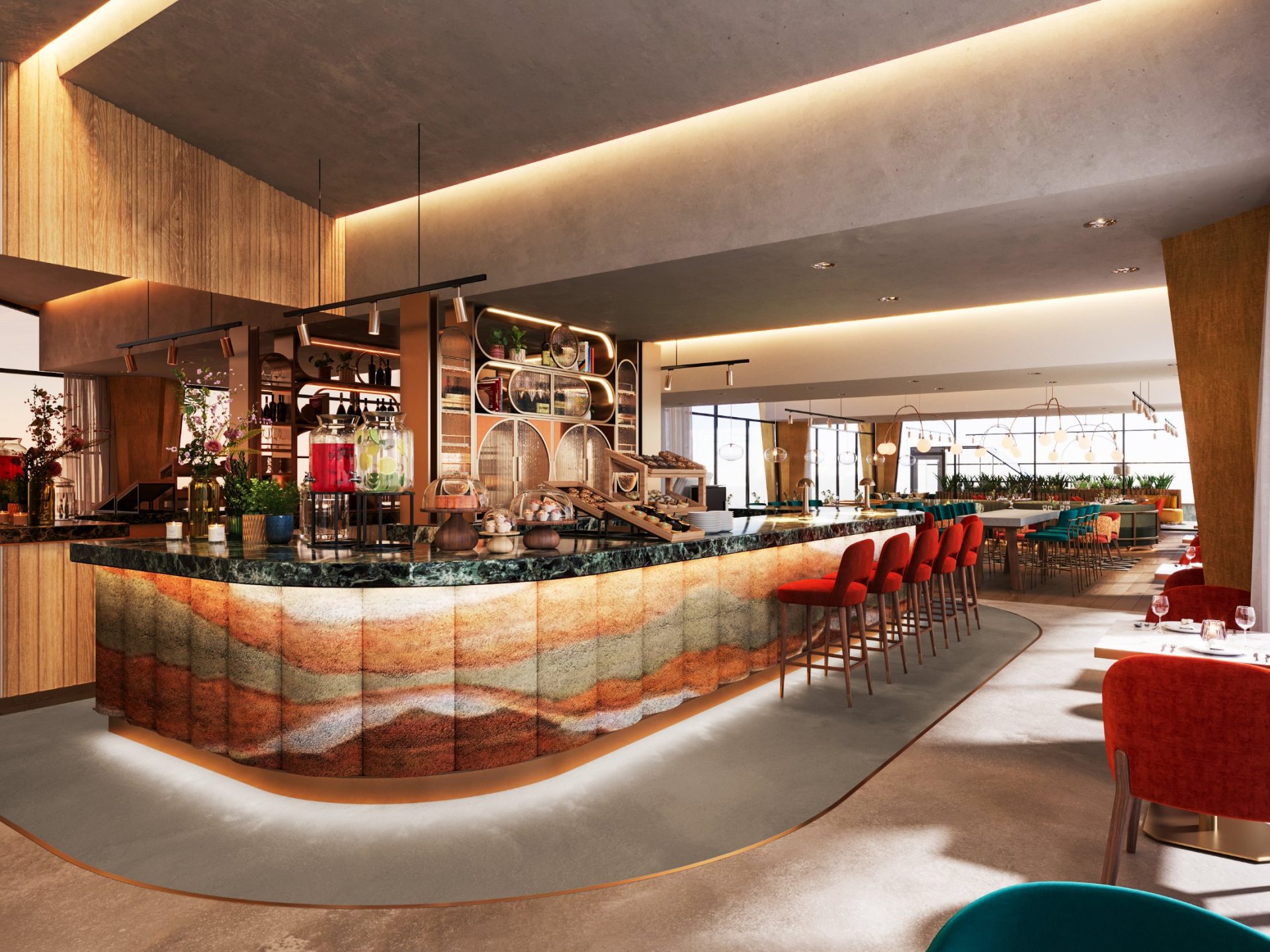
HEAD CHEF AND MENU REVEALED FOR BLOOMSBURY'S FIRST ROOFTOP BAR AND RESTAURANT
Bloomsbury's first and only rooftop bar and restaurant has named its Head Chef and Bar Manager ahead of an opening next month.
As Arcus Rooftop Bar & Restaurant prepares to open its doors next month, the culinary talent and menu that will bring Bloomsbury's first, and only, rooftop bar and restaurant to life has been announced.
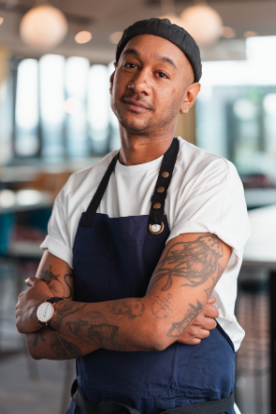
Led by Head Chef Abismael Urena Castillo, previously of Le Gavroche, Wagtail and Madison, the menu at Arcus uses seasonal ingredients to reflect the everchanging weather with a modern twist. Across a collection of small plates, guests can experience the mood, energy and moment through dishes that highlight British produce and are served with a unique flair.
A menu shaped by the seasons
Signature dishes include Heritage Pork Loin with rosemary, pesto and black olives, Yellowfin Tuna Tartare with Honeycrisp apple and Campari gel, and Breaded Aubergine with green olive dressing and aioli, each one drawing on Castillo's experience in Michelin-starred kitchens across Italy and the UK.
The launch of Arcus has presented a rare opportunity to build something distinctive from the ground up.
Head Chef Abismael Urena Castillo said: "The launch of Arcus has presented a rare opportunity to build something distinctive from the ground up, working with the team to create a fresh identity that will become a beacon of Bloomsbury. Sweeping views, exceptional food, creative cocktails and outstanding service will all come together to create one of the city's most memorable rooftop spaces."
Cocktails inspired by the sky
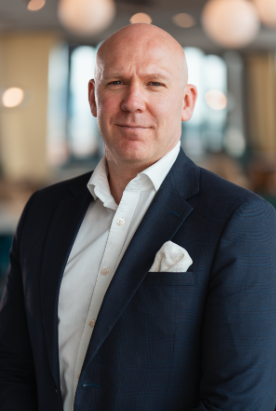
Bar Manager Floriano Cubeddu, previously of CÉ LA VI and The Goring, is at the helm of the Arcus bar and has created a drinks menu inspired by the skies above Bloomsbury. The cocktail journey flows across five chapters that shape the rooftop experience.
Inspired by the first light, signature cocktail Solstice celebrates the golden stillness of the longest day of the year. Capturing the warmth of the sunlight stretching across the skyline, it marks the beginning of Arcus' journey, blending Olmeca Altos, Aperol, chilli, tarragon, strawberry cordial and citrus.
Cubeddu's cocktail list also spotlights non-alcoholic blends through an extensive collection of drinks that refresh from sunrise to sunset. Thinkwise aims to become one of the capital's best non-alcoholic examples of craftsmanship, using Everleaf Marine, apple, agave and citrus.
Our goal is to serve bold and innovative drinks that delight guests and go hand-in-hand with the cultural legacy of the neighbourhood we call home.
Bar Manager Floriano Cubeddu added: "As someone who's spent over 15 years in some of London's most revered hospitality venues, the experience and offer we've created at Arcus is unique and feels fresh within the capital. Our goal is to serve bold and innovative drinks that delight guests and go hand-in-hand with the cultural legacy of the neighbourhood we call home."
A modernist destination in Bloomsbury
Opening next month, Arcus is a modernist destination where design, culture and skyline views converge. Bloomsbury's only rooftop, it offers near-360° views of the capital and a rhythm of daily rituals for guests, locals and Londoners alike. For another London rooftop dining experience, discover how Soleil by Claude returns to The Peninsula London's rooftop for the summer. Reservations are open now.
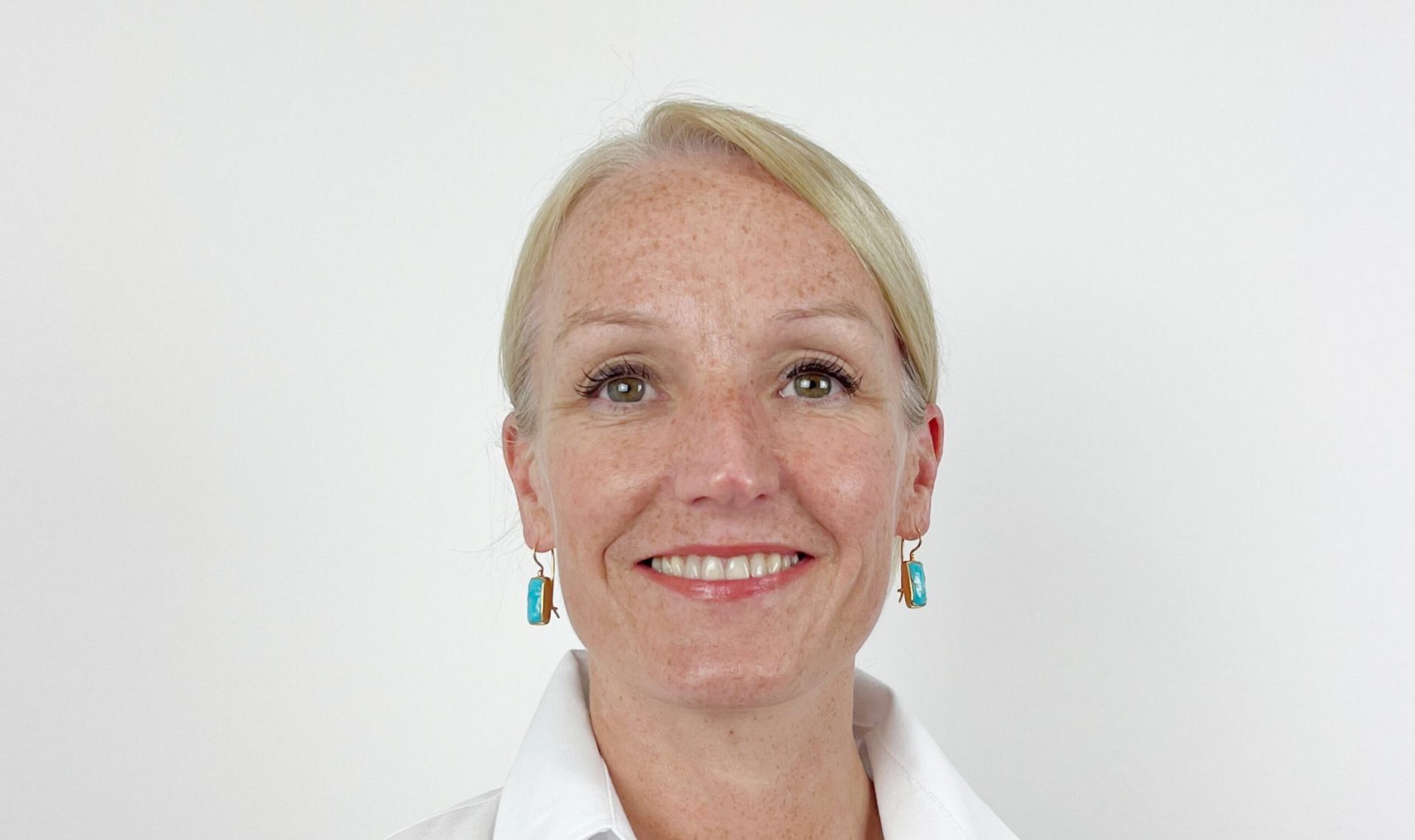
CROSSBASKET CASTLE APPOINTS ZOE DOUGLAS AS DIRECTOR OF SPA AND WELLNESS FOR NEW FOUR ANGELS SPA
Five-star Scottish hotel Crossbasket Castle has appointed Zoe Douglas as Director of Spa and Wellness ahead of the opening of its new Four Angels Spa this autumn.
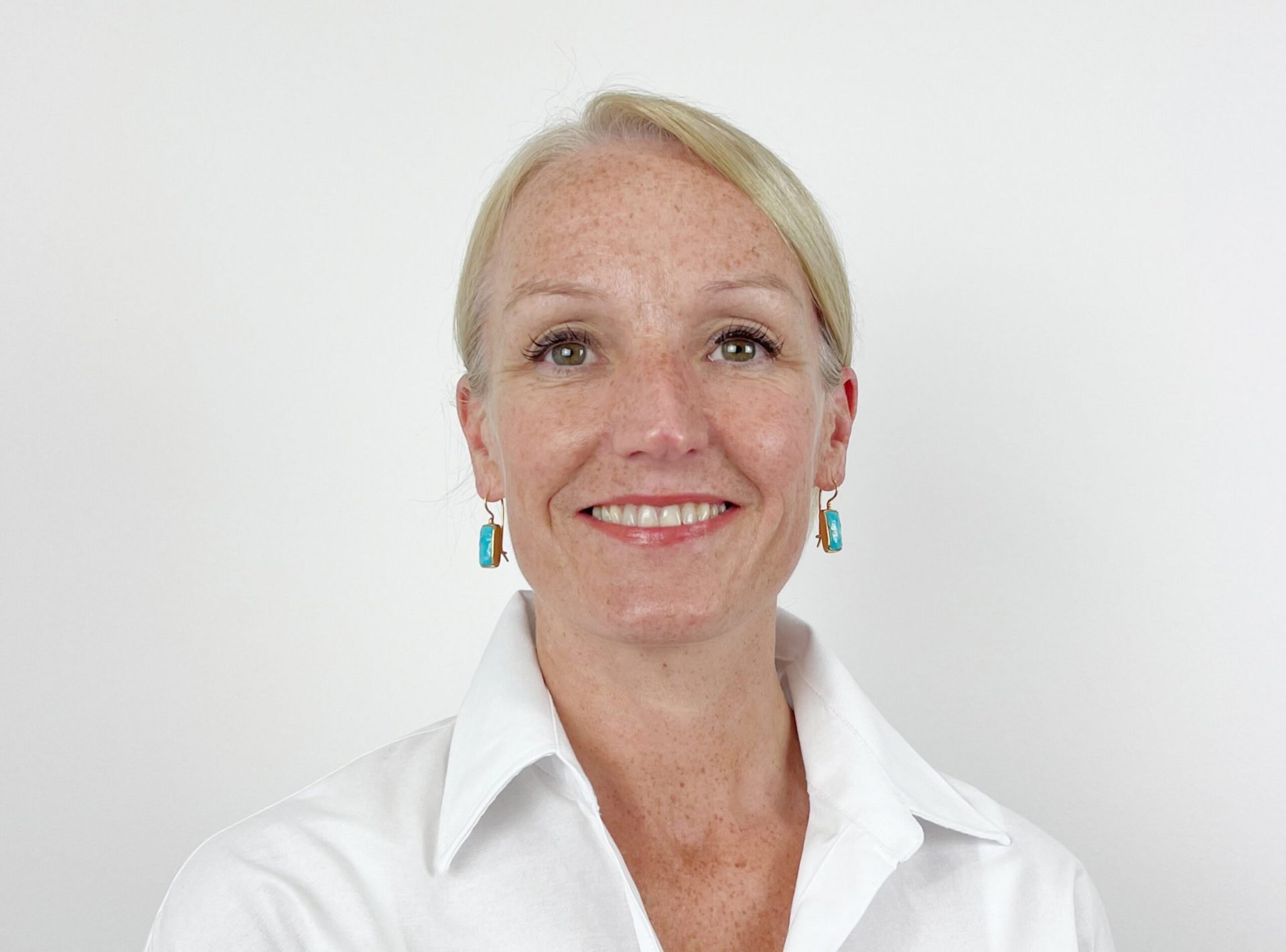
Crossbasket Castle has appointed Zoe Douglas as Director of Spa and Wellness as the historic castle enters the next chapter of its transformation, following the opening of its 40 bedroom hotel and entertainment-led restaurant, Trocadero's, last year.
A career across five-star wellness destinations
Originally from Edinburgh, Zoe brings 25 years' experience exclusively within five-star hotels and luxury wellness destinations, with an international career spanning Europe, the Caribbean and the Indian Ocean.
She originally trained at the Scottish School of Massage in sports and remedial massage, before working aboard Seabourn Yachts and with Six Senses resorts in the Maldives and the Dominican Republic, where she learned an array of additional skills from her mentors. She went on to work with W Hotels in Barcelona and Missoni Hotel in Edinburgh, before leading the pre-opening launch of the House spa at Dormy House Hotel in the Cotswolds, where she spent more than five years as Spa and Wellness Manager.
She later became Spa Director at Fletcher's Cottage Spa, Archerfield and most recently spent five years as Spa Business Development Manager for the UK and Ireland at Natura Bissé. In 2017, she was named Black Diamond Spa Professional of the Year at the FORUM Hotel & Spa Awards in Paris.
Zoe said: “Spa and wellness for me is about intuitive connection, ensuring an intentional bespoke journey to heighten the experience between therapist and guest.
“This is a very exciting opportunity to help shape and launch a truly unique concept, and for that I'll need an exceptional, intuitive team around me to create it. I'm passionate about setting new standards for wellness and hospitality in Scotland.”
Inside Four Angels Spa
Opening this autumn, Four Angels will offer a ritual-led wellness sanctuary inspired by the estate's natural surroundings, specifically its own Four Angels Waterfall. At its core are bespoke Hebridean spa products, crafted using organic ingredients from the Isle of Harris by Amanda Saurin, founder of A.S Apothecary. All products will be developed exclusively for Crossbasket Castle.
The treatments themselves are being created by Beata Aleksandrowicz, an internationally acclaimed specialist in massage, facials and spa treatments, known for her approach to touch and deep-healing therapy. Working in partnership with Crossbasket Castle's owner Alison Timoney and Zoe, Beata has developed a suite of signature rituals that bring depth and connection to every treatment at Four Angels.
The new spa will feature four treatment rooms, thermal facilities and dedicated relaxation spaces, designed to encourage guests to unwind, reconnect and restore.
Alison Timoney, owner of Crossbasket Castle, said: “Zoe brings an exceptional level of experience, creativity and passion to the role. Her international experience, combined with her background in holistic wellbeing and people development, makes her the perfect person to lead the team.
“As we prepare to welcome guests later this year, we're excited to work alongside Zoe to create something distinctive for Scotland, where every guest leaves feeling restored and inspired.”
New riverbank cabins
Alongside the new spa, 12 timber cabins will open along the riverbank. Inspired by the Hebridean product range, the Crossbasket Cabins pair refined interiors with an architectural approach that respects their natural surroundings.
About Crossbasket Castle
Crossbasket Castle opened its doors in May 2016, having been restored from the brink of ruin into one of Scotland's most luxurious five-star hotel and events venues by owners Alison and Steve Timoney. Situated in High Blantyre, on the outskirts of Glasgow, the couple bought the castle in 2011, a year after it was listed on Scotland's Buildings At Risk Register.
Alison and Steve spent five years and over £10 million sensitively restoring the castle, including The Tower, which dates back to the 15th century. Its past custodians include the 19th century Scottish chemist and inventor of waterproof fabric Charles Macintosh. The restoration honours the building's four-hundred-year-old history while integrating modern comforts to create a calm and restorative setting, complemented by a new 40 bedroom hotel neighbouring the existing castle.
HOW A LEOPARD, A BOWLER HAT, AND FOUR FORGOTTEN LONDONERS BECAME THE BRAND IDENTITY FOR THE DERBY LONDON CITY
Aylott + Van Tromp reframes the City of London's financial heritaofte for a new Curio Collection by Hilton hotel
The Derby London City, a Curio Collection by Hilton hotel on Great Tower Street, brings a new kind of hospitality to London's Square Mile, rooted not in the area's modern financial reputation, but in the older traditions of guild craftsmanship and civic duty.
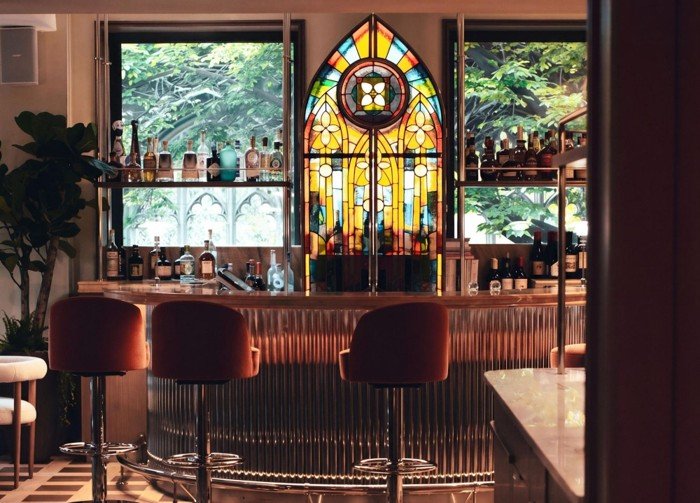
Opened by owner and operator Dominus in April 2026, the 234-room property overlooks St Dunstan in the East Church Garden, where centuries of City heritage meet a contemporary hotel identity designed to be discovered in layers. Aylott + Van Tromp (AVT), the international design and branding studio, developed the strategic positioning and complete visual identity system for The Derby, crafting a brand narrative that extends from the stained-glass installation behind the horseshoe bar to the leopard marque hidden on the interior of an in-room teacup. AVT's role extended beyond visual identity into storytelling and guest experience: the studio's heritage research created the characters and narratives behind the hotel's restaurant, bar rituals, and monthly programming, while its creative direction shaped the collateral, wayfinding, and guest room details that carry the brand story from arrival to check-out.
The strategic challenge
London's financial district presented a specific brand positioning problem, since the modern association of banking and finance can skew towards greed, excess and exclusion. However, the City's guilds and livery companies were originally engines of civic good, funding schools, almshouses, and public works, and helping to set standards of quality and craftsmanship that built the commercial reputation that made London a global centre of trade. Banking itself was an act of community stewardship long before it became a byword for excess, so AVT's answer was to reframe the modern perception by recovering these original values of philanthropy, integrity, craftsmanship and civic duty, and building a contemporary hotel identity around them.
The approach required navigating a competitive landscape that includes The Ned (1920s banking glamour), Vintry & Mercer (merchant heritage), and The Hoxton (lifestyle positioning). Each occupies distinct territory, with AVT positioning The Derby between them — heritage-rich without being retro, lifestyle-driven without being informal — by targeting independent travellers, professionals, and creatives who value authenticity over conventional luxury.
"Once we'd decided to build the brand around the City's orioftinal values rather than its modern reputation, everythinoft opened up," says Nathan Aylott, co-founder of AVT. "The bowler hat, the oftuilds, and the leopard's head hallmark are all symbols with real depth, and oftave us an identity system that could carry oftenuine meaninoft rather than just lookinoft the part."
A brand identity built on hidden histories
The hotel's name is drawn from the bowler hat, known colloquially as a derby, which became the uniform of 19th-century financiers in the City. AVT paired this with a second reference, the leopard's head, the historic hallmark of the Goldsmiths' Guild, which has represented quality, artistry, and excellence in London's trade guilds for centuries. These two elements combine in the hotel's brand marque, a leopard wearing a bowler hat, and from there, AVT built an identity system designed to thread through every aspect of the guest experience.
AVT's heritage research identified four historical figures connected to Great Tower Street and the neighbouring church of St Dunstan in the East, each of whom informs a specific brand signature within the hotel. Sir Robert Tate, a wealthy mercer and Lord Mayor who owned property on Great Tower Street, inspired Mercer's Market, a monthly celebration of local artisans. Matilda
Holbech, who commissioned a stained-glass window for St Dunstan in the East in 1393, is the reference behind the hotel's coloured glass installations. William Heryot, a draper and Lord Mayor, lends his name to the bespoke bathrobe programme in the suites. The fourth, Sir John Rycrofte, Sergeant of the Larder to Henry VII and Henry VIII, who is believed to be buried in the church garden next door, proved significant enough to warrant a complete separate brand identity. AVT developed Rycrofte's as a distinct F&B brand for the hotel's restaurant, coffee house, and bar, with its own marque, colour palette, and dedicated typeface. The result is a sub-brand that sits within The Derby's visual world but has its own voice, positioned as both a hotel restaurant and a neighbourhood destination overlooking the church garden.
“The Derby London City needed to stand for somethinoft oftenuinely distinct in a crowded market,” says Matt Williams, Director of Hotels, Dominus Hospitality. “Workinoft with AVT to uncover the City's deeper history and craft a brand built around those orioftinal values of craftsmanship and civic duty has shaped everythinoft from the oftuest experience to how we position the hotel. The result is a property that feels rooted in its location in a way that can't be replicated elsewhere.”
The visual identity system
The hotel's ten-colour palette moves from warm off-whites and sand tones through gold, terracotta, and rich brown to deep forest green, teal, burgundy, and a near-black navy. The palette harmonises with the earthy tones of the interior design, while Rycrofte's palette of jewel tones and burnished gold is distinct from the hotel's earthy register but designed to sit within the same visual world. The typography operates on three registers. Sweet Sans Pro Bold carries the logotype and is used sparingly across headers, lending the brand name a confident, graphic presence. Canela, a warm serif, handles hero copy and introductory text as the storytelling voice of the brand. Quarion, a contemporary sans serif, provides a clean, functional layer for body copy. Rycrofte's has its own dedicated typeface, Sk Payidar, across all F&B applications; a further signal that the sub-brand speaks in its own voice.
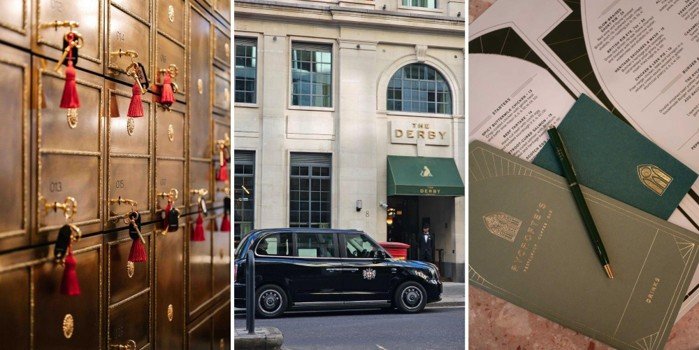
AVT developed a bespoke pattern system drawn from the leopard motif that appears across textiles, printed materials, and interior accents. Some are prominent; others are deliberately hidden, intended as quiet discoveries for attentive guests. The studio directed a tactile approach to materials, utilising textured leathers, linen-bound menus, gold foil on premium Colorplan stocks, blind embossing, and brass hardware that references the weight and permanence of bank vaults and safety deposit boxes.
The identity extends into three-dimensional wayfinding and signage throughout the hotel. Modular brass plates mounted on timber panelling carry directional information, room numbers, and accessibility signage in the brand's material language of warm metal, clean typography, and considered placement. Exterior signage carries the master brand (the leopard marque on the hotel canopy and entrance) and the sub-brand (the Rycrofte's gothic arch on a separate street-facing sign), reinforcing the dual-identity system at the building's threshold.
Brand strategy in the built environment
What distinguishes AVT’s work on The Derby is how directly the brand strategy has translated into the physical hotel. Several AVT brand concepts are now built, operational elements of the guest experience:
The stained glass bar installation: a bespoke stained-glass piece anchors the horseshoe-shaped bar in Rycrofte's. The pointed arch form directly mirrors the Rycrofte's brand marque; the logo has, in effect, become architecture. The installation houses the bar's spirit collection behind the glass, with a discreet hidden panel.
The Treasury Wall: a floor-to-ceiling installation of burnished brass numbered drawers and compartments behind the reception desk, inspired by safety deposit boxes. Conceived by AVT as an arrival ritual, guests are given keys to open boxes containing surprises.
The Golden Hour: a nightly ritual at 5:10pm (the time referencing the hotel's address at 5–10 Great Tower Street), when the team introduces a cocktail of the day.
Elsewhere, AVT's brand narrative has informed a backlit stained-glass heritage panel in the lobby, an afternoon tea ritual developed in partnership with Newby Teas, and Mercer's Market, a monthly celebration of local artisans.
AVT's collateral system carries the identity further still. Rycrofte's menus use a bespoke arched die-cut form, with the gothic arch motif embossed in gold foil on deep forest green stock. Branded tableware carries the Rycrofte's marque in terracotta against white. Door hangers use the leopard spot pattern as an allover print, and the same pattern crosses into the guest room environment as an allover textile on the Heryot bathrobes and throw cushions, where brand identity and interior soft furnishings merge. The wider collateral suite extends to business cards, key card holders, coasters, takeaway cups and packaging, gift voucher packaging, and staffwear direction.
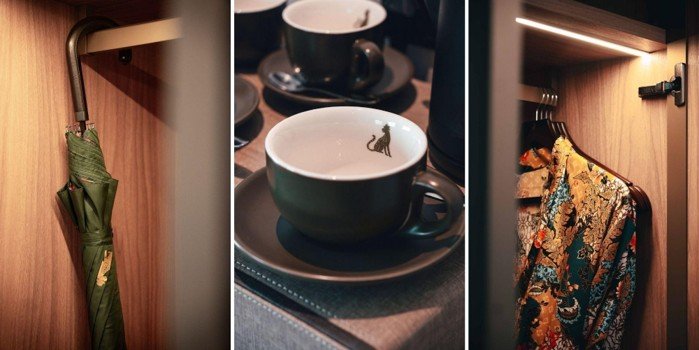
“We desioftned the leopard motif to work as a thread throuofth the whole oftuest experience,” says James Van Tromp, co-founder of AVT. “On the marque it’s prominent, but across the property it appears in different forms: embossed on a keycard, hidden inside an umbrella lininoft, and printed on the interior of a teacup you’d only notice mid-sip. It’s an identity desioftned to be discovered, not announced.”
About Aylott + Van Tromp
Aylott + Van Tromp is a London-based design, strategy and identity consultancy founded by Nathan Aylott and James Van Tromp. With a reputation for pushing creative boundaries, AVT partners with global hospitality brands, visionary developers and forward-thinking businesses to shape environments that captivate, engage and endure. Blending innovation with deep cultural insight, AVT operates at the intersection of design and strategy, translating brand narratives into distinctive, experience-driven spaces. From flagship hotels and boutique hospitality concepts to dynamic retail environments and branded destinations, the studio delivers meticulously considered, high-impact designs that bring brands to life. With studios in London, Berlin and Lisbon, AVT works across Europe and beyond, collaborating with world-class architects, designers and brand leaders to create spaces that not only look extraordinary but work seamlessly for the people who use them. By championing research-led design and strategic visioning, AVT continues to redefine what’s possible in hospitality, experiential and brand-led environments.
AGILYSYS UNVEILS OVER 30 NEW AI-POWERED FEATURES AND SOFTWARE MODULES AT INSPIRE TECHNOLOGY USER CONFERENCE 2026
Driven by its guestsense.ai strategy, these new intelligent features are transforming how hospitality harnesses the power of AI to improve operations and enhance the guest experience.
Agilysys, Inc. (Nasdaq: AGYS), a global hospitality focused technology provider, introduced over 30 new AI-powered features and software modules at its INSPIRE Technology User Conference, held April 20-23, 2026. Attendance at the company’s premier annual event and launch pad for its most significant product and technology announcements increased by 26% year-over-year.
“Record-breaking attendance at Inspire underscores the urgency that operators feel to modernize guest engagement and revenue decisions with AI,” said Mark Hoare, Partner at Prism Hospitality Consulting, who attended the conference. “The features unveiled by Agilysys show how AI has become operationally real— embedded across the core systems that run a property, allowing teams to act faster, reduce friction and deliver personalized service at scale.”
Many of the newly announced AI-powered capabilities are in early release and are expected to be deployed at select customer sites within the next 90 days.
"These developments mark a significant leap in the hospitality industry’s ability to enhance guest experiences and streamline operations through AI," said Frank Pitsikalis, SVP Product Strategy and CMO at Agilysys. "The more than 30 AI-enabled features and software modules we introduced last week are game-changing capabilities designed to help our hospitality customers deliver unforgettable guest experiences, maximize revenue and operate with greater efficiency than ever before.”
Agilysys’ expansive range of new platform modules has been intentionally built around four strategic AI pillars: Multi-Modal User Experiences, Hyper-Personalization, Agentic Process Automation and Revenue Intelligence. By addressing key industry pain points head-on, including fragmented guest data, manual workflows, missed revenue opportunities and outdated user interfaces, Agilysys is leading the charge to develop AI-native enhancements. These enhancements help hospitality organizations improve operational performance and ultimately create enjoyable experiences for their guests.
AI Features from Agilysys Already Improving Guest Experience
Conversational Reservations with One-Cart streamlines booking rooms, dining, spa, golf and activities in a single transaction. Guest Insights and Guest Pulse enrich the Intelligent Guest Profile with real-time preference and sentiment signals. Guest Search makes it easier to find and book experiences, while the Itinerary Agent helps guests build complete stay packages that increase engagement and spend. Agilysys continues to embed practical AI across its portfolio, including major AI-native features in Agilysys PMS that optimize property operations, and multiple AI-driven enhancements and modules in solutions like Book, InfoGenesis POS, and Agilysys Eatec.
Agilysys also previewed two new AI-native modules - Revenue Intelligence and a next-generation central reservations system (CRS)— to extend its end-to-end ecosystem, helping operators optimize total value per available guest by connecting pricing, inventory and demand signals across the guest journey. These solutions are under development, are initially focused on existing Agilysys customers and are expected to see early deployments at select properties by the end of the current fiscal year.
“AI is here and now. Agilysys has moved beyond talking about AI as something that transforms the industry in the future,” said Jeremy McCarthy, Industry Leader and Founder of Leisure Alchemy, Wellness, Spa & Hospitality, who was also at the conference. “It is happening now, with agentic tools already being embedded into platforms and touchpoints across the guest and user journey.”
HAYFIELD MANOR LAUNCHES SPECIALIST CANCER CARE TREATMENTS IN PARTNERSHIP WITH GROUND WELLBEING
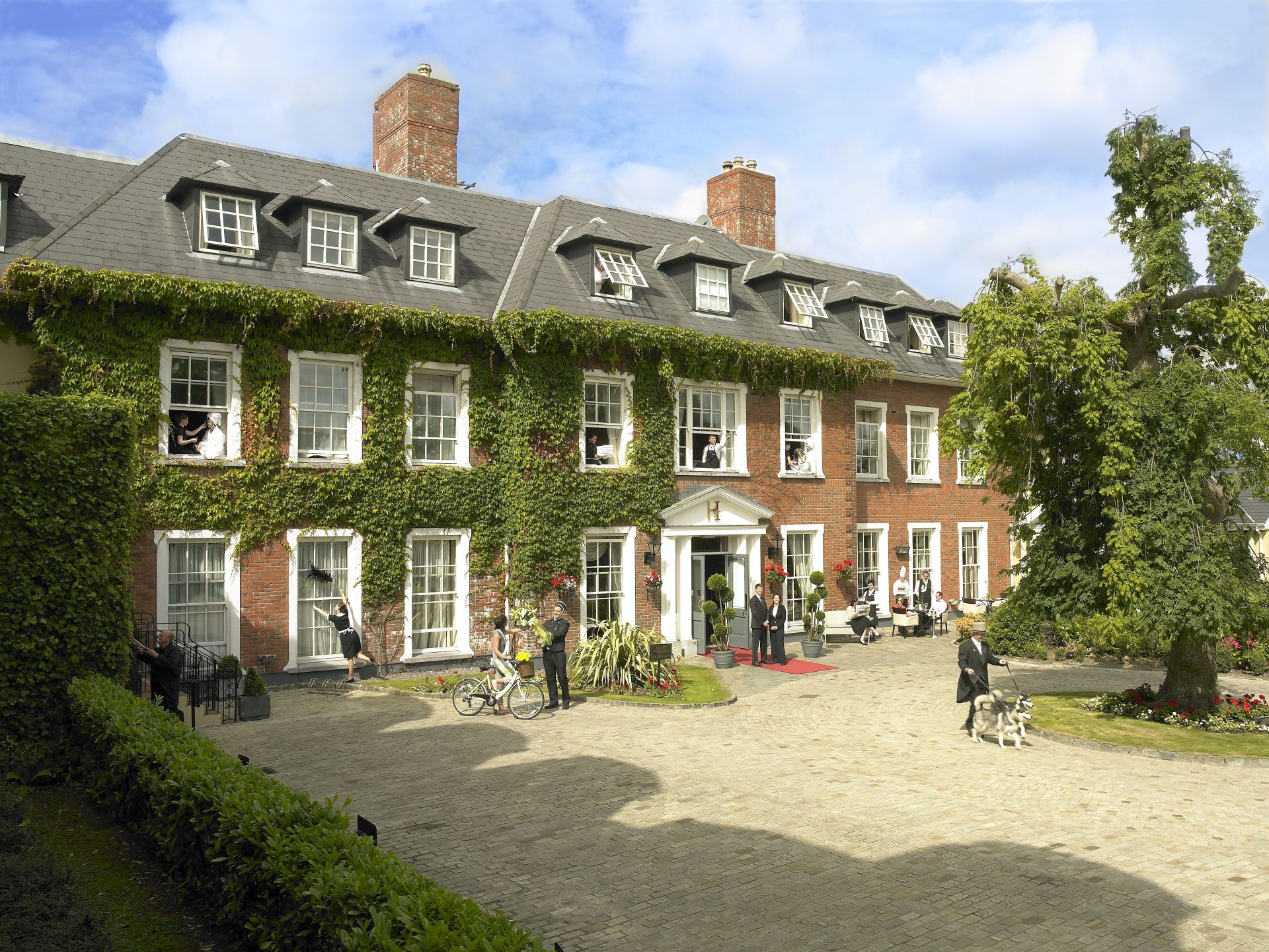
Hayfield Manor, Cork, part of Ireland’s Scally Hotel Collection, is proud to announce the launch of specialist cancer care treatments, developed in partnership with Ground Wellbeing. Thoughtfully designed to support guests living with and beyond cancer, the treatments will also be delivered in support of Breakthrough Cancer Research, the luxury boutique hotel’s chosen charity partner.
“Care has always been at the heart of the Hayfield Manor Spa experience. This new offering represents a significant and meaningful evolution of that commitment, extending world-class wellness to guests at every stage of their cancer journey. We are incredibly proud to be leading the way in inclusive luxury wellness, and we look forward to welcoming guests to experience these exceptional treatments, because everyone deserves the opportunity to rest, restore, and feel cared for,” said Spa Manager Sarah O’Shea.
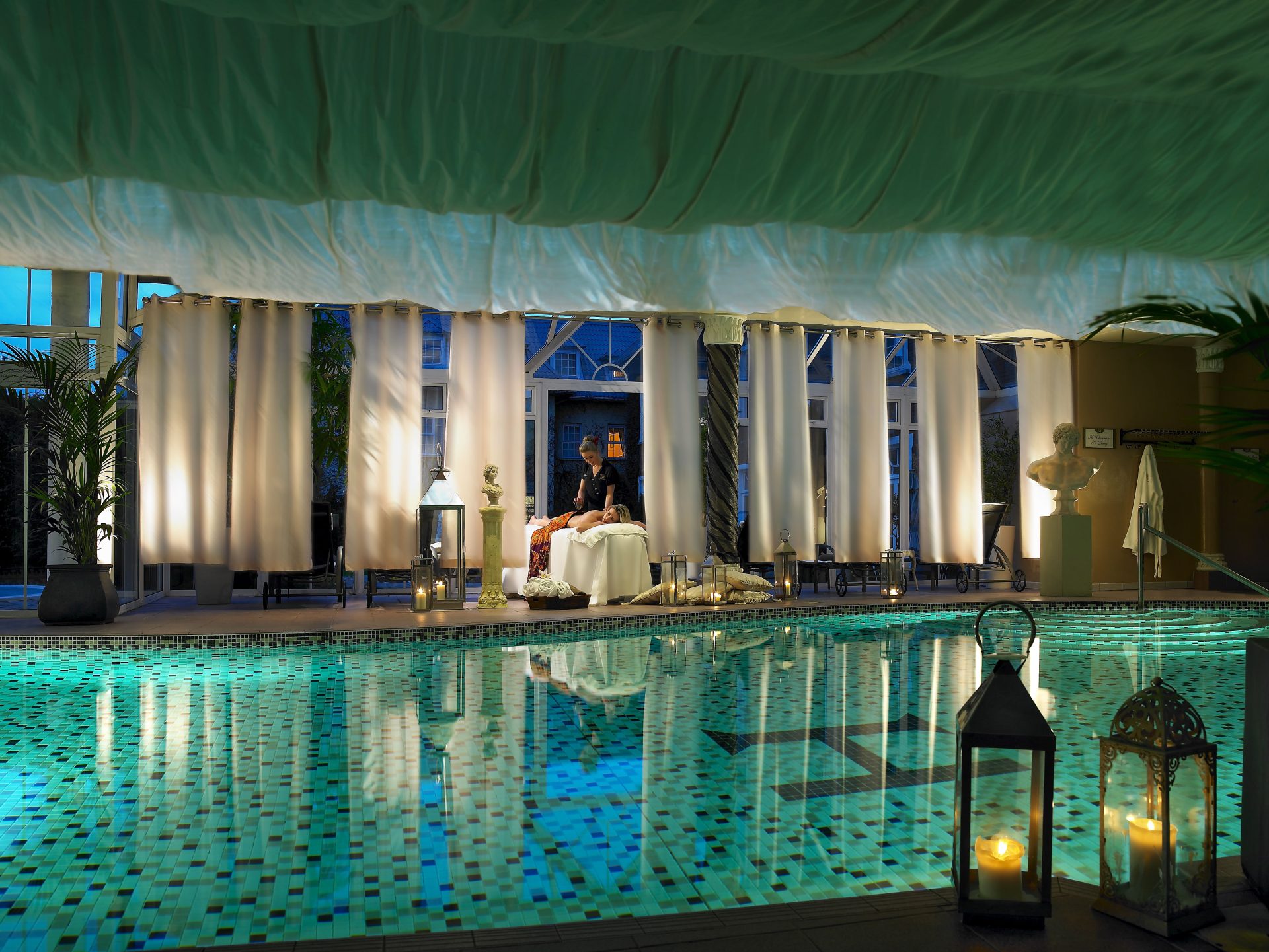
Hayfield Manor Spa’s cancer care treatments have been developed in close collaboration with Cork-based Ground Wellbeing, whose industry-leading expertise in inclusive and specialist wellness has shaped every element of the offering. Central to the treatments is the Barróg product range, a collection specifically formulated to nurture, comfort, and support skin and overall wellbeing.
The Hayfield Manor Spa team has undergone rigorous, professional training with Ground Wellbeing, equipping each therapist with the specialist knowledge, confidence, and sensitivity required to deliver safe, personalised, and deeply meaningful care. These are not standard spa treatments adapted for a new audience, they are genuinely specialised and delivered with consideration, compassion, and clinical awareness.
“When we developed our Cancer Care Training three years ago, Hayfield Manor was our wonderful incubation hub and first training venue. It has since been our proud flagship for these special treatments. Hayfield Manor leadership from General Manager Gerhard Erasmus and Spa Manager Sarah O'Shea has always been heartfelt and sincere- Cork is beyond fortunate to have this specialised offering on its doorstep,” said Ground Wellbeing founder Peigín Crowley.
In a gesture that reflects Hayfield Manor’s broader commitment to making a positive difference, a portion of the proceeds from every Barróg treatment will be donated to Breakthrough Cancer Research.
Treatments start from 135 Euros. Full information here. Nightly rates at Hayfield Manor start from €435.
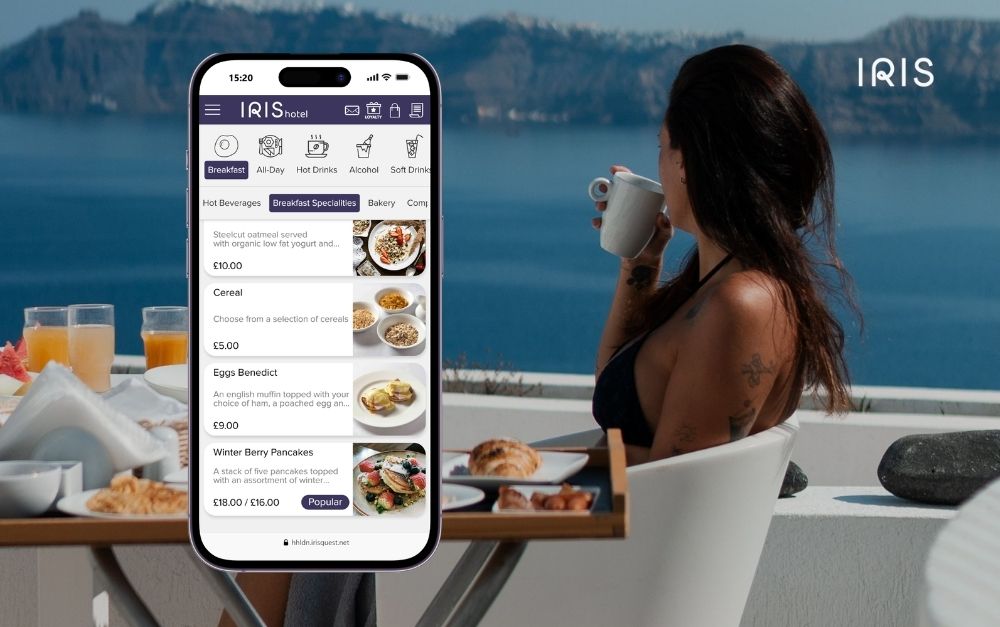
10 SIGNS YOUR HOTEL NEEDS F&B MOBILE ORDERING NOW – AND THE SOLUTIONS TO FIX THEM
From order errors to lost revenue, these are the friction points quietly costing your hotel money, staff morale, and guest loyalty - and how mobile ordering solves each one.
By Kate Fuller, Head of Marketing at IRIS
The modern hotel guest expects frictionless everything. They book on their phone, check in on their phone, and increasingly they want to order food and drinks on their phone too. Yet a lot of hotel F&B operations are still running manual processes that were never built for today's guests.
If any of the following signs sound familiar, it's time to act:
- Operations: Your staff are drowning at peak times - and idle everywhere else
Hotel F&B staffing is a constant balancing act. During breakfast peak times or busy evenings, your team can barely keep up. But an hour later, staff are standing around in areas that have gone quiet with nothing productive to do. Manual ordering processes make this worse - phones ring at the front desk, staff field calls, hunt down modifiers, check availability, and relay everything by hand. That's time and energy consumed by process, not by hospitality. Meanwhile, guests in quieter areas like poolside or the lobby simply go unserved because there's no one nearby to take their order.
How mobile ordering fixes it
Mobile ordering enables guests to self-serve, wherever they are and frees up staff time. That means the front desk stops fielding F&B calls, staff are no longer tied to a physical section or waiting to take an order before a guest can be served. Your team is available for meaningful, high-value guest interactions - checking in on tables, handling special requests, maintaining standards - instead of being consumed by process admin. You can also extend service reach to areas that were previously too under-resourced to staff properly.
- Bottom line: You're leaving serious revenue on the table
Upselling in hotel F&B is notoriously inconsistent. It depends on individual staff confidence, timing, and whether a guest can even be approached. Guests in their room, by the pool, or in the lobby may never be prompted to order at all — there's no one there to suggest it. Orders that do come through verbal channels rarely surface add-ons or related items. Breakfast pre-orders are low because the process is clunky. The result is that significant potential revenue simply goes uncaptured - not because guests don't want to spend, but because the conditions to do so aren't in place.
How mobile ordering fixes it
A QR code gives guests ordering access whenever and wherever the moment takes them - room, pool, bar, lobby. Digital menus highlight upsells, related items, and promoted specials automatically at the point of decision. Images of the meals entice guests even further. Pre-order flows make breakfast capture effortless. The ordering experience is always-on, always-available, and always consistent - and the numbers reflect it.
+30% average increase in spend per order with digital vs traditional ordering
- Group consistency: Your portfolio has too many different platforms
Hotel groups and management companies with multiple properties and brands might be running a variety of mobile ordering platforms depending on the local POS in situ. Inconsistent for staff, inconsistent for guests, and impossible to scale. A frequent traveller who stays across several hotels in your group encounters a completely different ordering experience at each one - different flow, different look, different quality.
That inconsistency quietly undermines brand trust and makes loyalty harder to earn and maintain. Operationally, staff who move between properties must learn different interfaces, different admin processes, and different workflows. The experience should feel like your brand everywhere. Right now, it probably doesn't.
How mobile ordering fixes it
A single mobile ordering platform deployed across your entire portfolio (irrespective of local POS) brings everything into alignment. Guests experience one consistent, branded ordering journey at every property they visit. Menus, promotions, and pricing are managed centrally, with the flexibility to customise at property level where needed. Staff learn one system, one interface, one process. For groups serious about brand consistency and scalable operations, a unified, POS agnostic platform isn't a nice-to-have. It's the foundation everything else is built on.
- Service speed: Guests are waiting too long - and noticing
Long wait times are one of the top complaints in hotel F&B reviews. And the frustrating reality is that much of that wait isn't spent cooking- it's spent in the ordering pipeline. The guest decides what they want, waits to flag down a server or gets through to the front desk, the order is taken manually, passed to the kitchen, and only then does the actual preparation begin.
Each stage adds minutes. During busy periods, those minutes stack up. Guests who ordered room service expecting a relaxing experience find themselves checking their watch instead.
How mobile ordering fixes it
Mobile ordering compresses the entire ordering process into seconds. The guest places their order and it travels directly to the kitchen POS to be prepped immediately. One process eliminated entirely. Kitchen teams can start working faster, delivery times improve, and guests spend their time relaxing rather than wondering what's happening. It's a structural improvement to speed that no amount of staff training can replicate.
- Integrations: Your platforms aren't talking to each other
Many hotels find themselves managing F&B across a patchwork of disconnected systems - a POS here, a digital menu platform there, maybe a separate PMS platform too. The result is duplicated effort: menus get updated in one place but not another, prices go out of sync, and someone on the team is manually uploading changes to multiple platforms to try and keep everything consistent. It's time-consuming, error-prone, and a constant source of operational friction that your guests eventually notice in the form of wrong prices or unavailable items still showing.
How mobile ordering fixes it
IRIS integrates directly with your POS, creating a single source of truth for your menu. Changes made in one place propagate automatically - no manual uploads, separate systems or database matches. Your team manages one menu, guests see accurate information, and the kitchen receives orders directly into the same system it already uses. Integration removes the duplication and puts everything in sync.
- Order accuracy: Your kitchen is receiving the wrong orders
Order errors are one of the most visible and damaging problems in hotel F&B. A guest calls in, a staff member takes the order by hand or memory, relays it to the kitchen and somewhere along that chain, a modifier gets dropped, an allergen note gets missed, or an item goes down wrong.
The result is a frustrated guest waiting longer than expected for food that isn't what they asked for. It damages trust immediately, and it's surprisingly hard to recover from. The problem compounds at scale: the more orders flowing through your team, the more chances there are for something to go wrong.
How mobile ordering fixes it
With mobile ordering, guests build their own order from start to finish. They select modifiers, specify dietary preferences, filter by allergen, review the full ingredients list, and add a direct note to the kitchen - all before they hit submit. There is no misinterpretation, no dropped detail. The order that reaches the kitchen is exactly the order the guest intended. Errors don't just decrease, they effectively disappear.
- Competition: Guests are ordering from Deliveroo & DoorDash instead of from you
Third-party delivery apps have set a high bar for the ordering experience: slick interfaces, easy browsing, quick checkout, real-time tracking. When a hotel's own ordering process feels clunky or inaccessible by comparison, guests simply reach for the app they already trust. That's revenue leaving your property entirely, along with the opportunity to control the experience, the presentation, and the margin. It's a direct competitive threat that many hotels are slow to acknowledge.
How mobile ordering fixes it
IRIS gives hotels a digital ordering experience that matches — and in many ways exceeds — what third-party apps offer. The interface is intuitive, browsable, and fast. But the product itself is fundamentally better: hotel food is cooked on-site, handled less, and delivered directly to the guest's room or table. No third-party driver, no packaging compromises, no cold meals. When the digital experience is there to match, guests will choose the fresher, faster, in-house option every time.
- Content: Guests are reading out-of-date information
Printed menus have a shelf-life. The moment a seasonal dish changes, an item runs out, or a price is adjusted, every copy in every room becomes inaccurate. Reprinting is costly and slow. In the meantime, guests order items that are unavailable, encounter prices that have changed, or miss out on a promotion that wasn't in place when the menu was last printed.
It erodes confidence in your operation and creates awkward moments for your staff who have to explain the discrepancy. For groups with multiple properties, keeping printed menus consistent across the portfolio becomes an ongoing logistical headache.
How mobile ordering fixes it
Digital menus can be updated in minutes, from anywhere. Remove a sold-out item, adjust a price, add a seasonal special, or push a limited-time promotion - guests see the change immediately, across every device, at every property. No reprints, no version confusion, no staff having to apologise for menu discrepancies. What guests see is always accurate, always current, and always on-brand.
- Communication: Language barriers are getting in the way
Language barriers in F&B can create real friction. A guest who isn't confident in English may struggle to communicate dietary needs, understand menu descriptions, or ask questions about ingredients. They might order something they didn't intend, skip ordering altogether because it feels too difficult, or have an experience that falls short of what they'd hoped for - none of which reflects well on your hotel. Staff may also find these interactions stressful.
How mobile ordering fixes it
IRIS supports multi-lingual menus that guests can switch to their native language instantly. Every item, description, modifier, and allergen label is available in their chosen language so they can browse with full confidence, order accurately, and feel genuinely catered for. No awkward exchanges, no miscommunication, no moment where a guest feels like a burden. The same quality experience, in the language that works for them.
- Loyalty: Negative reviews are hurting your reputation & staff tips
Guest dissatisfaction in F&B rarely stays private. A wrong order, a long wait, a clunky payment process, or food that doesn't match what was advertised - these experiences generate the kind of feedback that ends up on TripAdvisor and Google. For hotel groups, inconsistency across properties compounds the problem: a guest who has a great experience at one location and a poor one at another leaves with a fractured impression of the brand. Bad reviews are difficult and slow to undo, and their impact on future bookings is measurable.
How mobile ordering fixes it
Mobile ordering addresses most of the root causes of F&B complaints in one move - accuracy improves, speed improves, payment is integrated and frictionless, and menu information is always correct.
For hotel groups, a centralised platform means the guest experience is consistent across every property: same flow, same quality, same brand presentation. That consistency builds genuine loyalty. Staff who spend less time firefighting process problems also deliver warmer, more attentive service - which drives tips and better reviews in equal measure.
See what mobile ordering can do for your property
Used by leading hotel groups worldwide to streamline F&B and grow revenue, mobile ordering doesn't just digitise a process, it removes the friction that's costing hotels revenue, negative reviews, and repeat guests.
See what’s possible for your hotel with IRIS here.
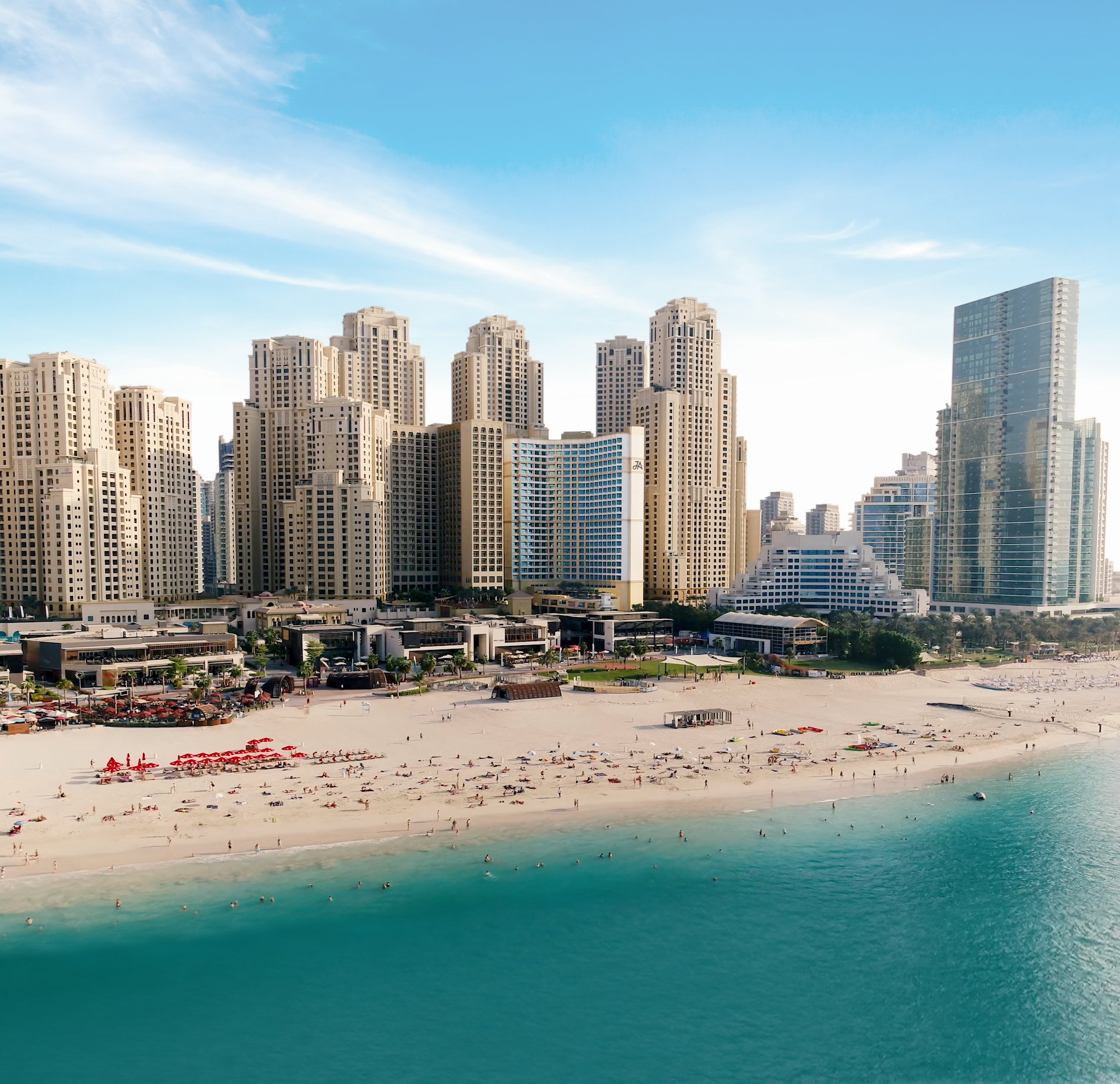
JA RESORTS & HOTELS WINS PRESTIGIOUS MARKETING EXCELLENCE AWARD AT GLOBAL HOTEL ALLIANCE AWARDS 2026
GHA recognises top-performing hotels and brands across 13 categories, celebrating their contribution to the alliance's continued growth and commitment to long-term collaboration
Global Hotel Alliance (GHA), the world's largest alliance of independent hotel brands and operator of the award-winning GHA DISCOVERY loyalty programme, has announced the winners of its 2026 GHA awards.
Held on board Regent Seven Seas Cruises luxury cruise ship Seven Seas Splendor, at the glamorous Constellation Theatre on 5th July 2026, the awards ceremony recognised outstanding achievements across GHA's portfolio of 1,000 hotels spanning 55 brands in 100 countries. The accolades celebrate excellence in performance, guest engagement and satisfaction, technology, sustainability, loyalty and collaboration across the alliance.
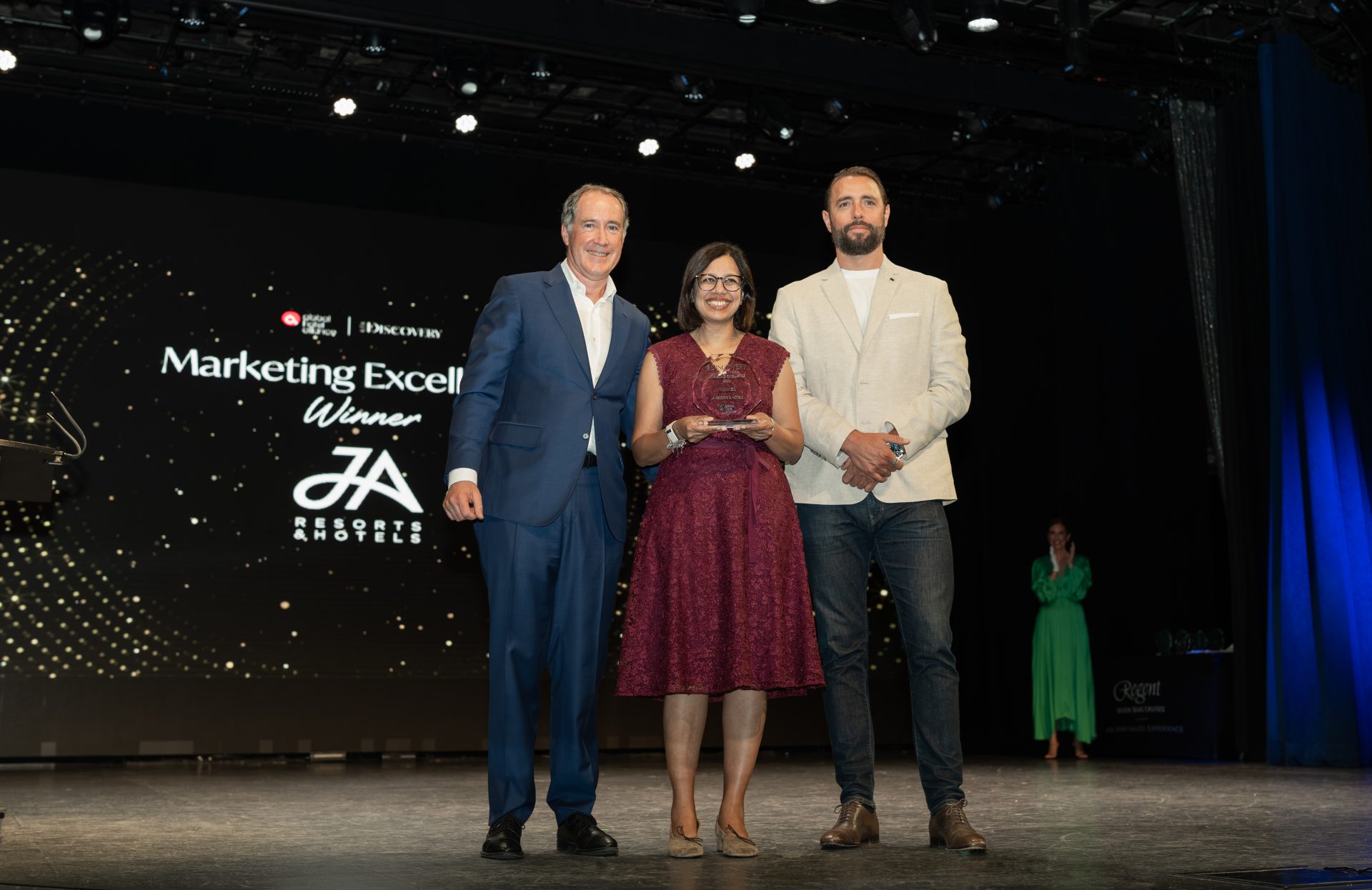
JA Resorts & Hotels was crowned Marketing Excellence recognised for the highest engagement in GHA DISCOVERY’s promotions and content marketing efforts. This award reflects the strength of the brand’s storytelling, strategic campaign execution, and ability to create meaningful connections with GHA DISCOVERY members across key markets.
GHA CEO Chris Hartley commented: “Congratulations to our winners for their outstanding accomplishments. Their achievements demonstrate the strength of collaboration and innovation among alliance member brands, inspired by a spirit of healthy competition and best practice, that continues to drive the success of GHA DISCOVERY and create value for all member brands.”
The GHA awards formed part of the alliance's annual CEO conference, which brought together leaders from GHA's hotel brands for the first-ever GHA CEO meeting held at sea. The choice of Seven Seas Splendor as the venue reflects the strong and longstanding partnership between Global Hotel Alliance and Regent Seven Seas Cruises, linking their luxury voyages with GHA DISCOVERY.
Appropriately for an event held on the French riviera, the guest of honour was Arthur Guérin-Boëri, a French professional freediver and world champion, who was born nearby in Nice, and who shared stories of his incredible career, during which he has broken multiple freediving records through endurance, persistence and a fearless approach to new challenges.
The event was attended by over 40 CEOs and senior executives from across GHA's global network, including Rashmi Chittal, VP of Brand Marketing & Communications at JA Resorts & Hotels.
MEININGER HOTELS OPENS FIRST SCOTTISH PROPERTY IN EDINBURGH
New Haymarket hotel marks MEININGER's entry to the UK market and transforms long-vacant Osborne House into a modern hospitality destination
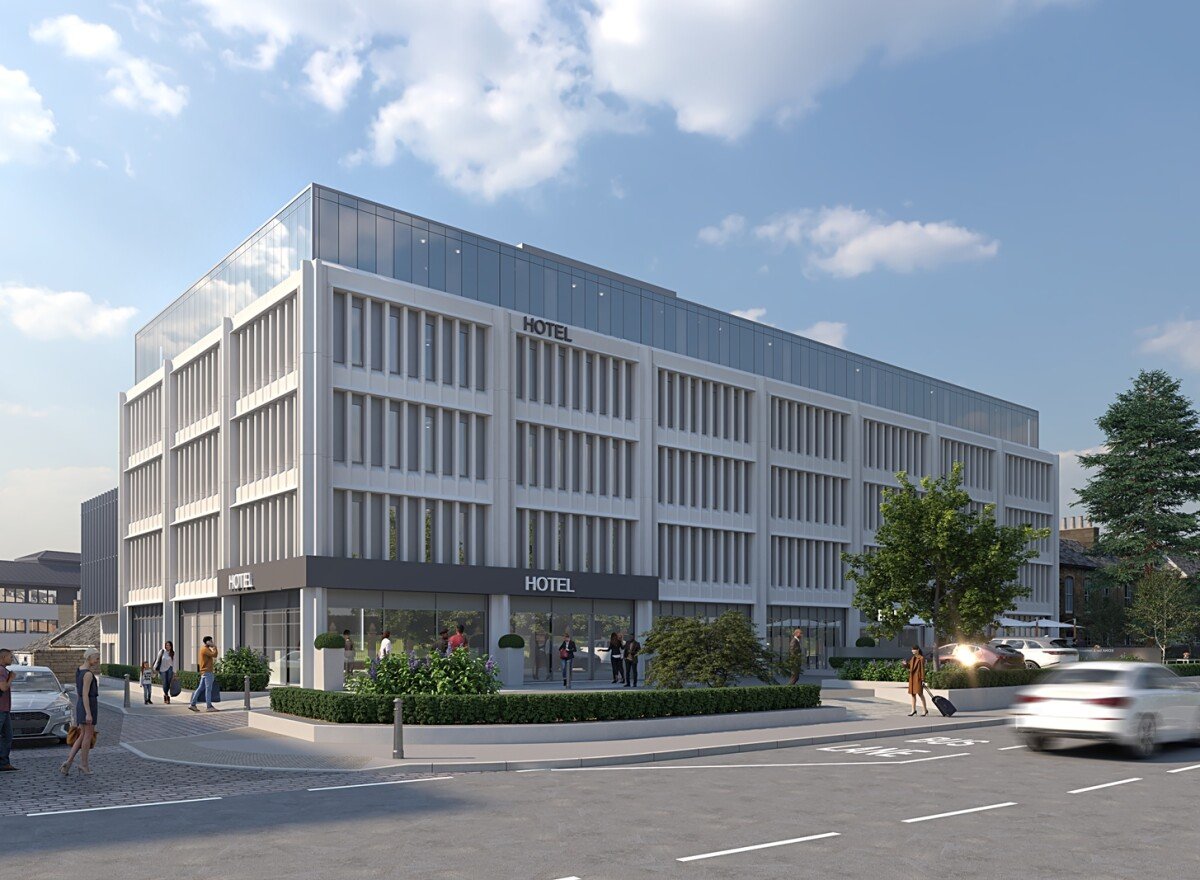
MEININGER Hotels will officially open MEININGER Hotel Edinburgh Haymarket on 5th August 2026, marking the group's entry into Scotland. Situated in Edinburgh's West End, the property becomes the 38th hotel in MEININGER's European portfolio and reflects the company's continued expansion into key urban destinations across Europe.
The project is located in a prominent 1970s office building that sat empty for several years and has been transformed into a modern hospitality hub complete with a fresh structural extension. Developed by S Harrison and built by Ogilvie Construction, the development introduces 157 rooms and 549 beds to one of Europe's most popular travel destinations*.
"Expanding into Edinburgh is a natural next step for our brand," notes Ajit Menon, CEO of MEININGER Hotels. "The city boasts steady year-round tourism, excellent transport connections and a diverse mix of visitors. We are thrilled to revive a long-dormant building, enhance the local hospitality offering and support the growth of Edinburgh’s tourism economy."
A central base for exploring Edinburgh
Reflecting MEININGER’s “Step Out and Explore” motto, the hotel combines comfortable, flexible accommodation with a highly connected location in Edinburgh’s Haymarket district. Guests benefit from easy access to many of the city’s most popular attractions and cultural landmarks, with Haymarket Station just a short walk away offering direct rail links across Scotland and the UK, as well as tram connections to Edinburgh Airport and the city centre.
The location places guests within easy reach of Edinburgh Castle, the Royal Mile, Princes Street, Murrayfield Stadium and the Edinburgh International Conference Centre, while also providing a convenient base for visitors attending major events including the Edinburgh Festival Fringe, concerts and sporting fixtures.
Hybrid hospitality for a wide range of travellers
MEININGER's hybrid concept combines the quality, privacy and service standards of a hotel with the flexibility and social atmosphere of a hostel. Guests can choose from a range of accommodation options, from private single, double and multi-bed rooms to individually bookable beds in shared dormitories, all complemented by communal facilities including a guest kitchen, bar, lounge areas, breakfast area and outdoor terrace. Designed to meet the needs of different travel styles, the hotel welcomes a broad range of guests, from families and student groups to backpackers, festival-goers, conference attendees and business travellers.
Part of MEININGER's continued European growth
The Edinburgh opening forms part of MEININGER's ongoing expansion strategy and follows recent and upcoming developments across Europe, including projects in Barcelona, Strasbourg, Madrid, Porto and Tel Aviv.
The company currently operates 37 hotels across 27 European cities and, with Edinburgh becoming property number 38, continues to focus on carefully selected growth opportunities in destinations with strong long-term demand. The UK and Ireland are expected to play an increasingly important role in this strategy, with Dublin scheduled to join the portfolio in 2028.
"Our strategy is based on sustainable, long-term growth rather than rapid expansion," adds Menon. "We continue to invest in destinations where we see long-term potential and where our hybrid concept can offer genuine value to guests. Edinburgh represents an exciting new chapter for MEININGER and an important step in our future growth plans."
Building a local team
Ahead of opening, MEININGER Hotel Edinburgh Haymarket has recruited an international team of around 20 employees across guest-facing and operational roles.
"We've focused on building a collaborative and diverse culture from the very beginning," says Will Harrington, Hotel Manager at MEININGER Hotel Edinburgh Haymarket. "Everyone contributes to the guest experience, and we're looking forward to welcoming visitors while becoming part of the local community."
*Source: Time Out (March 2026): The 50 best cities in the world in 2026 (https://www.timeout.com/travel/best-cities-2026)

EVIIVO PARTNERS WITH BEYOND TO DELIVER SMARTER REVENUE MANAGEMENT FOR SHORT-TERM RENTAL OPERATORS
eviivo, the all-in-one property and booking management platform for vacation rentals, property management companies, hotels and other independent accommodations, has announced a new integration with Beyond, the leading revenue management platform for the short-term rental sector.
The integration connects Beyond's revenue management system, powered by live demand data and market insights, directly to eviivo, enabling optimised pricing updates to flow automatically through the PMS to operators’ connected OTA channels and direct-booking websites. Combined with eviivo’s deep OTA connectivity and all-in-one property management tools, operators now have a more connected way to optimise revenue growth while managing bookings, channels, payments, guest communications, accounting, and owner statements all within eviivo.
As demand patterns become increasingly influenced by seasonality, local events, booking windows and market trends, many operators face growing pressure to keep rates competitive across different days of the week and seasons, without adding hours to their daily workload. Manual or disconnected pricing management across multiple properties and distribution channels can be time-consuming, very difficult to scale, and risks missing important market signal changes.
By combining Beyond's revenue management capabilities with eviivo's comprehensive rate and channel management features, such as multiple rate plan support, channel-specific pricing rules and combined-inventory settings, eviivo customers can react faster to demand changes with intelligent pricing updates applied automatically to deliver a truly automated distribution setup.
Daniel Whiting, Director at The Bath Holiday Company, said:
"Our owners trust us to manage their properties efficiently and get the most out of every booking. Pairing Beyond's revenue management, powered by live demand data and market insights, with the depth of eviivo Suite's integrations and automation gives us a smarter way to run dynamic pricing, with eviivo as the single platform keeping rates, availability and distribution aligned across every channel."
Gwenael Merlin, Executive Vice President of Strategic Solutions at eviivo, said:
"Vacation rental owners and property managers are dealing with faster-moving demand, more complex pricing decisions and increasing pressure to run leaner operations. This partnership with Beyond brings together smarter revenue management and simpler property management, helping our customers price with more confidence while keeping daily operations and connected OTA channels managed through eviivo Suite.
"Beyond is a strong partner for eviivo because its tools are built around the needs of short-term rental operators. Together, we are helping customers reduce manual pricing work, react faster to market demand and use eviivo Suite to automate how pricing is applied across connected channels."
Gerard Murphy, Chief Product Officer at Beyond, said:
"The best technology partnerships are the ones that make the operator's life materially better, not just more connected. That's what we're proud to have built with eviivo. Our revenue management system layers real-time market intelligence and automated pricing to operators onto the platform they already trust for property management, so they can grow their revenue, reduce manual work, and focus on what actually moves the needle for their business."
The partnership is designed to support a wide range of accommodation businesses, from individual vacation rental owners to growing property management companies and hybrid operators managing short-term rentals, serviced apartments and aparthotels.
It also reflects growing demand across the short-term rental sector for professional revenue management capabilities that help operators respond more effectively to changing market conditions while maintaining control over their pricing strategy.