


Four ways hotel brands jeopardise executive hiring – and how to put it right

The need for exceptional hotel leadership has never been greater. With operating costs rising and consumer sentiment remaining weak, management teams face mounting pressure to deliver performance in challenging conditions.
Strong leaders build resilience, keeping morale high and employee turnover rates low, and in doing so, build the most valuable asset any hotel can have in tough times - loyal, connected teams dedicated to delivering an outstanding guest experience.
Recognising the influence that senior hires have on culture, innovation, experience and brand is key, yet many hotels fall into the urgency trap, believing that fast, crisis-driven hiring will quickly solve performance challenges.
The reality is rushed senior recruitment can often end in poor fit, adding significant costs to the business long term. It’s far better to get leadership appointments right first time and avoid the four common missteps that can stand in the way of securing truly transformative, top-tier talent.
Mistake one: Not having a robust leadership hiring framework
During the hiring process, managers often prioritise technical skills and experience over leadership capabilities and behaviours. The reason for this is clear in that the latter are harder to define and measure, but also more difficult to align across an organisation.
To make better appointments, hiring managers should take a holistic view of what makes a leader successful within their business. This means defining not only the experience required, but also behaviours, values, and personal traits that drive performance and long-term success.
By clearly understanding the desired “leadership profile” and aligning the wider organisation around it, hotels can ensure candidates not only look strong on paper, but also possess the mindset and character needed to thrive in the environment and deliver sustained results.
Companies should invest time in clarifying the ideal leadership profile for key roles and develop a robust selection process that includes behavioural interviews, assessments, and scenario-based evaluations. While these methods require time and planning, they are invaluable for identifying true leadership potential and securing hires who will strengthen the business long-term.
Mistake two: Ignoring what really attracts top talent
Hotels can’t attract the leadership they need without rethinking outdated employee value propositions (EVPs). Senior candidates often juggle multiple offers and are frequently approached for opportunities. As such, salary alone is no longer the key driver - flexibility, work-life balance, culture, and opportunities for growth now rank just as highly.
Offering competitive pay but remaining rigid or silent on other benefits risks rejection. Incomplete or uninspiring EVPs should be replaced with propositions that genuinely resonate, capturing what truly matters to top-tier leaders. And if cultural proof can be shown and not just told, it’s even better.
It can be difficult for brands to determine exactly what it is that will appeal to their target audience. Are executives seeking a well-established culture of wellbeing to step into? Or are they motivated by transformation and the chance to shape, influence, and leave a legacy?
Organisations can get closer to this through active listening. Monitoring conversations among relevant professional communities, engaging authentically on social platforms, and consulting with specialist senior-level recruitment partners who understand what truly drives decision-making among the leaders you want to attract.
Mistake three: Short-term, reactive hiring
One of the most successful hiring strategies is to not wait for the vacancy to appear but rather continuously be building a pipeline of future leaders and talent. A strong candidate network can create true bench strength, ensuring that when key roles open, the right people have already been identified and engaged.
This kind of preparedness requires collaboration across the business. HR teams play an important role in keeping close to talent, mapping the market, maintaining contact with promising leaders, and closely tracking internal potential. But line managers must also contribute by spotting emerging talent, mentoring high performers, and supporting long-term succession planning. This creates a network of relationships that can be activated quickly when change happens.
Alumni networks are another powerful but often overlooked resource. Former employees can return as even stronger leaders, bringing back new experience and perspective.
Building a leadership pipeline isn’t about reacting faster, it’s about thinking further ahead. By treating talent development and relationship-building as ongoing priorities, hotels can ensure they always have a deep and diverse bench of future leaders ready to strengthen the business for the long term.
Mistake four: Not thinking outside the box
Finally, many hotels inadvertently limit their senior hiring success by relying too heavily on familiar candidates from within the sector. While hospitality experience is often critical, broadening the search to include leaders from adjacent industries such as luxury retail, airlines, or luxury travel for example can uncover exceptional talent with transferable skills and fresh perspectives.
Some of the most successful leadership appointments in hospitality have come from outside the industry. These individuals can bring innovative thinking, and best practice and capability in fields where traditional hotel executives can sometimes lag, such as digital transformation, customer experience design, or brand engagement.
It should be noted that organisations with a clear leadership framework one that defines what “good” looks like in terms of behaviours, values, and capabilities are far better equipped to identify and integrate talent from beyond the sector.
Expanding the talent pool can also mean reaching beyond conventional sourcing methods. While platforms like LinkedIn are useful for identifying active candidates, many high-potential leaders are passive jobseekers who might not be obvious at first. Partnering with specialist executive search firms or networks that engage across multiple industries can help uncover these hidden candidates and bring in the kind of transformative leadership that drives true competitive advantage.
Reshaping hiring practices to build organisational resilience
Ultimately, the hoteliers that take a more strategic approach to hiring by strengthening their assessment criteria and redefining employee value propositions will be the ones to attract and retain exceptional talent.
By widening their talent pool and avoiding the common hiring pitfalls outlined above, businesses will find stronger leaders who elevate teams, inspire change, and shape a more resilient future.


Minor Hotels announces the expansion of Tivoli Hotels & Resorts in Italy with the Tivoli Palazzo Risorgimento Lecce
Minor Hotels, a global hospitality group with hotels, resorts and branded residences across 59 countries, announces a new Tivoli Hotels & Resorts in Italy, in the heart of Puglia. Following a comprehensive renovation, the Tivoli Palazzo Risorgimento Lecce is set to open in April 2026, establishing itself as a new landmark in luxury hospitality for one of Italy´s most sought-after and fastest-growing travel destinations Lecce.
Located in Lecce's historic centre, on Via Imperatore Augusto, between Piazza Sant'Oronzo and Piazzetta Santa Chiara, Tivoli Palazzo Risorgimento Lecce will feature 45 elegantly appointed guest rooms, a restaurant on the ground floor and a lounge bar at the rooftop with breathtaking views of the Cathedral Bell Tower. Guests will also enjoy a wellness area with a pool, treatment rooms, Turkish bath, and a fully equipped gym.
Surrounded by golden sandstone buildings, charming piazzas, and vibrant cafés and wine bars, the hotel will offer guests a rich blend of relaxation and cultural experiences in the heart of Lecce — often called the “Florence of the South” for its renowned Baroque architecture and vibrant cultural scene.
Located within walking distance of key attractions like the Roman Amphitheatre in Piazza Sant'Oronzo, the Basilica di Santa Croce, and Lecce Cathedral, the new Tivoli Palazzo Risorgimento Lecce will provide easy access to beautiful beaches just 20 minutes away by car. The city is well-connected via Brindisi Airport (35-minute drive), and high-speed rail from major Italian cities.
Gonzalo Aguilar, CEO of Minor Hotels Europe & Americas, commented: “We are thrilled to announce this new Tivoli property in collaboration with Gest Resort. With this latest addition, the Minor Hotels portfolio will reach a total of 60 properties in Italy. Set in a truly distinctive location and showcasing a unique style, this hotel will elevate the luxury hospitality offering in Lecce. It seamlessly blends Tivoli’s rich heritage and savoir-faire with the essence of an authentic Puglian escape.”
"We are excited to collaborate with one of the luxury brands from a leading player like Minor Hotels, sharing the ambition to elevate this exceptional property into a landmark destination. Our goal is to attract new visitors to the city while simultaneously reshaping the local hospitality landscape.", confirms Marisa Bleve, head of Gest Resort.
With a journey that dates back to 1933 in Lisbon, Tivoli Hotels & Resorts is well-known for its cultural heritage and genuine connection to each destination. The brand expanded from Portugal to Brazil, Qatar and China, and has been growing its footprint further in Europe with recent openings in Spain, Italy and Netherlands. This year the brand further expanded its presence in Portugal with the openings of Tivoli Kopke Porto Gaia and Tivoli Estela Golf & Lodges, both in the north of the country.
Auberge Collection Appoints Jessica Martino Enan as Chief Commercial Officer to Drive Global Growth and Brand Innovation

Auberge Collection, the award-winning portfolio of one-of-a-kind luxury hotels, resorts, and residences, is proud to announce the appointment of Jessica Martino Enan as the company’s Chief Commercial Officer. In this new role, Jessica will lead Auberge’s global commercial organization, spearheading strategy across marketing, sales, revenue management, digital, and distribution, further strengthening the brand’s position as the leader in luxury hospitality.
Jessica brings more than two decades of experience building and transforming some of the world’s most iconic luxury brands through creativity, innovation, and digital transformation. Most recently, she served as Executive Vice President, Global Chief Digital and Client Service Officer at Gucci, where she led the brand’s global digital and omnichannel growth and reimagined the client experience across all touchpoints. Previously, Jessica held senior leadership roles with Louis Vuitton, LVMH, and Vogue. She holds an MBA from the Kellogg School of Management at Northwestern University.
“Jessica is a dynamic and forward-thinking leader with a wealth of global experience,” said Christian Clerc, President and Chief Executive Officer, Auberge Collection. “Her deep expertise in the luxury sector, keen understanding of the luxury consumer, and passion for creating exceptional guest experiences will be instrumental as we continue to build the next era of growth and innovation at Auberge.”
“Auberge Collection’s focus on authenticity, craftsmanship and exceptional, one-of-a-kind experiences reflects exactly what today’s luxury consumer desires,” said Jessica Martino Enan, Chief Commercial Officer, Auberge Collection. “The brand’s distinctive position within the luxury hospitality landscape is incredibly inspiring, and I am thrilled to join Auberge Collection to help shape its next chapter of growth.”
Jessica’s appointment comes at a pivotal time for Auberge Collection. Last month, the company unveiled a new brand identity to reflect its growing portfolio of landmark city hotels, award-winning beachfront escapes, alpine destinations, countryside estates, and residences. The new name underscores a broader vision for Auberge and reaffirms the brand’s commitment to creating the most inspiring collection of one-of-a-kind properties and experiences in the world.
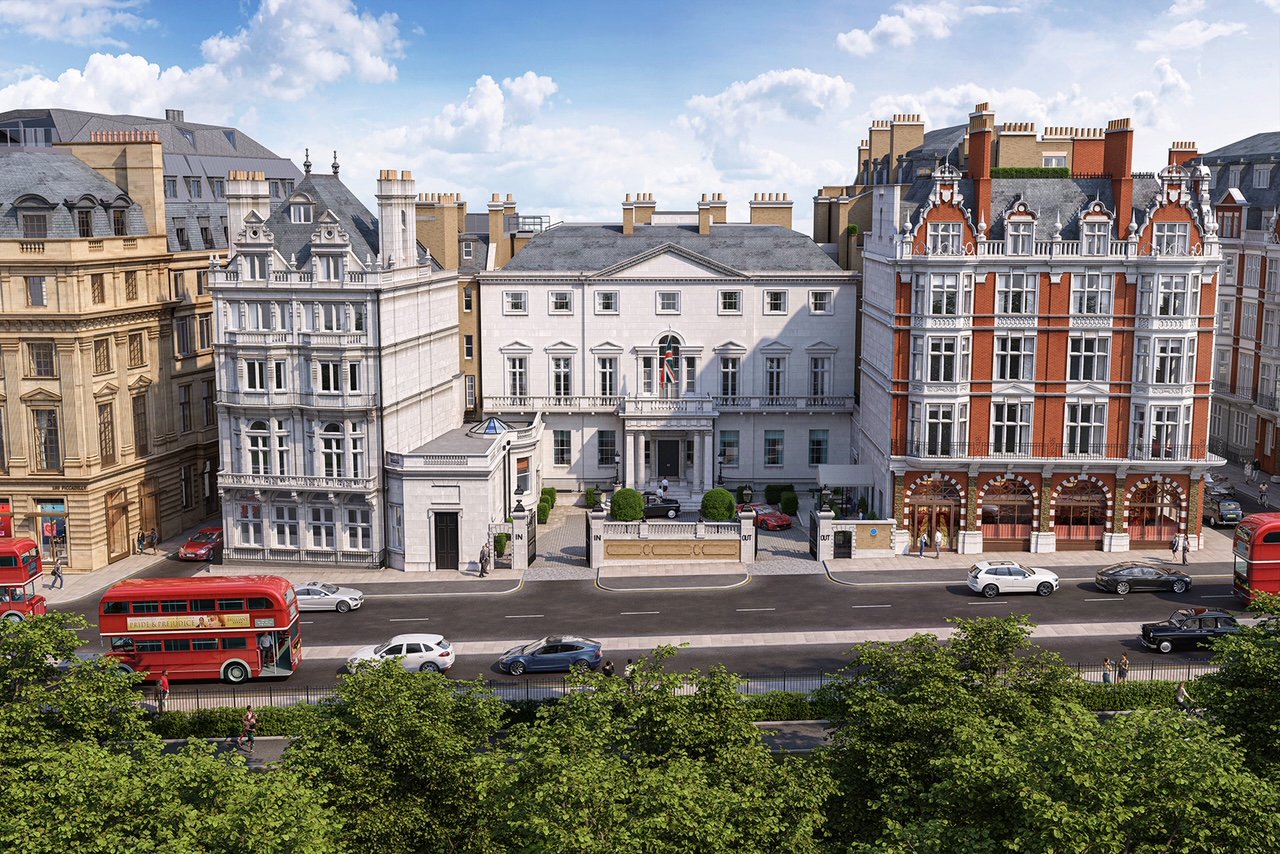
Auberge Collection also continues its thoughtful expansion with the highly anticipated debuts of Cambridge House, Auberge Collection in London and The Knox, Auberge Collection in Dallas, both opening in 2026, alongside recent additions Collegio alla Querce, Auberge Collection in Florence and The Woodward, Auberge Collection in Geneva. Auberge will also soon open several additional urban locations, including The Shore Club, Auberge Collection in Miami Beach, and The Birdsall, Auberge Collection in Houston.
For more information, please visit auberge.com.
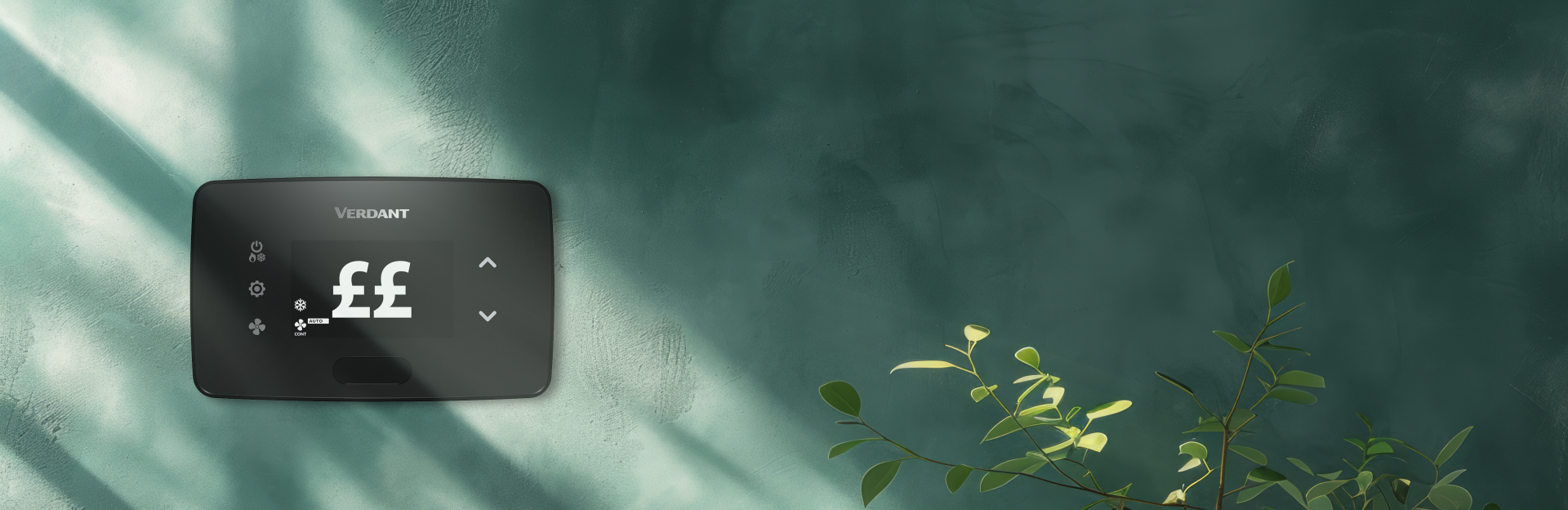
The Hidden Energy Drain
Unlocking Sustainability in Hospitality with Smarter HVAC Controls.
Sustainability is now a central theme in the hospitality industry. From small, family-run independents to global hotel groups, hotels are expected to reduce carbon emissions, comply with ESG requirements, and respond to growing guest expectations for greener stays. While many operators focus on visible initiatives such as eliminating single-use plastics or sourcing locally, one of the largest opportunities for sustainability often goes unnoticed: hotel HVAC systems.
That’s where Verdant’s smart energy management thermostats come in, helping hotels cut waste where it matters most.
Heating and cooling represent up to 60% of a hotel’s total energy use, and much of that energy is wasted when guest rooms sit empty. With occupancy averaging 60% across the industry, hotels are effectively heating or cooling empty rooms more than half the time. That hidden drain on energy drives up utility bills and undermines net zero ambitions.
Reduce HVAC runtimes with smart technology.
Smarter HVAC controls are proving to be one of the most effective ways for hotels to cut energy waste without affecting guest comfort. Using advanced occupancy detection, these systems monitor motion and body heat to understand when a room is empty. Temperatures are then automatically adjusted while the guest is away, reducing unnecessary energy use but ensuring the room feels just right on their return.
Designed specifically for hospitality, Verdant’s energy management solutions operate on proprietary radio frequency technology at 862 MHz. This means it installs quickly, works independently of hotel Wi-Fi, and never interferes with the guest experience.
Sustainability effort needs data to lean on.
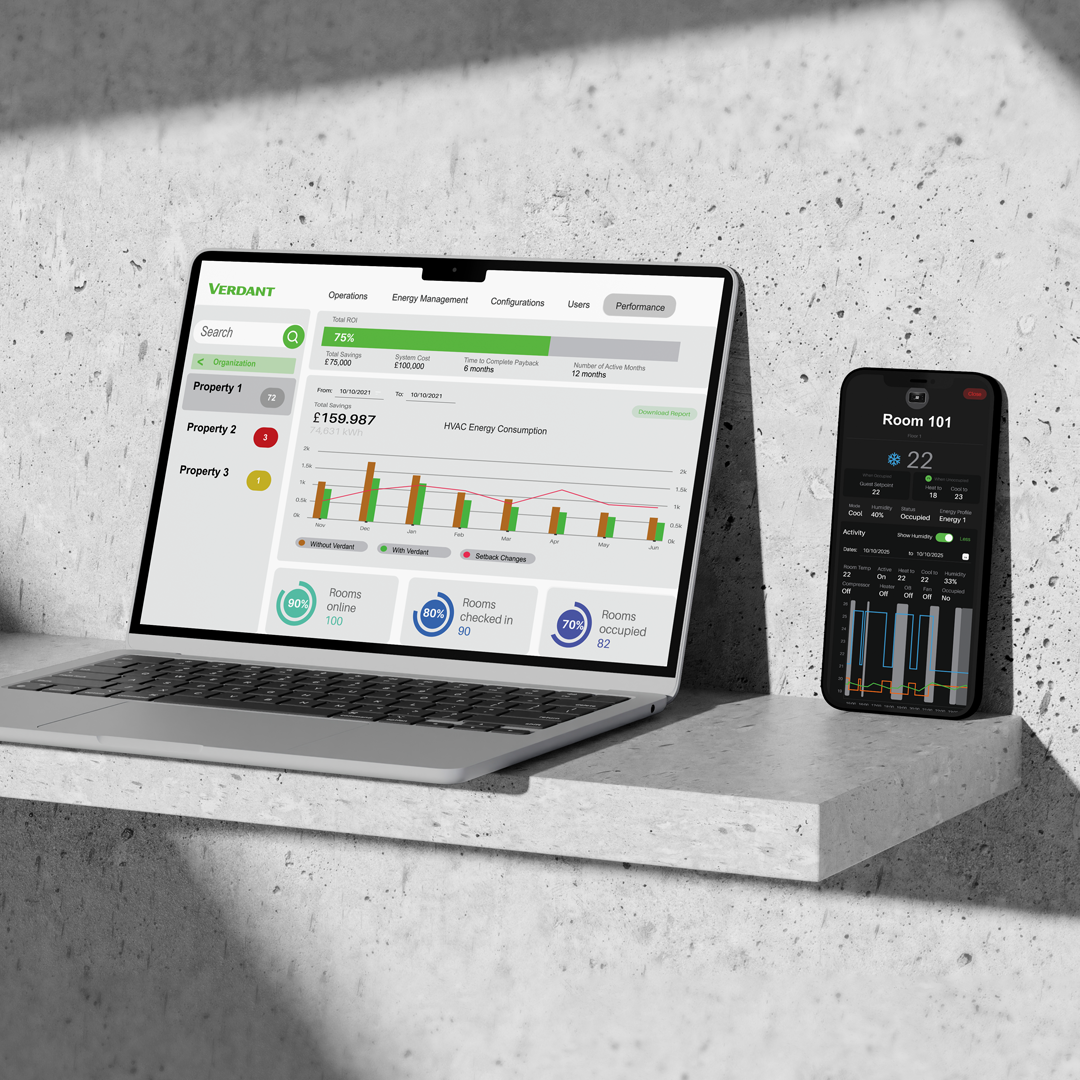
For many hotels, making changes is only part of the story, proving those efforts matters just as much. Verdant solutions go beyond energy savings by providing real-time, portfolio-wide insights through the Verdant Thermostat Manager platform.
Operators can easily track energy consumption room by room, or across entire portfolios. Data driven reports can be generated too. The system can be programmed to send out automated alerts to optimize performance remotely.
This transparent reporting aligns perfectly with the industry’s move towards science-based net zero targets and partnerships such as the Energy & Environment Alliance (EEA), which is helping the sector transition towards carbon neutrality.
UK Hotels Leading the Way
The UK is home to some of Europe’s most forward-thinking hotels when it comes to sustainability, with properties investing heavily in greener operations and smart technology. Among them, The Landmark London, one of the capital’s most iconic five-star hotels, has embraced Verdant’s smart thermostats as part of its wider energy efficiency strategy.
These efforts also contribute directly to Scope 2 emissions reductions (purchased electricity) and support compliance with BREEAM energy efficiency criteria, one of the country’s leading sustainability standards for buildings. Similarly, in Edinburgh, the Haymarket Hub Hotel adopted smart energy management as part of a £2 million renovation aligned with IHG’s Journey to Tomorrow plan—showing that both heritage and modern properties can use technology to drive meaningful change.
“Verdant thermostats have been installed in more than 9,000 hotels, multifamily buildings, senior living communities, and student residences across North America and Europe,” says Michael Serour, VP & GM, Verdant Energy Management Solutions, Copeland. “We’re proud to now support UK hotels in their sustainability journey with proven, scalable solutions.”
Sustainability as guest expectation
Sustainability is no longer just a behind-the-scenes operational focus, it is central to the guest experience. According to recent studies, travelers increasingly choose hotels that demonstrate clear environmental commitments. The ability to stay in a comfortable room while knowing the property is actively reducing its environmental impact and enhances loyalty and reputation.
The beauty of smart HVAC controls is that guests rarely notice them in action. While the room feels just right when they return, the system has been working quietly in the background to reduce energy use and emissions during their absence. Sustainability becomes seamless, effortless, and built into every stay.
The Smart Choice for a Greener Future
Hospitality has reached a tipping point. With energy costs high, guest expectations rising, and ESG pressures mounting, smart energy management is becoming an essential part of hotel operations.
By addressing one of the largest hidden drains on energy, HVAC systems, the Verdant system empowers hoteliers to reduce utility bills by up to 18%, shrink their carbon footprint, and take measurable steps toward net zero.
Every unoccupied room is an opportunity for greener operations. Let's build a greener future, one room at a time.
Book a demo with a Verdant energy expert today and discover how our system can help your property achieve maximum energy savings while maintaining exceptional guest comfort and supporting your hotel’s energy goals.

In Conversation With
Catherine Morris, Managing Director at Tradelinens, as we take a deep dive into the brand and find out how they are transforming the guest experience.

Tradelinens has built a strong reputation in the hospitality sector – how do you see the brand’s role evolving as guest expectations for comfort, sustainability, and luxury continue to rise?
At Tradelinens, we’ve been supplying luxury hospitality for decades, so we’ve witnessed first-hand how guest expectations have evolved - and we’ve evolved right alongside them. Comfort, sustainability, and luxury are no longer nice-to-haves, they’re essential, and our role is to help hoteliers deliver all three seamlessly. Everything we design is about elevating the guest experience, because we know that memorable stays are what set our clients apart. Whether it’s in-room dining table linen, bespoke embroidery, robes for children, or even for dogs, our product development always starts with the hotelier’s needs and the guest experience in mind.
Hoteliers are constantly balancing operational efficiency with the desire to offer a memorable guest experience. How does Tradelinens support hotels in achieving both?
This balance is at the heart of what we do. We believe products should be as practical as they are beautiful. Every item we produce is designed to withstand the rigours of commercial laundry, so hoteliers can trust that they’ll last, look impeccable, and deliver a consistently luxurious feel for guests. From creating bespoke pillow menus to advising on embroidery designs, our expertise ensures that hotels don’t have to compromise between efficiency and guest delight. In short, we design with both the guest and the operator in mind, luxury that works hard behind the scenes.
Sustainability is now a key decision factor in procurement. Could you share how Tradelinens is innovating in responsible sourcing, product longevity, and circularity within the textile industry?
For us, sustainability has never been about following a trend, it’s always been fundamental to the way we work. We partner with mills that share our values, using responsibly sourced fibres like BCI cotton, and working with environmentally conscious dyeing and finishing processes. Longevity is also crucial: our products are made to last, reducing waste and the need for constant replacement. And we’re continuously exploring new ways to lessen our impact, from sourcing innovations to circular solutions. Sustainability isn’t a side note for us, it’s woven into every stage of our supply chain.
From boutique hotels to global chains, linen needs can vary widely. How does Tradelinens tailor its approach to different segments of the hospitality market?
Flexibility is one of our greatest strengths. Our extensive product range allows hotels to select specifications that suit their brand and their guests - whether that’s a specific thread count, a feather and down blend, or a bespoke embroidery that enhances the brand identity. For larger clients, we manage forecasting, stock replenishment, and shipment schedules in both the UK and internationally. At the same time, our longstanding supplier relationships mean we can source bespoke sizes, constructions, or entirely new products to meet unique requirements. With over 90 years of combined experience in our team, we’re able to advise every client - from boutique independents to global chains - on the solutions that will truly work best for them.
Uniting the Brands
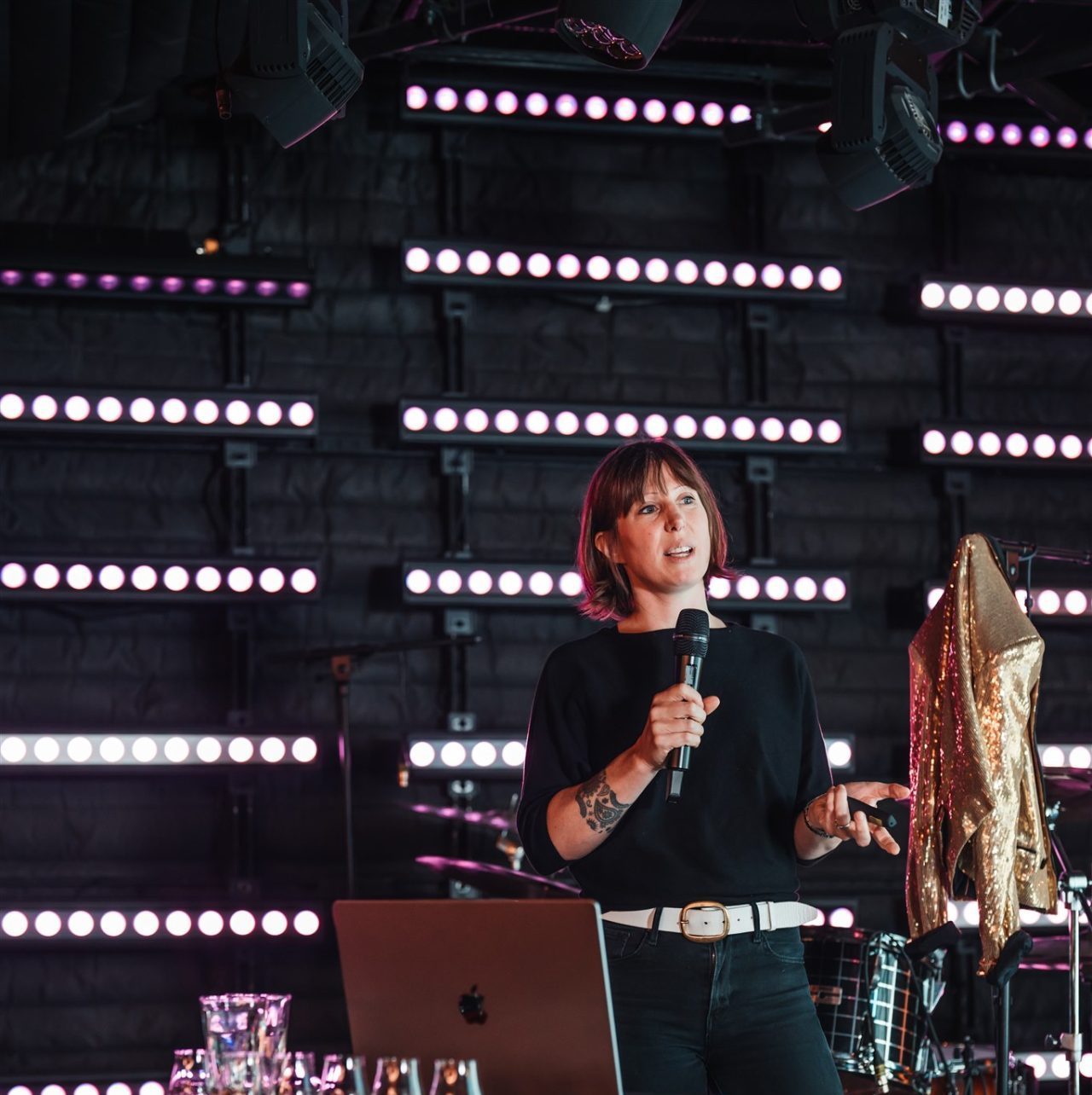
Hazel Glen, Sales Director at The Whisky Exchange, speaks to Hotel Magazine on the company’s bold rebrand.
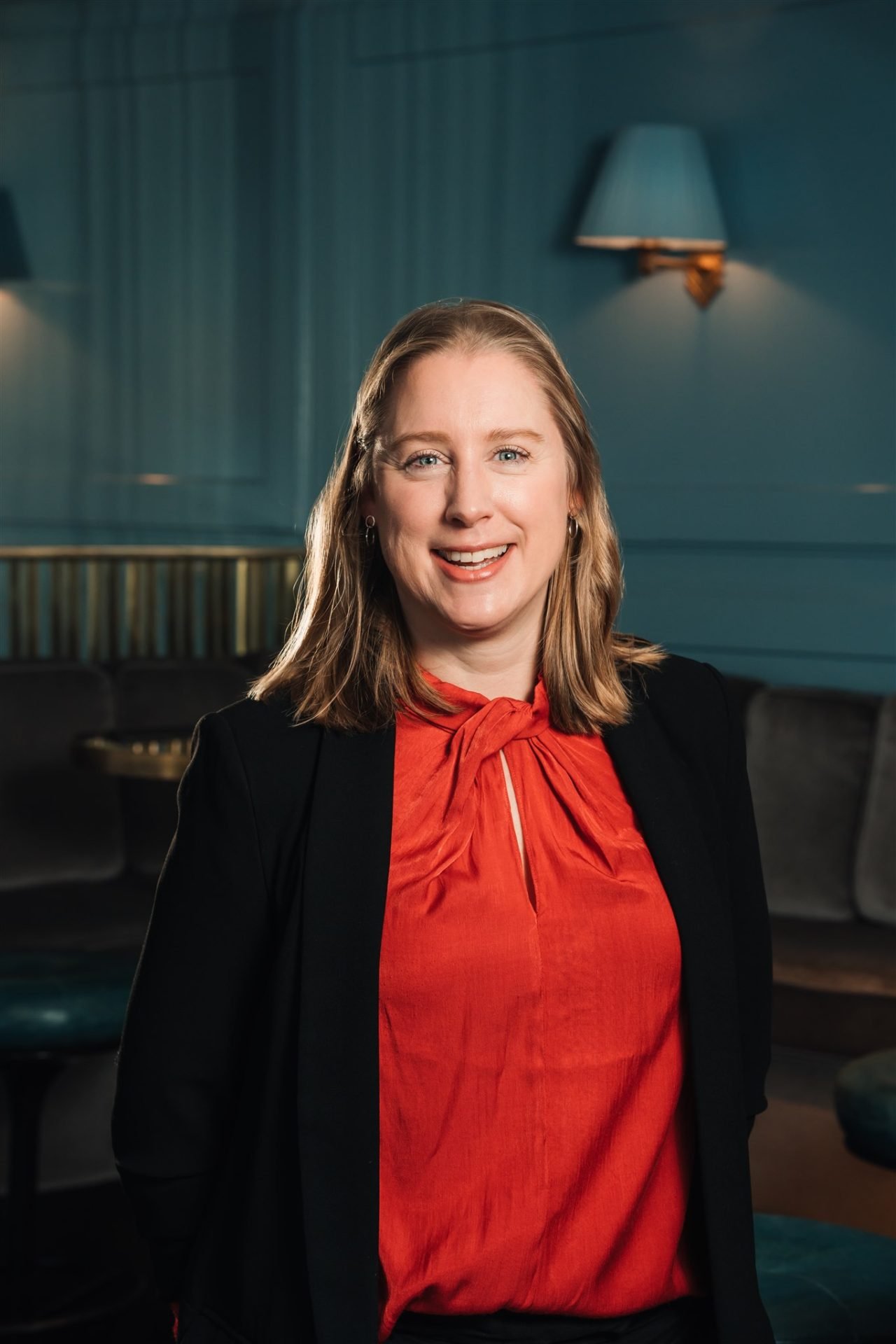
What was the main motivation behind bringing Speciality Drinks under The Whisky Exchange Trade name, and how do you see this strengthening the connection between the different parts of the business?
The Whisky Exchange was founded in 1999, and by the time the company launched Speciality Drinks as our wholesale arm, we already had what we felt was the best selection of whiskies, fine spirits, Champagnes and more in the UK. Speciality Drinks has been the name for the side of the business that supplies that same award-winning selection to the on-trade, but it has been powered directly by The Whisky Exchange, offering the same selection of products, curated by the same experts. 26 years later, and now in a new era after our original founders left the business, we wanted to make sure the company had a bold new identity that united the brands within the group more than they had been before – not just in terms of visual identity, but the DNA of the whole company, the values we have, and our people working more collaboratively, too. That’s why you’ll see The Whisky Exchange Trade, Whisky.Auction, our shops and our events all look and feel like parts of one consistent whole, and we think we’ll be much stronger because of it. Now, we can say to our consumer base that in the simplest terms, The Whisky Exchange is the drinks company that supplies the best bars, restaurants and hotels in the UK, as well as millions of individuals worldwide.
You’ve mentioned that customers will continue to receive the same service, team support, and training opportunities – how important was it to maintain this continuity during the rebrand?
People are at the heart of what we do, and that won’t change. In the same way that our recently launched online ordering platform wasn’t brought in to replace our brilliant sales team, but to complement them, the new brand identity doesn’t mean the people the trade know as the Speciality Drinks team won’t be there; they’ll still be at the heart of everything we bring to the table. Likewise, we’ll still be running our flagship community-building and education events for bartenders and buyers in the trade, too. When we bring in new faces, we often look for a background in hospitality, which results in a team that really understand exactly what their customers are looking for. That’s still the case now, and it’s the people, the team, their presence in the trade and their dedication to great customer service that will provide that continuity, as well as clear communication from us about the new name and any other changes.
From a customer perspective, what will be the most noticeable change after the rebrand, and what steps are you taking to ensure that the transition feels seamless?
Put simply, the name is the obvious thing. It’s a big departure, and it will probably take a month or two to become second nature for our customers, I’m sure. We’re also rolling out a brand-new website, which I’m delighted about. We think it does a great job of summing up the values of The Whisky Exchange Trade, everything we offer our customers, and how our online ordering platform can make the experience of buying from us more intuitive and quicker, while reminding our customers that they will still always benefit from our team’s hands-on account management and expertise.
Looking beyond the new name and colour scheme, how does this rebrand fit into The Whisky Exchange’s longer-term vision for growth and customer engagement?
We think the new brand identity – not just for The Whisky Exchange Trade, but for the other parts of our business, too – will mean what The Whisky Exchange stands for and how the whole of our ecosystem fits together makes more sense for our customers, whether it’s those that shop online or in-store, our event attendees or our customers in the trade. Rather than focusing on individual business units, we’ll be thinking about things as a collective, and sharing more knowledge and resources internally and externally. It’s also the chance to refocus on our strong points, both for us and, hopefully, for our customers, too.
What will this re-brand mean for the hotel space?
Everyone in the drinks industry knows how important hotel bars have been in creating what is now a world-class cocktail culture in London and elsewhere in the UK, and it’s the same for restaurants and food. We work with hundreds of hotel brands, from small boutique properties to the biggest names – it will always be a core part of our customer base and our business, and hotels are a place to reach millions of discerning customers every year. If someone is sitting in a hotel bar, trying one of our exclusive products and asking where they can find it, their bartender can say they bought it from The Whisky Exchange, and the consumer can go and do just that, online or in-store. We’re all really excited about making that journey simpler and easier for our customers.

Driving Change

In an in-depth conversation with Julie Owst, Head of Sustainability at Bidfood, we look at how the brand is redefining sustainability in foodservice.
Sustainability is no longer a nicety; it’s an operational necessity for the hospitality and foodservice sectors. From cutting emissions to tackling food waste, suppliers play a critical role in helping hotels and restaurants reduce their environmental footprint. One company at the forefront of this movement is Bidfood, a leading foodservice wholesaler with an ambitious sustainability agenda. We sat down with Julie Owst, Head of Sustainability, to discuss the company’s recent progress and how it’s supporting customers on their own journey toward net zero.
Mapping the Carbon Footprint of 12,000+ Products
Bidfood’s most resource-intensive project to date has been its partnership with CarbonCloud, a digital platform designed to track the carbon footprint of food and drink products.
“Our goal is to map the carbon impact of every single item in our range, branded and unbranded, so we can provide customers with the information they need to make informed choices,” explained Julie.
So far, Bidfood has created initial carbon footprints for its 12,200-strong product portfolio. The project has now moved into its next phase, engaging suppliers directly. Using system-generated invitations, suppliers can review the data, provide additional product-specific information, and instantly generate recalculations for greater accuracy.
“This isn’t just about helping our customers understand the climate impact of their menus,” said Julie. “It’s also about engaging suppliers in carbon measurement and reduction, which is critical if we want to drive real change across the value chain.”
Setting Science-Based Targets
In parallel, Bidfood is re-baselining its entire corporate carbon footprint in preparation for submitting emissions targets to the Science Based Targets initiative (SBTi). The move underlines the company’s commitment to climate action and gives customers confidence that Bidfood’s goals are credible, measurable, and aligned with international best practice.
“This work supports our customers with their own net zero ambitions,” noted Julie. “It also enables us to engage our supply chain in a much more robust and transparent way.”
Educating Customers with Sustainability Factsheets
Beyond carbon, Bidfood has been busy creating resources to help operators better understand sustainability issues. Its series of downloadable factsheets, covering everything from food provenance to certification schemes, has proved popular with customers.
“We’ve recently added new guides on Fairtrade, Rainforest Alliance certification, and rice sustainability,” Julie explained. “They’re designed to raise awareness and provide accessible information on complex topics - helping our customers make decisions that align with their values and those of their guests.”
The wholesaler has also been spotlighting the growing issue of water scarcity in supply chains, encouraging suppliers to sign up to WRAP’s Water Roadmap. To date, eight suppliers have pledged their commitment, a small but significant step toward wider industry collaboration.
Tackling Food Waste with Practical Tools
Food waste remains one of the most pressing challenges for hospitality businesses, with huge implications for both the environment and profitability. Recognising this, Bidfood recently launched its own food waste recipe guide.
“Food waste is often discussed in abstract terms; tonnage, carbon impact, financial loss - but for individual operators, these figures can feel overwhelming,” Julie said. “We wanted to create something practical and engaging that customers and employees could use straight away.”
The guide offers creative recipes for commonly wasted ingredients, such as bread and vegetables, with contributions from both Bidfood chefs and office staff. It has been complimented by the company’s ongoing Unlock Your Menu campaign, which includes a dedicated section on food waste avoidance, as well as promotion of WRAP’s Guardians of Grub resources.
Balancing Long-Term Goals with Daily Realities
For a business operating in a low-margin sector, marrying long-term sustainability ambitions with daily operational pressures is no small feat. Julie is candid about the challenge.
“If I could answer the question of perfectly balancing day-to-day operational demands with long-term environmental goals, I could retire early,” she laughed. “It’s the tension everyone in this space faces. Sustainable alternatives often cost more, and with rising wages and a cost-of-living crisis, many of our customers simply can’t absorb additional costs.”
To navigate this, Bidfood has embedded sustainability into its wider strategy through a combination of sourcing policies, subject matter experts in each functional area, and a governance structure that ensures accountability at senior leadership level.
“We prioritise action in areas that are materially relevant to both our business and that of our customers,” Julie explained. “Our sustainability team acts as the conscience of the business, we help establish KPIs and targets that keep us on track with long-term issues that might not feel urgent day-to-day but are absolutely vital for the future.”
A Partner for the Hotel Sector
For hotels looking to strengthen their sustainability credentials, Bidfood’s work offers both inspiration and practical support. With detailed product carbon data, accessible educational resources, and a strong commitment to responsible sourcing, the wholesaler is positioning itself as a key ally in helping the sector meet its environmental goals.
“We know the hotel industry is serious about reducing its environmental impact,” Julie finished. “Our role is to provide the tools, data and products that make that journey easier, without compromising on quality or competitiveness.”
As sustainability continues to rise up the hospitality agenda, Bidfood’s proactive approach highlights the critical role suppliers play in shaping a more resilient, responsible foodservice industry.
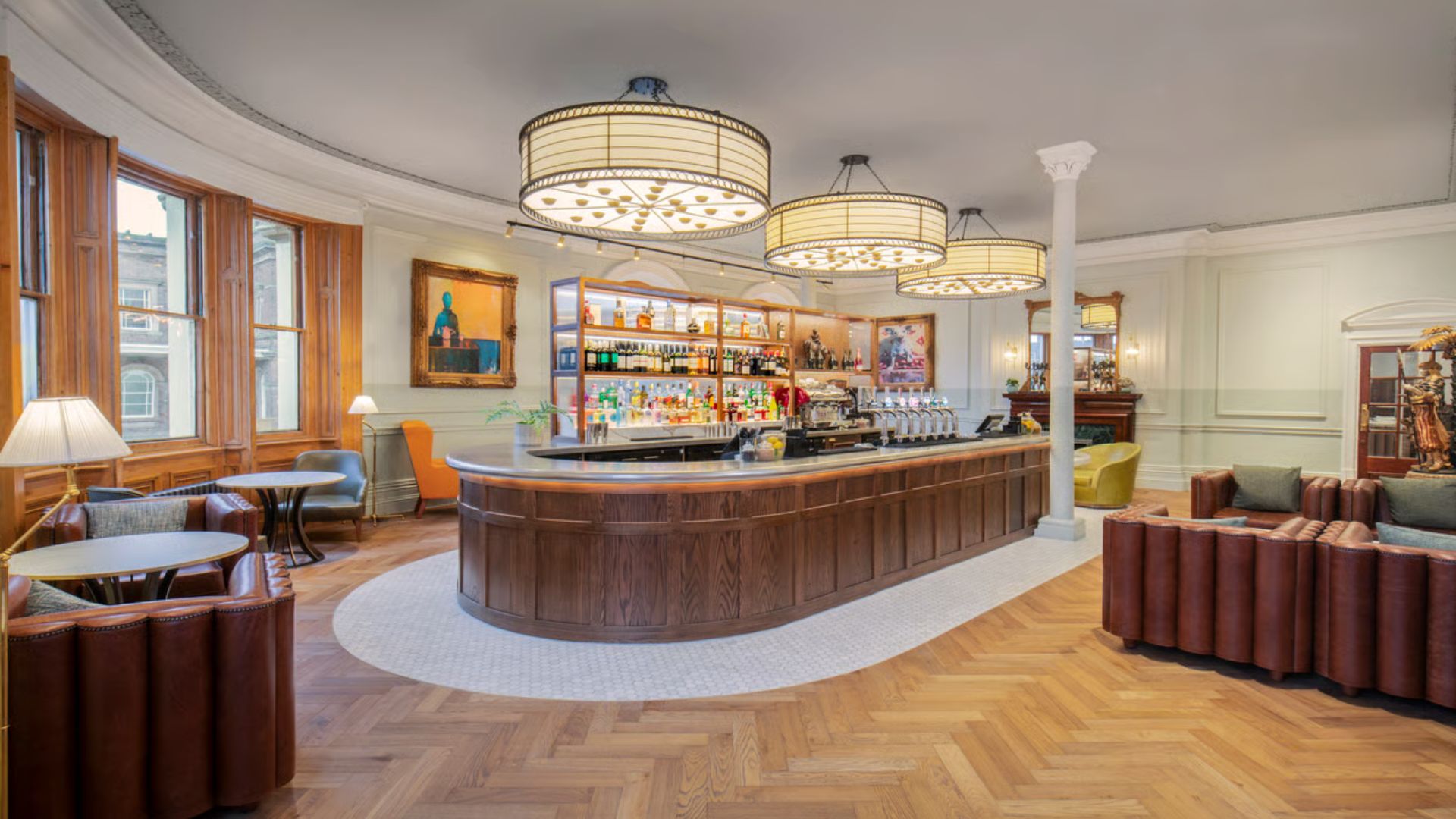
The Key to Success
City centre success for BWH Hotels.
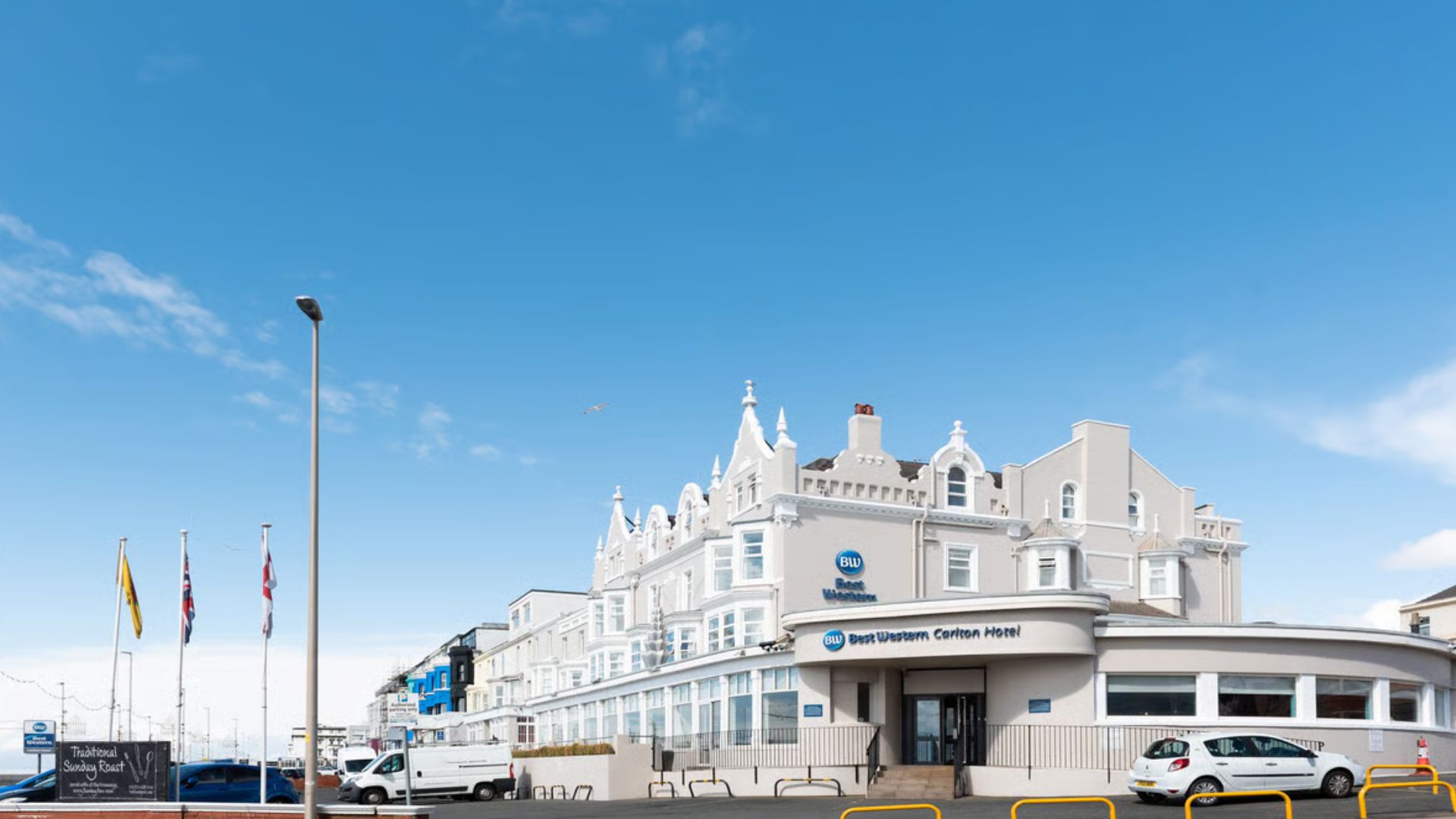
BWH Hotels GB is seeing continued success in a number of its city centre locations despite the challenges facing the wider hospitality sector.
With a focus on innovation, tailored guest experiences and strategic revenue management, the brand is outperforming market trends and setting a benchmark for city centre hospitality.
While ADR across the sector has stabilised over previous months, city centre hotels have delivered growth with revenues up 2.5% year to date driven by a 3% uplift in bookings. As always there are regional variances in performance, but it is the North West which has seen the strongest uplift with revenues up 8% on the same period prior year, with Chester and Blackpool seeing double digit growths.
While mid-scale and economy hotels are under strain, the BWH Hotels GB Revenue Team focused on optimising the leisure segment through targeted promotions over the summer months which resulted in the brand gaining market share.
Key to success has been accurately forecasting future demand so ADR can be optimised over peak nights, while putting strategies in place to drive volume where demand is expected to be low. With bedstock being a hotel’s most perishable product, BWH has been focusing on sell-out efficiency, measuring the number of sell-out nights their hotels are achieving where there is a forecasted opportunity to do so.
These examples demonstrate how BWH Hotels are maximising efficiency while still delivering memorable guest experiences.
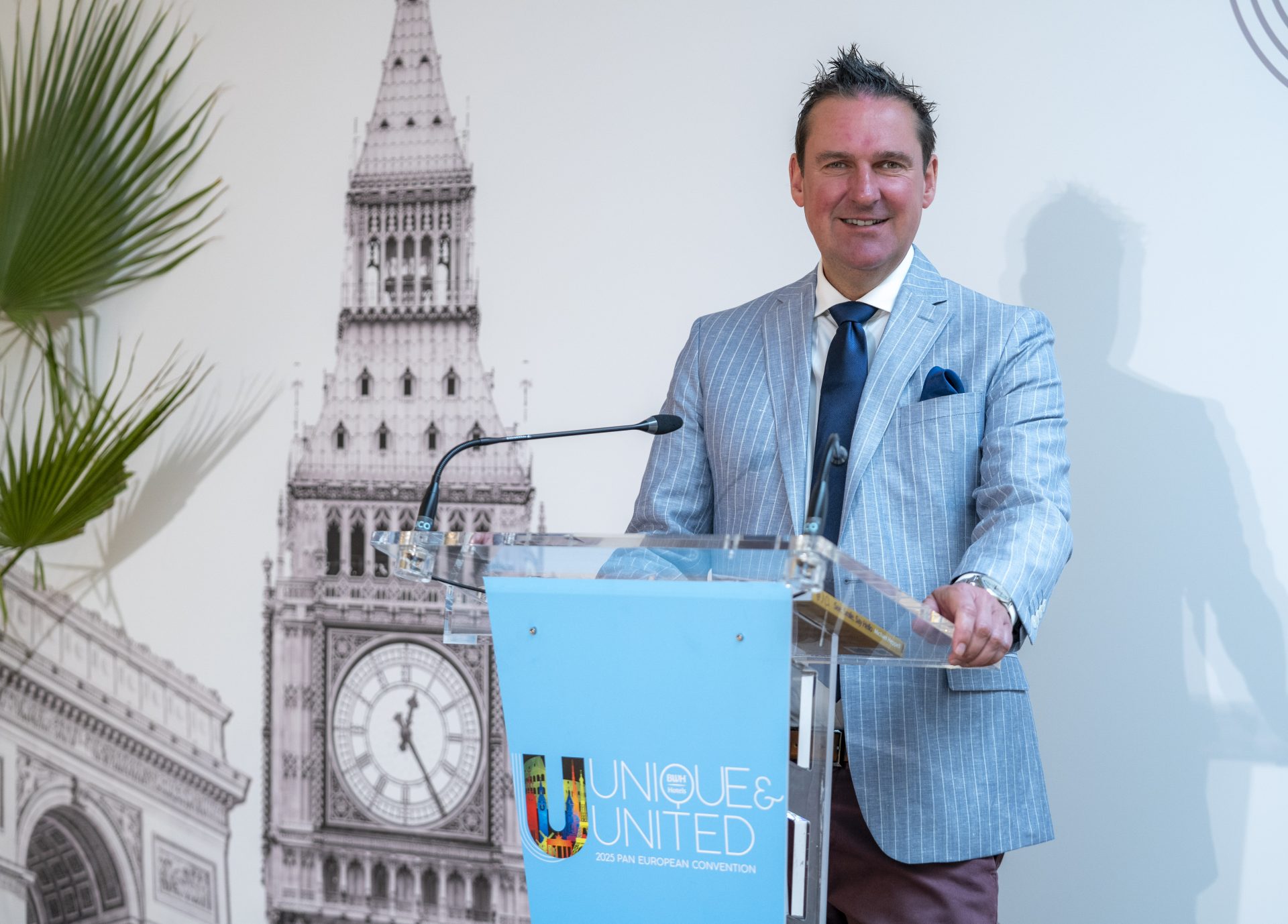
Andrew Glover, Head of Revenue at BWH Hotels GB, said: “By combining data-driven strategies, digital innovation and a relentless focus on guest experience, BWH Hotels GB and our Revenue Management team, are not just weathering the challenges in city centre hospitality - we’re outperforming market trends and setting new benchmarks for success.”
Digital performance is also contributing to growth. Website conversion rates have improved by 28 per cent, page load times are now 68 per cent faster and organic clicks are up one per cent in two months. Impressions have risen by 18 per cent, supported by a culture of continuous testing that has already delivered seven successful changes. Social media engagement is increasing, with 15,000 new Instagram and TikTok followers gained in the past six months, BWH Hotels GB is gaining traction faster than most hotel brands in social.
Loyalty programmes also remain a key strength. BW Rewards and WorldHotel Rewards now have 64 million members globally, including two million in Great Britain.
Members have generated 112,000 stays in the past year, providing an uplift of £44,000 per hotel, an 18 per cent increase year on year. Loyalty data shows members are twice as likely to stay more than once and three times as likely to use multiple hotels.
Meetings and Events remain challenging, however, BWH Hotels has a conversion rate of double the industry average of 8 per cent, reflecting the focus on maximising value from every opportunity.
With data-driven strategies, advanced technology and personalised experiences, BWH Hotels GB is proving that city centre hospitality can thrive.
By combining operational efficiency, digital engagement and loyalty-driven growth, the brand is well positioned for continued success.
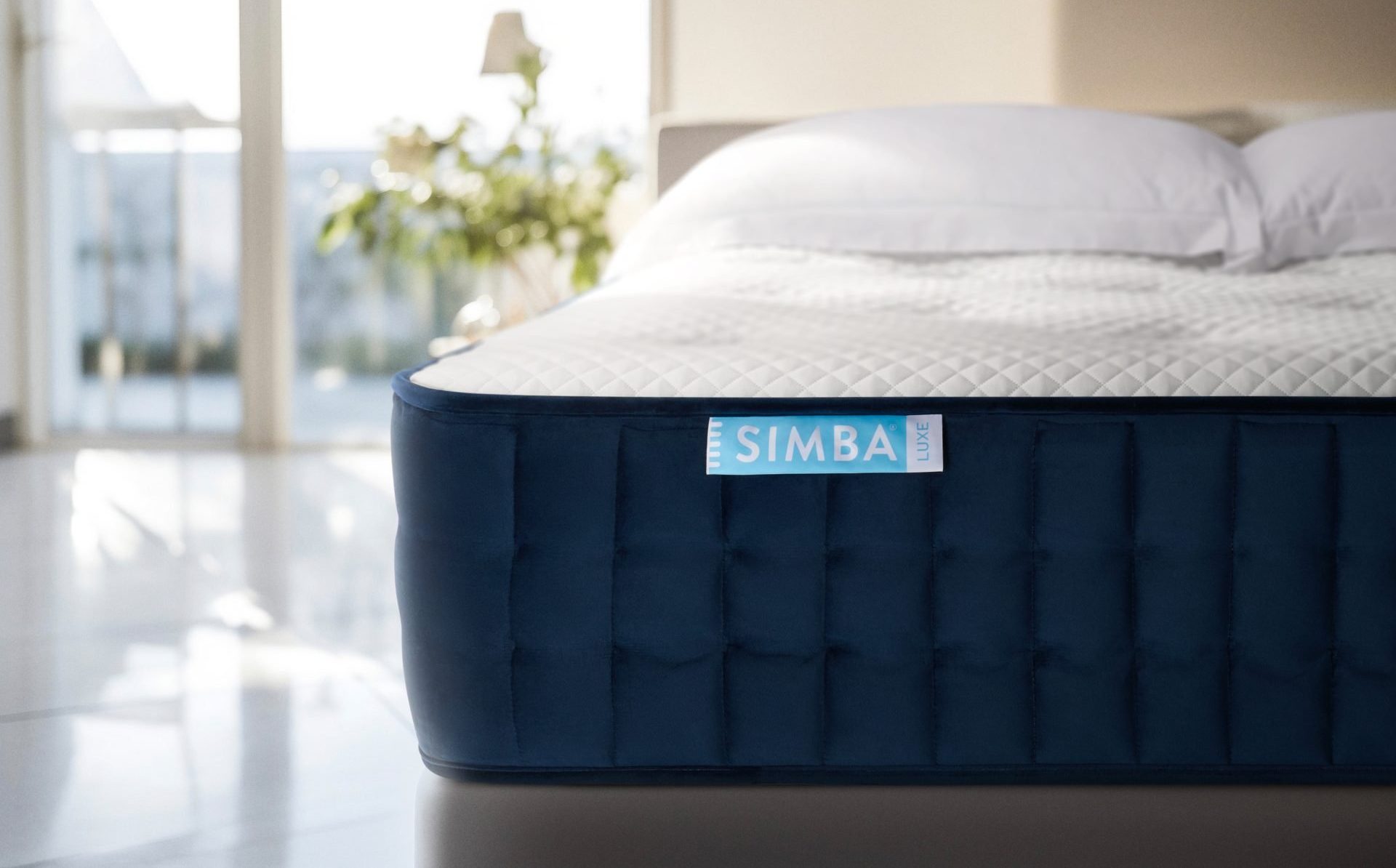
The Dream Standard
To offer the best guest experience… Check in with Simba’s contract mattresses.

Following the huge success of their critically acclaimed Hybrid® range, sleep experts Simba extended their award-winning mattress tech to the hospitality sector in 2024. And it’s been going like a dream according to Keri Blunden, Simba’s Head of Wholesale and Contract Sales. Having partnered initially with leading hospitality brands such as Wilderness Reserve, the Ellen Kensington, Woodlands in Glencoe, and Terra di Gaya in Corsica, Keri comments “We’ve been delighted to work with some amazing new partners this year such as The Townhouse in Leith. These beautiful hotels and locations echo our commitment to superb comfort and five-star service, while embracing high standards of sustainability”.
Resting easier with Simba
While mattresses are definitely a key factor in guest comfort, they’re also a huge investment for hosts and owners. So, working with Simba, the world’s most five-star rated mattress brand*, can help everyone rest easier. As the happy owner of The Townhouse Leith, a family-run, boutique aparthotel in Edinburgh, observes “We did a lot of research before deciding on the Simba Pro contract mattresses… It has proven to be the right decision - our guests rave about how comfortable they are, and many ask where we got them. One guest told us she’d had the best night’s sleep of her life!”
Simba has also proved a huge success at Woodlands, a collection of modern, luxury lodges near Glencoe; the finer details of their guest experience really resonated with independent reviewer The Hotel Guru: “Egyptian cotton sheets, super-comfy mattresses and breakfast delivered to your door. A romantic highland hideaway”.
Unique room service
So, what is it that makes Simba mattresses so ideal for the hospitality sector? Crucially, Simba’s contract designs mirror the high standards this much-loved brand adhere to in their main direct to consumer range, using the same patented innovation to help their customers sleep deeper, longer and cooler. As Keri Blunden explains, “Hoteliers and hospitality brands feel safe in the knowledge that, thanks to our unique patented technology, our mattresses are designed to feel superbly comfortable for all body shapes and sleep styles”. It also probably explains the amazing 350k+ 5-star reviews the brand has already earned.
The team at Simba developed three contract designs that deliver their signature, high-tech comfort and broad appeal, reflecting different price points as well as Simba’s ongoing commitment to sustainability; all three are rod-edged for durability and hand-tufted to allow glue-free construction for maximum recyclability. Across the range, each mattress showcases the best of Simba’s signature technology – like their patented titanium alloy Aerocoil® micro springs, which are conical in shape to offer pinpoint support, reduce partner disturbance and enhance pressure relief to parts of the body (like shoulders and hips). Simba’s technologies, materials and production processes are consistently aligned with key hotel regulations, presenting guests with the most comfortable, memorable sleep experience, in a way hoteliers can really trust.
The Hybrid® Luxe Contract Mattress is Simba’s deepest, most sumptuous contract design. It aligns with the most luxurious of interiors, with nine layers of plush cushioning and superb pressure relief and up to 4,500 of Simba’s unique Aerocoil® micro springs. Featuring eight premium comfort layers and a lower spring count, the Hybrid® Pro Contract Mattress is designed to offer exceptional comfort but at a lower price point, making Simba’s transformative sleep tech accessible to a wider variety of guests. Meanwhile Simba's Green Label Contract Mattress is designed to offer planet-conscious plushness; it draws on natural wool for soft but resilient cushioning, alongside up to 2,500 Aerocoil® micro springs and a deep layer of natural, sustainably sourced latex renowned for its soothing elasticity and breathability.
What's next on the menu?
From private rental to luxury resort, Simba are excited to continue adding hospitality partners to their roster, whether via their three existing contract designs or through bespoke creations for clients keen to tailor their mattresses to their own preferred décor or spec. Keri comments, ‘’As one of the UK’s bestselling retail mattress brands, we’re perfectly positioned to help the hospitality sector give their guests a superb night’s sleep.”
Interested in finding out more? Please reach out to wholesale@simbasleep.com
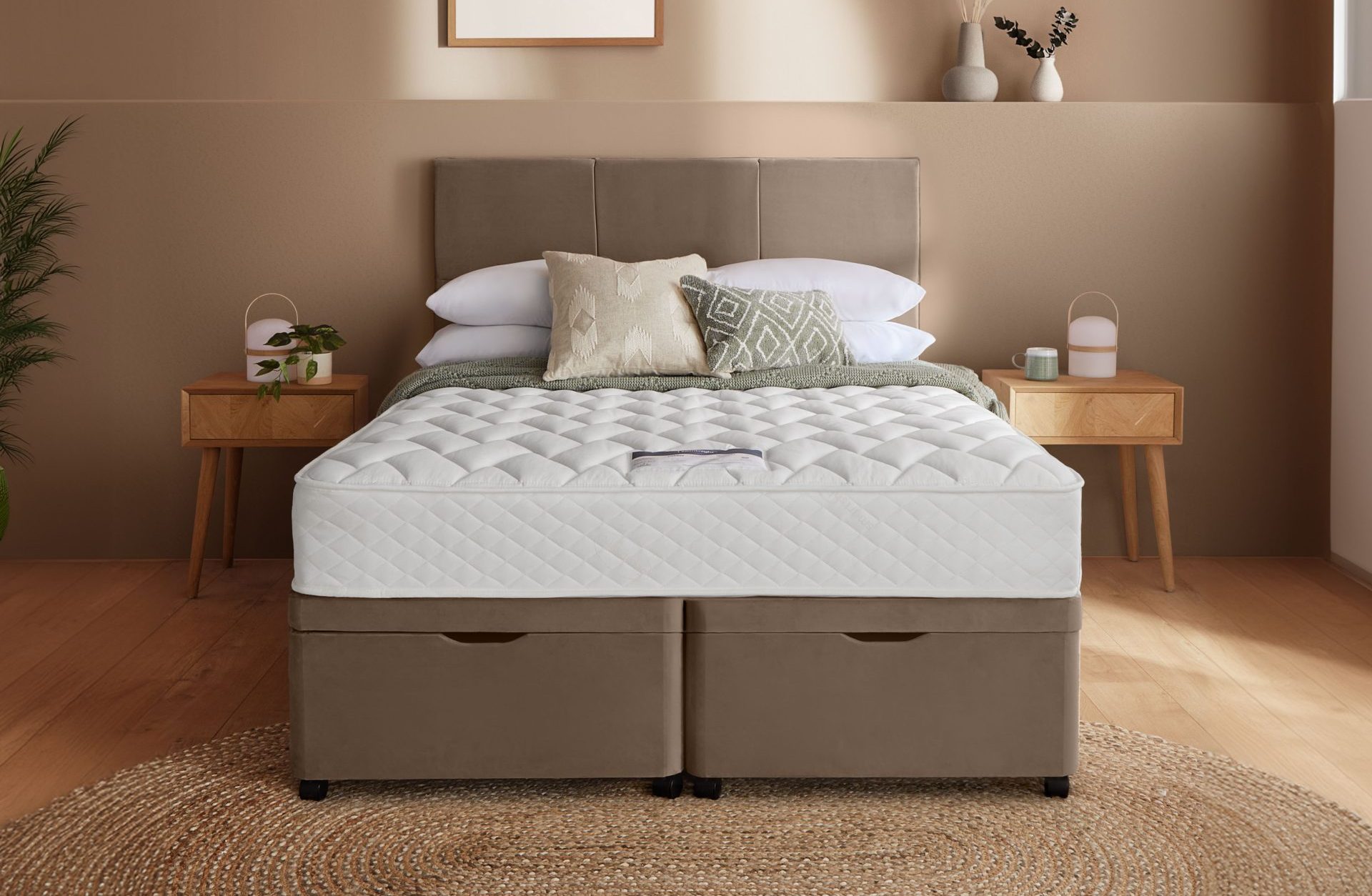
Make or Break
When the Fit Isn’t Right: The Overlooked Factor That Can Cost Hotels Thousands.
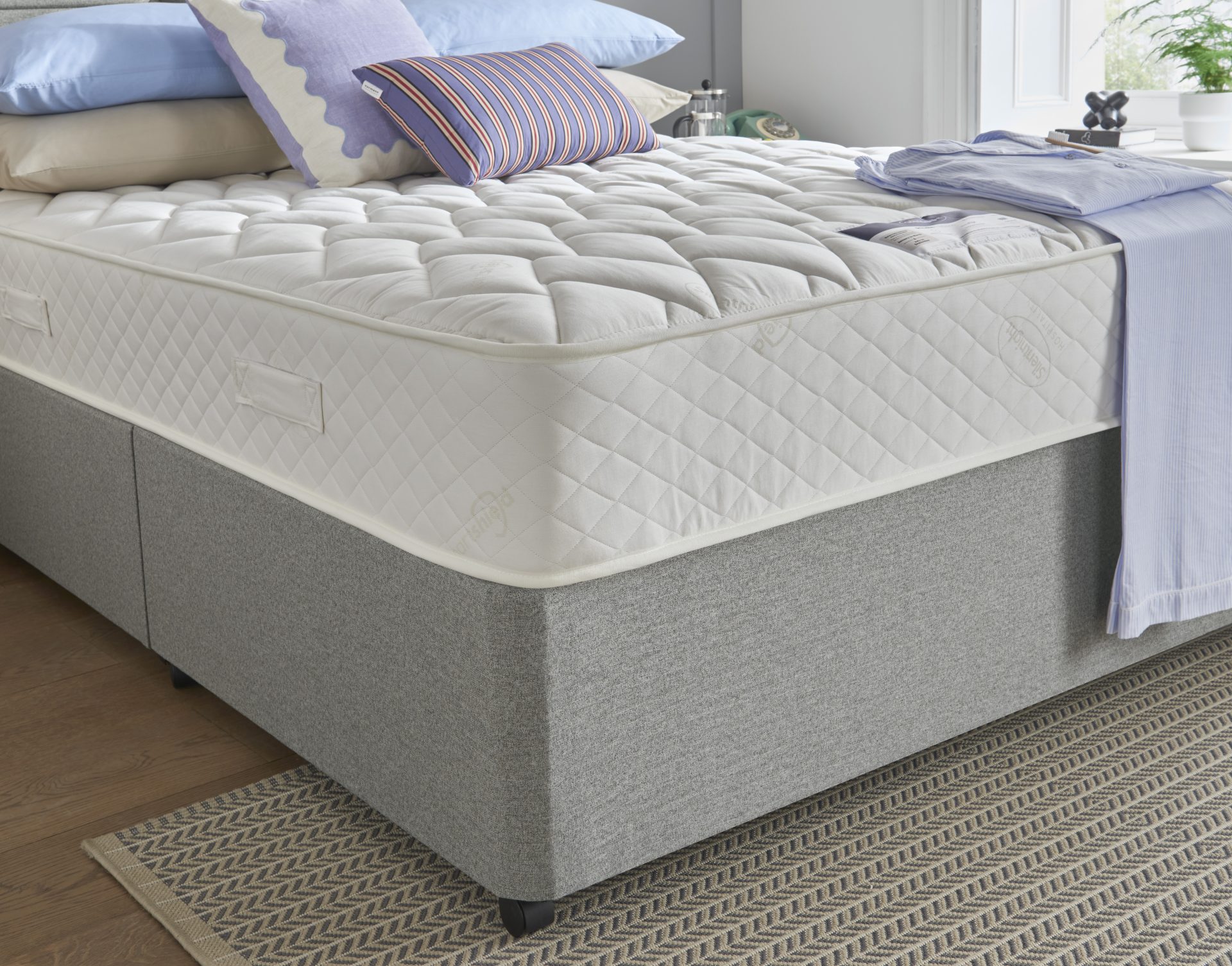
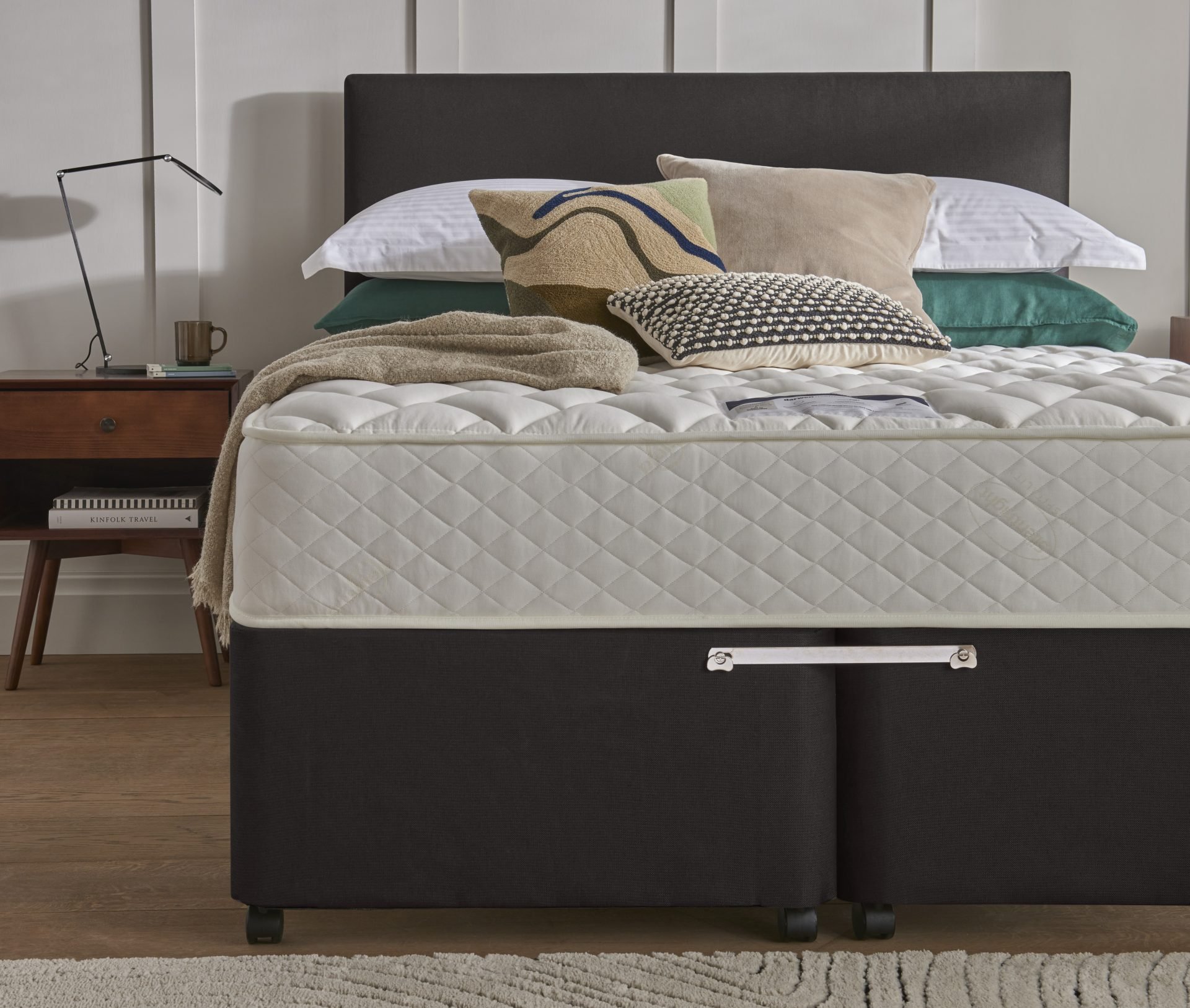
In a world where guest experience is everything, hoteliers spend vast amounts of time and money curating the perfect night’s sleep, investing in quality mattresses, sustainable materials, and standout design. But behind the plush duvets and crisp linen lies a detail that’s often overlooked: the installation itself.
Increasingly, operators are discovering that poor bed installation can quietly erode both profit and reputation. Rooms left out of service, frustrated housekeeping teams, and guests who simply don’t rest well, all can stem from an installation that wasn’t done properly.
According to Silentnight Contract, one of the UK’s leading hospitality sleep specialists, this issue is becoming more common as some providers treat hotel deliveries like standard home drop-offs. “Installing beds in an operational hotel is a completely different challenge,” explains a Silentnight spokesperson. “You’re working around guests, service lifts, tight schedules and multiple room types. It requires experience, precision, and care.”
One hotelier recently shared how choosing a budget installer led to nearly twenty rooms being fitted incorrectly. The rework meant paying twice - once to fix the problem, and again in lost revenue from unavailable rooms. It’s a costly mistake that’s easily avoided.
Silentnight Contract’s approach is built on the opposite philosophy. The brand has developed specialist hospitality service teams trained specifically for hotel environments. Every installer understands the pressures of working discreetly, coordinating with on-site teams, and maintaining exacting brand standards across every room.
It’s not just about convenience. A properly installed bed performs better, lasts longer, and maintains comfort over time, helping reduce guest complaints and protecting long-term investment. “It’s the kind of behind-the-scenes detail that can make or break consistency across a portfolio,” says Silentnight.
With decades of experience supporting the UK’s leading hotel brands, Silentnight Contract has seen first-hand how getting the small things right elevates the overall guest experience. In an industry where reputation rests on reviews, attention to detail is more than operational, it’s strategic.
As more operators focus on enhancing sleep quality as part of the guest offer, the message is clear: don’t overlook the installation. Because when the fit isn’t right, everything else can come undone.
For more on Silentnight Contract’s hospitality expertise, visit silentnight.co.uk/hospitality.