

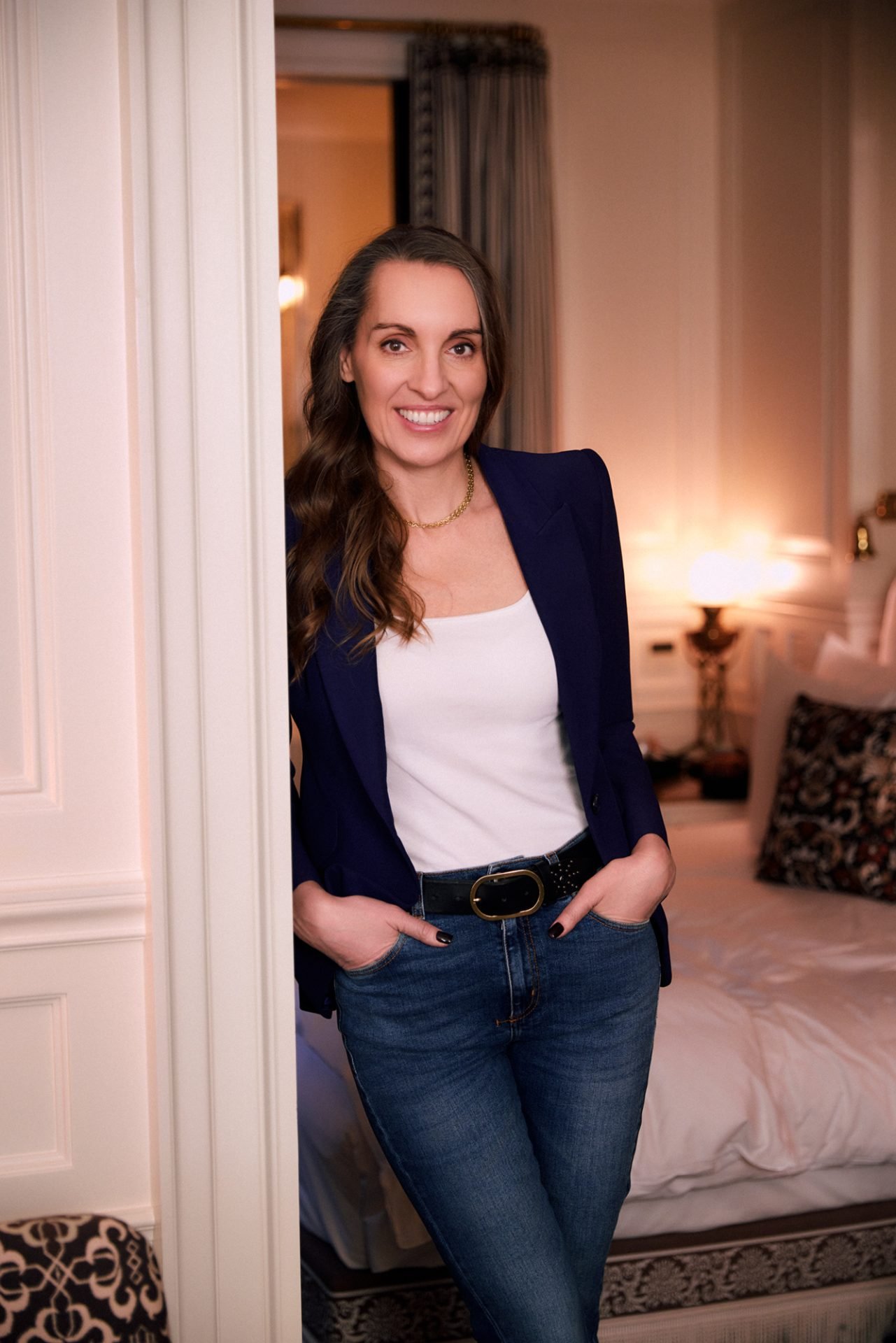
Tamara Lohan is the former co-founder of boutique brand Mr & Mrs Smith and Global Brand Leader for Luxury at the Hyatt Hotels and is featuring in Hotel Magazine’s In the Hot Seat this October.
 You’ve built your career around luxury hospitality. What first drew you to the industry, and what have been the defining moments in your own journey that have shaped the way you think about luxury today?
I’ve always been obsessed with hotels. Long before I worked in the industry, I was the guest poring over where to stay, looking for those places that somehow got everything right. And James and I kissed a lot of frogs. We had plenty of disastrous weekends away in hotels that looked wonderful in the photographs but simply didn’t deliver when you got there.
That frustration was part of what led us to create Mr & Mrs Smith. We wanted to find the hotels we genuinely wanted to stay in and be very honest about what made them special. Sometimes it was extraordinary design or a brilliant restaurant. Quite often it was something much harder to photograph: the atmosphere, the way you were looked after, how the lighting made you feel, the sense that somebody had thought about the experience from the guest’s point of view.
I think that’s where my understanding of luxury really began. I’ve always been fascinated by design, architecture, food, travel and culture, and hotels are this wonderful meeting point for all of them. But a hotel has to work. You sleep in it, eat in it, shower in it, ask people for things, get lost in it. You experience every decision somebody has made.
Building Smith gave me the privilege of experiencing thousands of hotels through that lens. Joining Hyatt has given me another perspective: what it takes to create and protect that level of experience across a global luxury brand.
And after all these years, I’m probably even more obsessive about the details. The best luxury feels deeply considered, but never overworked. You sense the care without seeing the machinery behind it.
The definition of luxury has changed dramatically in recent years. How would you define contemporary luxury today, and what do you think the most sophisticated luxury traveller is looking for that they weren’t looking for 10 or 15 years ago?
Luxury has become much more emotional. The most sophisticated travellers have access to beautiful things already. They know good design, they eat incredibly well, they’ve stayed in extraordinary hotels. The more sophisticated the traveller, the harder they are to impress with expense alone.
Increasingly, I think luxury is about the things money alone can’t guarantee. Time. Privacy. A sense of discovery. Genuine expertise. Someone remembering something you mentioned almost in passing and quietly making it happen. Or being given access to a person or place that opens up a destination in a completely different way.
Ultimately, luxury is about how a hotel makes you feel.
That sounds deceptively simple, because creating that feeling takes an extraordinary amount of work. The architecture matters. The materials matter. The food, the lighting, the scent, the bed, the way someone greets you when you arrive. But the guest shouldn’t be mentally ticking those things off. They should simply feel that they’re somewhere very special and can relax into it.
I think that’s one of the biggest changes from 10 or 15 years ago. There was a period when luxury could be communicated quite visibly through abundance and recognisable symbols of status. Today’s most discerning travellers tend to have a much quieter confidence. They’re curious. They want beauty and exceptional quality, but they also want soul, meaning and a connection to where they are.
And they can spot something manufactured a mile away. The most sophisticated travellers have a finely tuned sense of what feels genuine, and that’s become a very important part of luxury.
Park Hyatt has traditionally been associated with a very particular idea of understated, highly personalised luxury. How do you see the brand evolving while protecting the qualities that have made it distinctive, particularly as you oversee its next phase of growth?
There’s a confidence to Park Hyatt that I really love, and I want us to build on it. At its best, there’s an extraordinary sense of calm, beautiful architecture, wonderful food and wine and a very human style of service.
I’d like us to share more of what we know. Park Hyatt has incredible connoisseurship within its hotels, and luxury becomes much more interesting when you give guests access to that knowledge. It might be an artist whose studio is usually closed, a remarkable bottle from a tiny producer, a private collection, or simply knowing the person in the city who is brilliant at what they do.
That’s the role I’d love Park Hyatt to play. A cultured insider who can open doors to the rare, the fascinating and occasionally the inaccessible, without making a great performance of it.
We’re thinking deeply about how Park Hyatt expresses that in its next chapter. Even the word “Park” is interesting to me. A great park gives you beauty, space and a sense of escape, but it also changes depending on where you are in the world. There’s something quite rich in that idea for a global brand.
And I want Park Hyatt to have confidence in its own taste. Luxury can become terribly well behaved. The hotels I remember have a point of view. There might be a brilliant piece of art, an unexpected book beside the bed, a restaurant you’d cross the city to eat in, or a member of the team who sends you somewhere you’d never have found yourself.
Park Hyatt should feel cultured, warm and deeply comfortable, with curiosity and pleasure running through it. And occasionally, I’d like it to make you smile.
Park Hyatt has a significant pipeline ahead, from Riviera Maya, the brand’s first all-inclusive, to Phu Quoc, Mexico City and Vancouver. How do you approach scaling a luxury brand across very different markets without allowing the experience to become formulaic?
For me, consistency in luxury is about the quality of the experience, rather than making every hotel look or feel the same.
There are things a Park Hyatt guest should be able to trust completely wherever they are in the world: the quality of the room, the bed, the food and wine, the materials, and above all the service. Those things have to be exceptional. Then you give each hotel the freedom to belong completely to its place.
That’s what makes this next group of openings so exciting. Park Hyatt Mexico City should feel like Mexico City. Park Hyatt Phu Quoc should give you an experience you could only have in Vietnam. We want great architects, designers, chefs and our own colleagues to bring a destination to life rather than sand away everything interesting about it in pursuit of consistency.
Park Hyatt Riviera Maya is particularly fascinating because it gives us the chance to think about all-inclusive through a luxury lens. At its best, all-inclusive can create an incredible sense of freedom. The transactions disappear. You’re not signing a bill every time you order a drink or wondering what is and isn’t included. You can relax into the experience.
But that freedom depends on generosity. The food and wine have to be brilliant. The experiences have to feel considered. There needs to be choice, spontaneity and a sense that we’re giving the guest our best, rather than managing what they consume.
AI is rapidly changing the way hotels understand, anticipate and interact with guests. Where do you see genuine opportunities for AI within luxury hospitality, and equally, where should the industry be careful not to automate the human touches that make great hotels special?
I’m genuinely excited about what AI can do in luxury hospitality, particularly behind the scenes.
Great luxury service has always depended on observation and memory. Someone notices how you like your coffee, that you asked for a firmer pillow, or that you’re travelling with your daughter this time rather than for work. AI can help us make much better use of those little signals, and potentially carry that understanding with a guest from one stay to the next.
I’m equally interested in what it can take away from our colleagues. Hotels generate an extraordinary amount of admin and repetitive work. If AI can give a brilliant concierge, housekeeper or front-office colleague more time to look up, notice what’s happening around them and actually talk to guests, that’s a very good use of technology.
Because the magic still happens between people. Anticipatory service is incredibly nuanced. Sometimes a guest wants conversation and recommendations; sometimes they’ve had a 12-hour flight and want the key to their room in about 30 seconds. A great hotel colleague can read that.
So I’d like the intelligence to become more sophisticated while the experience becomes more human. Ideally, the guest simply senses that we know them a little better and that things happen beautifully around them. They shouldn’t have to think very much about the technology making some of that possible.
Looking ahead, what do you most want Park Hyatt to be known for under your direction, and what would success look like for you personally as you lead the brand through this next chapter?
I’d love people to fall in love with Park Hyatt.
Love means you remember how a place made you feel. You have a favourite Park Hyatt, a member of the team you still remember, a restaurant you want to go back to, perhaps even a particular room you always ask for. And when we open somewhere new, you’re curious to see what Park Hyatt has created there.
I saw the power of that kind of emotional connection at Smith. People would plan trips around hotels they’d fallen for, and I’ve never lost my fascination with what makes a hotel inspire that level of affection.
For Park Hyatt, I want to build on the extraordinary foundations already there and bring more warmth, pleasure, cultural curiosity and personality into the experience. I want each hotel to feel very much of its place, while having the confidence and human touch that tells you you’re at a Park Hyatt.
Personally, success would be seeing that affection grow. In 5 years’ time, I want Park Hyatt to be a brand people actively seek out, wherever they’re travelling, because they trust our taste, they love how our hotels make them feel and they’re excited to discover what we’ll do next.