

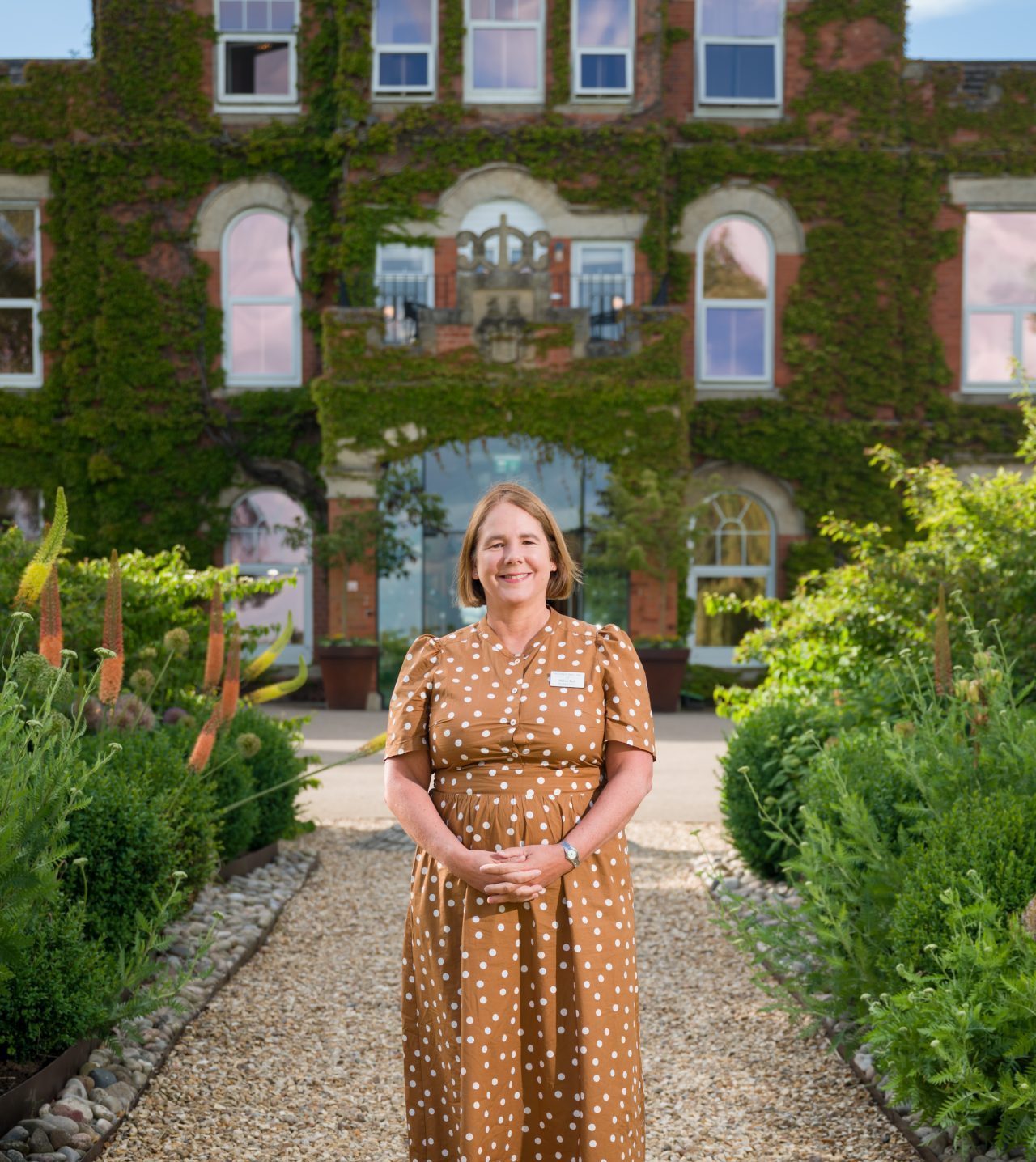
New Managing Director to Lead Ragdale Hall Spa into Next Era Following Leadership Retirements
Ragdale Hall Spa announces the appointment of Helen Bull as Managing Director, marking a new chapter for the business as long-standing members of the senior leadership team retire after three decades of service.
Following over 35 years of service and leadership, directors Hugh Wilson and Allison Garner, announce their retirement. Helen Bull succeeds them in the role, building on Ragdale Hall Spa’s position as one of the UK’s most renowned destination spas. Hugh Wilson said ‘I’m proud to be handing over the reins to Helen, Ragdale Hall Spa is an incredible brand and business with a strong team and foundation, foundations that Allison and I have been part of building and shaping. We will be stepping away confidently that Ragdale is in safe hands and that it will become even more remarkable.’
Helen brings over 30 years of commercial experience in the hospitality, leisure and tourism industry, with a career spanning sales, marketing and senior leadership roles across a range of organisations. This includes notable senior leadership roles at Merlin Entertainments, where she was responsible for long-term resort strategy, delivering financial targets and overseeing the operational running of the resort for both guests and employees.
Stepping into her new role, Helen will lead a team of 525 employees, ‘I am extremely excited to be leading the team here at Ragdale, a team with a great reputation for delivering exceptional guest experiences that we pride ourselves on’.
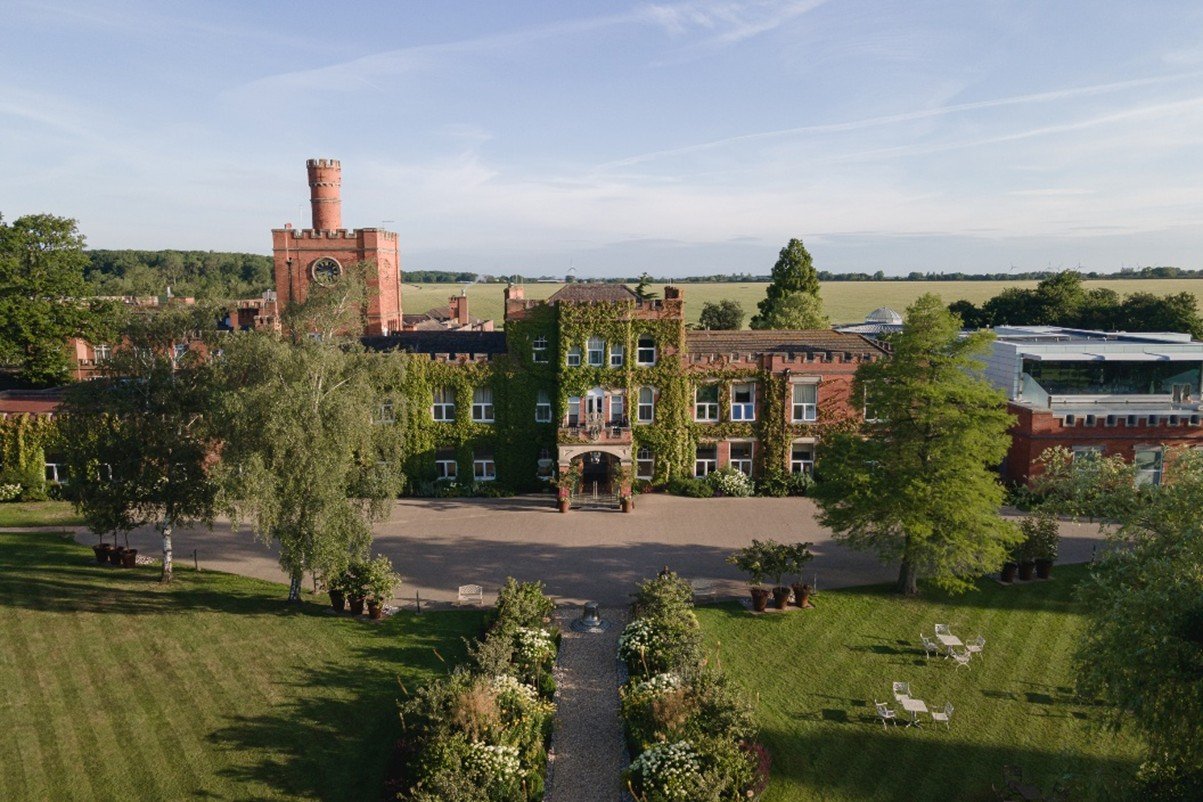
The 93-bedroom property has a rich spa history spanning 50 years and with Helen’s appointment she will take forward plans for Ragdale’s future growth, building on the strong start already made. Helen said ‘It is a privilege to join a brand that is so highly regarded and continue the success that Hugh and Allison have had a huge part in creating. I look forward to using my experience and expertise to lead Ragdale Hall Spa into its next era.’

A New Era for Cameron House on Loch Lomond: Victory Group Completes Acquisition of the Iconic Scottish Resort
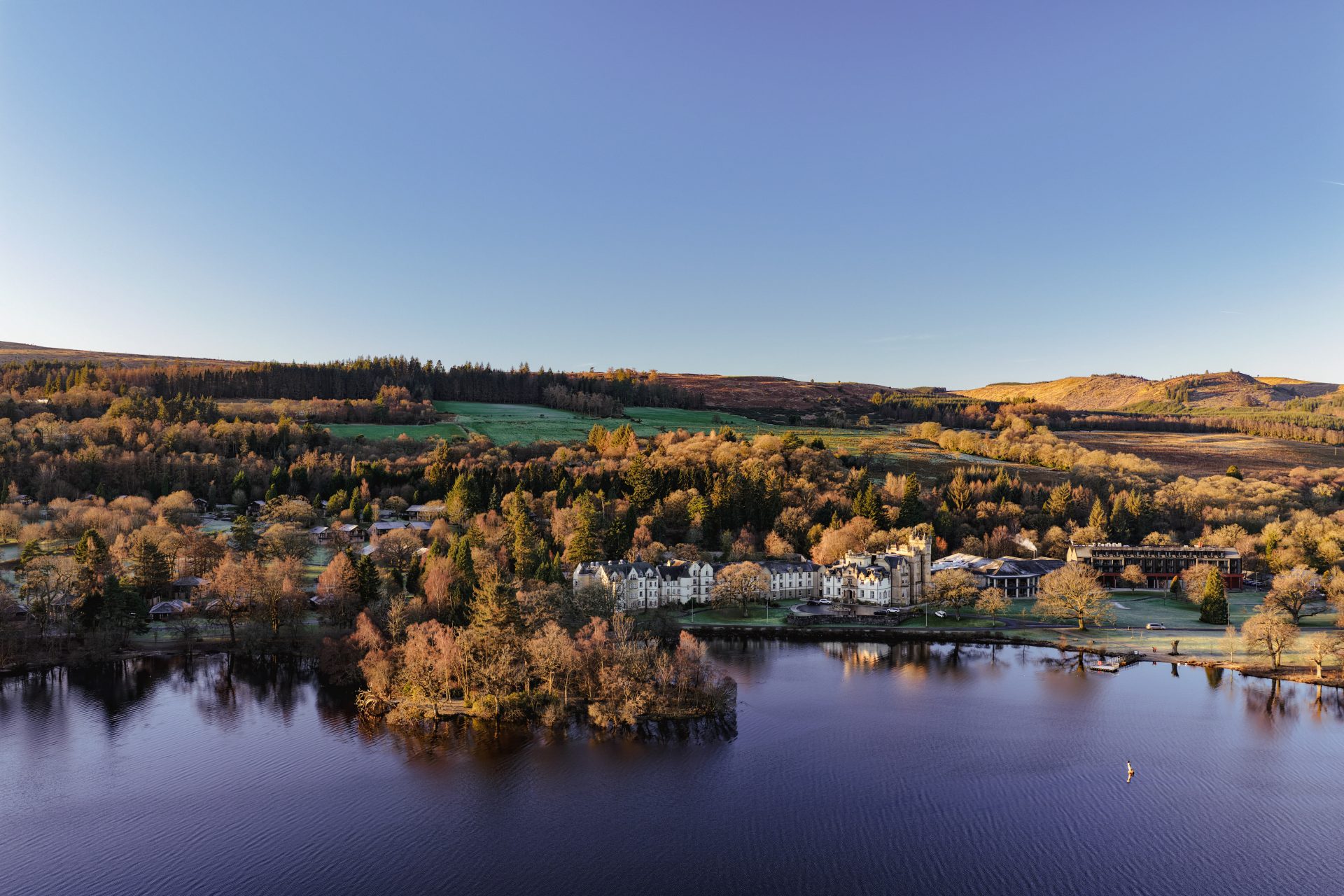
Cameron House, the 17th-century estate set on the picturesque shores of Loch Lomond, has been acquired by Victory Group, marking the start of a vibrant new era dedicated to elevating the guest experience. Combining historic Scottish charm with contemporary hospitality, this iconic estate offers an idyllic escape just 30 minutes from Glasgow. Ideally positioned between Loch Lomond and The Trossachs National Park, Cameron House is a year-round destination where a blend of elegant hotel rooms as well as self-catering lodges, cottages and apartments allows guests to fully enjoy a wealth of outdoor experiences, both on the water and throughout the surrounding countryside.
Recently named among the best resorts in Europe in the Condé Nast Traveller UK Readers' Choice Awards, the baronial mansion-turned-hotel is widely cherished for its historic position within Scottish hospitality, and recognised as the gateway to the Scottish Highlands. Under Victory Group’s stewardship, the resort will undergo a phased evolution, including enhanced wellness offerings, curated lifestyle experiences, and immersive family programming - all underpinned by a dedication to preserving the estate’s rich heritage within this lochside landscape.
Victory Group, the leading luxury real estate and hotel investment firm headquartered in London, sees the addition of Cameron House into their portfolio as an endorsement into the estate’s future, aiming to recapture the spirit of this 400-acre lochside retreat. Erik Moresco, Founder of Victory Group, shared his vision:
"This acquisition reflects our strong commitment to high-quality assets in attractive locations. Cameron House combines a setting of breathtaking beauty, heritage, and luxury with legendary Scottish hospitality. We are absolutely thrilled to be making our first acquisition in Scotland, and we continue to see the UK as a compelling investment market."
While the warm Scottish hospitality that guests love remains unchanged, Victory Group’s transformation will refocus Cameron House’s position as a must-visit, forward-thinking destination for global travellers. Further details regarding the next phase of the resort’s evolution, including plans and new experiences, will be announced in the coming months.
BARONS EDEN REBRANDS AS HIDDENWELL TO SUPPORT UK SPA HOTEL EXPANSION STRATEGY
Barons Eden has rebranded as Hiddenwell to reflect its evolving vision for elevated wellness hospitality and future expansion plans.
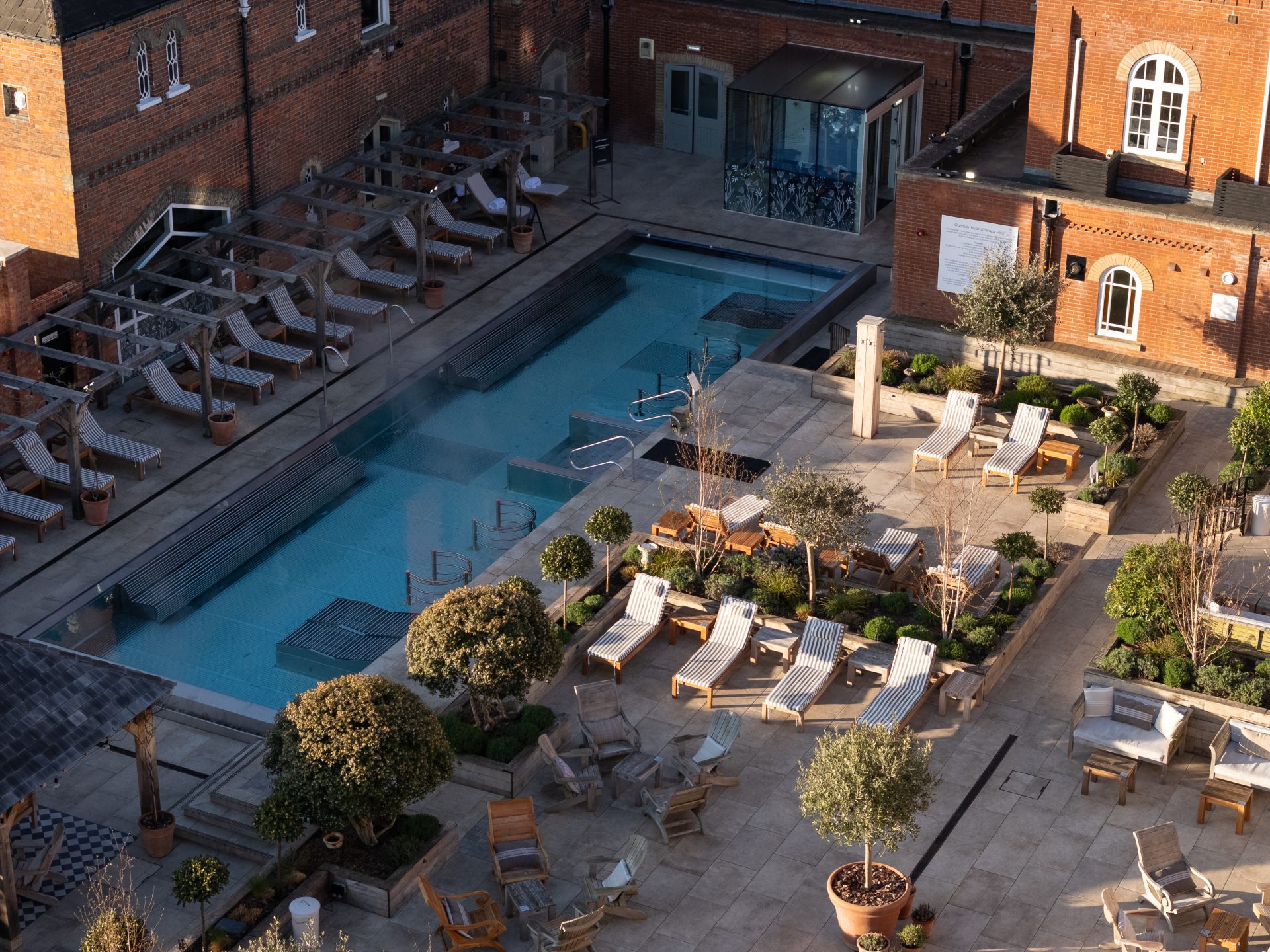
Barons Eden, the company behind the award-winning collection of Destination Spa Hotels, has announced its rebrand to Hiddenwell - a new parent brand identity reflecting the company’s evolving vision of redefining spa and supporting its future growth and expansion plans.
Hiddenwell will become the umbrella brand overseeing the group’s growing portfolio of destination spa hotels, including Hoar Cross Hall in Staffordshire and Eden Hall in Nottinghamshire, with additional properties set to join the collection.
Hiddenwell is built around the belief that the best moments are often the ones hidden away – time to slow down, reconnect and indulge in feel-good experiences at your own pace. The new identity reflects the group’s vision for creating beautifully designed spa escapes that feel warm and effortlessly restorative.
Following extensive research, the rebrand marks a significant milestone for the business as it looks to strengthen its position within the UK’s elevated wellness and hospitality landscape. Designed around the idea of discovery and escapism, Hiddenwell reflects a more contemporary approach to wellness hospitality.
Currently at the heart of the Hiddenwell collection are two award-winning spa destinations:
- Hoar Cross Hall by Hiddenwell is a destination spa retreat in rural Staffordshire, home to one of the largest state-of-the-art spas in Europe, 104 bedrooms and suites, and award-winning dining including its two AA Rosette restaurant, The Ballroom.
- Eden Hall by Hiddenwell is a countryside day spa in Nottinghamshire, offering immersive day and evening spa experiences focused on relaxation, treatments and switching off from everyday life.
As part of its next phase of growth, Hiddenwell has also confirmed plans to further expand the group with the additions of Ardencote Manor in Warwickshire and Orsett Hall in Essex. The expansion forms part of the group’s wider long-term strategy to evolve its portfolio and cement its position as one of the UK’s leading destination spa operators.
Ed Law, CEO at Hiddenwell shared that “This rebrand marks an exciting new chapter for the business. Hiddenwell reflects not only where we are today, but where we are heading as a growing collection of destination spa hotels centred around wellbeing, escapism and exceptional guest experiences. As the demand for wellness-led travel continues to grow, Hiddenwell gives us a strong platform for future expansion while continuing to invest in immersive and restorative experiences across our existing properties”.
As Hiddenwell enters its next phase of growth, the rebrand reflects the group’s vision for reimagining the modern spa experience - creating destination spas centred around wellbeing, escapism and meaningful connection. Built around the philosophy that the best things are often well hidden, Hiddenwell aims to offer guests spaces to truly switch off, recharge and discover moments of calm away from the pace of everyday life.
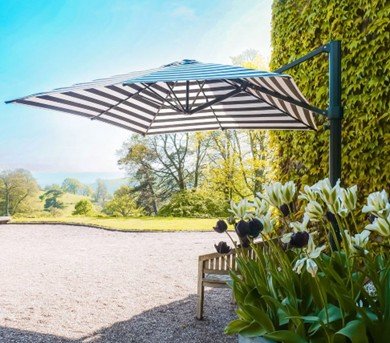
Outdoor Living Enters a New Era as Hospitality and Homeowners Embrace Personalised Design, says InstaShade
From bespoke branded canopies and boutique hotel-inspired styling to custom colour palettes and multi-functional shade solutions, outdoor spaces are becoming more personalised, more design-led and more commercially valuable than ever before, according to new insight from premium shade specialist InstaShade.
Drawing on projects across both the hospitality and residential sectors, the British outdoor living brand has identified a significant shift away from standardised outdoor products towards tailored environments that reflect individual identities, enhance user experience and maximise the value of exterior spaces.
The trend is particularly evident within hospitality, where hotels, restaurants, spas and leisure destinations are increasingly investing in outdoor areas as an extension of their brand experience.
Sarah Lunt, Director at InstaShade, said: "We're seeing outdoor spaces become increasingly important for both hospitality operators and homeowners, but for very different reasons. For hospitality businesses, every square metre needs to work harder – whether that's increasing covers, extending dwell time or creating memorable guest experiences that encourage repeat visits. At the same time, consumers are bringing those same expectations home, seeking outdoor environments that feel every bit as considered and comfortable as their interiors.
"What connects both markets is a growing demand for individuality. Standard solutions are giving way to bespoke designs, carefully selected materials and products that reflect a property's personality. Whether it's a luxury hotel terrace, a boutique spa or a private garden, people want outdoor spaces that feel unique, purposeful and seamlessly integrated into the overall experience."
One of the strongest trends shaping the market is personalisation. Within the commercial sector, bespoke solutions now account for as much as 70% of InstaShade's installations, with operators increasingly specifying branded fabrics, customised colours and tailored finishes that reinforce their wider design schemes.
Hotels and hospitality venues are recognising that outdoor spaces are often among the most photographed and memorable parts of a guest's stay. As a result, shade structures are evolving from functional necessities into design features that help create a distinctive sense of place.
The same trend is increasingly filtering into residential projects, where homeowners are looking to create outdoor spaces that feel as considered and curated as their interiors.
Alongside personalisation, InstaShade has identified a growing preference for understated luxury. Natural tones, wood-effect finishes, muted neutrals and tactile materials are proving particularly popular across both sectors, reflecting a broader move towards timeless design and long-term investment rather than short-lived trends.
Pattern is also making a statement outdoors. Wide stripes, particularly in earthy and neutral colourways, are emerging as one of the defining aesthetics for Spring/Summer 2026. Inspired by luxury coastal destinations and boutique hospitality settings, the look brings a sense of character and sophistication to both commercial and residential environments.
Meanwhile, hospitality operators are embracing a revival of retro-inspired styling. Scalloped edges, decorative valances and 1970s-inspired detailing are becoming increasingly popular as venues seek to create memorable outdoor spaces that stand apart from competitors whilst delivering strong visual appeal across social media and marketing channels.
Delivered through InstaShade's Belgravia and Hove collections, these design cues balance nostalgia with contemporary craftsmanship, helping venues create outdoor environments that feel distinctive whilst remaining elegant and timeless.
Functionality remains equally important. Both hospitality operators and homeowners are seeking solutions that maximise flexibility and usability throughout the day.
As a result, demand is growing for products that offer enhanced performance alongside premium aesthetics, including rotating parasols, adaptable shade systems and installations capable of serving multiple outdoor zones from a single structure. These solutions not only improve guest comfort but also help operators maximise the commercial potential of outdoor dining, lounging and entertainment areas.
The desire for products that work harder is also driving innovation across the sector. New shade solutions are emerging that bridge the gap between premium aesthetics and accessibility, whilst developments such as in-ground installation options, enhanced stability features and improved protective accessories are helping to deliver greater convenience without compromising on appearance.
Looking ahead, InstaShade believes the future of outdoor living will be shaped by design integrity, flexibility and personal expression.
Lunt concluded: "The most successful outdoor spaces are no longer defined purely by functionality. They need to deliver on aesthetics, comfort, flexibility and long-term value. We're seeing hospitality operators lead many of these trends, investing in bespoke features and premium finishes that strengthen their brand identity, whilst homeowners are increasingly taking inspiration from the hotels, restaurants and resorts they visit.
"As the boundaries between indoor and outdoor living continue to blur, we expect personalisation, timeless design and commercial practicality to remain at the forefront of purchasing decisions across both sectors."
Based in Cheshire, InstaShade is a family-run specialist in premium outdoor shade solutions for both residential and commercial environments. Working with homeowners, hotels, restaurants, spas and leisure venues across the UK, the business combines British design expertise with premium materials and extensive customisation options to create outdoor spaces that are both functional and visually distinctive.
Where to buy
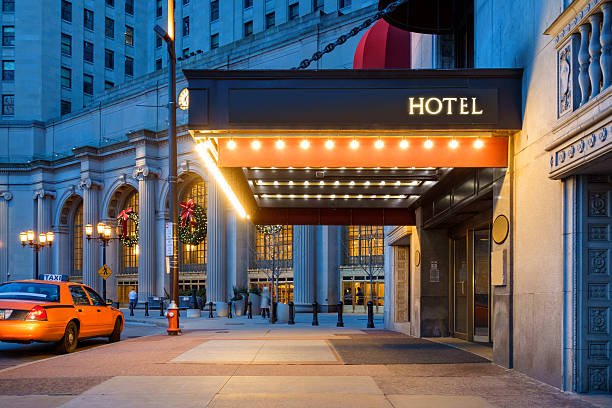
Hotel Renovation Timelines: The Early Decisions That Keep Rebrands and Reopenings on Track
When a hotel renovation falls behind schedule, the conversation afterwards usually focuses on what went wrong during construction. A supplier delivered late. A contractor had competing commitments. An unforeseen structural issue added weeks. These things are real and they happen on most projects of any scale.
But the people who run these projects regularly will often tell you that the trouble started earlier. A design concept that was broadly approved but never actually locked, so procurement was advancing on assumptions that turned out to be wrong. Stakeholder sign-off that required three more rounds than anyone planned for because nobody established at the outset who had final authority. Visual materials for the launch campaign requested in week fourteen when they needed six weeks to produce properly. By the time construction began, the schedule was already compromised.
The consistent lesson is simple and frequently ignored: a renovation timeline is only as strong as the decisions made before building works start.
Before Construction: The Decisions That Actually Set the Schedule
Most of the variables that determine whether a hotel refurbishment finishes on time are settled — or fail to be settled — in the months before the first room goes offline.
The commercial logic needs to be clear early. What is this renovation for? A full rebrand and repositioning requires different decision-making than a rolling rooms upgrade or a lobby refresh ahead of a market repositioning. A hotel remaining partially operational during works faces sequencing and operational constraints that a full-closure project doesn't. These aren't design questions — they're strategic ones, and if they're unresolved when design work begins, the ambiguity propagates forward.
Owner expectations, operator requirements, and brand standards all need to be aligned at this stage, not discovered to be misaligned after the design is developed. The projects that generate the most expensive late-stage changes tend to be the ones where those conversations were deferred.
Who Approves What, and When
Hotel projects have complex stakeholder structures. Owners, operators, brand representatives, designers, procurement teams, commercial and marketing leadership — all may have legitimate interests at different stages. The problem isn't that they exist. It's when their approval requirements become clear only after decisions have already been made.
For larger hotel refurbishments, the early planning group may include architects, interior designers, procurement leads, branding specialists, and, where visual approvals or launch materials are needed, a 3D rendering firm that can help translate the proposed design into presentation-ready imagery before works begin.
Mapping approval authority explicitly — who has sign-off at which stages, who provides input without a veto, how disagreements get resolved — removes a significant source of schedule risk. Teams that assume approvals will happen smoothly without establishing the process discover the problem at inconvenient moments, usually when something is already in motion.
The Design Lock and Why It Matters for Procurement
The relationship between design approval and procurement timing is where many hotel projects encounter their most practical difficulties. FF&E suppliers have lead times measured in months. If design decisions are still being revised when procurement should be progressing, the schedule has to absorb both the outstanding design time and the full supplier lead time from whenever that work is finally done.
The design lock — the point at which finishes, materials, lighting approach, and key specifications are genuinely confirmed — needs to happen early enough for procurement to move with confidence. A concept that establishes atmosphere without specifying finishes is useful for generating broad approval. It is not sufficient for driving procurement decisions.
Procurement teams making sourcing decisions need confirmed specifications, not interpretations of an evocative mood board. The earlier those specifications are available, the more lead time suppliers have, and the less likely construction is to stall waiting on furniture that wasn't ordered in time.
Visual Materials Are Part of the Timeline Too
Hotel renovation projects typically need presentation materials well before completion. Internal reviews require showing what finished spaces will look like. Board and investor presentations need visual communication of the proposed transformation. Pre-opening press materials, website content, and sales assets for F&B venues or premium spaces need to exist before the property reopens — not after.
Teams that treat these as tasks to handle near the end of the project consistently find they've underestimated the time required. Producing strong visual assets from a design still being developed is slower and more expensive than working from something finalized.
Project managers unfamiliar with the time required often ask how long does 3D rendering typically take only after the design stage is already well advanced — when those visuals may be needed within weeks for a stakeholder review or a launch deck. The answer depends heavily on project complexity and scope, but it is consistently longer than teams who haven't planned for it tend to assume.
Design and Guest Experience Need to Be the Same Conversation
The design transformation and the guest experience it's meant to create should be developed together, not as parallel workstreams reconciled at the end. A lobby redesign that improves photographs without improving how guests move through arrival and check-in will eventually show up in reviews, regardless of how well it performs in press coverage.
A spa refurbishment positioned around calm and restoration needs different material and acoustic decisions from one positioned around energy. A restaurant transitioning from business dining to destination F&B needs design choices that support the service style and atmosphere being targeted. When design and experience intent are aligned from the brief onwards, the decisions that follow tend to be more consistent and require fewer revisions.
Late Changes Cost More Than They Appear To
When strategic decisions surface after procurement has begun or after visual assets have been produced, the costs move through the project in several directions at once. Supplier variation orders. Contractor adjustments. New visual materials. A press release postponed. A soft opening pushed back. Revenue anticipated during the gap between the original and revised opening date doesn't return.
The argument isn't for treating design as inflexible — renovation projects require adjustment, and some late changes are genuinely necessary. It's for frontloading the decisions most likely to require changes if they're made wrong. When those conversations happen in the planning phase rather than during construction, the cost of adjustment is a fraction of what it becomes later.
Milestones, Not Open-Ended Review Cycles
The renovation timelines that hold together best are built around explicit milestones with named owners and dates — not around assumptions that decisions will happen when the project needs them to.
Useful milestones for a hotel refurbishment: concept sign-off, individual room-type approval, public-area design approval, FF&E freeze, procurement order release, visual asset delivery, press readiness, and pre-opening handover. Each milestone should have a confirmed decision-maker and a date that something downstream actually depends on.
This structure does two things. It surfaces schedule pressure early enough to respond to it. And it gives all project partners — designers, contractors, suppliers, visual production teams, marketing — a shared reference point they can plan against. Some schedule disruption is almost inevitable on complex hotel projects. The ones that absorb it without losing the opening date tend to be the ones where early planning was detailed enough to give the team something solid to work from when things don't go exactly as planned.

Coca-Cola Set to Replace Pepsi Across Marriott’s Global Portfolio
In a significant shift for the hospitality sector, The Coca-Cola Company has secured a new agreement with Marriott International to become its exclusive beverage partner, bringing an end to the hotel group’s decades-long relationship with PepsiCo.
Under the new deal, Coca-Cola’s product range will be rolled out across Marriott’s extensive global footprint, which includes more than 9,700 properties spanning 143 countries. Guests can expect to see Coca-Cola beverages featured in lobby bars, mini-markets, in-room minibars, soda fountains, and across catering for meetings and events.
The move marks the conclusion of a 34-year partnership between Marriott and PepsiCo, a relationship that began in 1992 when Pepsi replaced Coca-Cola as the chain’s beverage supplier. That earlier transition followed Coca-Cola’s decision not to participate in a substantial financing arrangement proposed by Marriott at the time.
The latest development represents another chapter in the long-running rivalry between the two beverage giants. With largely overlapping product portfolios, competition between Coca-Cola and PepsiCo has often played out through high-profile partnerships such as this one. For Coca-Cola, the Marriott agreement offers not only global visibility but also a meaningful boost in brand exposure among international travellers.
Industry observers note that similar switches have sparked strong consumer reactions in the past. When Culver’s transitioned from Pepsi to Coca-Cola several years ago, loyal customers voiced notable dissatisfaction. However, Coca-Cola has indicated that Marriott’s decision was driven by guest preferences, citing demand for its broader “total beverage portfolio.”
How Marriott guests will respond to the change remains to be seen, but the transition underscores the growing importance of beverage strategy as part of the overall guest experience in the hotel industry.
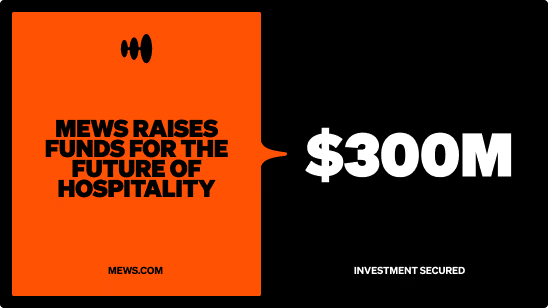
Mews Secures $300 Million Investment to Cement Position as World’s Leading Hospitality Operating System
- EQT Growth leads Series D funding round to accelerate the AI-native future of hotels globally, with participation from new investors Atomico and HarbourVest
- Investment values Mews at $2.5 billion
- Mews’ Platform Transaction Volume reached $19.7 billion in 2025
Mews, the operating system for hospitality, today announced it has raised $300 million in a Series D funding round led by EQT Growth, with new investors Atomico and HarbourVest Partners, and participation from existing investors Kinnevik, Battery Ventures and Tiger Global. This investment marks a defining moment for hospitality technology and values the company at $2.5 billion. Following a year of strong and durable growth, during which SaaS gross profit increased by 55%, this fundraise establishes Mews as the leading hospitality tech provider for hotels of all sizes.
In 2025, the company achieved:
- A customer base of 15,000, with 132,000+ monthly active hoteliers in 85 countries
- 42.3 million checked-in reservations, of which 3.2 million via Mews Kiosk1
- Platform Transaction Volumes of $19.7 billion
- Accelerated SaaS gross profit growth of 55%
- Created more than half a billion ($537 million) in additional revenue for hoteliers through its proprietary Mews Spaces2 feature, powered by over two million non-room reservations
“With EQT Growth joining in addition to new investors Atomico and HarbourVest, we have the backing to continue moving faster than anyone else in the industry,” said Matt Welle, CEO of Mews. “We are engineering an operating system that is changing how hoteliers interact with their guests. Mews exists to handle the operational complexity so hoteliers can focus on what matters: making hospitality even more fun, profitable, and fulfilling.”
The funding will expand Mews’ investments in artificial intelligence, embedding agent-driven systems across the platform to automate complex workflows, reduce cognitive load for staff, significantly improve the guest experience and accelerate how products are built and deployed - enabling properties to:
- Orchestrate operations in real time with intelligent automation
- Optimize revenue and profit with advanced insights into guest behavior
- Scale business without the debt of legacy tech
- Radically simplify workflows to onboard teams faster
“Hospitality is the business of experiences,” said Richard Valtr, Founder of Mews. “The validation for our product from the market is clear, in both the US and Europe, and it is great to see how we are now powering ahead of any other hospitality company in terms of AI and agentic hospitality. It’s an exciting time to reinforce our vision of making Mews hotels the most profitable in the industry.”
A new standard for a global industry
“I’ve had the pleasure of getting to know the Mews team for several years and witness the company go from a bold vision to an organization delivering at scale,” said Kirk Lepke, Partner at EQT Growth. “Hospitality is one of the world’s largest industries, yet its core systems remain decades behind. Mews is creating a modern technology standard, an AI-enabled hospitality operating system that helps solve the fragmentation we see in the industry. We at EQT Growth are incredibly excited to lead this round and partner with Mews.”
Mews will also accelerate the expansion of Mews Payments and its broader fintech infrastructure, embedding commerce into the core of hotel operations and positioning Mews as the connector between experience and revenue. In addition, the company will continue its ambitious international expansion across its primary geographies of North America and Europe, as well as expanding into new markets.
“Matt and Richard have built a category-defining platform with the depth, pace of innovation and global reach required by modern hospitality,” said Laura Connell, Partner at Atomico. “The most ambitious builders in hospitality are focused on delivering ever-improving experiences for their end consumers, and they need technology that can keep pace with rising expectations around speed, service and personalization. Mews is the key enabler for the future of hospitality, and the team is well on their way to building a generational company.”
The investment comes shortly after the completion of Mews’ fourteenth acquisition, DataChat, the leading generative AI analytics platform. In January 2026, Mews was named the #1 Property Management System for the third year in a row and #1 Hotel Point of Sale System in the world by customers and reviewers of Hotel Tech Report, a reflection of its ability to lead both the operational and commercial layers of hospitality.
The funding round is subject to customary regulatory closing conditions.
1 A self‑service check‑in and check‑out kiosk that allows guests to handle arrival and departure themselves.
2 Mews’ multi‑space management capability that lets a property manage and sell any kind of space (not just rooms) directly in the property management system (PMS).
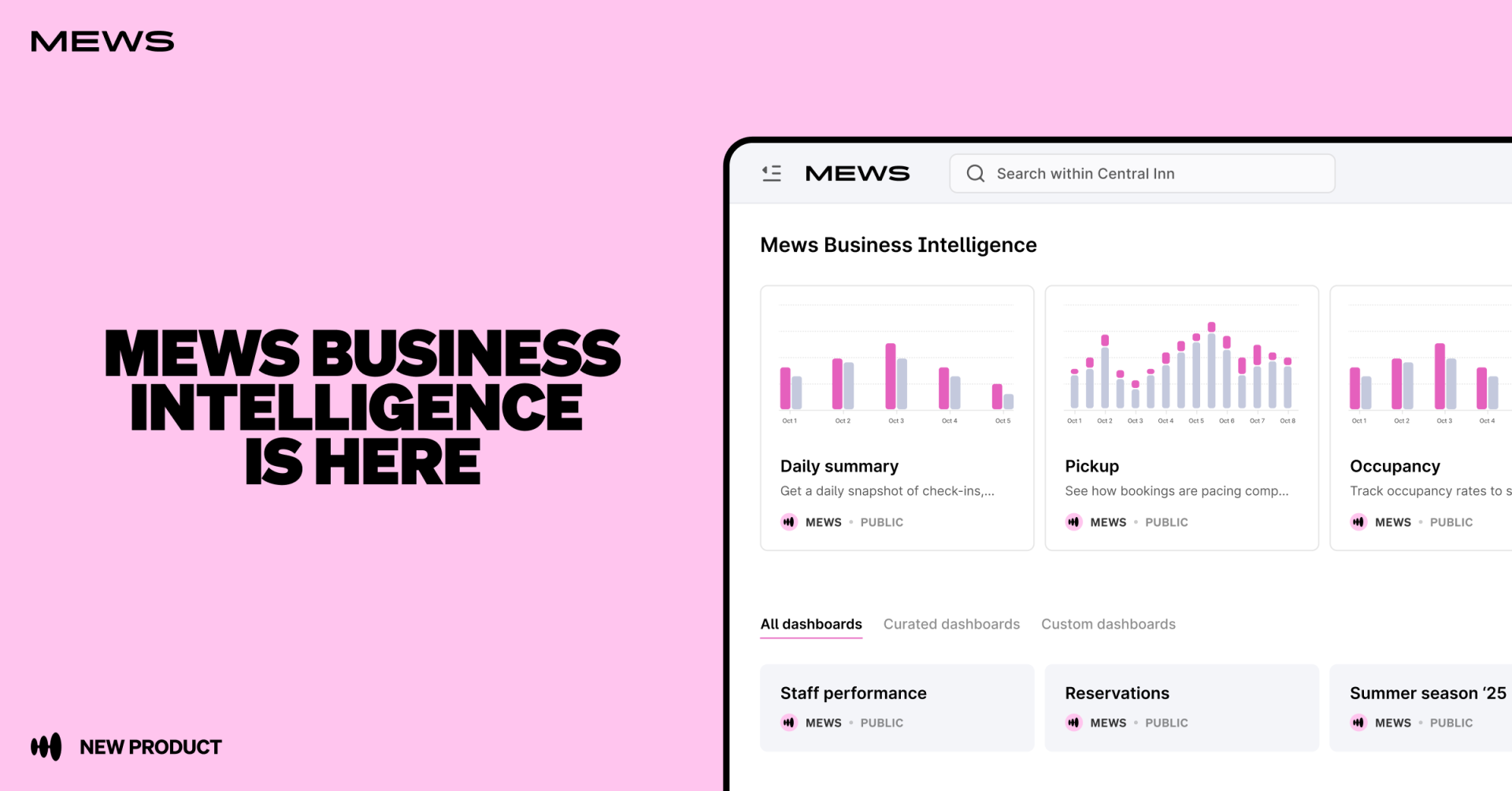
Smarter Decisions, Faster: Mews Launches Business Intelligence for Hotels
Embedded data and analytics product with AI-powered insights rolls out globally, giving hoteliers a single source of truth for faster decision-making
Mews, the operating system for hospitality, has today launched Mews Business Intelligence (Mews BI), a native data and analytics product delivering instant, actionable AI-insights for hoteliers. Built directly into the Mews operating system, Mews BI gives hotel teams a single source of truth and the ability to act on live business data without leaving the platform they already use to run their properties. With built-in, customizable dashboards and scheduled reports, hotels can track revenue, occupancy, and bookings across their portfolio, helping teams make smarter, faster decisions.
Changes that drive impact:
- Embedded analytics to speed up decision-making: Mews is introducing built-in, self-serve analytics that let hospitality teams explore performance data and spot trends without manual exports. The update also includes AI-powered performance summaries that translate key property and portfolio metrics into plain-language, so operators make faster, better-informed decisions.
- Custom dashboards tailored to business priorities: Users build fully customizable dashboards through an intuitive drag-and-drop interface, making it easier to track KPIs that matter most across individual properties, portfolios, teams and stakeholders.
- Automated reporting to reduce manual work: Dashboards and reports are scheduled for automatic delivery, keeping teams aligned without repetitive manual work.
- A more complete view of performance: By combining Mews data with external sources, such as OTAs and Google Ads, hospitality businesses get a unified view of commercial and operational performance across the organization.
“Customers are looking for solutions that they can trust”, said Pepa Starýchfojtů, CPTO at Mews. “With Mews BI, we’re giving hoteliers a single, reliable platform to turn their data into actionable insights – helping them make faster, smarter decisions every day.”
Already adopted by over 1,000 early customers, Mews BI is helping hospitality operators make smarter, faster decisions. These early adopters are already seeing the impact. The Adara Hotel, a boutique retreat in Whistler, has achieved significant revenue and performance gains since implementing Mews BI. By using the room performance dashboard to understand occupancy and ADR by room type, the team re-categorized inventory and introduced targeted strategies that drove a 20% increase in 2-bedroom suite occupancy, threefold winter revenue from 1-bedroom suites, and an 11% total revenue uplift during the spring shoulder season with a $50 higher ADR. With Mews BI now part of their daily workflow, Adara can make faster, data-led commercial decisions, and uncover new revenue opportunities across seasons.
Rhys Davies, General Manager of the Adara Hotel, commented, “We had data before, but it was manual and not detailed, just basic stats like overall ADR and date. With Mews BI, everything is in one place”.
Mews BI is now available automatically to all customers with Mews Analytics or on the Enterprise package, with hostels planned for support in the second half of 2026. At launch, all customers – including those without Mews Analytics – will have access to the insight dashboards, marking a significant upgrade in reporting capabilities at no extra cost.
For more information: https://www.mews.com/en/products/mews-bi
Mews Reinforces Position as Hospitality’s Operating System
Mews accelerates toward the next era of hospitality with a connected, intelligent platform and a new brand identity
Mews is advancing its ambition to power the next era of hospitality with a connected, intelligent operating system designed to unify revenue, operations and the guest journey within a single platform. Today, the company unveiled an evolved brand identity that reflects this momentum and the scale of opportunity ahead.
“Hospitality is entering a defining and exciting decade,” said Richard Valtr, Founder of Mews. “Guest expectations are rising. Revenue models are expanding beyond rooms. Artificial intelligence is reshaping how businesses operate. However, this is against the backdrop of rising costs of labor, energy and distribution. The hotels that thrive in these conditions will be those built on unified, adaptable infrastructure rather than disconnected systems, which is why we are creating the hospitality industry’s Operating System.”
That ambition is backed by scale. Recently, Mews secured $300 million in Series D funding at a valuation of $2.5 billion. Over the past year, the company accelerated SaaS gross profit growth by 55%, and expanded to 15,000 properties across 85 countries, supporting more than 132,000 monthly active hoteliers.
Across industries, software now accounts for more than one-fifth of total technology budgets, according to Boston Consulting Group1. Yet fragmentation remains one of the biggest barriers to unlocking real value. In hospitality, siloed systems continue to limit personalization, operational agility and profit growth.
Mews is addressing that structural challenge head on. The company’s hospitality operating system unifies guest, operational and financial workflows within a single platform, creating the foundation for automation, insight and increasingly autonomous workflows across hotels and hotel groups.
“The second I saw Mews, I was obsessed. It felt like a system designed by someone who actually understands how hotels work,” said Grace Grieco, Executive Director of Operations and Sales, Pelham Hospitality. “With Mews, things finally started speaking to each other.”
As AI adoption accelerates, that foundation becomes critical. BCG research shows that only 5% of companies today are achieving meaningful AI value at scale, largely because intelligence cannot scale on disconnected systems2. A true operating system changes that dynamic.
“Our ambition is simple,” Valtr added. “Technology should carry the complexity so people can focus on hospitality. With advances in AI, we believe that the upcoming years will see a steep change in productivity that this industry has not seen before.”
The evolved Mews brand is a visual expression of that transformation. Centered around a fluid brand mark inspired by the original meaning of a ‘mews’ – where individual houses or departments come together as part of a larger enterprise – the new identity reflects connectivity, momentum and adaptability. Its flexible forms and natural motion signal a platform designed to respond in real time to the needs of modern hospitality, reinforcing Mews’ role as the infrastructure hotels will build on for the next decade.
First Dedicated Canadian Spirits Tasting Showcases Nation’s Finest at Canada House
The High Commission of Canada in the UK is to host its first-ever dedicated spirits tasting to showcase spirits from across the country.
The Canadian Spirits Showcase, which takes place on 3 March at Canada House, marks the first time spirits have been given their own platform outside of the High Commission’s successful annual wine tasting.
The event will feature spirits producers from seven provinces and territories, including from British Columbia, Alberta, Saskatchewan, Nova Scotia, Ontario, Quebec, and the Yukon.
Producers will showcase a range of spirits, made from Canadian world class barley, rye and wheat, along with fruit, flowers, berries and botanicals. An assortment of farm to glass gin, vodka, whisky and unique local offerings capture the tastes of the nation’s fields, forests, and seas. The tasting brings together craft distilleries, large and small, some of whom have representation in the UK, along with a raft of exciting producers that are seeking representation. (Full list of producers in attendance below.)
Canada’s distilling heritage predates the founding of the country, beginning with rum production in Atlantic Canada and New France. As the country expanded westward to the Pacific, whisky and other grain-based spirits took root in Ontario and the Prairies. While today’s craft distilling industry is comparatively young, it has grown exponentially over the recent decades with more than 300 craft distillers now operating across the country.
Emma Finn, Trade Commissioner at the High Commission of Canada in the UK said: “There are some incredible spirits coming out of Canada – the breadth of regions and products really demonstrate the quality and versatility that makes Canada such an exciting spirits-producing nation. We’re thrilled to be able to put this on show for the first time in its own dedicated, deserved, space.
“Canada has become known for wine, beyond Icewine, and we want the UK to discover the sheer variety and innovation that can be found in the exciting spirits on offer.”
The event takes place from 11am – 5pm on Tuesday, 3 March at Canada House. Registration is essential.
To register your interest, please contact: alexm@williammurray.co.uk